Task Automation: How to Cut Repetitive Work
Task automation saves time, gets work done faster, and reduces errors. Learn how to automate repetitive tasks step-by-step and how to decide what to automate.
Updated October 22, 2026

AI agents are becoming easier to build, easier to customize, and more useful for everyday work. As a result, many workers without extensive development experience are building their own AI agents that follow workflows, integrate with the tools they already use, and automate repetitive tasks.
That’s good news for productivity, but it also creates a new challenge for employers. Employee-built agents can access company data, connect to business systems, interact with customers, and take actions on their own, putting companies at serious risk.
Employers need to understand these risks so they can put guardrails in place while still benefiting from the trend.
Looking for a Artificial Intelligence agency?
Compare our list of top Artificial Intelligence companies near you
Clutch surveyed more than 700 full-time workers who have built their own agents. The findings reveal why employees are building agents, how they're using them, the benefits they're seeing, and the risks employers need to consider.
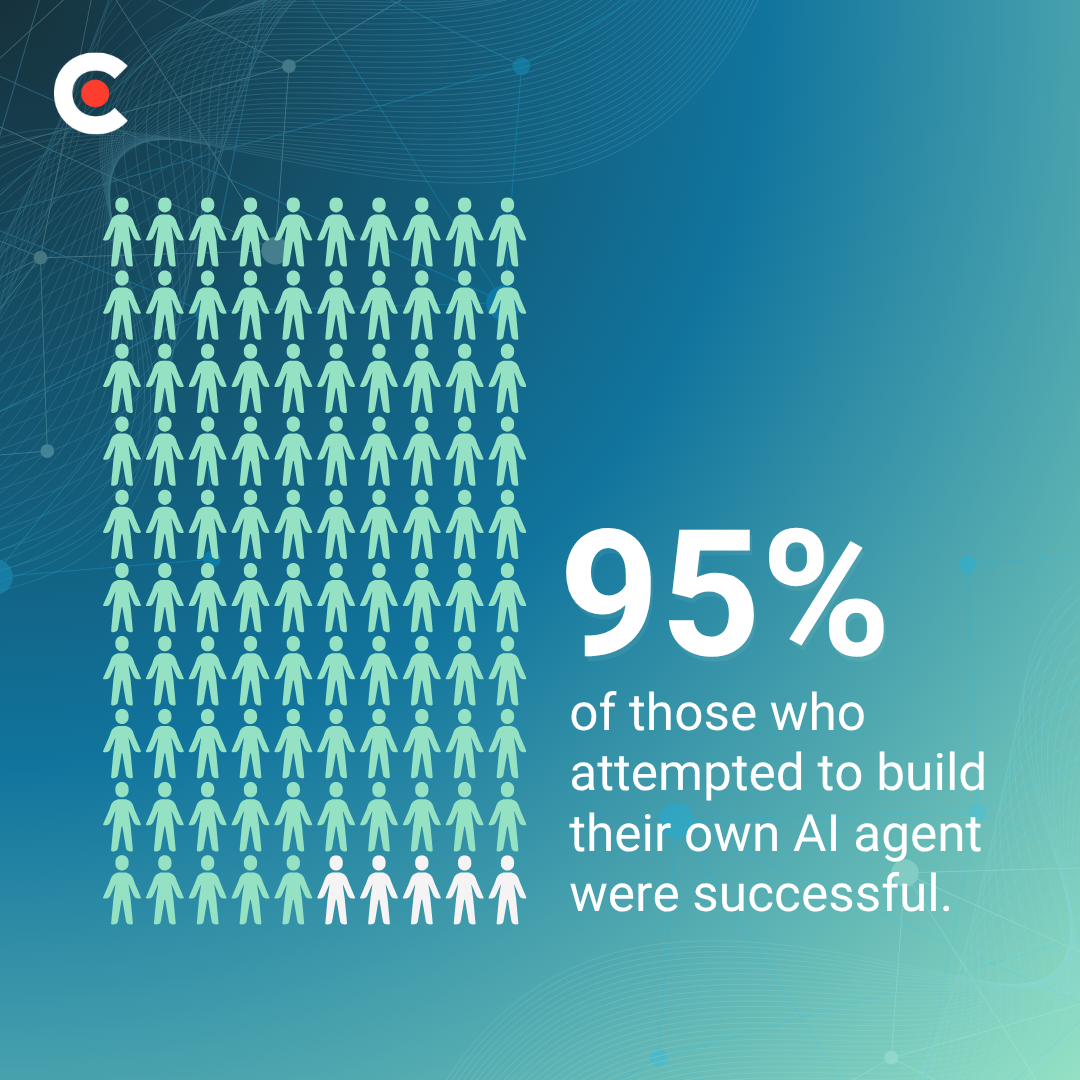
The barrier to building an AI agent is getting lower thanks to AI tools that don’t require extensive formal training or development experience to get started. In fact, 95% of those who attempted to build their own AI agent were successful.
And they’re not necessarily relying on formal development skills to make it happen. Nearly 6 in 10 (59%) who built their own AI agent already had sufficient technical knowledge, while others relied on readily available resources to figure it out. Twelve percent (12%) used YouTube tutorials or other online videos, and 9% used AI tools such as ChatGPT or Claude to help them build their agents.
Even with little experience, it doesn’t take a ton of time for workers to build their AI agents, either. Nearly three-quarters (71%) built their AI agent in less than a week.
These workers are jumping in feet first, too. Nearly 9 in 10 (89%) took an experimental approach, figuring out how to build their AI agent as they went through the development process.
This doesn't mean building an AI agent is completely straightforward. It’s more of a learn-as-you-go process, with lots of trial and error along the way. Nearly everyone (98%) faced challenges when building their own AI agent, but most overcame them.
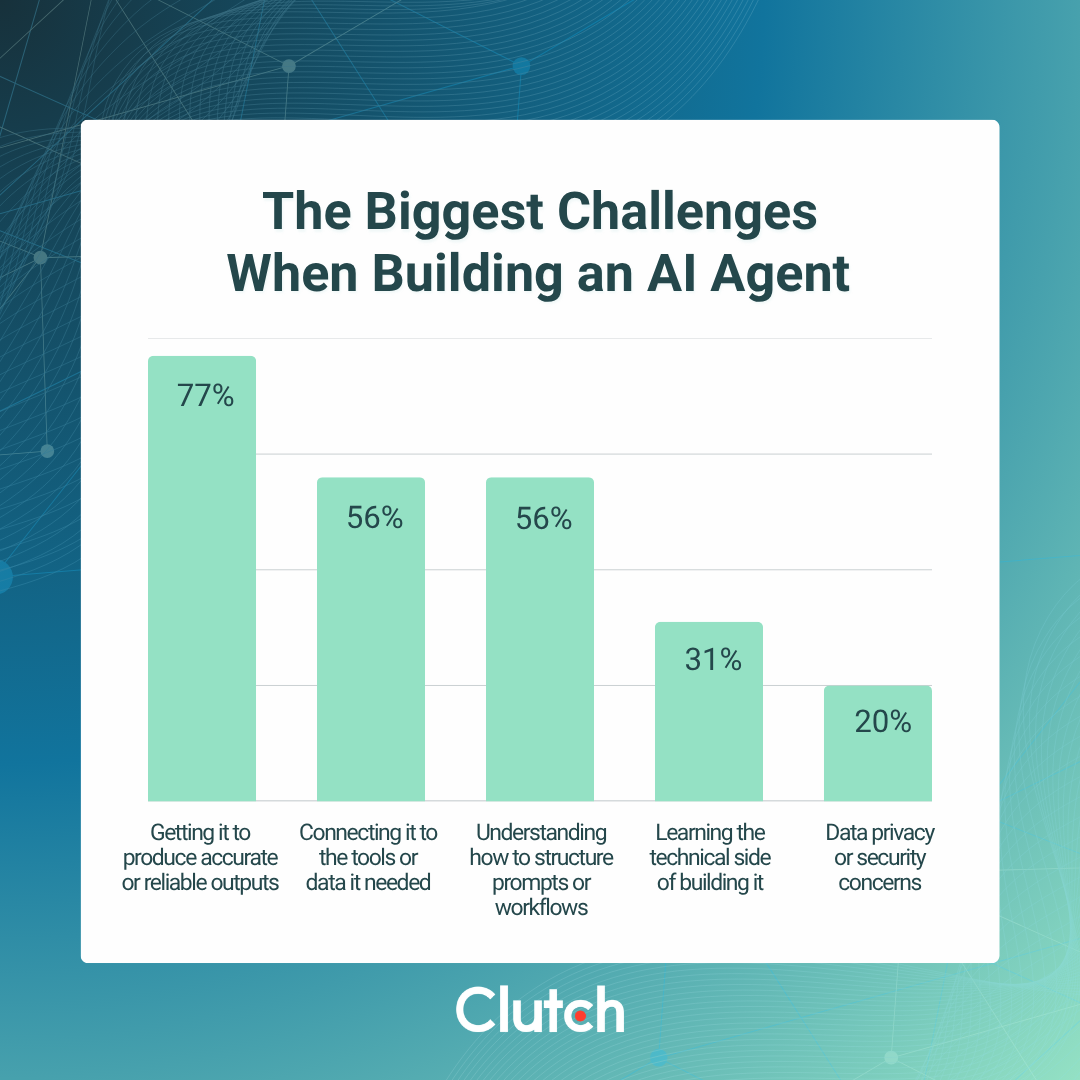
The biggest challenges were getting their agent to produce accurate or reliable outputs (77%), connecting it with existing tools and data (56%), and understanding how to structure the workflow (56%).
Workers don't necessarily need to know exactly what they're doing before they start. They can start with a problem, experiment with different approaches, and refine the agent until it works properly.
Ultimately, the ability to build an AI agent is becoming less about having specialized expertise and more about being willing to experiment and learn along the way.
Many companies may assume that their most experienced employees drive automation, but more than half (57%) of employees who have built their own AI agents are individual contributors.
This suggests that employees are recognizing opportunities to use AI agents within their own workflows and taking the initiative to build solutions themselves. Rather than waiting for their employer to identify an AI use case or provide an approved tool, they're experimenting with agents to automate repetitive tasks, streamline processes, and save time on everyday work.
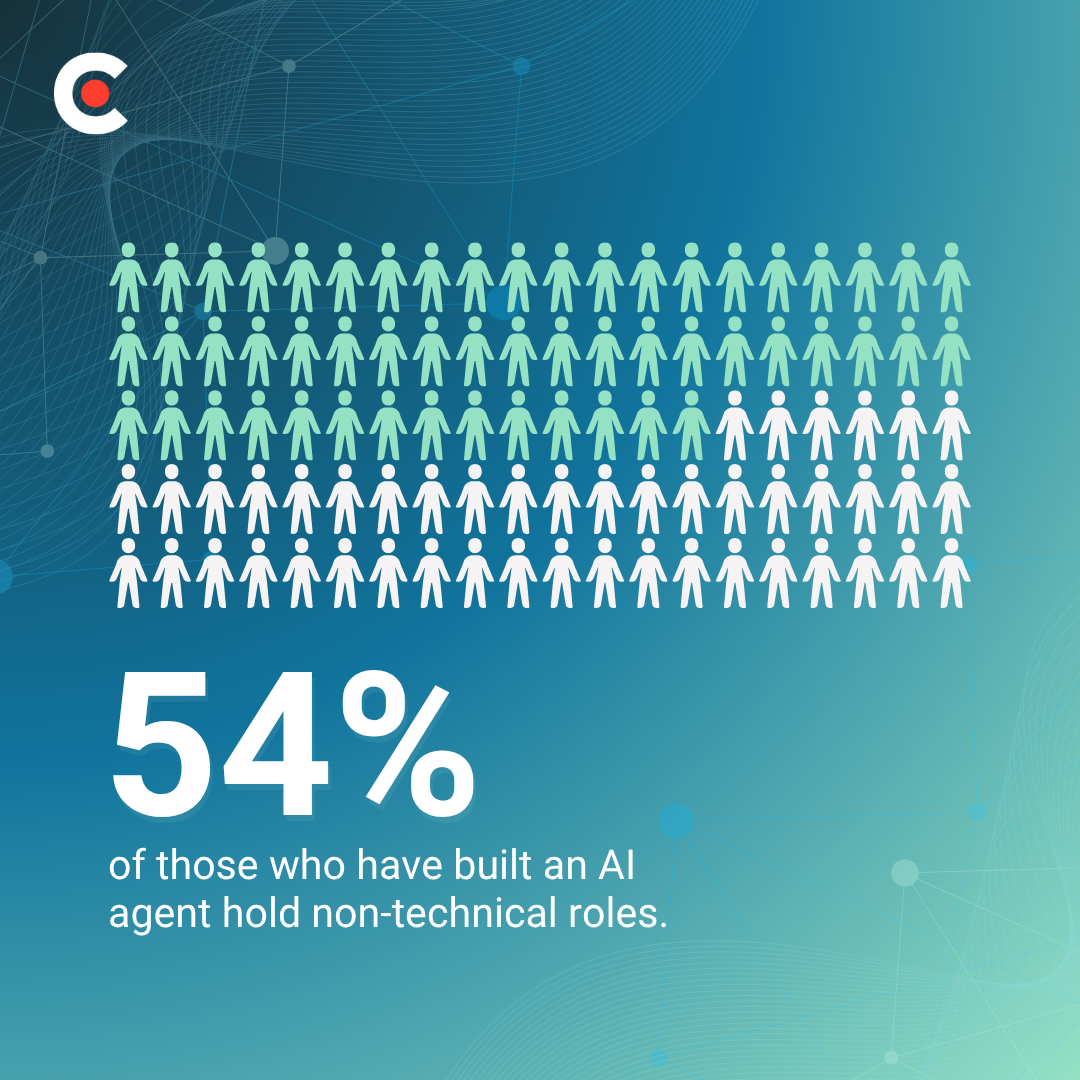
And this pattern extends well beyond technical teams. Fifty-four percent (54%) of those who have built an AI agent hold non-technical roles. Thanks to AI tools like Microsoft 365 Copilot Agent Builder, workers don't necessarily need development experience to identify where an agent could improve their work and put one into practice.
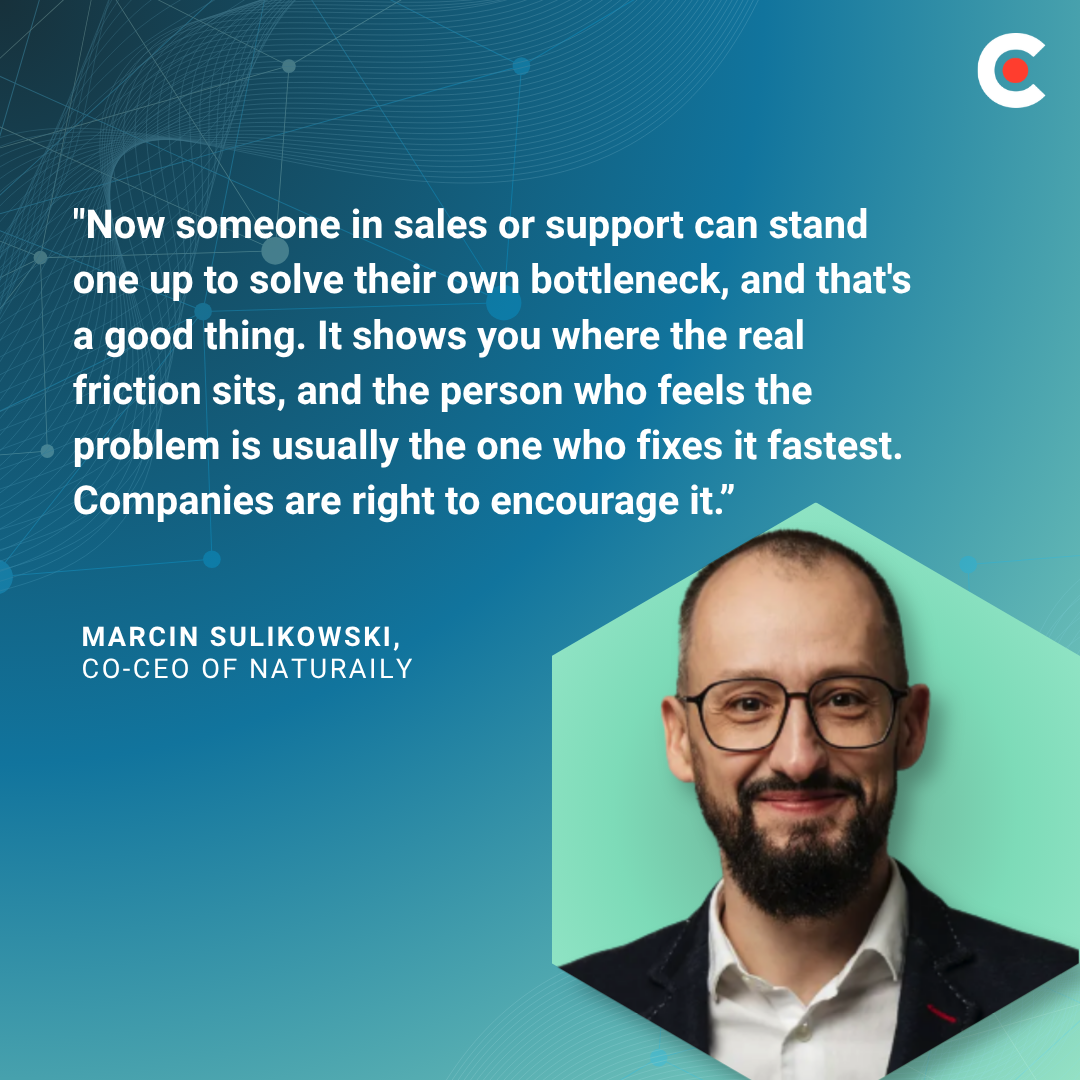
“Not long ago, building an agent meant pulling in a dev team. Now someone in sales or support can stand one up to solve their own bottleneck, and that's a good thing,” says Marcin Sulikowski, Co-CEO of Naturaily. “It shows you where the real friction sits, and the person who feels the problem is usually the one who fixes it fastest. Companies are right to encourage it.”
Marketing teams are a perfect example of how non-technical teams can build their own AI agents to optimize their workflows. In fact, marketing employees are the second-most likely group to build their own AI agents (29%), behind IT and operations (32%). They can use AI agents to monitor competitors, automate reporting, and conduct content research, freeing up time for more strategic work such as campaign development and content creation.
While AI agents can make teams more efficient, organizations need to ensure employees have the training to use them effectively and responsibly. Understanding what employees are building can help businesses establish appropriate guardrails, identify potential risks, and scale successful solutions across the organization.
Most workers decided to build their AI agent to automate a repetitive task (78%). This makes sense because agentic AI is well-suited for structured, repeatable workflows. Instead of spending time on the same tedious tasks over and over, workers can use an agent to handle them automatically and free up time for work that requires more creativity or judgment.
An agent isn't necessarily useful for a one-off task, but its ability to repeat a process with minimal intervention is extremely valuable for workers who spend much of their time on just a few tasks.
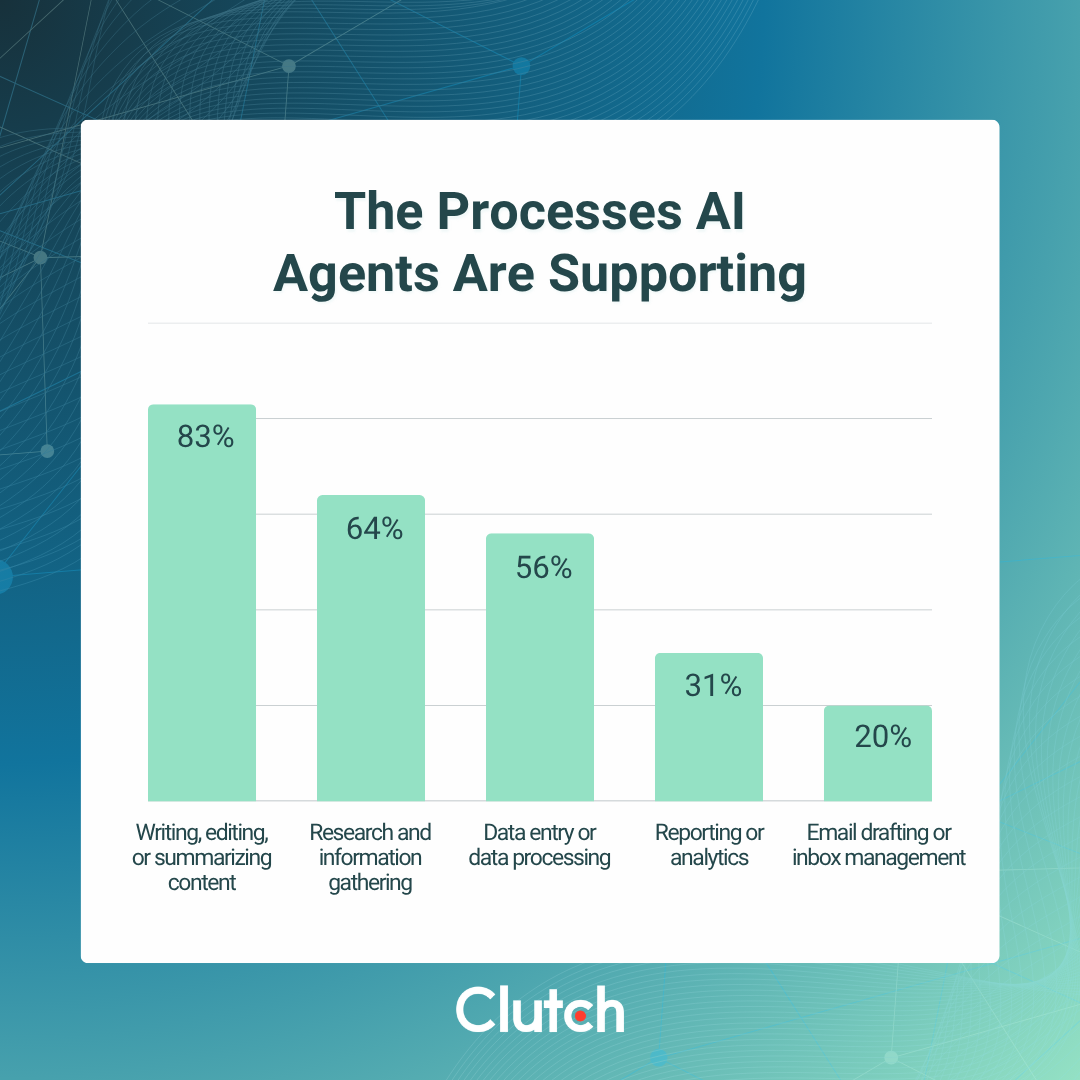
That’s reflected in how workers are using their agents. The most common use is writing or summarizing content (83%), followed by gathering research (64%) and data entry or processing (56%). These are all tasks that workers may need to perform repeatedly, making them great candidates for automation.
More importantly, though, 88% of the AI agents built are client-facing. Sometimes, that agent is for the customer, completing tasks such as researching information or processing a request. Other times, it can help workers produce deliverables for a client, such as generating a report or drafting responses to client emails.
Both, however, can have a significant impact on the customer experience. While AI agents can reduce turnaround times and help companies scale to meet customer demand, faster service doesn’t automatically translate to greater customer satisfaction.
Companies need to make sure their agents actually improve the customer experience, protect consumer privacy, and handle requests appropriately. And when an agent can’t provide the right answer or a customer wants human help, there should always be an easy path to a person.
For those who have invested in building their own AI agent, the work has paid off. Nearly all (94%) are confident that their AI agent is operating correctly, and 90% say their agent saves them several hours of work each week.
The biggest benefit is speed. Eight in 10 (80%) say their AI agent helps them complete tasks faster, while 58% say it allows them to increase their output. And speed isn’t impacting the quality of their work: nearly half (49%) also report fewer errors.
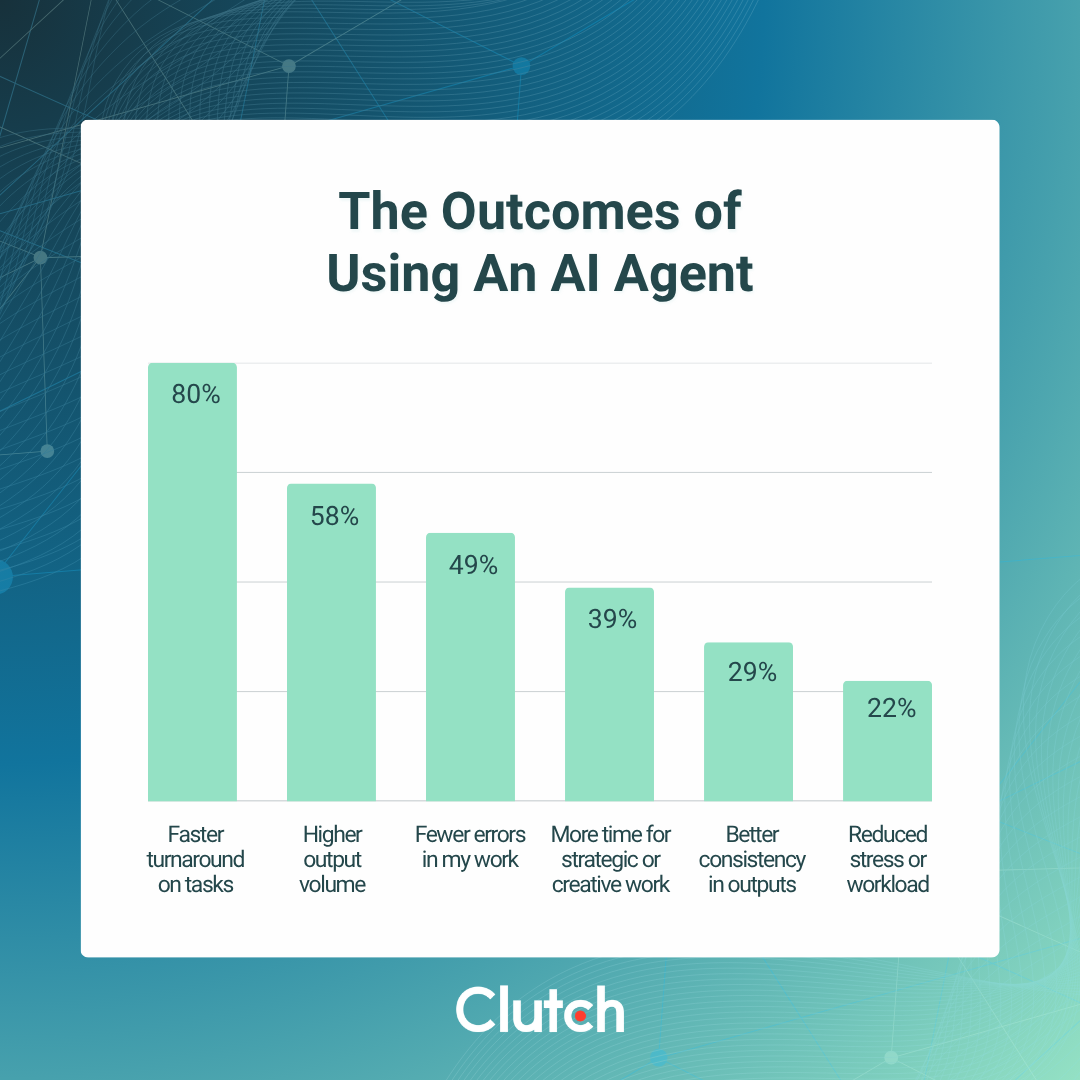
The benefits extend beyond productivity, too. 39% say their agent gives them more time for strategic or creative work, while 29% say it helps them produce more consistent output. Another 22% report reduced stress or workload.
And these benefits aren't going unnoticed by employers. Nine in 10 (90%) respondents say their employer has asked them to share, scale, or document their agent for broader use. What starts as one employee experimenting with a solution to their own workflow can quickly become a tool the wider organization wants to adopt.
As with any AI technology, AI agents come with risks. Those risks can be harder to spot when an employee with limited technical experience builds an agent on their own. Without formal development support or regular oversight, an organization may not know exactly how the agent works, what it has access to, or what happens when something goes wrong. And if no one is actively monitoring it, a problem could go unnoticed until it affects a customer or disrupts a business process.
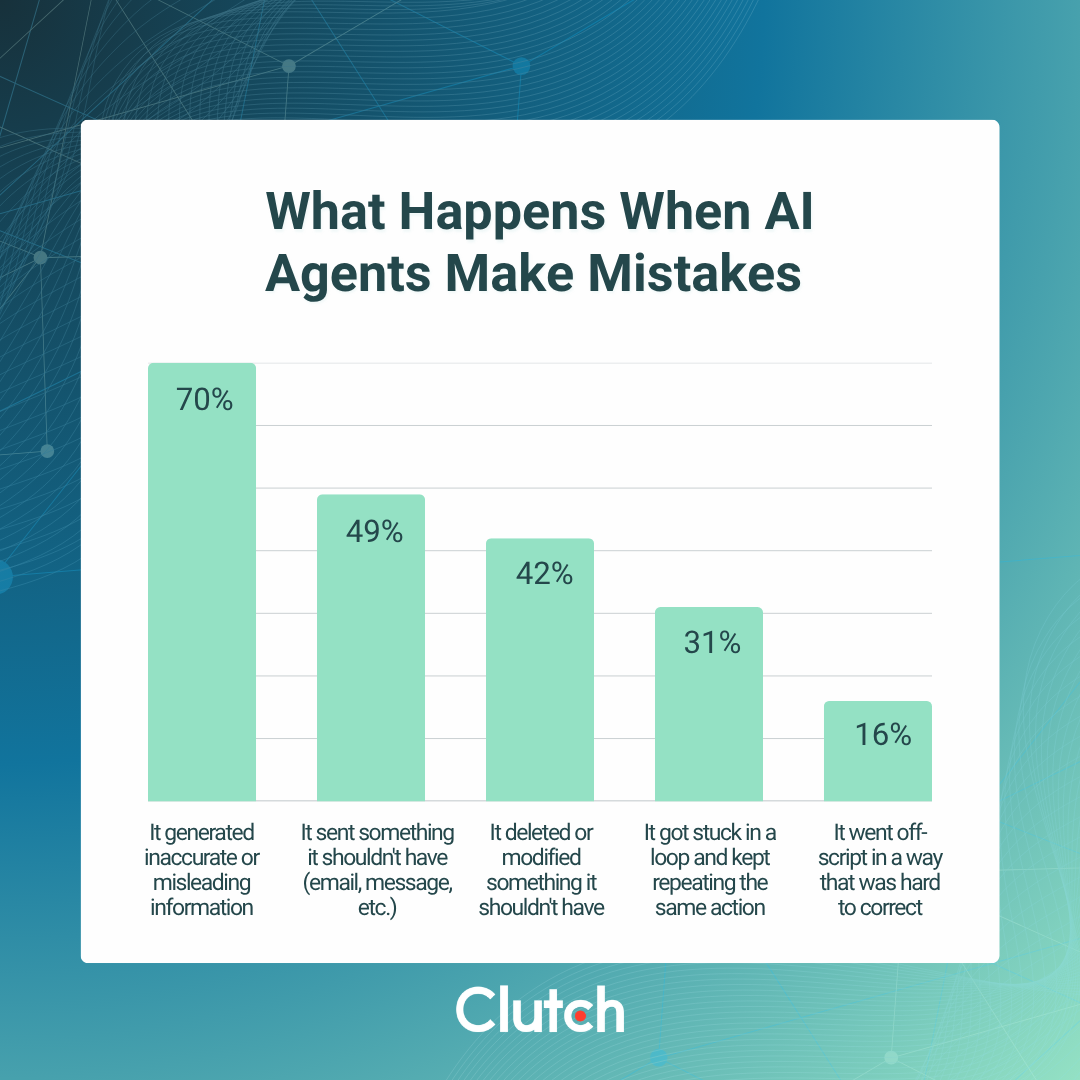
Most workers (95%) have encountered problems with their agents. Seven in 10 (70%) say their agent has generated inaccurate or misleading information. Nearly half (49%) have had an agent send something it shouldn't have, such as an email or message, while 42% say an agent has deleted or modified something it shouldn't have.
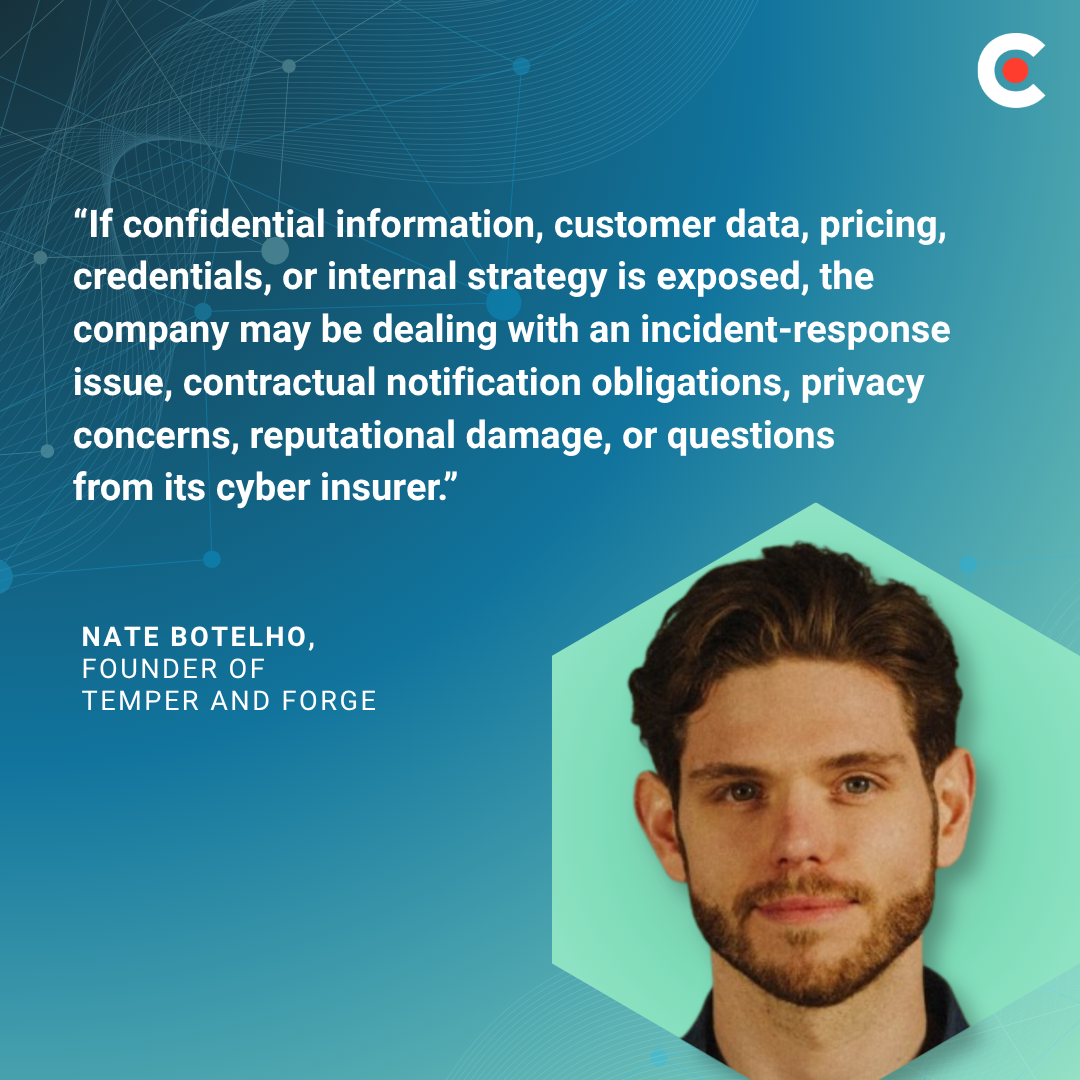
These risks become particularly important when an agent is client-facing. “When an AI agent sends something externally that it shouldn’t have, the fallout can extend well beyond an embarrassing email,” warned Nate Botelho, Founder of Temper And Forge. “If confidential information, customer data, pricing, credentials, or internal strategy is exposed, the company may be dealing with an incident-response issue, contractual notification obligations, privacy concerns, reputational damage, or questions from its cyber insurer.”
To protect their businesses organizations need visibility into the agents employees are building, even when those agents started as individual experiments. “That is why organizations should distinguish between agents that assist employees and agents that are authorized to act on behalf of the business. The closer an agent gets to external communications, financial transactions, customer systems, or sensitive data, the stronger the approval controls, logging, monitoring, and human oversight should become,” advised Botelho.
Clear boundaries, testing, and monitoring can help companies capture the benefits of AI agents without giving them more autonomy than they can safely handle.
One of the biggest risks associated with employee-built AI agents is what they can access and do with company data. Almost all (91%) of the agents these workers built have access to company data, including customer or client data (73%), internal documents (51%), employee or HR data (49%), and financial records (33%).
Most (74%) say they know exactly what data their AI agent touches and how. But understanding what an agent can access isn't always as straightforward as it seems. An agent connected to multiple tools or systems may have access to more information than an employee realizes, creating risks such as:
And there's evidence that these risks aren't just theoretical: 11% of workers say their AI agent has exposed or mishandled sensitive data at some point.
This is where AI policies and governance become important. Companies need clear guidelines on which data employees can use with AI agents, which systems agents can access, and when an agent needs to be reviewed or approved before it is put into use. Franchise brands face a sharper version of this problem, since franchisees sit outside HQ's direct control, which is why franchise management software increasingly limits AI to approved SOPs and role-based permissions.
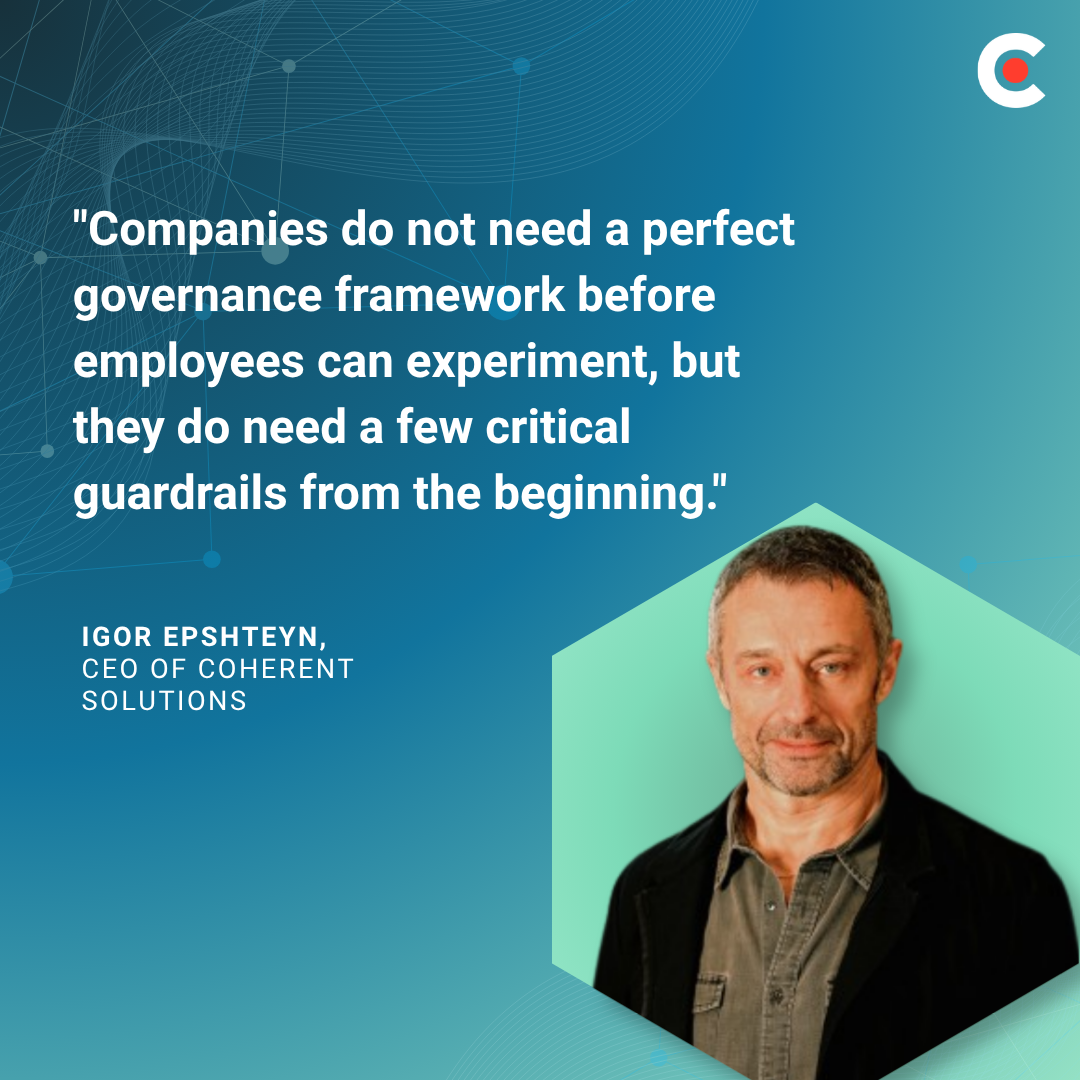
“Companies do not need a perfect governance framework before employees can experiment, but they do need a few critical guardrails from the beginning,” says Igor Epshteyn, CEO of Coherent Solutions. “For example, an agent can be allowed to draft an email or Slack response without being permitted to send it — preserving much of the productivity benefit while keeping consequential actions under human control.
That allows employees to experiment with AI while giving companies greater visibility and control over how their data is being used.
Not every AI agent needs a developer. But some do, and knowing the difference matters.
“Building a working agent prototype is easy now,” says Hammad Maqbool, AI & LLM Engineering Lead at Phaedra Solutions. “Making it reliable, secure, and maintainable once it’s in production is the hard part.”

Employees can reasonably prototype internal, low-risk, reversible tasks. But expert review becomes important when an agent accesses sensitive data, communicates with customers, changes business systems, contributes to regulated decisions, or operates independently. Maqbool’s rule of thumb is simple: “Prototype it yourself, but seek expert review before giving an agent production data, external communication rights, or decision-making authority.”
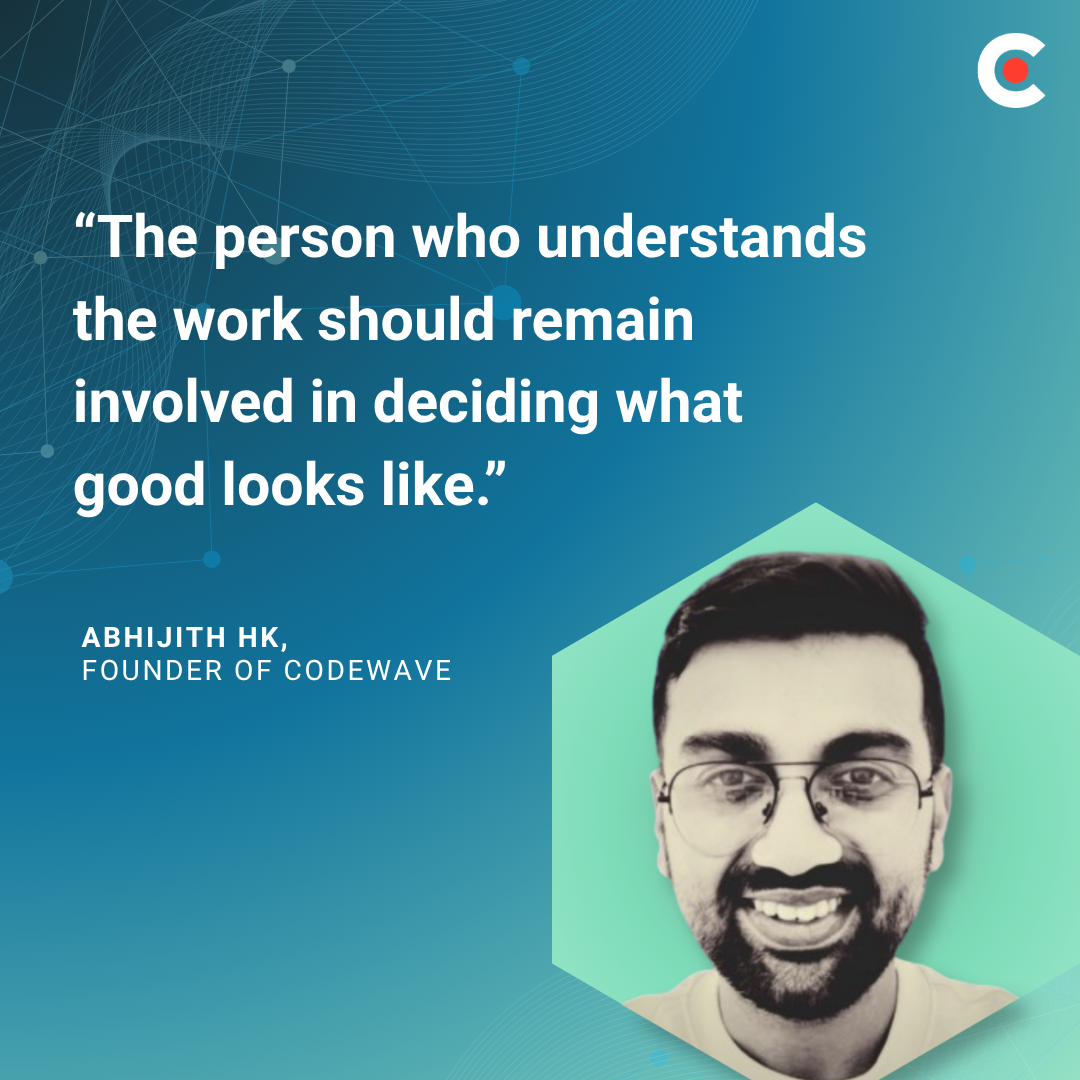
The need for expert involvement depends on what an agent can access and what could happen if it fails. Experts can help assess permissions, failure cases, and recovery options while keeping employees involved in defining what good looks like. “Experts should help examine permissions, failure cases and recovery, but they should strengthen what employees build rather than take the problem away from them,” advises Abhijith HK-, Founder of Codewave, “The person who understands the work should remain involved in deciding what good looks like.”
Codewave, for example, developed a marketing outreach agent that initially required human approval for every generated email. Abhijith fed his edits and reasoning back into the system, gradually increasing automation as outputs improved. “I only automate sending after we’ve seen consistently good outputs over time.”
This graduated approach reflects a broader principle: autonomy isn’t all-or-nothing. Low-risk, reversible tasks may eventually require little oversight, while high-stakes actions need tighter guardrails. When mistakes could affect customers, expose sensitive data, or commit the business to something, expert involvement becomes essential.
Search for industry-leading AI development companies on Clutch.
Many workers are identifying problems with their workflows and are building their own AI agents to solve them. And most are seeing real productivity gains as a result. For many companies, that’s a huge opportunity, but it also introduces new risks.
Companies need clear policies around data access, agent permissions, output review, and which agents can interact with customers or clients without approval. They also need visibility into the AI agents employees are building, rather than assuming that company-approved tools are the only ones being used at work. At some point, they may need to hire external providers as well.
The companies that get this right will give employees room to innovate while putting the guardrails in place to protect company data, customers, and the business. That’s how organizations can capture the efficiency gains of employee-driven agentic AI without letting experimentation create unnecessary risk.
Clutch surveyed 1141 full-time workers in September 2026 using the polling site SurveyMonkey. 733 had built an AI agent. All respondents were based in the United States between the ages 18-99; 48% were male and 52% were female.
Participants were asked a series of multiple-choice and single-selection questions about their experience building an AI agent. All respondents were required to complete the survey in full to be included in the final analysis.