Testimonial Advertising: How to Turn Customer Stories Into Sales
Testimonial advertising uses real customer stories and reviews to promote your brand. Discover popular types and how to put this content to work.
Updated September 30, 2026

The best OOH advertising examples do one thing well: they make people stop. Apple turned customer photos into billboards. KitKat swapped smartphones for chocolate bars and won the 2025 Cannes Lions Outdoor Grand Prix. McDonald's built a billboard that handed out free McFlurries. Below are 11 out-of-home campaigns, what each one did, and what your brand can borrow from them.
The stakes are real. U.S. OOH ad revenue hit a record $9.46 billion in 2025, up 3.6% year over year, and digital OOH now makes up 36.3% of that spend, according to the Out of Home Advertising Association of America (OAAA). But more spend doesn't mean more attention. A Clutch survey of 453 consumers found that 43% encounter OOH ads, yet less than 1% pay attention to them. The campaigns below are the exceptions.
OOH advertising, or in some markets, outdoor advertising, refers to advertising that reaches consumers outside of their homes. Think about a major billboard in Times Square for the latest superhero movie or a CoverGirl ad displayed at a shopping mall kiosk. That is OOH advertising at work. OOH ads can help target consumers when they're stuck in traffic or commuting on public transportation from work. Compared to other media channels, OOH advertising produces the highest levels of consumer recall, along with being unskippable.
Looking for a Advertising agency?
Compare our list of top Advertising companies near you
Small businesses can use these tactics too. Programmatic buying of OOH ads has made real-time purchasing possible for companies of all sizes. If you're still deciding whether the channel fits, read our take on whether OOH advertising is still worth it.
| Brand | Year | Format | Market | Result |
| Apple, Shot on iPhone | 2015 onward | Billboards, UGC | Global | Long-running campaign, strong social engagement |
| Bumble | 2020 | Digital billboards | U.S. | Nearly 60M impressions |
| Compassion in World Farming | 2010 | Transit (bus ads) | U.K. | Fueled public debate on mega-dairies |
| Samsung at SoFi Stadium | 2020 onward | Venue DOOH | Los Angeles | 70,000 sq ft screen |
| Coca-Cola | 2016 | Interactive bus shelters | Singapore | Strong voucher redemption |
| Spotify Wrapped | 2022 | Gamified DOOH | Global | High social visibility |
| McDonald's | 2021 | Experiential billboard | London | Free McFlurries from a billboard |
| KitKat, Phone Break | 2025 | Billboards, transit | Czech Republic | Cannes Lions Outdoor Grand Prix |
| Guinness | 2023-24 | Weather-triggered DOOH | Australia | 18% revenue lift, 15% more pub foot traffic |
| Mad Mex | 2024 | Programmatic DOOH | Australia | 9% sales increase |
| Disney+, Percy Jackson | 2025 | 4D water billboard | Hollywood | Viral social reach |
Apple’s Shot on iPhone billboards are a clear example of an out-of-home ad.
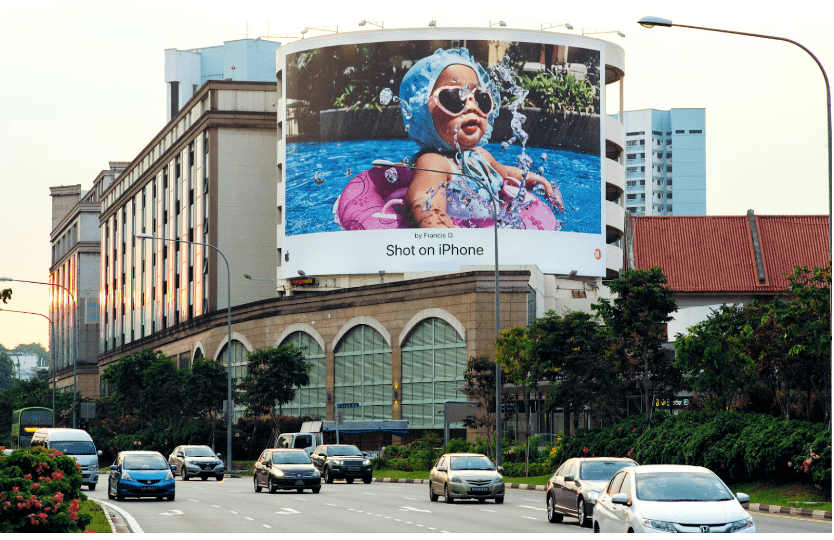
These campaigns are designed to capture universal images that appeal to anyone with an iPhone, particularly with the interactive element of featuring real-world customers in the images. Users around the world can submit their own photos with a chance of being selected. This originally started as a digital marketing campaign before evolving into an OOH ad tactic.
By showcasing a select few in eye-catching billboards, Apple is encouraging consumers to submit their own content when purchasing an iPhone that can capture visually stunning images.
According to Apple, the campaign helped achieve a brand retention rate of up to 90%, strong social engagement, and significant media impressions.
If a brand wants to replicate this kind of campaign, they should focus on leveraging their customers as creators, optimize for authenticity, and look for ways to measure beyond immediate sales.
Takeaway: Turn customers into creators, optimize for authenticity, and measure beyond immediate sales.
Finding ways to build connections was a common theme across all demographics in 2020, particularly during the COVID-19 pandemic.
Bumble, the dating app, created a series of digital billboards as an ad for their service.
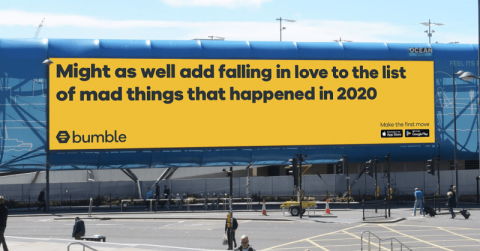
With the bright yellow background, the billboards also tied their message with a current event that created a quick connection with audiences. This kind of humor felt empathetic and authentic, not tone deaf, by helping to acknowledge the shared weirdness of 2020, making Bumble feel more human and relatable.
The campaign capitalized on a collective emotional moment: isolation, lockdown, and the desire for human connection. That emotional grounding increases the campaign’s resonance.
Bumble’s campaign generated nearly 60 million impressions across the US, driving a spike in app usage where the campaign was run.
For brands looking to replicate this campaign, consider messaging that is both timely and human-centered, yet bold.
Takeaway: Messaging that is timely, human-centered, and bold travels further than a product pitch.
In 2010, Compassionate in World Farming’s ‘Cows Belong in Fields’ campaign took over buses all over the United Kingdom.
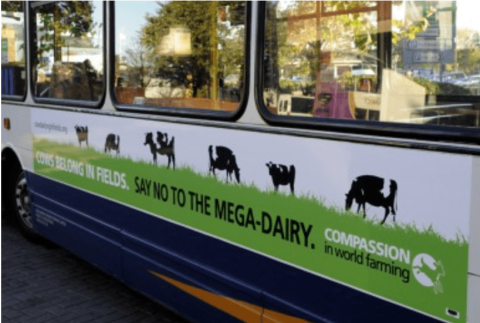
The ads were run to encourage consumers to take action against mega-dairy, alerting them to donate and contact their representatives. While your business likely isn’t raising for a cause, transit ads are a great way to get the word out in a form of advertising.
On the policy front, their argument contributed to public debate, and their ongoing work has had expanded media coverage.
Businesses can find ways to map their advertising to a real issue in order to leverage credibility.
Takeaway: Tie your advertising to a real issue your audience cares about to build credibility.
Hosted in SoFi Stadium, the digital display is a product of Samsung. The Infinity Display is a prime example of digital OOH.
It is the largest digital sports signage seen in outdoor media. The system is a great promotion for Samsung products, as well as a good way for other companies to get involved in digital out-of-home advertising with their own ad formats. DOOH advertising only works if eyes are on the product; what better way than advertising at a stadium?
Brands can achieve a similar effect by creating immersive campaigns that generate buzz.
Takeaway: Immersive placements in high-attention venues generate buzz that a roadside board can't.
In 2016, Coca Cola explored interactivity at bus shelters in Singapore with their ‘Taste the Feeling’ ad campaigns.
In partnership with Clear Channel, the outdoor campaigns allowed passers to create GIFs using a series of Coke filters. After posing for photos, users were then granted a reward – a QR code voucher for a free Coke.
Clear Channel noted heightened engagement levels at these bus shelters on social media, as well as high voucher redemption rates.
This is a clear example of how businesses can utilize innovation in out-of-home media. Make interactivity simple, fun, and highly visual.
Takeaway: Give people a reason to interact, then reward them with something they can redeem.
Spotify Wrapped is a popular seasonal campaign that pops up on social media. In 2022, Spotify introduced gamified billboard advertising.
With different digital screens in various ad spaces, Spotify used data from their listeners to use playful insights for their advertising media.
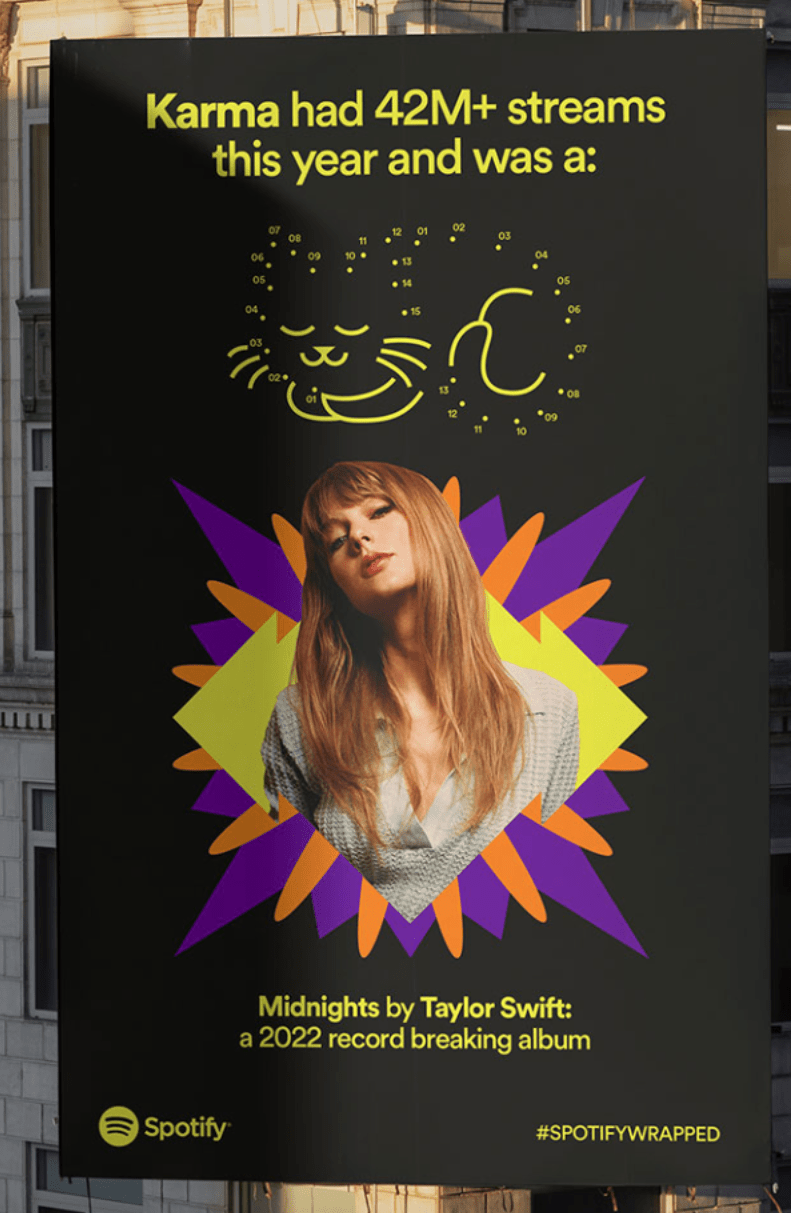
Other boards used games like fill-in-the-blanks and word searches to encourage passers to find out more information about listeners all over the globe.
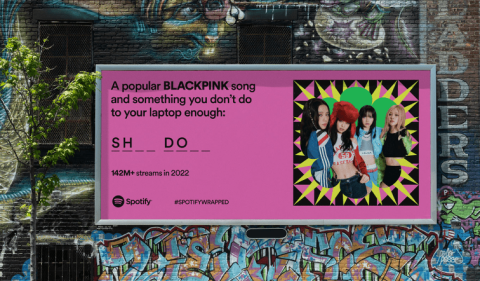
This DOOH campaign was a hit for the music streamer, combining eye-catching digital ads with their own data. Their ad revenue in 2022 increased by 19% year over year, alongside a rise in brand recognition.
Brands can find inexpensive ways to gamify their OOH advertising by incorporating simple games or quizzes.
Takeaway: First-party data makes great creative. Use what you know about customers to spark curiosity.
McDonald's is considered one of the founders of innovative OOH advertising.
In August 2021, McDonald's and Leo Burnett London installed a "walk-thru" billboard on London's South Bank that handed free McFlurries to people passing by. The pop-up ran for one weekend and tied into the brand's lighthearted "Fancy a McDonald's?" platform.
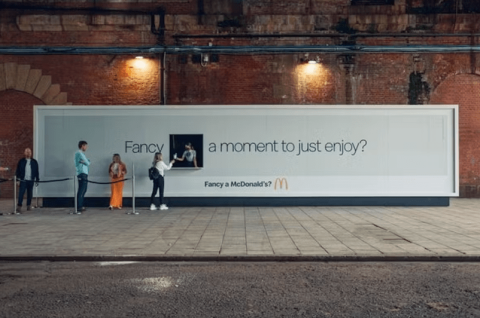
Takeaway: The most memorable billboards deliver the product, not just the message.
KitKat's "Phone Break" campaign won the Grand Prix for Outdoor at Cannes Lions 2025. Created by VML Czechia, the billboards, subway ads, and print placements replaced smartphones in everyday scenes with KitKat bars, which share the same oblong shape.
The ads had no headline and no slogan. The visual did all the work, pushing people to put their phones down and take a real break.
Takeaway: If your product has an instantly recognizable shape, you might not need copy at all.
Guinness in Australia ran "The Guinness Brewery of Meteorology," a digital OOH campaign that only served ads when the temperature dropped. Cold weather is Guinness weather, so the brand showed up exactly when people wanted a stout.
According to Vistar Media, the campaign drove an 18% year-over-year revenue increase, a 15% uplift in pub foot traffic, and a 17% increase in brand power.
Takeaway: Real-time triggers like weather, time of day, or live scores make DOOH feel relevant instead of random.
Mad Mex, an Australian fast-casual chain, used its own store-level sales data to trigger programmatic DOOH ads when and where its audience was most likely to buy. Creative changed by location, highlighting taste, health, or value based on what drove sales at each store.
The campaign reached 2.9 million consumers and delivered a 9% sales increase, according to Vistar Media.
Takeaway: You don't need a global budget. Programmatic OOH lets regional brands target by store, daypart, and message. Compare programmatic advertising companies to get started.
To promote season two of "Percy Jackson and the Olympians," Disney+ installed a 4D billboard at Hollywood and Vine in December 2025. The screen was paired with a working water tank, so on-screen waves and a giant tentacle appeared to crash through, spilling real water into a catch pool below.
The stunt spread quickly across social media over its launch weekend.
Takeaway: Physical effects turn a billboard into content people film and share.
OOH advertising supports the full sales funnel, guiding customers from awareness to consideration and action.
Like other types of advertising, OOH advertising provides brands with an opportunity to convey powerful messages to consumers. Here are a few benefits of launching OOH campaigns for businesses:
Together, these benefits make OOH a powerful advertising tool for building awareness, driving engagement, and generating cultural impact.
OOH ads can take different forms. Some popular ones include:
By leveraging this mix of formats, brands can tailor their message to the moment and create memorable experiences.
Innovative OOH advertising goes beyond traditional billboards, embracing formats that surprise, engage, and immerse audiences in unexpected ways. Experiential marketing plays a crucial role in this evolution by creating interactive, real-world brand experiences that invite participation and foster emotional connection. These experiences often extend their reach through social sharing, turning physical encounters into amplified digital conversations.
Another powerful approach is guerrilla marketing, which leverages unconventional placements and bold creativity to disrupt everyday environments. Often categorized as ambient media, these executions integrate seamlessly into their surroundings while delivering a surprising brand message.
Brands can also explore high-impact formats, such as large-scale wallscapes, mobile billboard activations, and targeted place-based media.
Together, these innovative OOH formats provide a diverse toolkit for building awareness, engagement, and lasting brand impressions.
Programmatic DOOH (pDOOH) transforms digital out-of-home advertising by automating the buying and selling of ad space through data-driven platforms. By combining technology with real-time audience measurement, pDOOH enables advanced geotargeting, ensuring ads are delivered to specific demographics at precise locations and times of day. This approach allows brands to move beyond broad reach and instead focus on more relevant, context-aware location-based advertising.
Using geolocation data and geofencing, pDOOH connects messaging to real-world movement patterns, reaching consumers where they are. Additionally, DOOH supports dynamic creatives that can be updated instantly based on live triggers like local events or traffic levels. This real-time action increases relevance, responsiveness, and overall campaign effectiveness by aligning the message with the moment.
Successful OOH campaigns begin with thoughtful media planning and a clearly defined location strategy. Placing ads in environments where the target audience naturally lives, works, or travels increases visibility and relevance, especially given the viewer's limited attention span. Strategic placement ensures the message is seen quickly and frequently, maximizing impact within brief exposure moments.
Equally important is understanding and complying with local regulations and zoning laws, which can vary widely by city or region and directly affect available formats and placements. OOH is most powerful when integrated into a broader omnichannel marketing strategy, serving as the most effective offline medium for driving online activity. When planned holistically alongside digital and social channels, OOH reinforces messaging, boosts recall, and strengthens overall campaign performance.
Effective OOH design starts with understanding the brief viewing window in which audiences encounter the message. Whether seen from a moving vehicle or across a busy street, OOH ads often have only a few seconds to make an impression. This reality makes concise messaging essential.
A proven guideline for achieving this clarity is the seven-word-or-less rule. Limiting copy ensures instant readability and comprehension, even at a distance or at speed. Strong typography paired with bold, high-contrast visuals and colors improves legibility across varying viewing distance conditions, helping the message stand out in visually crowded environments and remain easy to process at a glance.
Finally, effective OOH creative should guide audiences toward a clear next step. A simple and direct CTA (a short URL or QR code, for example) bridges the gap between offline exposure and online engagement. By keeping the CTA as streamlined as the message itself, brands can maximize recall, interaction, and impact long after the moment of exposure has passed.
Measuring the effectiveness of OOH has traditionally been a challenge, particularly for static formats where direct response is harder to track. However, KPIs like ROI help frame OOH's value. Metrics such as impressions and CPM also provide standardized ways to evaluate reach and compare cost-effectiveness against other media channels.
For DOOH, modern measurement techniques have significantly improved transparency and accountability.
Out-of-home advertising continues to expand as more and more companies choose to invest in their brand’s reach. OOH marketing campaigns capture the attention of customers as they go about their everyday routines - does your service need to be at the forefront of their minds when waiting at the bus stop? Businesses need to consider their own products, budget, and company mission before investigating OHH ad opportunities to ensure they are a good fit for their marketing strategies.
Explore OOH advertising agencies on Clutch by filtering through verified reviews.
A billboard is the most common example of OOH advertising. Other examples include bus wraps, airport screens, mall kiosks, and bus shelter ads. Apple's Shot on iPhone billboards and McDonald's walk-thru billboard are two well-known campaigns.
OOH covers all advertising outside the home, including static print billboards. DOOH (digital out-of-home) uses digital screens, so ads can change in real time based on weather, time of day, or audience data. DOOH made up 36.3% of U.S. OOH revenue in 2025, according to the OAAA.
Yes. Programmatic DOOH lets businesses buy screen time by location and hour instead of committing to a month-long billboard. Mad Mex used this approach to target individual store areas and grow sales 9%.
It can be, but only with strong creative. U.S. OOH revenue hit a record $9.46 billion in 2025, yet Clutch's survey found less than 1% of consumers pay close attention to OOH ads. Campaigns that interact, surprise, or use real-time data are the ones that break through.
OOH is getting smarter, not smaller. The winners from the past two years share a pattern: they use data to show up at the right moment, or they create something physical people want to film. Expect more weather- and location-triggered DOOH, more 3D and 4D installations, and tighter links between billboard impressions and store visits.
Before you invest, evaluate whether OOH fits your products, budget, and company mission. If it does, find a partner who knows the local media landscape. Browse OOH advertising agencies and OOH media buying companies on Clutch, filtered by verified client reviews.