
Testimonial Advertising: How to Turn Customer Stories Into Sales
Testimonial advertising uses real customer stories and reviews to promote your brand. Discover popular types and how to put this content to work.
Updated April 24, 2026

Effective advertising is crucial in enticing consumers to choose your product or service. Nonetheless, choosing the right advertising approach that aligns with your objectives and considers the existing consumer awareness about your offering is vital. Learn popular examples of product advertising.
Whether you're a small business, a renowned brand, or a popular figure, spreading the word about your offerings is essential. Relying solely on a reputable name or a visually appealing social media presence is insufficient.
This article looks into seven highly successful examples of product advertising, analyzing their strategies and outcomes.
Looking for a Advertising agency?
Compare our list of top Advertising companies near you
Product advertising encompasses various forms of communication intended to persuade customers to purchase a particular product. Its primary objective is to enhance brand recognition and highlight differentiating factors compared to competitors.
Product advertising seeks to generate demand by raising consumer awareness about a specific product and stimulating their interest in it. Moreover, it endeavors to prompt swift purchase decisions through product visibility.
For instance, a jewelry company might employ paid advertisements to showcase individual items, enticing customers to click the ad and place an order.
Here are some of the benefits of using product advertising:
On her album “Cowboy Carter,” Beyonce has a track titled “Levi Jeans,” which connected directly to her brand partnership with Levi’s. Along with a collection of classic denim, Levi’s released several retro-inspired shorts that blended heritage denim visuals with star power.

For product launches, leveraging a star or cultural figure plus narrative advertising can elevate perception and expand reach. It is important to keep in mind that the collaboration must feel authentic to the product.
In the competitive landscape of the shoe manufacturing industry, it becomes crucial to devise creative advertisements to distinguish oneself. Adidas, recognizing this, has consistently demonstrated its expertise in this area. In one notable instance, Adidas showcased the involvement of robots in their manufacturing process, providing an entertaining and intriguing glimpse into the behind-the-scenes operations.
This innovative approach captivated audiences and shed light on the intricate details of their manufacturing processes.
Ads that educate while entertain create deeper engagement. By emulating similar strategies, businesses in various industries can craft advertising campaigns that not only showcase products, but also highlight innovation and transparency, which is important for brands.
In May 2025, Billie, the bodycare brand, launched a new poster campaign in New York City, with a twist.
The activation highlights their “All Day” deodorant and invites the most inquisitive to decide for themselves by “sniffing armpits.”

Instead of just seeing the ad, people are encouraged to engage physically in an odd way. This also creates the opportunity for buzz for the brands.
For a new product, it might be time to lean into an unconventional experience that aligns with your product’s promise while inviting user interaction.
Using color and movement is a great tactic for companies looking to attract buyers. For example, Amazon Alexa released a fun and engaging ad to promote their latest Echo Dot product.
The ad shows the Alexa product in various locations, completing different tasks and engaging with outside forces that might negatively impact other voice control systems. With vibrant sound and imagery, Amazon communicates the power of its latest Alexa product.
By using dynamic sequences, animated elements, or real-time interactions, companies can make their products feel lively and engaging, which increases the likelihood of viewers remembering the ad.
Businesses can transform standard product advertisements into memorable, multi-sensory campaigns that emphasize functionality and actively engage their audience.
Some product advertising campaigns connect to moments. In February 2025 and in honoring of Black History Month, RareBeauty launched the “I See You” campaign that focused on the represention of Black women with portrait photography showing the company’s makeup.
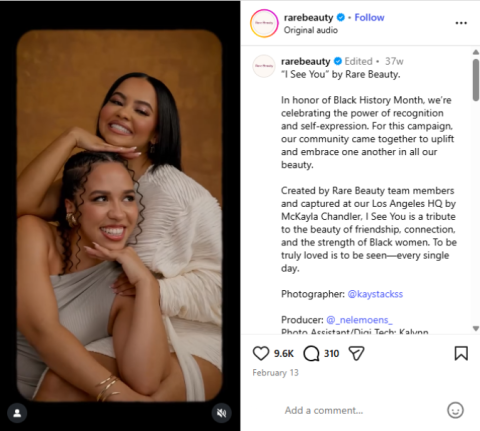
While not strictly about a specific product, this ad campaign shows how you can launch a “campaign” around a brand value.
Buy less, demand more. In their 2020 ad, Patagonia encourages their target audience to think about the impact that their buying patterns have on the world.
Through dynamic visuals, powerful messaging, and striking statistics, the company positioned itself as a brand that values sustainability over mass consumption.
Rather than pushing for higher sales, Patagonia invited consumers to think critically about their own influence, turning a traditional advertising goal on its head. This approach not only reinforced Patagonia’s environmental mission but also deepened brand loyalty among conscious consumers who prioritize authenticity and purpose.
Using pop culture references to launch a product can create a moment-based relevance with your audience.

IKEA India launched an office furniture line, with a campaign styled like the TV show “Severance.” The line has stark, minimalist pieces, which ties directly to the eerie vibes of the show.
The wink to one of the most popular currently airing shows makes the campaign more than just a product push. For brands looking to mimic similar ideas, it is important to ensure the product fit and design actually match the narrative.
Here are some of the benefits of using product advertising:
Product advertising emphasizes the distinct characteristics of your product, enabling consumers to comprehend the benefits of selecting your offering over alternative options.
It highlights what makes your product unique and communicates how those qualities solve specific consumer needs or pain points. Effective product advertising not only informs, but builds connection.
Product advertising influences customer purchase choices by persuading them that your product surpasses others in quality and value. It does this by clearly showcasing key differentiators that position your product as the more rewarding choice.
Product advertising encourages consumers to make quick purchase decisions based on seeing your product and the need it satisfies. By creating a sense of urgency or emotional appeal, it connects the product directly to a consumer’s immediate desires or problems.
Strong visuals, persuasive messaging, and clear calls to action can prompt impulse buying behavior.
Successful product advertising entails conducting thorough research on your target market to discern how your product's unique benefits align with their specific needs.
This process involves analyzing consumer behavior, preferences, and pain points to craft messaging that feels both relevant and personalized.
By understanding what motivates your audience, you can tailor advertising that resonates. That ensures your product is positioned as the ideal solution.
Although product advertising is not primarily centered on brand promotion, the advertisements can enhance or reinforce a consumer's perception of the brand based on the showcased products.
Each ad serves as a reflection of the brand’s overall identity. When executed effectively, product-focused campaigns are strengthened brand image overtime.
Product advertising can help reduce incorrect perceptions and increase brand loyalty by providing accurate information about a product and its benefits.
When customers feel informed and confident about a brand, they are more likely to remain loyal, recommend the product to others, and continue choosing it over competing alternatives.

There are three main types of product advertisements. The product's stage within the product life cycle determines which type of product advertising to use. A product may be in the introduction, growth, maturity or decline stage of the product life cycle.
The three main types of product advertising are:
Comparative advertising involves comparing your product with one or more competing brands, highlighting its advantages. This approach is particularly suitable for products in the growth or maturity stages of the product life cycle. Such advertisements often emphasize specific attributes or features, directly or indirectly, to sway consumers to select your product over others. Comparative advertising facilitates logical purchase decisions by aiding consumers in comprehending their options and determining their preferences.
Competitive advertising stimulates demand for a particular brand, making it a favorable strategy for products in the growth or maturity stages of the product life cycle. These advertisements highlight the distinctive benefits and attributes that set the product apart from similar offerings by other brands. The objective of competitive advertising is to persuade audiences that the company's products surpass those of competitors in the marketplace, fostering a perception of superiority.
Pioneering advertising stimulates the initial demand for a new product, primarily employed for products in the introduction phase of the product life cycle. These advertisements comprehensively explain the product's benefits, aiming to enhance public awareness and understanding of the new offering. Pioneering advertising aims to generate widespread recognition and interest in the newly introduced product.
Advertising plays a pivotal role in driving business growth by magnifying the impact of your small business marketing endeavors. It enables you to connect with the appropriate audience through tailored and persuasive messaging, effectively converting potential customers into loyal patrons. Additionally, advertising facilitates the process of retargeting your audience, whether your objective is to enhance brand recognition or stimulate repeat business from existing customers.
Hire an advertising agency on Clutch to help with your goals.