The State of Content in the Age of AI
2026 Clutch and Conductor data reveals how marketers are adapting content strategies for AI and LLMs, from bigger budgets to new success metrics and...
Updated January 3, 2025

There’s no slowing down for the marketing trends that will continue to disrupt the entire marketing industry. We will be looking into the trends of Digital Marketing that we cannot ignore in the coming year and beyond.
The digital marketplace is highly competitive, and trends are speeding up. Marketers must take advantage of these trends to expand global business opportunities.
Business owners and marketers should know that the strategies implemented last year may not be as effective in the coming year. Update your strategies to adapt to the changing digital marketing landscape.
Looking for a Digital Marketing agency?
Compare our list of top Digital Marketing companies near you
This article outlines the 6 digital marketing trends you need to know in 2020.
Artificial intelligence (AI) is a complex form of technology that might intimidate some digital marketers. In layman's terms, we can say that artificial intelligence is a technology designed to think and work like humans.
In the past few years, marketers have grown more confident using AI because of the results it can provide. Some examples of AI benefits include chatbots, predictive consumer behavior models, and personalized experiences for users.
Artificial intelligence helps analyze consumer behavior, the pattern of the search, and use data from various platforms to help businesses to know how their customers can find their products and services.
Current search engines, for example, have improved the search experience that we now take for granted.
With AI, we can better understand the ups and downs of our businesses.
Voice searches are increasing rapidly, and businesses need to adjust their strategies. ComScore says almost 50% of searches will be by voice search in the coming years.
Voice search on devices such as Amazon Alexa and Google Home provides audio content that has all relevant information and answers to users’ questions.
One study found that 2 in 5 voice search users say voice-activated devices are essential in their lives.
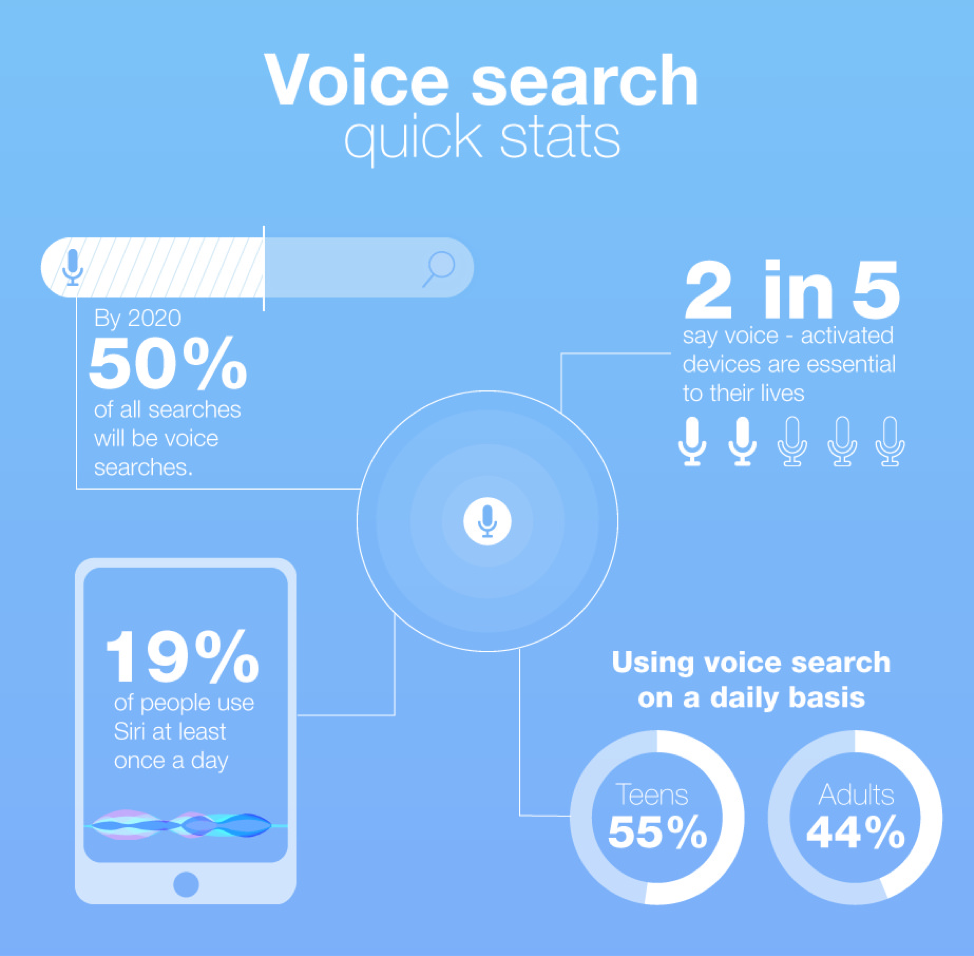
Almost one-fifth of people (19%) even say they use Siri at least once every day.
Implementing a voice search strategy into your digital marketing campaigns isn't just about being relevant – it’s also about providing a unique and optimized customer experience that will promote relationships and build brand loyalty.
Nestle, for example, provides voice cooking instructions on smart home devices as you cook. Users just need to ask their device for a recipe.
To optimize your site for voice search, first, make sure you understand your audience's search intent.
Use long-tail keywords on your website, such as “how to cook a pancake” instead of a short keyword like “pancake”.
Innovations like Amazon Echo, Google Home, Apple’s Siri, and Microsoft’s Cortana make it easy for people to perform searches by just pressing a button or saying a voice command.
Over time, errors in voice assistants like Alexa, Siri, and Google Home have decreased, making it easier for people to use these devices.
A brand that knows how to take advantage of voice search will be able to increase their organic reach to a wider audience.
Social media is almost synonymous with online marketing. People’s purchasing decisions are constantly influenced by things they see on different social platforms.
We might not realize how many people are shopping directly on social media platforms. Instagram now features in-app shopping experiences, where users can tap products in an image and be redirected to an e-commerce extension of the platform.
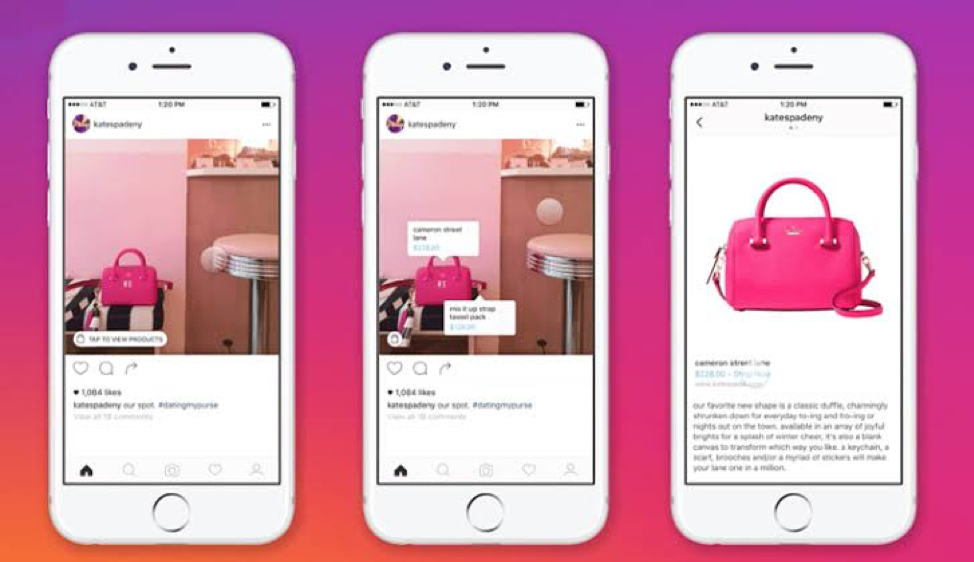
E-commerce integrations on social media help brands meet users where they spend most of their time.
Instagram, Facebook, and Pinterest, for example, have created stoppable posts for e-commerce stores which make it easy to tag and shop their products directly from the post.
We expect shoppable posts to become the norm in 2020. They are a great way to drive traffic towards your product page.
Augmented reality (AR) and virtual reality (VR) are among the top digital marketing trends forecasters predict for 2020.
According to Statista, the AR/VR market is forecasted to hit $18 billion in value in 2020, with consumer purchases accounting for many AR/VR sales and investments.
Augmented reality has transformed retail experiences for customers. IKEA, for example, uses AR to help customers to see what piece of furniture suits their place before purchasing.
Google is constantly working to make its products easier and simpler for its consumers with automation. Google Ads' Smart Bidding automates ad buying, bringing big changes to digital marketing.
Manual bidding was time-consuming and challenging. Digital marketers adjusted bids while keeping in mind aspects such as user languages, browsers, and devices.
Now, marketers are turning to automated bidding tools that use machine learning to analyze adjustments and identify the right set of consumers.
Smart bidding helps you to track and analyze the data from every search and click that was performed in your campaign and make changes accordingly.
Using the right bid strategy can help set up an optimized campaign for better conversion. In short, define your goals, choose a proper strategy and keep optimizing.
Social messaging apps like WhatsApp, Facebook Messenger, and WeChat are not just messaging apps anymore.
Social messaging channels have become a popular way for businesses to communicate with customers and share services or products with them.
Customers find social media a convenient place to communicate directly with the merchants or companies.
Social channels build relationships between a company and its customers. On social media, your business can invite people to events, explain updates about products and services, and even provide customer support when needed.
Social messaging apps can help your businesses generate leads and increase sales through them.
Technological innovations are driving dramatic changes in the digital marketing space. Through digital platforms like Facebook, Twitter, Instagram, LinkedIn, businesses can reach audiences across the world.
The reach is huge and no one can stop us in reaching the audience through this platform. By the outcomes, we can say that the future of digital marketing is growing tremendously.
Changing trends can pose a challenge to marketers and digital marketing agencies. Investing in new technologies, however, is a wise decision for the business owners to effectively scale their business online.
That’s why a digital marketing agency should take stock of these 6 trends today, or risk falling behind the competition in 2020.