
How UGC Video Ads Outperform Traditional Creative in Paid Social Campaigns (With Real Examples)
Learn why UGC video ads outperform traditional creative in paid social, with real examples, best practices, and proven strategies.
Updated April 23, 2026

Small businesses looking to invest in video services should look first to create a realistic budget that accurately accounts for their needs. Download this video production budget template to get started on your video project.
94% of marketers believe that video content boosts user understanding of their products and services. With easier and more effective communication of value, conversions will follow— but how much should you budget for video?
According to data collected by Clutch, the average cost of a video production is less than $10,000, but prices vary depending on the type of video, the length of the content, and the complexity of the production.
Looking for a Video Production agency?
Compare our list of top Video Production companies near you
That’s why it’s so important to create a production budget. By considering these factors, companies can more accurately plan how much they need to spend on video and align production spending with their project goals.
Looking for a video production company to bring your plans to life? Find a top-ranked team on Clutch.
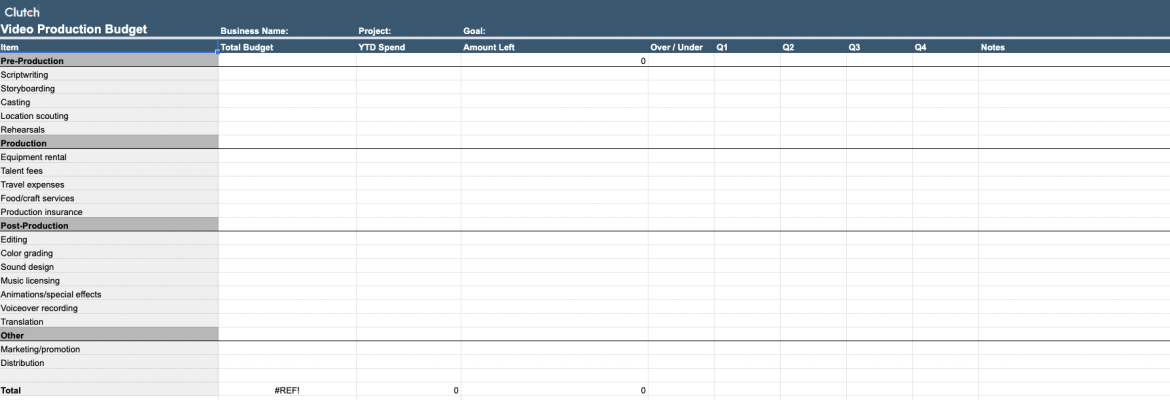
Download the Video Production Budget Template
Note: It’s important to remember that the actual contents of this budget can and should be adapted to meet your unique needs.
Understanding typical price ranges for different formats helps business leaders budget effectively and make informed decisions about which type of video best fits their goals. Here’s a breakdown of average costs by video type to give you a clearer picture of what to expect.
| 2D Animation | $1,000-$3,000 per minute |
| 3D Animation | $5,000-$10,000 per minute |
| Explainer Video | $1,500-$15,000 (1-3 minutes) |
| Commercial Video | $8,000-$20,000 |
| Event Streaming | $1,000-$15,000 |
| Corporate Videos | $2,000-$20,000 |
| Interviews & Testimonials | $1,000-$7,000 |
Video production agencies usually charge $100-$150 per hour for their work. While that may sound steep, the cost of salaries, training, and equipment you would need to support an in-house video production team would be much higher. With an agency, you get a full crew of experts, professional gear, and a polished workflow that brings your vision to life quickly. Meanwhile, in-house teams offer more control and flexibility but require continuous investment in staff and resources.
Freelancers can be a cost-effective alternative to working with an agency while still providing specialized expertise.
Similar to agencies, freelancers typically charge between $25 and $150 per hour, depending on their experience, skill set, and the complexity of the project. However, they are often open to smaller or one-off projects if you’re still testing video or don’t have a huge budget.
This option allows businesses to scale up or down based on specific project needs and often provides more flexibility in scheduling and creative input.
One of the reasons why many businesses choose to outsource video production is because they have all of the equipment they need to produce high-quality video content. These items can add up and dramatically increase the cost to produce a video if your in-house team doesn’t have access to these tools.
| Cameras and lenses | $1,000-$50,000 |
| Lighting Equipment | $100-$5,000 |
| Audio Equipment | $200-$3,000 |
| Tripods and Stabilizers | $100-$2,500 |
| Editing and Post-Production Software | $20-$300 per month |
| AI Video Editing Software | ~$50 per month |
The cost of B2B video production services can vary significantly depending on several factors, including the video's purpose and goals, the project's length and complexity, and the resources and services required.
What makes some video projects a few hundred dollars while others costs tens of thousands? Here are some of the greatest points of influence that dictate the cost of video production:
Video production pricing depends most on the number of resources needed, projected production timeline, type of video, and length of the final video product.
Additionally, unexpected costs and bottlenecks are typical in video production projects because of all the moving parts involved. It’s smart for companies to set aside a small portion of their budgets for contingencies that may arise. This will keep you from falling victim to the harmful effects of scope creep.
The final cost of video production services will depend on the types of video production you’re hoping to contract.
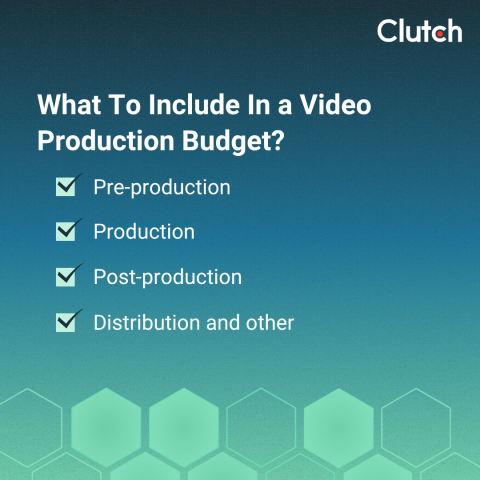
There isn’t just one phase of a video project; getting a high-quality video requires a professional video production team that understands the required stages. Here are some of the services they provide, split up into four overarching categories:
The types of B2B video production products are seemingly endless: explainer videos, promotional videos, training videos, and more. Each type of video has its unique set of requirements and costs, so understanding the differences in structure, length, and complexity is a vital part of budgeting for your efforts.
This article will provide a step-by-step guide on how small business owners can create a budget for various B2B video production services.
Discover the real cost of video production to prep for your next project.
Creating a budget for video services is all about putting your needs into action and effectively prioritizing the necessary features of your final product. Building a budget will teach you how professionals can practically address your goals.
Regardless of your most pressing needs, a sound budget puts a price tag on the most mission-critical aspects of your plans. This is absolutely essential, as it provides you with the information you need to set realistic expectations and follow through on them.
Of course, this can be easier said than done, especially in the logically complex world of video. Still, you can achieve a great starting budget by following these four simple steps:
These steps are intended to aid you in finding your video must-haves while balancing costs along the way.
Before you start creating a budget for your B2B video production project, it's essential first to determine the purpose and goals of the video. This will help you to understand what resources and services are required to achieve your desired outcome.
Let’s put this into context with an example: suppose you’re a business hoping to explain a complex product or service to potential customers. Here’s how you might think this type of video project through:
When the goals of a project change, the resources and needed deliverables often change with it. Let’s examine how this plays out for a company that needs a promotional video for a new product.
In all likelihood, the second project will cost a lot less because it requires fewer resources to meet the desired goal. This way of comprehensively thinking through goals helps you keep a budget lean.
You could save thousands on a video product by closely evaluating a video's purpose.
Should you hire a video production freelancer or a video agency? Decide using our guide.
Once you clearly understand your video's purpose and goals, you can begin researching and comparing prices for different B2B video production services.
It’s unlikely that you have all the human resources and equipment your need in-house. So, in video production cases especially, investing in outsourced business services is wise to bring your video goals to life.
A professionally produced video will better translate your message (hence achieving business goals more quickly). To get the level of quality that will meet these goals, it’s best to hire a reputable team or individual freelancers specializing in video work.
In taking this step, you will need to assume the costs of hiring a wide variety of professionals. Most of your crew members will be active during the production phase of your effort.
One way to evaluate which company is best for your needs is to reach out to different production companies and request service quotes.
Be sure to provide as much detail as possible about your project, including the following:
This is the information you scoped out in the first step of this process and will help production companies give you the most accurate quote possible.
Getting quotes from various providers is your best bet for comparing costs. This will give you a better shot at getting the best possible value for your money.
Despite this, it’s important to note that the cheap option may not be the most fruitful option for your purposes. Think back to your mission and goals (and maybe do a cost-benefit analysis) to determine whether a cost-saving quote will really provide the quality you require for your final product.
Unlike some other outsourced service providers, there are costs in addition to those associated with hiring industry professionals in video production. Companies looking to produce accurate budgets will also need to factor in equipment costs and other resources needed to create the video.

Source: Uscreen
This may include the costs of the following tools:
Make a list of the things you’ll need to produce the video you want and take stock of the things you already have. You will have to rent or purchase the equipment if you don't have the necessary equipment.
Renting equipment can be a cost-effective option, especially if you only need the equipment for a short period. Companies without plans to make frequent videos should most likely rent.
However, if you plan on using the equipment frequently, it may be more cost-effective to purchase it outright — especially for in-depth marketing campaigns. As video becomes more prevalent in marketing strategies, more companies may opt to buy some of their core equipment.
The length and complexity of a B2B video will be a huge indicator of a project’s overall cost.
For instance, a lengthy and complex video will demand more time and resources than a shorter option. Because it will take more effort to produce, a budget for long videos will be expected to be bigger.
Is the scope of your video project going to be more expensive than it’s worth?
To determine the length and complexity of your video, consider the following questions:
Just like video length, adding effects and elaborate graphics will drive up the price of your video. This is because they’ll take additional personnel to create.
Answering these questions will give you an idea of the scale of your video project. With this information, you can start to anticipate the total cost of your final product.
Another way to determine how your video will be priced is by examining pricing models of video production teams.
Most video production companies will offer either a day or hourly rate for their services.
Note that companies will often charge more than half their day rate for half-day requirements to make up for the value lost by not being able to work continuously for an entire day.
In cases where your project demands less than a full day of shooting, it may be wisest to seek out a company that uses an hourly rate pricing structure.
Remember to regularly update and examine your budget as the project moves forward. This will help you better stay on track to meet your goals and timelines. Given the many logistical challenges a video production project can present, it’s wise to regularly keep track of your financial resources throughout the production phases.
Building a budget for your project will allow you to ballpark the total cost of video work. Additionally, your budget will help you affirm your priorities and ensure you get the production value you’re after.
By understanding the purpose and goals of the video, researching and comparing prices for different services, considering the cost of equipment and other resources, and determining the length and complexity of the video, small business owners can create a budget that meets needs and achieves goals.