Will AI Replace Graphic Designers? The Fear vs. The Facts
AI is revolutionizing graphic design, but is it replacing designers? Clutch research reveals what businesses actually think, and what designers need to...
Updated February 27, 2026

Print design is an integral component of branding and marketing. Business cards, brochures, and packaging are all under its massive umbrella. In this detailed article, we’ll guide you in the budgeting process for your next print design project so you know how much to expect and prepare.
Consistency is the name of the game when it comes to business and branding. Print design plays a big role in helping businesses craft a cohesive and thoughtful brand identity that will leave a lasting impression on their customers.
Ask any business owner and marketer about the importance of strong visual communication. Whether it’s a small business or a startup, it's important to immediately invest in solutions that will help your business become more recognizable and memorable.
Looking for a Graphic Design agency?
Compare our list of top Graphic Design companies near you
Print design is a type of graphic design that focuses on physical assets such as business cards, brochures, and stickers.
An experienced print designer knows how to conceptualize and create the signs that will be used for print publication. These professionals can visualize how a design translates to physical form and how it can leave a lasting impression on its intended audience.
Setting a budget for a print design project can be intimidating if you don’t know what to expect and what factors to consider. This piece will help you understand everything there is to know when creating a budget for your needs.
Once you finish this piece, the next step is to find the ideal partner that will breathe life into your ideas and brand. Connect with the leading print design companies on Clutch.
To be clear, print design doesn’t cover print production — that’s an entirely different service. Print design only refers to the process of conceptualizing and executing designs that will go onto physical assets.
The costs of print design will vary depending on the unique needs of businesses. Knowing the many different types of print design will help clear things up when budgeting.
If you plan to start a project soon or hire a service provider, here are types of print design for your reference:
Of course, the more type you need, the higher the price tag goes. Once you finally grasp each type, you can finally sit down with your team to plan a practical budget for your business.
Additional reading: “Print Design Pricing Guide”
Before you start inputting figures into your Google or Excel spreadsheets for a clear budget overview, the first thing you need to do when preparing your budget is to define the scope of your project.
For this first step, you can call on your marketing heads and leadership team to discuss what print materials you need designs for.
Create a priority list of all the materials needed based on the marketing campaigns and strategies your business prepared. In addition to those, leave room for other occasions like seasonal designs, possible conventions, and trade shows.
Setting clear priorities and defining the project scope will help you make the most out of every dollar spent and track how it contributes to your goals. Additionally, you will need the priority list later to communicate effectively with your print designer.
As mentioned, the broader the scope of your project, the more it’ll cost; while to some extent, that’s true, the value of your project should be considered.
What does project value mean? Many professional designers charge based on value and not on their time. For example, print designs for big-name brand magazines will cost more than brochures for a one-day convention. The value of a magazine that will hit stores is more than the latter.
Moreover, the industry your business is in and its reputation also directly affect the value of your project.
For an easy example of this, take a look at well-known brands vs. small businesses. Established brands from commercial industries have higher-value projects compared to mom-and-pop shops that are planning to put out fliers and banners in their areas.
By understanding the value of your project, you can adjust your budget according to industry standards.
The complexity of the design is a big factor to keep in mind when planning your budget. It's easy to overlook how the difficulty of your design can impact the timeline, cost, and even quality of the final output.
Print design is and isn't simple.
No business owner wants to look like a generic brand that uses minimalist stock images and DIY templates for their branding and designs. It's only natural to ask for unique print designs that will complement their brand.
As clients, you need to understand that the designer will only work based on the brief you provide them.
If you asked for designs that will require them to meticulously draw and layout everything from scratch that will cost more, of course.
Don’t go overboard though. Demanding more details and more complicated designs will not only add to the costs but also make your brand look too cluttered.
Print design isn't a daily necessity for many businesses unless you're in a specific field that requires you to print new materials regularly. Thus, many businesses tend to prefer hiring freelancers and print design agencies for their projects.
Designers come with different price tags. It will all depend on their expertise, experience, and even reputation.
Freelancers cost less but print designing agencies can accommodate broader projects compared to them. Finding the ideal designer to work with will help you determine how much you need to allocate to your budget.
Remember, when discussing with a service provider make sure to inquire more about how they price their services. Ask about their pricing structure, whether they charge by the hour, by day, or per output.
One of the best ways businesses save money here is by outsourcing offshore to service providers from Asia and Eastern Europe who charge less compared to designers from North America and Western Europe.
Miscellaneous expenses can come in all shapes and forms, anytime whether you expect it or not.
Examples of miscellaneous costs include:
Fonts are also something you need to carefully consider when budgeting. Does your brand require specific fonts for its print designs? Well, that can be another expense because certain fonts are protected by copyright and they will require payment for commercial use.
It's better to be prepared and allocate ahead of time rather than running short when you encounter unexpected miscellaneous expenses.
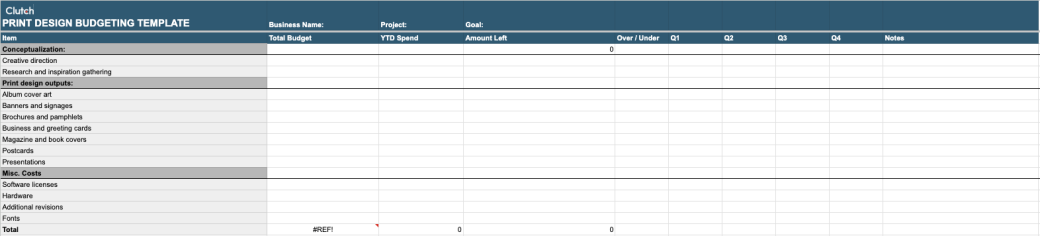
Download our free budget template for print design and use it as an expense tracker.
If you search the internet to find how much you should spend on print design, you'll see a variety of answers ranging from a couple hundred dollars to several thousand dollars. It's hard to give a definite answer because there are so many factors that come into play when finalizing the total cost of professional print design projects.
Each business has its own unique needs and visions when it comes to design, but those aren't the only elements that impact the price tag.
Here are some of the main variables that directly affect print design expenses:
Pay close attention to each of these variables when planning your budget. Be specific and don't be indecisive when it comes to your brief. At the end of the day, the best way to minimize costs is by avoiding countless revisions caused by miscommunication and misunderstanding.
Lastly, always keep a budget spreadsheet to keep track of your weekly budget and monthly bills.
Print designs can help you craft a good reputation and reliable credibility for your audience. Don’t underestimate the power of visual communication in business.
Your customers aren’t just on their phones scrolling through social media; they’re out and about too! You could be missing out on opportunities to attract customers if you still don’t have any print design assets and products out there.
Great print designers are key to maximizing your investment. The right partner can understand your vision and help breathe life into your print designs.
Match with the leading print designers on Clutch.