Lead Quality vs. Lead Quantity: Why B2B Teams Are Rethinking Their Funnel in 2026
Bigger buying committees and tighter budgets are forcing B2B teams to rethink lead quality vs. quantity. Here's how top teams rebalance the tradeoff in 2026.
Updated March 24, 2026

Content marketing, if properly planned and executed, is worth investing in due to its resulting positive brand impresssions and conversions.
Content marketing is often treated as a magical cure-all for businesses: It costs less than traditional outbound marketing and has the potential to generate a great deal of traffic and conversions.
However, content marketing is not for everyone. In a previous article, I argue that businesses need to carefully consider whether content marketing works for their company before deciding to invest in it.
Looking for a Digital Marketing agency?
Compare our list of top Digital Marketing companies near you
For some, it may not be worth it because of high costs, low ROI, or difficulty measuring results.
This article argues that content marketing is an effective marketing strategy that can provide a variety of benefits, and it outlines how to make content marketing work for your company.
If properly maintained, the advantages of a content marketing strategy are numerous. These 3 reasons, in particular, should make you at least consider investing in content marketing.
What sets content marketing apart is that it allows you to appeal to a broader audience.
You may focus your marketing strategy on your ideal customer by creating customer personas and carefully prioritizing selected audiences, but you will inadvertently reach others who may possibly convert.
Content is not as targeted as paid ad campaigns on Google or social media, but it allows marketers to direct users through the awareness, consideration, and decision stages of the buyer’s journey.
Companies need to engage with consumers beyond just promoting their products and services to compete in a crowded market. Not only do they need to attract, convert, and close customers, but they also must retain them.
Content marketing helps retain customers by building a strong community of supporters and fans around your business. It also engages customers by driving their interest in your products or services.
Specifically, content can appeal to customers’ emotions and create powerful emotional bonds through storytelling. Emotions are experiences, and customers cherish positive experiences above all else.
Content is not just about emotions and experiences; it is also about the end result – brand perception.
In-depth blog posts, sharp infographics, informational videos, and podcasts all increase brand awareness, strengthen your following, and improve your company’s image.
Strong content marketing also establishes your company as an industry thought leader and expert.
For example, content with new, relevant information, such as statistics from an original survey, shows your knowledge and authority on a topic.
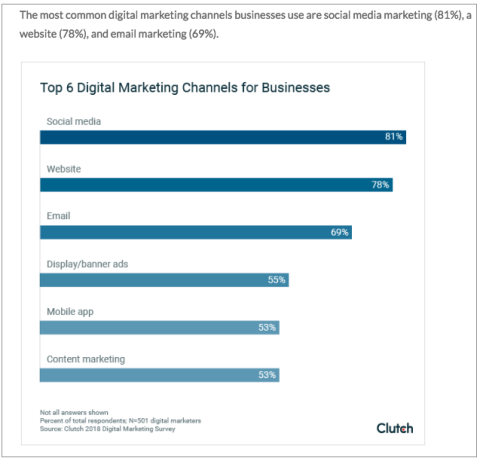
As a thought leader, you can exercise your legacy to shape business and consumer landscapes in your favor.
Content marketing can easily make or break your business.
If you do it right, you can reap a multitude of digital marketing benefits, including:
Despite its potential benefits, content marketing does not guarantee results. A failed investment in content marketing can blow a massive hole in your marketing budget, damage your brand’s reputation, and cause you to lose clients.
Before you invest in content marketing, ask the following questions:
I strongly encourage you to consider each of these questions or hire a content marketing consultant to help you assess the landscape for your business.
Content marketing benefits businesses that are ready and willing to invest in it long-term.
A successful content marketing campaign can build awareness and loyalty for your business. As a result, prospects, customers, and repeat buyers will perceive your brand in a positive light.
However, investing in content marketing can be costly. Content marketing requires a lot of time, effort, and money.
Its relatively high cost may explain why some hesitate to invest in a comprehensive content strategy.
Do not dismiss content marketing without giving it a try.

Sergey Grybniak is a serial entrepreneur and digital marketing expert. He has been providing digital marketing services for over 10 years and has successfully completed more than 500 projects. With his vast experience in launching and promoting e-commerce platforms, Sergey helps small- and mid-sized businesses establish a thriving web presence. He is founder of the digital marketing agency Clever-Solution, and of online B2B/B2C marketplace Opporty.
Sergey Grybniak is a serial entrepreneur and digital marketing expert. He has been providing digital marketing services for over 10 years and has successfully completed more than 500 projects. With his vast experience in launching and promoting e-commerce platforms, Sergey helps small- and mid-sized businesses establish a thriving web presence. He is the founder of the digital marketing agency Clever-Solution(link is external), and of online B2B/B2C marketplace Opporty.
See full profile