
The Best Password Managers for Small Businesses in 2026
How secured are you online? Explore these top password managers to help safeguard your small business from malicious cyber attacks this 2026.
Updated April 14, 2025

When an entrepreneur develops an innovative idea, the risk of idea theft can be troubling. Use this article to learn how you can keep an idea safe from competitors and other threats.
Updated June 3, 2022
How can entrepreneurs protect their ideas? More and more people are coming up with new ideas, with the rise of the internet and bubbling social media platforms like TikTok.
Looking for a IT Services agency?
Compare our list of top IT Services companies near you
Many entrepreneurs share the same fear: that someone else might steal their idea for the next big invention.
Imagine the moment when you see that someone has founded a company on a concept that was actually yours. In addition to financial losses, experiencing idea theft can be emotionally devastating.
This can impact mobile app development companies, Salesforce consultants, DevOps experts, and IT services providers alike. Theft in the information technology world does not discriminate.
You can use this article to learn how to determine if your idea was stolen by a competitor and how to protect yourself from idea theft in the future.
Hire an IT solutions provider while browsing Clutch’s directory of trusted firms and service providers.
Many entrepreneurs, venture capitalists, and influencers claim that people overvalue ideas and even encourage people to pitch their ideas for free, using consulting services. There are many case studies, however, where famous business ideas were stolen.
In general, these instances fall into two categories: theft of concepts, and theft of visual design and branding. Both impact overall business solutions.
Steve Blank, a well-known entrepreneur and author, claims that he has been a victim of idea theft twice during his career, specifically related to business concepts.
During the first instance, Blank was launching his own video company. While in Japan for the business, he alleges that he saw his Japanese client presenting slides that were actually his.
On another occasion, Blank presented an idea to the vice president of a reputed company. Later, Blank alleges that the same vice president used his slides to raise his own funds.
In addition to the theft of concepts, another common form of idea theft is when visual design and branding are copied or stolen.
For example, the visual design of Pipedrive, a sales pipeline management software, was ripped off point-to-point by another development services company.
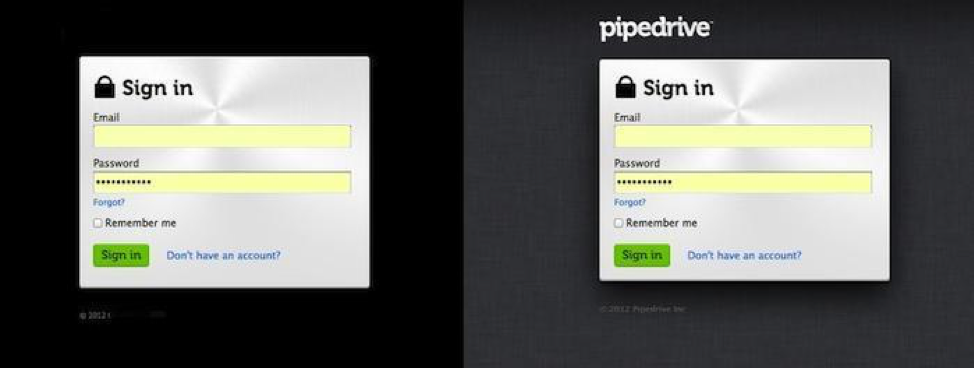
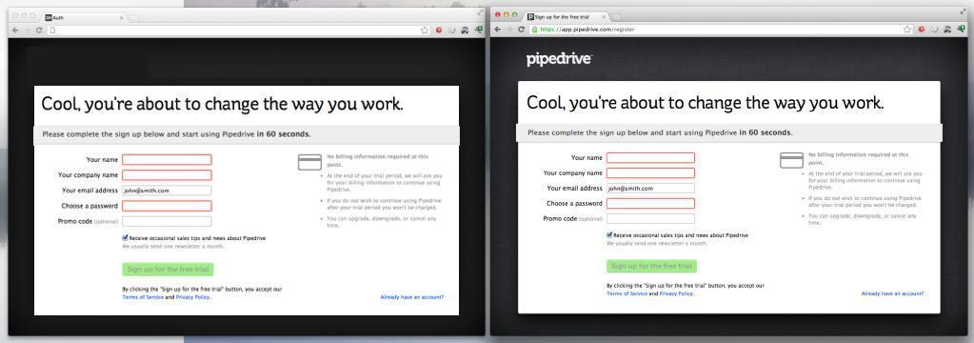
The other company’s interface is nearly identical to Pipedrive’s interface. The only difference is that Pipedrive uses a grey background, while the website that copied it used a black background. Even the fonts are pretty similar.
Idea theft happens often enough that entrepreneurs must take steps to protect themselves.
Interested in cybersecurity support? Hire a top service provider to deliver an enterprise service.
There is an age-old saying: Prevention is better than cure. This is even more true in the age of digital transformation.
Instead of having regrets later, it’s better to take precautionary measures and be proactive to protect your ideas.
You should take 4 key steps for data protection:
To ensure that your idea won’t be stolen, you should only share ideas that are in an early stage. Avoid sharing ideas that are close to execution, even when it comes to technology consulting.
The risk of idea theft increases when:
To minimize the risk of idea theft, you should wait to share information about your idea until you’re ready to receive formal feedback. In this phase, others can help you identify weak points or potential challenges, but you won’t need to reveal the solutions that will make your idea novel or profitable.
People can know your startup is investing in application development, but don’t tell them the marketing strategy behind your big idea.
If you’re wondering how to ask for feedback without actually revealing your business idea, you can use a simple customer feedback framework and suggestions for how to take action on feedback by David Cancel, the CEO of Drift, a B2B marketing platform.
By learning when to share information and when to hold back, you can decrease the chance that your idea will be stolen.
You should require anyone with access to your idea to sign a non-disclosure agreement (NDA).
An NDA is a formal agreement that prevents someone from sharing your idea with anyone else. If someone violates your NDA, you or your technology company can take legal action against him or her.
You can find boilerplate for a standard NDA online:
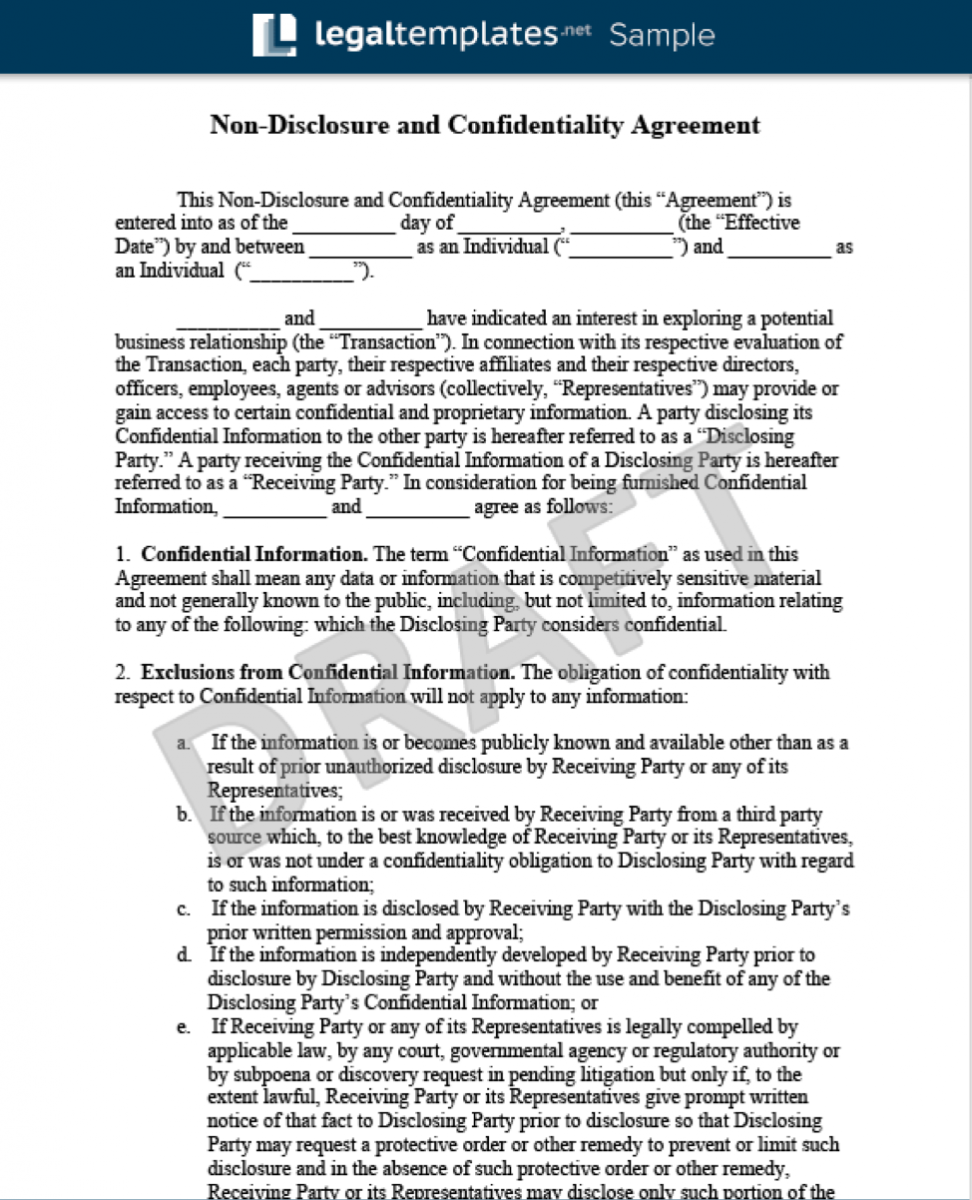
You should also contact a lawyer who can help you set the specific terms of your NDA.
Blank says that his biggest regret was viewing NDAs as an impediment rather than protection against theft. Had Blank obtained a signed NDA, he would have had the option of taking legal action against the person he accused of stealing his idea.
Small businesses and medium-sized businesses can also receive support services from an NDA. It does not discriminate by company size.
An NDA gives you the option of taking legal action if your idea is stolen, which discourages theft.
Many entrepreneurs share too many details about their ideas. Often, they think that explaining compelling details about the idea will convince others to invest in it.
Avoid this type of "business consulting."
However, this greatly increases the risk of theft. Instead, you should only discuss the most persuasive aspects of your ideas with investors – not every detail about how you plan to execute your strategy.
Examples of information you should refrain from sharing include:
Instead, focus on sharing beyond the technology services:
As an entrepreneur, you need to sell people dreams – but don’t tell how to achieve them, since that’s what your business will do once it launches.
By keeping these guidelines in mind, you can protect your idea and maintain your presence as a leading provider.
Entrepreneurs should keep a written and dated record of everything. If you don’t keep a record of your conversations, you won’t have any proof if you later suspect someone of stealing your idea.
As you pitch your idea to potential collaborators, outsourcing partners, or investors, you should keep a written record of your:
You should also keep track of how your idea changes over time.
Additionally, you must password protect these notes so that no one can access them without your permission. In iOS, there is a simple method for doing so or investing in protective cloud solutions.
You should lock or password protect important files on your Windows PC or Mac. You can also use apps like AppLock to protect your notes on Android.
Careful note-taking will allow you to build a record of how your idea developed, and how you shared it – preventing you from doubting your memory of events. Storing these notes securely will ensure that no one can access or tamper with them.
Learn about the latest innovations in the custom software development realm by finding out the top software solutions in the fintech industry.
Idea theft doesn’t exist in novels and movies alone. It also doesn’t matter if you’re a small nonprofit in New York or an award-winning healthcare industry leader in Canada.
In fact, incidents of idea theft are real and can have devastating impact on entrepreneurs.
In review, be smart about sharing your ideas about technology solutions and require individuals you tell to sign an NDA. Make sure to limit the information you share while keeping everything in writing for future use and data protection.
Tactics, such as knowing when to share information, limiting what information you share, and keeping written documentation, can all reduce the risk that your idea will be stolen.
Finally, in the event that your idea is stolen, requiring NDAs will ensure that you have the legal protection necessary to take action.
Browse Clutch’s list of managed service providers to see the benefits of IT strategy consulting.
Additional Reading:
Neeraj Sharma is an avid reader and writer with an undying passion for making people aware of the latest tech with his blogs. He has written a myriad of articles related to tech, apps, games, social media, and entrepreneurship. At present, Neeraj is contributing articles on applify.co.
See full profile