
Evaluating an Marketing Agency in the AI Search Era
AI search has completely changed how people interact with online content. When an AI summary appears at the top of search results, Google users only click a...
Updated June 25, 2026

Selling any product or service requires customers, but leads for sales don't just grow on trees. Capturing warm leads is crucial for business growth, and tactics, including social selling, performance marketing, and strategic partnerships, can all help gain and maintain buyer interest until the point of sale. Explore how your business can create an effective pipeline to generate the best leads for your company.
Finding customers to buy your product or service and closing the deal is at the core of any business. Leads can come from various approaches, ranging from cold calls to social media ads to word of mouth, but not all are created equal. Leads are generally divided into “warm” and “cold,” with warm leads typically being more ripe for conversion.
Organizations need to generate leads to sustain their profits and scale their businesses. Understanding lead generation, how to create a pipeline, and how to measure progress is crucial for your operation's success.
A warm lead is a prospect who already knows your business and has shown some interest — by following you on social media, subscribing to your newsletter, downloading content, or visiting your pricing page — but hasn't yet asked to buy. Because they're already aware of you and the problem you solve, warm leads convert far more readily than cold prospects who've never heard of you — by many industry estimates, several times more readily [verify + link, e.g., Bullseye / SDR benchmarks]. This guide explains how warm leads differ from cold and hot leads, how to spot them, and how to build a pipeline that generates and converts them.
Selling a product or service starts with attracting the interest of potential customers. Lead generation is the process of capturing a prospect's contact information so you can nurture them toward a sale.
“Lead generation can be tricky because not every lead is a good fit for every business,” said Drew Blumenthal, Founder and CEO of Digital Drew SEM. “We research our target audience thoroughly and create detailed customer personas. That helps ensure that the leads we get are relevant and high-quality.”
In the past, businesses were limited to snail mail, cold calls, advertisements, and the classic word of mouth to find potential buyers. Today, the internet allows for a much wider range of options. Sales representatives and marketing teams can use social media platforms, email, blogs, videos, and e-books to attract new leads.
Once individuals gain interest in your offerings, they become warm leads who are more likely to make a purchase.
Matt Watson, CEO and Executive Director at Watson Creative, believes that generating warm leads is all about value-based connection.
“We focus on building trust through thought leadership –webinars, articles, speaking engagements, and in-depth case studies that showcase our expertise and track record,” said Watson.
He continues that another part of their strategy is leveraging client success stories because of the value. Potential clients can see how much their team cares about ethics, innovation, and other themes that lead to a successful business relationship.
When building the opportunity for a new business relationship, there are two types of leads that companies should keep tabs on.
Segmenting leads by interest level helps you decide how much time and effort each will take to convert, and how to market to them. Most teams use a three-point temperature scale:

Warmth isn't a guess — it shows up in behavior. The clearest buying signals include visiting your pricing or product pages, downloading a guide or template, attending a webinar, opening and clicking several emails, repeatedly engaging with your social content, or coming in through a referral. The more deliberate the action, the warmer the lead.
To act on those signals at scale, many teams use lead scoring — assigning points to actions (a pricing-page visit might be worth more than a single email open) so sales can prioritize the prospects most ready to talk. Intent data and AI-assisted scoring can sharpen this further by flagging when a prospect's behavior suggests they're actively in-market, so reps spend their time where it converts.
There are many ways to build a pipeline that turns strangers into warm leads. Five reliable approaches:
Generating a warm lead is only half the job; warm leads cool off without consistent, valuable follow-up. The most effective nurturing meets prospects with the right message at each touchpoint rather than a single hard sell.
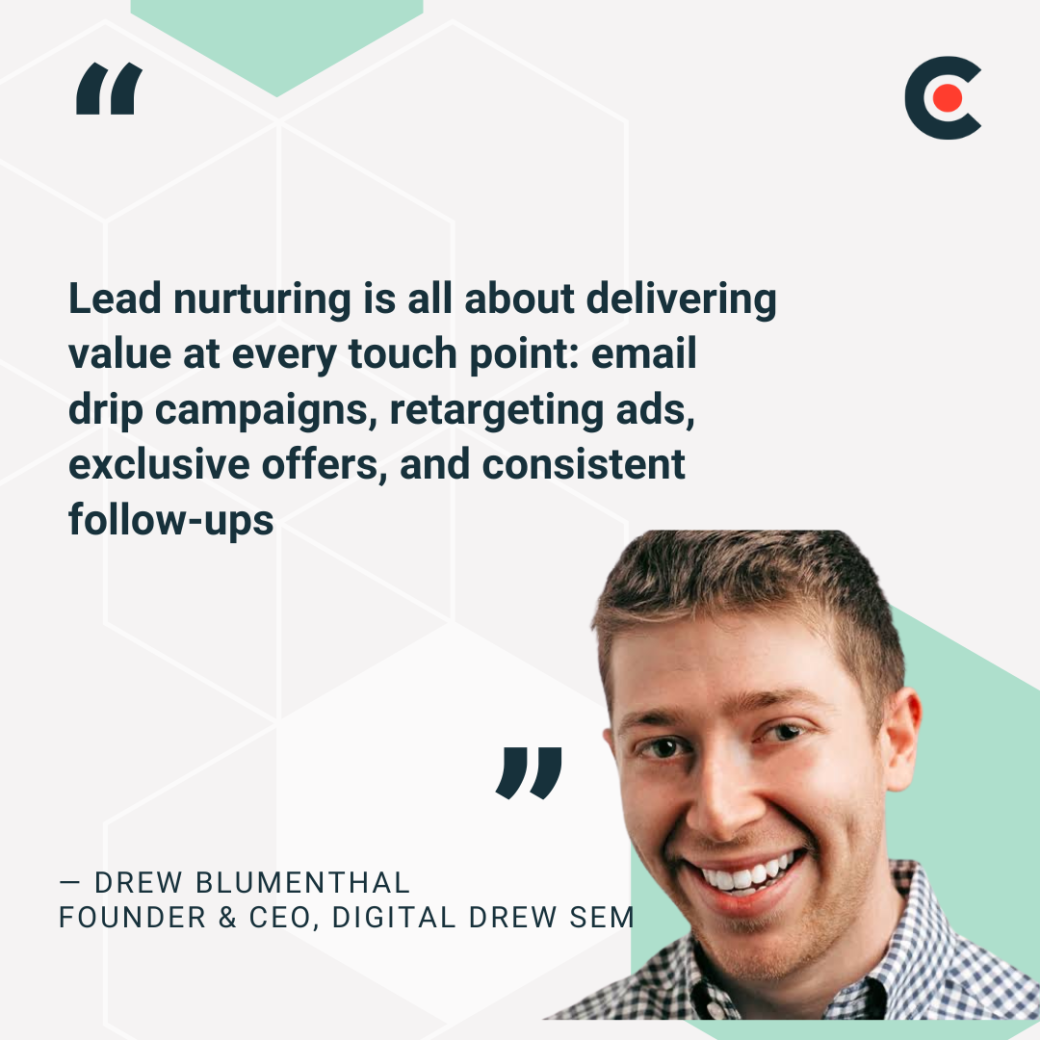
"Lead nurturing is all about delivering value at every touch point: email drip campaigns, retargeting ads, exclusive offers, and consistent follow-ups," said Blumenthal. A fast first response matters, too — the sooner you follow up after a prospect shows interest, the likelier they are to stay engaged rather than drift to a competitor.
Effective lead generation depends on measuring your progress. Watch these KPIs throughout the pipeline:
A steady stream of warm leads is crucial for organizational success.
“The best relationships are built on understanding, and when a lead feels heard, the conversion follows naturally,” said Watson. “It’s a long-game approach, but it leads to stronger, more sustainable partnerships.”
Building and refining a lead generation pipeline can help your company increase sales and profits. For best results, be sure to also add the best sales and marketing professionals to your team.
Finding the right members for your marketing and sales teams is essential for continued warm leads and an optimized sales funnel. Using a B2B reviews & ratings platform like Clutch is an excellent way to hire top talent and increase your profits.
A warm lead is a prospect who already knows your business and has shown some interest — following you on social, subscribing to your newsletter, downloading content, or visiting your pricing page — but hasn't yet asked to buy. They sit between cold leads (no prior awareness) and hot leads (active buying intent).
Someone who downloaded your e-book and later returned to view your pricing page, a newsletter subscriber who keeps opening your emails, or a prospect referred by an existing customer.
Because they already recognize your brand and the problem you solve, warm leads convert at meaningfully higher rates and with less effort than cold prospects [verify + link a conversion stat, e.g., warm vs. cold email reply rates]. That makes them a more efficient use of sales and marketing time.
Build a pipeline that combines cold outreach, social selling, strategic partnerships, performance marketing, and content/SEO — then identify the warmest prospects with behavioral signals and lead scoring, and nurture them with consistent, valuable follow-up.