
Your Brand Strategy Problem Probably Isn't a Messaging Problem
AI made brand execution cheap, but not brand strategy. Here's why agencies must shift from logos to diagnosing the gap between what companies say and do.
Updated December 15, 2025

A brand positioning framework is the blueprint for marketing your business to the right audience—helping you stand out, build trust, and outshine the competition. We sat down with Matt Watson, CEO & Executive Creative Director at Watson Creative, to get first-hand insights on crafting a brand positioning framework that drives your web design project. Discover the key elements and how they can shape a memorable, impactful digital presence.
In today’s digital age, a business’s website plays a crucial part in conveying brand identity. With consumers spending more and more time online, your website is often the first and most frequent way you can connect with potential buyers. It’s often your customers’ first introduction to your brand, which means it’s crucial that their experience is consistent with your fundamental identity.
When your brand materials — including your website — reflect your core values, you can build customer loyalty and increase your revenue by between 10% and 20%, according to some estimates. This makes branding an essential part of web design.
Looking for a Public Relations agency?
Compare our list of top Public Relations companies near you
"Branding is the foundation of any good web design. It’s not just about how a site looks—though aesthetics are important—it’s about how the design communicates your story and values,” says Matt Watson, CEO & Executive Creative Director at Watson Creative, an award-winning brand strategy and digital design agency located in Portland, Oregon. “A brand needs to come through in every detail, from the colors and fonts to the user experience itself.”
Of course, this means that you need to be intentional in every detail of your web design and how it helps convey your brand. “It’s about making sure the website feels like an extension of the brand’s voice, and that takes thoughtful strategy,” says Watson.
A brand positioning framework is key in building out this strategy. Generally, a brand positioning framework is a structured plan for aligning your organization’s values and establishing your niche in the market. For web designers, a brand positioning framework can act as a roadmap to guide decisions throughout your project.
This article will dive into how to create a brand positioning framework and what you need to know for a successful web design partnership.
Search for industry-leading web design companies on Clutch. Read client ratings and reviews to find the perfect partner for your upcoming project.
Identifying your brand positioning is often the first step in a web design project, as it can have a big impact on your web design.
“[W]e emphasize understanding the brand's core position before we even start sketching concepts,” Watson explains. Often, your brand’s values can impact the features you want to include and what should be prioritized. “The website should always work to reinforce the brand’s promise. That clarity creates trust with your audience, which is critical for building long-term loyalty."
Brand positioning goes beyond your logo and color palette. It’s also about your company values and mission statement, how to appeal to customers, and your niche in the market. A well-structured framework should include the following elements:
When first embarking in creating your brand positioning framework, you should start by defining what sets your products or services apart and why your customers should choose you over your competition. This is known as your value proposition, or what aspect of your business appeals to customers over other options in the marketplace.
To figure out your value proposition, ask yourself these questions:
Using your answers, you will be able to communicate your value proposition using the Steve Blank formula: We help (X) do (Y) by doing (Z). This formula is used to focus on how you provide value to your customers, rather than simply describing the features of your products.
Your target audience is the customers who are most likely to want to buy your offerings and the people you want to hear your message the most. By identifying your target audience, you can tailor your messaging and web design to appeal to them directly.
For instance, if your target audience is first-time moms over the age of 35, your message will be a lot different than if your target audience is young teenagers learning how to skateboard. The same logic applies when designing your website: you want to make sure your website includes features that your target audience appreciates.
A mission statement is a short paragraph that concisely explains your purpose, including your values, ethics, culture, and goals. Usually, mission statements help business leaders think through their goals, company culture, and what makes them unique in the industry. Similarly, a mission statement can be used to inform web design.
Watson explained why this is so valuable, “If a brand doesn’t clearly communicate who it is and what it stands for, visitors won’t connect in a meaningful way. That disconnect can lead to missed opportunities, whether it's failing to convert a sale or missing a chance to deepen a community relationship." Ultimately, a mission statement ensures that users can connect with the business’s mission online.
Every memorable brand has a distinct voice. Your tone should come through in the language you use, imagery, and even the font of your website. Web designers can convey funny, serious, or even breezy tone of voice through your web design, but the most important aspect is that your voice is distinctive and consistent.
Brand messaging pillars are the three to five major themes or values that represent your brand. These are especially useful in creating your website since you can easily build out content marketing materials around them. Usually, this is focused on a brand’s purpose, perception, identity, and brand experience.
The clothing brand Patagonia does a fantastic job communicating their brand pillars on their website by outlining their core values, all of which directly impacts their mission to protect the environment.
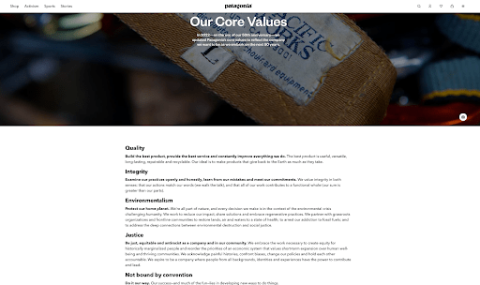
On their website, they explain how they strive to meet each value, whether it’s by creating high-quality products that can be used for years or by supporting grassroots activism. This helps drive all of their business decisions to ensure that they live and work by their mission statement. By sharing this information on their website,
A brand essence wheel is a visual tool that can help businesses define core elements of their brand, such as how a brand makes a consumer feel, what they offer to customers, how it looks, and more.
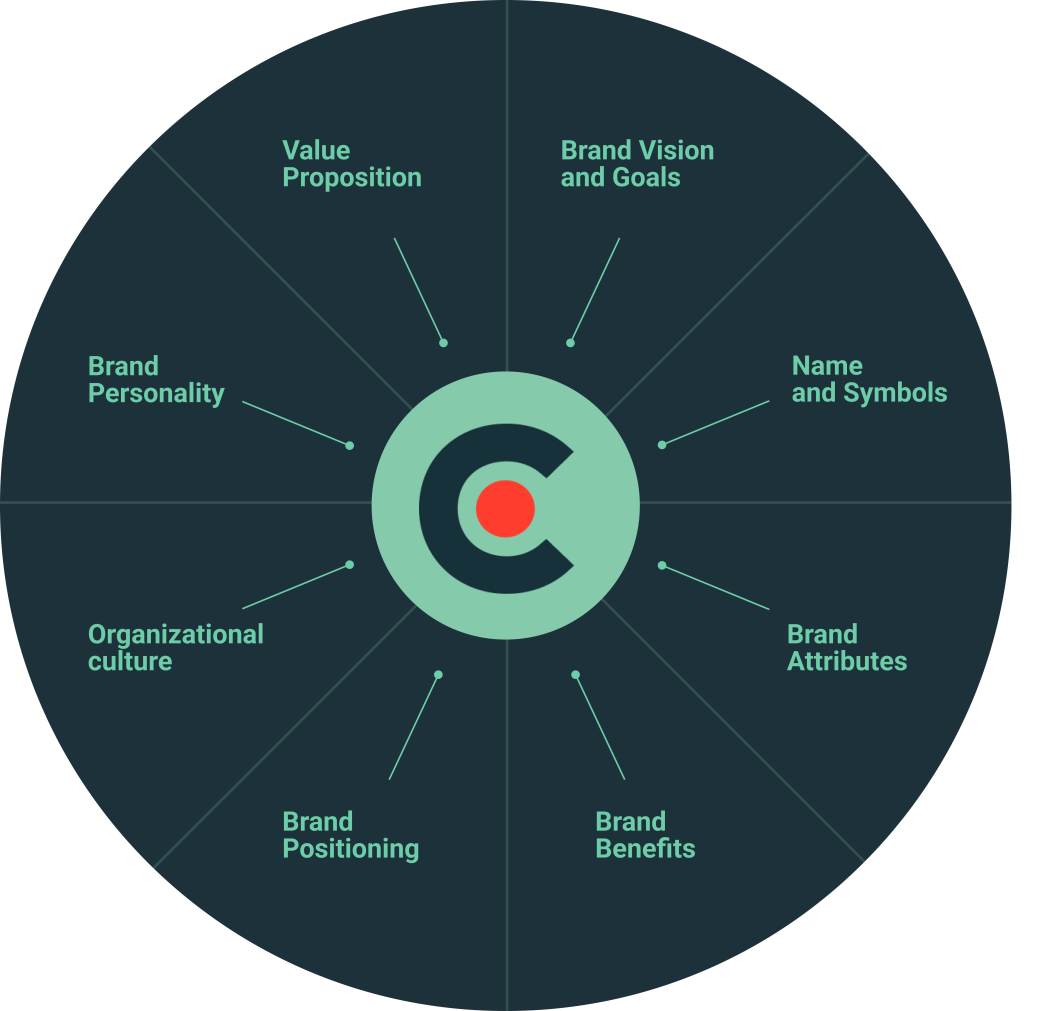
Working through a brand essence wheel will help you distill all of the elements of your brand into an easily conveyed message. The brand wheel considers:
Ultimately, a brand essence chart allows companies to visualize their brand.
Understanding what your competitors are up to can help you figure out how you can stand out and find growth opportunities. The point isn’t to copy your competitors down to the T. Instead, you want to identify their strengths and weaknesses and compare them to your own. This will factor into how you design your website and speak to your customers.
A brand positioning framework will help organize your strategy and maintain consistency across your website and other brand materials. To create your own brand framework strategy, you need to consider how your brand is currently positioned, what your ideal positioning is, and how you can differentiate yourself from your competitors.
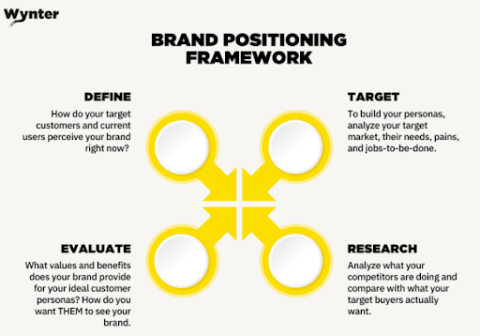
This requires you to evaluate how you provide value to your customers and identify the space you consume in the marketplace. This may mean that you need to conduct market research, competitor research, and customer research. With this information, you can define your brand and how you should target personas more effectively.
The next step is to bring all of these elements together to clearly define your brand position and write a brand positioning statement.
Your brand position will be different from any other because it will be unique to your company, your vision, and your values. Still, there are several common types of brand positioning frameworks that describe your company’s value proposition and position in the marketplace. These are often known as:
Often, the approach your business takes can have a big impact on your web design. “For a quality-based brand, you’ll want your website to showcase high-end visuals, meticulous craftsmanship, and sophisticated UI/UX to reinforce that standard of excellence,” Watson explained. “On the other hand, a customer service-based brand would want to prioritize ease of navigation and interactive support options, making the user feel heard and valued from the first click.”
Solidifying your brand positioning framework can help your web design team with content creation and design that differentiates your brand. Here are some examples of successful brand positions to inspire you:
Brands that use a quality-based positioning framework focus their message on how their products or services are premium. With this type of positioning, you can justify a higher price. BMW is an excellent example of quality-based brand positioning. They’re appealing to customers who want a luxury experience and don’t mind paying for it.

On the home page of its website, BMW uses words such as “power,” “prestige,” “luxury,” and “confidence.” All of the elements of its message convey that BMW's cars are premium and high-quality.
In a time when more businesses are becoming less personal, customer service-based brand positioning lets your customers know you have their best interests at heart. Delta embodies this concept with its ‘Faces of Travel’ campaign. It features different families that have used Delta to travel all over the world.
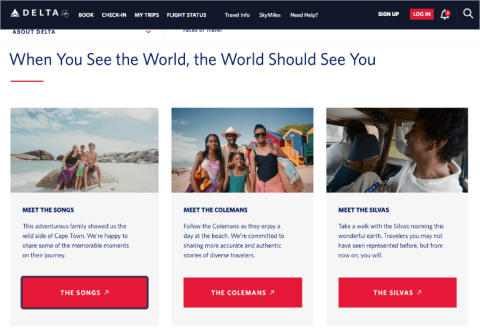
By using actual travelers on its website, the company is putting them at the heart of their messaging. Even more importantly, Delta uses this page of their website to emphasize their company values by featuring travelers that aren’t often represented in travel culture.
People are often willing to pay more for products or services if they’re more convenient. Car detailers who come to you while you’re at work have an edge if you value your time and don’t mind paying a little extra.
Amazon epitomizes this type of convenience. They offer free shipping, easy returns, and a convenient place to buy a wide variety of products. Its home page is customized for you based on items you’ve ordered or browsed through before.
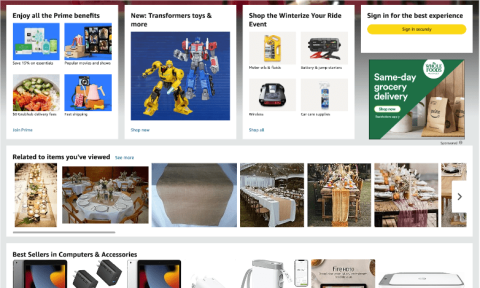
By remembering your preferences, Amazon makes customized suggestions about other products you might like.
If your prices are better than your competition, you can use price-based brand positioning. With prices going up across the board, many people are looking for low prices. Walmart successfully used this strategy in its stores and on its website.
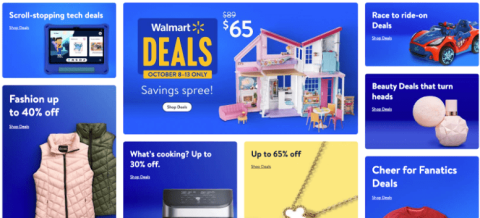
The homepage features ads highlighting how much you can save money by shopping with Walmart.
Once you’ve created a brand positioning framework, communicating it to your web design team is essential to ensure your new website reflects your brand. Web designers can use your brand positioning framework to create a website that reinforces your marketing message.
"Clear communication with your web design team is crucial, and it starts with alignment,” Watson says. “The more the design team understands your brand’s values and goals, the better they can translate that into an online experience.”
“I always encourage clients to provide not just creative briefs but also examples of brands they admire, even if those brands aren’t competitors. This gives the design team a sense of the vibe you're aiming for, which helps in making thoughtful design choices.”
One of the best ways to make sure your website designer understands your brand is by providing documentation on your brand as well as information on your target audience and competitors. Additionally, establishing regular touchpoints and providing feedback can ensure that your web design more closely reflects your brand image.
The end result should be a website that clearly describes what you offer and why customers should choose your business over others in the market.
Your digital presence is one of the best ways your business can connect to the world. In today’s attention economy, you need to clearly communicate your message and brand positioning as quickly as possible.
Customers generally won’t take time to go digging through your website to find out what you offer. Great web designers can make it easy for them to tell what sets you apart from others in your industry as soon as they land on your homepage.
By creating a brand positioning framework and clearly communicating your brand goals with your web design team, you can build a new website that speaks to your target audience, builds customer loyalty, and ultimately increases online conversions.