Website ROI: How to Measure, Calculate, and Improve Your Return
Website ROI measures the value your site generates relative to what you spend. Learn how to calculate it, track the right KPIs, and improve your return.
Updated May 29, 2026

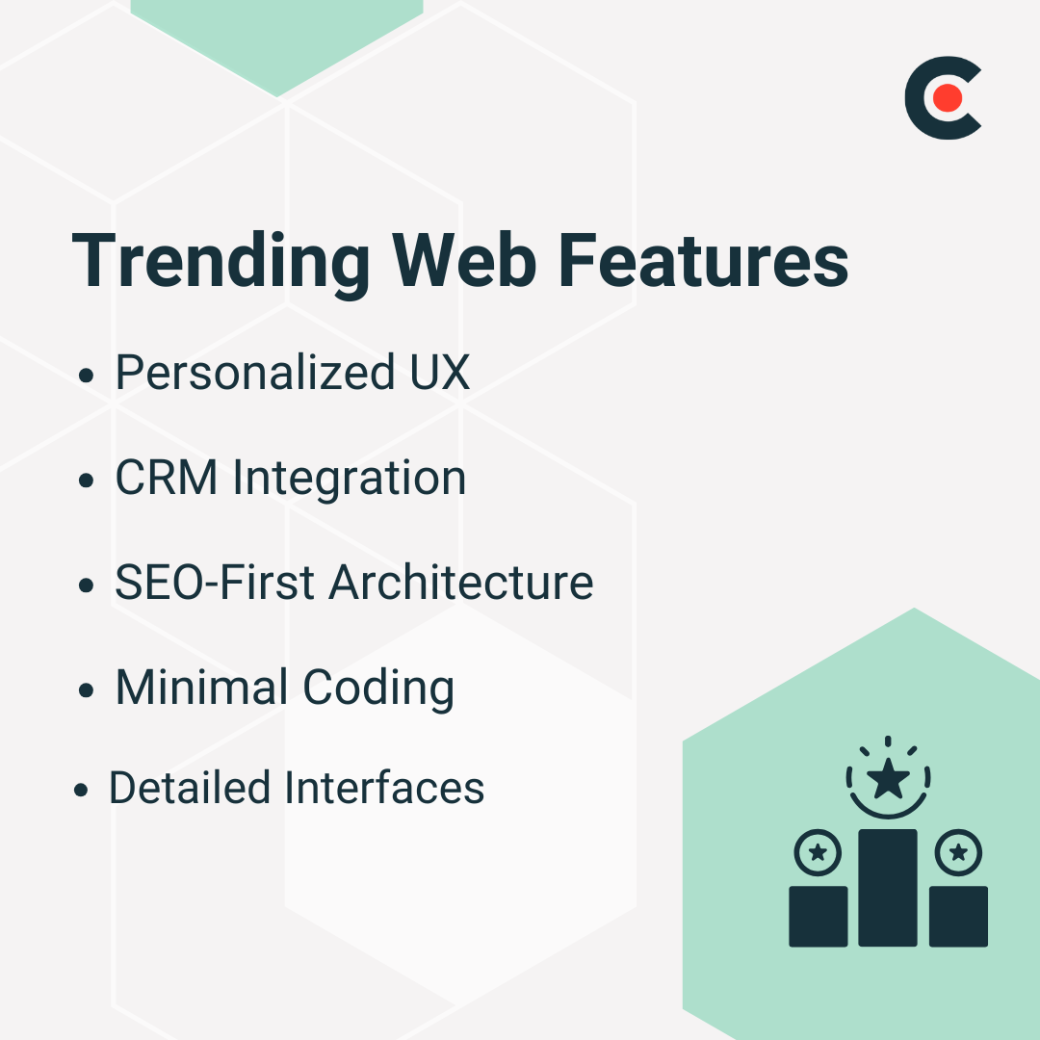
From AI-driven personalization to detailed user interfaces, companies are rolling out features that not only meet current demands but also anticipate future trends. In this article, we’ll explore five of the most impactful and forward-thinking product features gaining traction across industries.
Your website isn't just a digital storefront anymore. It's your most powerful business asset, working around the clock to drive revenue, capture leads, and streamline operations. Yet most companies still treat their websites like static brochures, leading them to miss out on massive opportunities.
What worked for web development two years ago doesn't cut it now. Your customers expect your website to have more sophisticated experiences. Your sales team needs better integration. Your marketing budget demands measurable returns.
It's essential to invest in modernizing your website. In this article, we're talking about five trending product features that serious companies are implementing to gain competitive advantages.
Artificial intelligence (AI) isn't about reshaping web development with flashy chatbots or gimmicky animations. The real transformation lies in AI enabling your website to adapt to individual users in ways that directly impact your conversion rates and customer satisfaction.
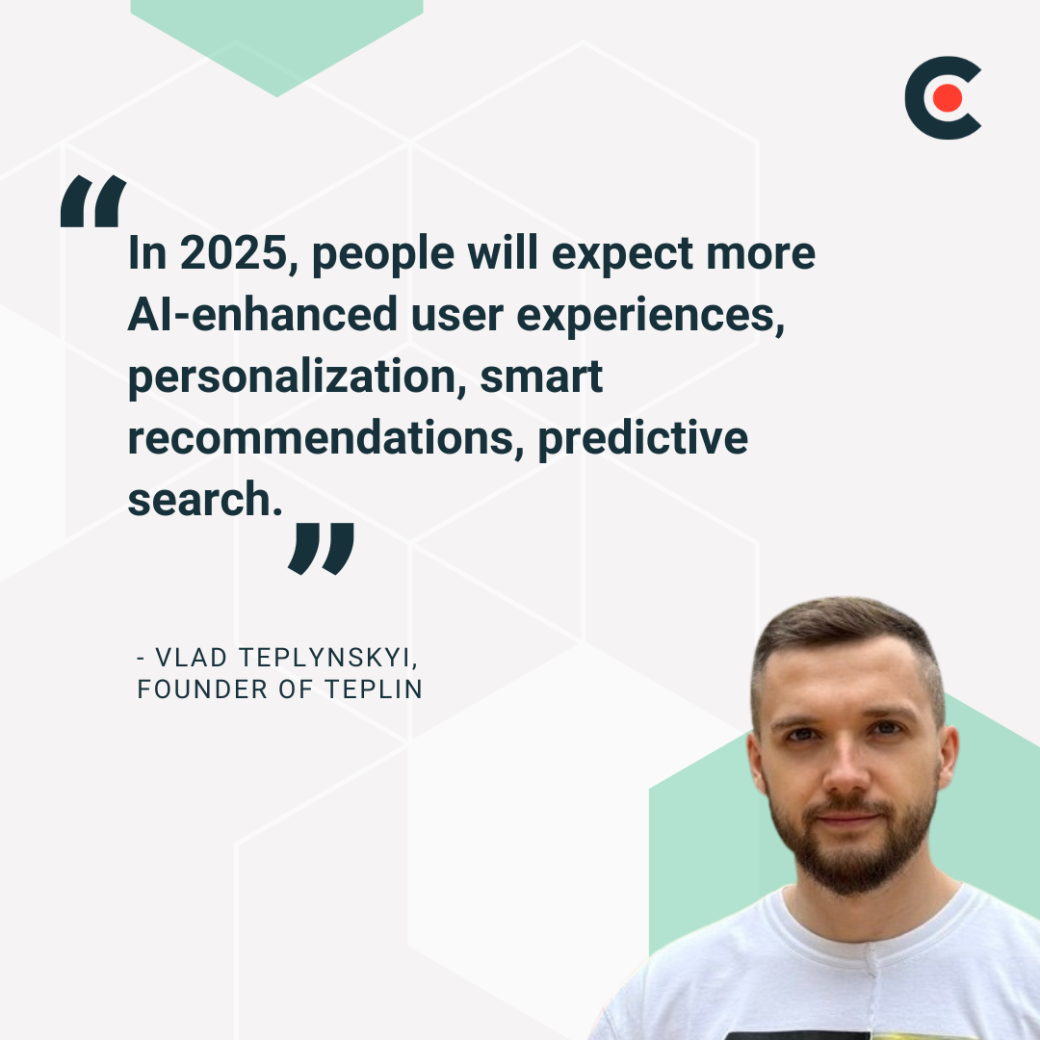
“In 2025, people will expect more AI-enhanced user experiences, personalization, smart recommendations, predictive search,” says Vlad Teplynskyi, Founder of Teplin. With modern AI personalization, your website can now analyze user behavior patterns, content preferences, and engagement history to deliver experiences that are custom-built for each visitor.
Here are a couple examples:
The technology has matured significantly. Context-aware assistants can now understand user intent with remarkable accuracy. Then, adaptive interfaces adjust your website's layouts, content, and functionality based on individual preferences.
“I expect a lot of progress in AI, especially in the B2C space - things like context-aware assistants and adaptive user experiences that feel truly personalized,” claimed Andy Powell, COO of OAK’s LAB. Ultimately, this provides a better user experience and can help increase engagement.
The business value becomes clear when you examine the numbers. According to a study by McKinsey, hyperpersonalized web experiences can increase response rates by 40% and reduce deployment costs by 20%. For companies with longer sales cycles, this translates to more qualified leads entering your pipeline and shorter time-to-close for existing prospects.
Context-aware assistants represent the next evolution of this technology. Instead of generic chatbots that frustrate users with scripted responses, these systems understand conversation context, remember previous interactions, and actually help visitors accomplish their goals. For example, a prospect researching enterprise software solutions would receive different assistance than someone looking for implementation timelines or pricing information.
Additionally, predictive search capabilities are becoming standard expectations rather than nice-to-have features. When users type "enterprise security," they expect your site to immediately surface relevant case studies, product specifications, and implementation guides without requiring them to navigate through multiple menu levels.
Meanwhile, smart recommendation engines can analyze both explicit user actions and implicit behavior signals. If a user were to download multiple whitepapers about cloud migration, they might see strategic implementation content prioritized over basic educational materials. This level of sophistication keeps qualified prospects engaged longer and guides them toward conversion actions.
Most businesses still haven't nailed practical AI assistance. You have an opportunity to get ahead of this curve by focusing on specific use cases rather than trying to build comprehensive AI systems.
Start with one area, maybe smart content recommendations or predictive form completion, and expand from there.
Customer relationship management (CRM) integration transforms your website from a lead generation tool into a complete sales enablement platform. When your site connects seamlessly with your CRM system, every visitor interaction becomes valuable data for your sales and marketing teams to act on immediately.
While websites generally capture basic contact information through forms, they leave sales teams to piece together the prospect's intentions. CRMs can help streamline this process through automation and enhanced analytics.
Marketing automation can actually feed behavioral triggers directly into your CRM workflows. For instance, a user who views pricing pages multiple times might automatically receive targeted follow-up sequences. Prospects who download technical documentation could trigger alerts for your solutions engineering team.
The operational benefits from these features compound quickly. Sales teams spend less time on data entry and research and more time on relationship building. Marketing campaigns become more targeted and effective. Customer success teams get early warning signals about account expansion opportunities or potential churn risks.
Additionally, many CRMs track information such as:
This visibility will change how your sales team approaches conversations.
Instead of generic discovery calls, they can reference specific content that the prospect engaged with and tailor presentations to their interests. Also, your marketing team gains precise data about which campaigns drive traffic and which content pieces move prospects through your funnel.
As search evolves, SEO is more important than ever. Christopher Baker, Managing Director of Creative Brand Design, says, “SEO is another non-negotiable now – it’s no longer treated as a bolt-on, and clients increasingly expect it to be baked into the website build from day one.” SEO is no longer something you add on top of a finished website — it needs to be a priority even before you begin development.
Modern SEO requires architectural decisions that affect everything from your content management system to your server configuration. These choices directly impact your ability to compete for valuable search visibility.
Your prospects aren't just searching for generic industry terms—they're looking for specific solutions to complex problems, comparing vendors, researching implementation challenges, and seeking validation for purchasing decisions. Your website architecture needs to support this entire research journey, not just capture branded searches.
Building an SEO-friendly website starts with your site structure and internal linking strategy. Every page should serve a specific purpose in your customer journey as it logically connects to related content.
For example, your technical documentation needs to link to case studies, and your solution pages should connect to implementation guides. This creates topic clusters that search engines recognize as authoritative resources.
User experience also factors into search rankings more heavily than ever. Page loading speed, mobile responsiveness, and intuitive navigation affect both search visibility and conversion rates. That's why you also need to consider an architecture that delivers fast, accessible experiences across all device types without sacrificing functionality. Technical SEO can help with that.
Example of how you can build SEO-friendly architecture:
The strategic advantage: Businesses that build SEO considerations into their initial architecture decisions consistently outperform competitors who treat search optimization as an afterthought.
Web design directly impacts how prospects perceive your company's capabilities and professionalism.
A poor design either suggests outdated thinking or resource constraints; neither impression helps close enterprise deals. Also, traditional design-to-development handoffs often create months-long timelines and expensive revision cycles.
“In 2025, I expect significant interest in tools that bridge the gap between design and development,” says Nate Botelho, founder of Temper And Forge.
Modern tools can bridge the gap between sophisticated design and rapid implementation. You can now create visually compelling, highly functional websites without extensive custom coding or lengthy development sprints. This shift changes both your design possibilities and your operational timeline.
These web design trends involving no-code and low-code platforms have matured significantly.
No-code platforms like Webflow, Framer, and Squarespace allow designers to create fully functional websites without writing code. They're perfect for marketing sites, portfolios, and simple business websites.
Low-code platforms provide more flexibility while still reducing development time. They offer custom coding options for complex functionality while automatically handling routine tasks.
The business impact of these modern solutions goes further than faster launch timelines. When design updates don't require developer resources, your marketing team can respond quickly to campaign needs, seasonal promotions, or competitive changes. They can even use A/B testing for design elements, not just copy variations.
There are several platforms that offer maximum design control while minimizing coding requirements. Webflow, for example, allows pixel-perfect design control through visual interfaces while automatically generating clean, performant code. Framer provides advanced interaction capabilities without requiring any JavaScript expertise.
The strategic consideration: Your design process affects how quickly you can adapt to market changes, launch new initiatives, and test different approaches. Faster iteration cycles create competitive advantages in fast-moving markets.
Minimalist web interfaces dominated the last decade, but the pendulum swings are becoming visible. Some industries are embracing richer, more detailed interfaces that provide comprehensive information and sophisticated functionality without sacrificing usability.
“I think we’ll see a counter-trend against overly minimalistic designs, with some companies leaning into richer, more detailed interfaces, similar to what’s already popular in Eastern markets,” predicts Powell.
Eastern markets have maintained more information-dense design approaches throughout the minimalism website trend, and some of their interface patterns are gaining adoption globally. These designs prioritize functionality and information accessibility over visual simplicity.
For instance, instead of a simple product page with basic descriptions, companies may add an interactive product explorer with 3D models, comparison tools, and embedded video demonstrations
These web trends particularly apply to B2B software, financial services, and technical industries where prospects need detailed information to make informed decisions. Overly stripped-down designs can hide important details behind multiple clicks, which ends up hurting conversion rates when users need comprehensive data.
Detailed interfaces aren't about cluttering pages with unnecessary elements. Instead, they should present complex information in organized, scannable formats that help users accomplish their goals efficiently. Think financial dashboards that display multiple data sets simultaneously or product configurators that show real-time pricing and availability.
Consider your industry context and user expectations. Enterprise software buyers often prefer comprehensive interfaces that demonstrate system capabilities. Professional service firms might benefit from case study presentations that showcase expertise depth.
Your website represents your company's operational sophistication to every new prospect. Outdated web features signal outdated thinking, while modern capabilities demonstrate that you understand and invest in current business requirements.
The five web development trends we've covered aren't isolated improvements. They work together to create web experiences that function as complete business systems.
Your competitors are making these investments now. The first companies to implement these website features will build sustainable advantages in lead generation, sales efficiency, and customer satisfaction. The costs of falling behind will only increase over time.
Start with the features that address your most pressing operational challenges. Build systematically rather than trying to implement everything simultaneously. But start soon, because these aren't trends you can ignore while your competition pulls ahead.