
Micro SaaS: How Solo Developers Build Profitable Products
Solo developers now make up 35% of startups. Discover how micro SaaS lets individuals build and launch profitable products without a big team.
Updated March 30, 2026

In 2026, augmented reality (AR) has officially moved past the novelty stage. It’s become ubiquitous across some of the most popular apps on the internet, improving social media platforms, educational tools, retail experiences, and workflows.
According to a Clutch survey of 400 consumers, 54% of consumers believe they’re likely to increase their use of AR and VR technology in the next two years, and the app ecosystem is expanding to meet the demand.
From location-based games to creative tools, this guide covers the best augmented reality apps of 2026, organized by category.
Looking for a Software Development agency?
Compare our list of top Software Development companies near you
AR apps layer immersive digital overlays onto real-world locations through cameras, blending the digital and physical. Ultimately, this creates interactive experiences that capture attention and boost user engagement.
AR gaming became exceptionally popular when Pokémon GO launched in 2016, showing how location-based gameplay could reach a global audience. A decade later, it’s still going strong, but it’s not the only AR gaming and entertainment app worth your attention.
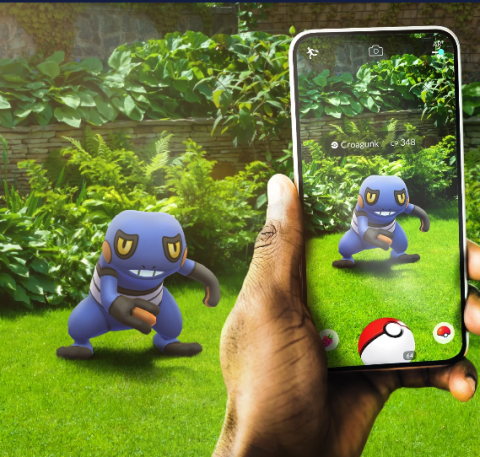
Niantic’s flagship AR game remains the gold standard. In it, players explore real-world locations to catch Pokémon through AR creature interactions, battle gym leaders, and join community events. It’s brought one of this generation’s most beloved franchises to new heights and made Pokémon a more social experience.
For business leaders, Pokémon GO is a key example of how AR can encourage real-world exploration and social gameplay. It’s a model for driving physical-world engagement at a massive scale, showing how powerful a well-designed AR experience can be in increasing brand penetration.
10 years after its release, the game is still relevant thanks to a constant stream of new events, features, and AR enhancements. This proves that AR apps can be more than one-off viral trends when designed well.
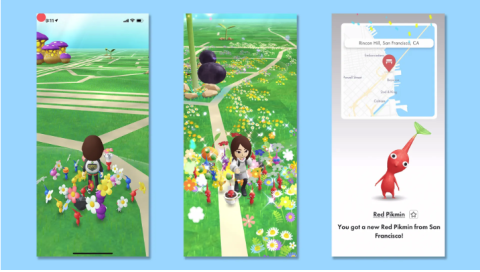
Pikmin Bloom is another example of location-based AR gaming. Players grow and collect Pikmin characters by walking, with their daily steps driving in-game progress. This encourages people to get out and move in ways few games match. The alignment between player health and game progress provides a health incentive to stay engaged.
The popularity of Pikmin Bloom shows how AR gaming can succeed in different verticals. While Pokémon GO is competitive and trend-based, Pikmin Bloom is a relaxing gaming experience that rewards ongoing engagement.

Ingress is another excellent AR game from Niantic that offers one of the deepest strategy experiences in the category. Players join one of two factions and compete with the other to capture real-world landmarks. These “portals” form a persistent global map of contested territory that users continue visiting to reclaim.
Ingress rewards long-term strategic commitment and community organization. Its persistent global AR game map was genuinely unique at launch and is a model developers can follow to encourage prolonged engagement with physical landmarks.
Social media platforms were some of the first apps to bring AR to a mass consumer audience, and they remain the most accessible entry points for new users today. Filters, effects, and creative tools have normalized AR interaction at a scale unmatched in any other category. Here are the AR apps that are leading the space in 2026.
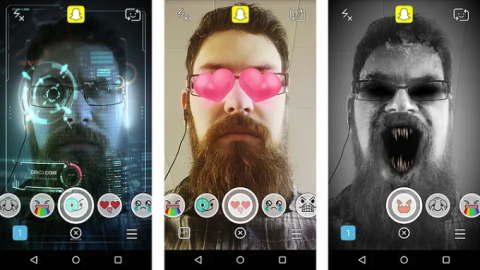
Snapchat is the original platform that made AR filters a daily habit for millions of users. Its Lens Studio platform lets creators and brands build custom AR experiences, including face filters, world effects, and interactive games. These can then be distributed to Snapchat’s full user base, making the app one of the largest and most active AR content ecosystems.
For brands, Snapchat is a direct channel to consumers who already know and enjoy AR content. The creative structure and user network are already in place. All you need is an idea that speaks to your audience to capitalize on them.
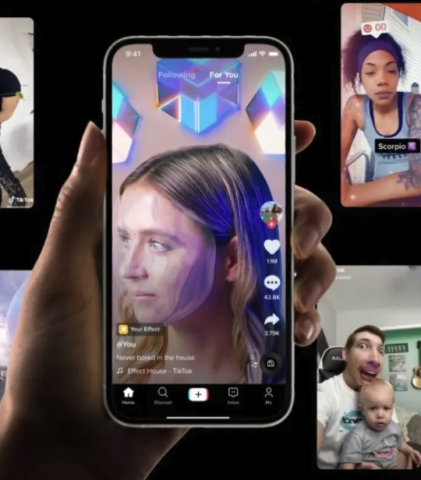
TikTok has made AR effects a core piece of its viral content engine. With the Effect House platform, creators get built-in tools for designing interactive AR experiences, similar to Snapchat. When effects catch on, they can spread quickly and generate massive free coverage for brands.
One major advantage for companies is that TikTok’s AR effects invite active user participation. So users don’t just passively engage but often actively create and distribute AR experiences to their own audiences. This can be a powerful lever for discovery, especially when targeting younger generations.
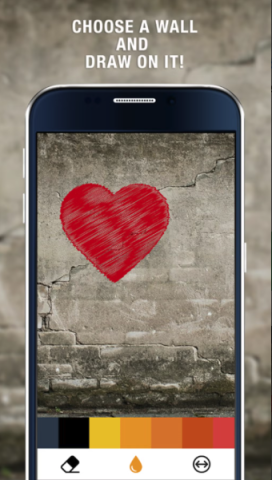
WallaMe combines location-based AR with social media. Users can leave AR messages, drawings, and digital graffiti at real-world locations they visit, but they are only visible to other people who visit that spot with the app. The result is a geolocation-based social layer sitting on top of the physical world.
The concept is still in its early stages, but it represents something genuinely new. Location-specific digital communication could become an important piece of experiential marketing and event activations as the concept continues to spread and more users check for these messages.
AR’s role in education is to make abstract and complex concepts more tangible to students. That can mean bringing a printed page to life in three dimensions or helping users understand something unfamiliar in their physical environment. These apps demonstrate the potential for learning.

Quiver is an AR app that transforms a printed coloring page into an animated work of art. Students point their device at their work and then watch it lift off the page and respond to their interaction. Familiar classroom activities in art and STEM education become more immersive, social learning moments.
The app is a model for instructors looking for ways to bridge physical and digital learning materials. Quiver shows how AR can support existing learning tools by adding a new layer of interactivity on top, rather than replacing them with something entirely new.
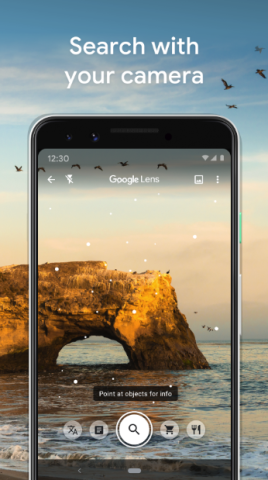
Google Lens is one of the most widely used AR tools. Users can point their camera at any object in their environment and instantly learn anything they want to know about it. From plants and text in foreign languages to restaurant menus and product barcodes, Google Lens surfaces the most relevant information for whatever you care to learn more about.
For business leaders, the app shows what everyday AR utility means in practice. These apps don’t always have to deliver highly immersive experiences that pull the user out of their environment. They’re often more impactful when layered on top of the physical world to help us better understand it.
AR is also reshaping how people connect with one another. The following app helps people stay connected across distances through engaging virtual environments.

vTime XR is a platform that lets friends and colleagues meet in shared virtual environments. Featuring both AR and VR, the app becomes a custom background for conversation and collaboration. It’s designed to make connecting feel less like a video call and more like actually being somewhere together.
This has a lot of potential for distributed teams, representing an early step toward remote work that extends beyond a flat screen. If avatar fidelity and spatial audio continue to improve, the gap between virtual and in-person interactions should narrow over time.
Some of the most compelling AR applications are those that turn ordinary physical spaces into something more, layering storytelling, navigation, and other tools onto the world around us. The following app is a wonderful example of that in practice.
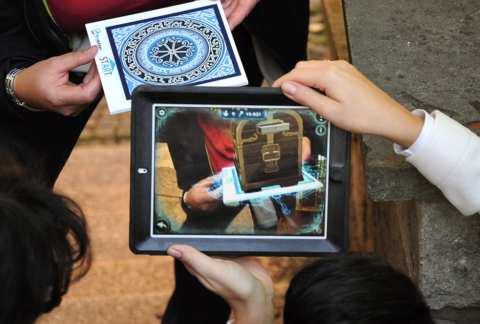
Cluetivity builds AR scavenger hunts and escape game experiences for cities, museums, and tourist hotspots. It combines AR-driven storytelling with GPS navigation to turn physical places into interactive adventures.
For companies, Cluetivity is another example of how AR can be leveraged to deepen engagement within a physical space. Whether that’s a conference venue, campus, or retail environment, the technology creates an experience that can become a point of differentiation for your space.
Across industries, AR apps are growing in popularity because they’re becoming easier to build and more accessible to users. Hardware improvements, combined with growing interest from content creators, are accelerating innovation and making immersive experiences more engaging, scalable, and relevant for everyday use. As the technology becomes more seamless and widely available, more brands are finding practical ways to integrate AR into everyday experiences.
The average smartphone today is significantly more capable than it was five years ago. Many of these devices now include LiDAR sensors, multi-lens camera systems, and dedicated AI processors, which all combine to help AR experiences load faster and perform better.
As mobile hardware continues to improve, developers will be able to leverage the upgrades to serve increasingly realistic and lag-free AR experiences. This makes customers more likely to continue engaging with AR apps, contributing to the sector’s ongoing growth.
Snapchat and TikTok have shown how AR can help users create new content. These platforms give creators the tools they need to develop and distribute individual AR experiences at scale. This helps to build audience loyalty and expand reach on social media, which creates more monetization opportunities.
That’s why brands, influencers, and independent developers are all building AR effects today in much the same way they create video content. The trend should continue to accelerate as long as users adopt AR along current trendlines.
The deeper appeal of AR across all of these categories is its ability to ground digital content in physical spaces. Unlike a website or video, AR experiences are directly connected to real places and objects. This makes them naturally more memorable, contextually relevant, and shareable.
The past 20+ years have been about bringing physical reality to digital spaces through platforms like Facebook and Instagram. AR reverses this, bringing the digital to the physical world. That’s a unique value proposition and one that should drive continued use of the technology.
The apps available today are already impressive but are also early in some ways. The next wave of AR development will be unleashed by the following trends:
The question for business leaders is how quickly AR will become a meaningful part of their industry. If you expect the wave to arrive soon, developing your own AR experience today may be a critical piece of remaining culturally relevant tomorrow.