How UGC Video Ads Outperform Traditional Creative in Paid Social Campaigns (With Real Examples)
Learn why UGC video ads outperform traditional creative in paid social, with real examples, best practices, and proven strategies.
Updated May 25, 2026

Video is one of the most effective tools businesses have for building trust, connection, and brand recognition. But not all videos perform the same way. The ones that consistently provide the best results aren’t product demos or sales pitches, but brand story videos.
Today’s audiences aren’t looking to read long white papers or sit through feature-heavy ads. They want to understand who a brand is, what it stands for, and whether it aligns with their values, and they want that understanding quickly.
That’s where brand story videos excel.
Looking for a Video Production agency?
Compare our list of top Video Production companies near you
A strong brand story video uses narrative and emotion to make a brand memorable. It helps viewers feel something before they’re ever asked to buy anything. When done well, these videos don’t just attract attention, but create long-term loyalty.
In this guide, we’ll break down what a brand story video is, why it matters for businesses, and the five critical elements that make brand storytelling videos effective. Whether you’re exploring brand video examples or planning to create one of your own, this framework will help you understand what separates the best brand story videos from the rest.
A brand story video is a type of brand storytelling video designed to communicate:
Rather than listing features or pushing a sale, it uses narrative and emotion to build a connection with your target audience.
At its core, a brand story video focuses on values, purpose, and transformation. It shows the human side of a business—whether that’s the founder’s journey, a customer’s experience, or the bigger mission behind the brand. The goal isn’t immediate conversion; it’s trust, resonance, and memorability.
This is why many of the best brand story videos feel more like short films than ads. They invite viewers into a story instead of asking them to buy something right away.
A brand story video is often confused with other types of branding videos, but there are important distinctions.
It is not:
If the primary goal is persuasion or conversion, you’re likely looking at a promotional or sales video, not a brand story video.
The difference comes down to intent:
This distinction is clear when you study strong brand video examples: the most memorable ones rarely lead with the product at all.
Brand story videos work best at the top and middle of the marketing funnel, when connection matters more than conversion. They’re especially effective for:
When done well, brand story videos become foundational assets and are often reused across websites, social media, presentations, and campaigns as a central piece of brand identity.
Videos convert better than any other content type, according to 74% of marketers.
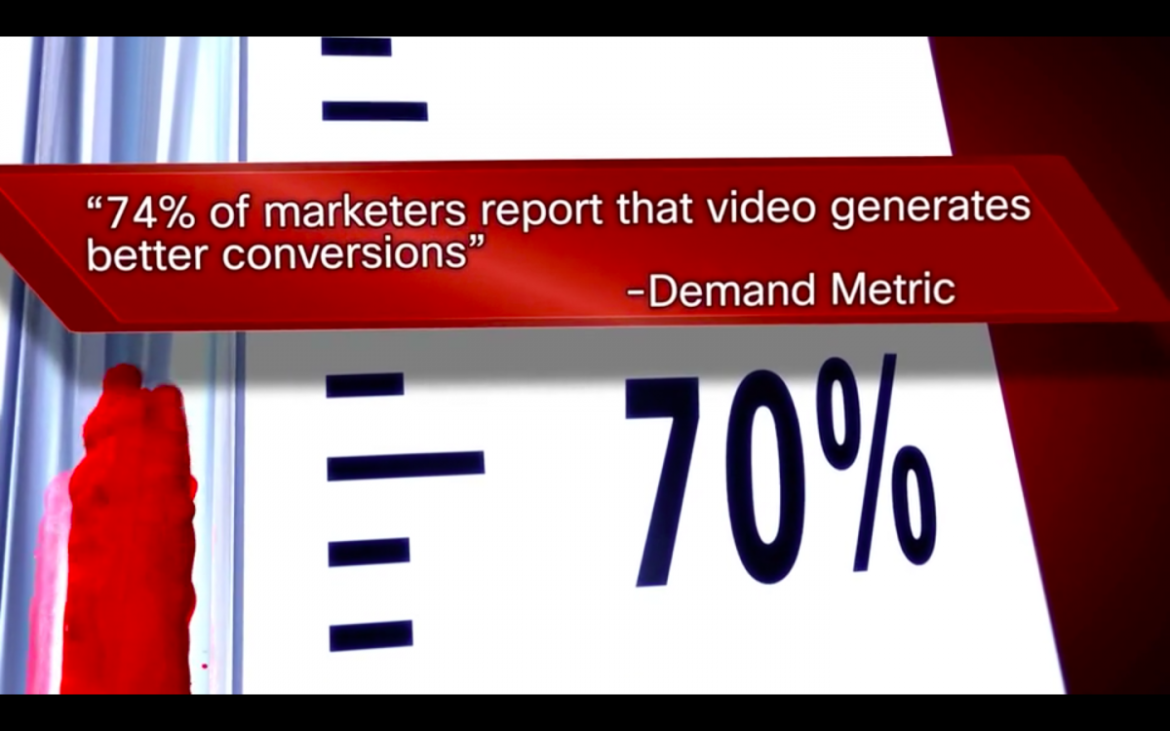
Source: Why Is Video Important To Me?
And while videos are important for businesses, the conversion from videos relies on the story being told.
As the owner of Rip Media Group, I’ve seen firsthand how visual storytelling works across industries. From producing Hollywood films to creating more than 1,000 branded commercials for organizations like Cisco, Ben & Jerry’s, Comcast, The United Nations, and NetApp, one pattern is consistent: the most effective videos follow clear storytelling principles.
That’s where the following five elements come in. These are the most critical components of a great brand story video, and they’ll guide you through creating one that actually connects.
Great advertising is focused on one thing: getting the buyer to understand what’s in it for them.
A video should be all about your client or prospect and solving a problem they have.
Resist the temptation to show off the tech you have and how you are so much better than the competition. You need to make your audience understand exactly how you can benefit them.
Your viewers want to know how you will:
Once you have people thinking about how terrific your offering will be for them, your job becomes far easier.
Take a moment – what are the top 3 things your product does to improve your customer’s life? This will help you figure out what experience you want to show customers in your video.
So, who is your most desired buyer? Who did you create your product or service for?
The more in-depth you can go with your buyer profile, the better your script and subsequent marketing video will be.
It is personalized touches that make all the difference because sales is a one-to-one promise. The more you can tailor your message, the more effective the story will be.
You can start with the basics, such as:
With these, at a minimum, you can tailor your message directly to the needs, goals, and desires of your target audience.
Now, your foundation has been laid, and you can start framing.
Stories induce relationships and activate emotional memories. Your marketing stories should be created to generate these reactions. There are four types of stories you can use to get your message across:
You know this type, when, against all odds, our hero wins the day when he or she really shouldn’t: the underdog-hero, “an every-man/every-woman,” except for one or two extraordinary talents. Feature film examples of this story type include “Rocky,” “Harry Potter,” and “Wall-E.”
This story type takes our empathetic underdog (see above) on a journey that starts in relative obscurity/insignificance but ends with accomplishments he or she could only have dreamed of before. Familiar examples of this are “Star Wars,” “Lord of The Rings,” “The Princess Bride,” and nearly every Nike commercial.
An example would be a Nike commercial featuring Michael Jordan discussing all the hard work that went into his success.
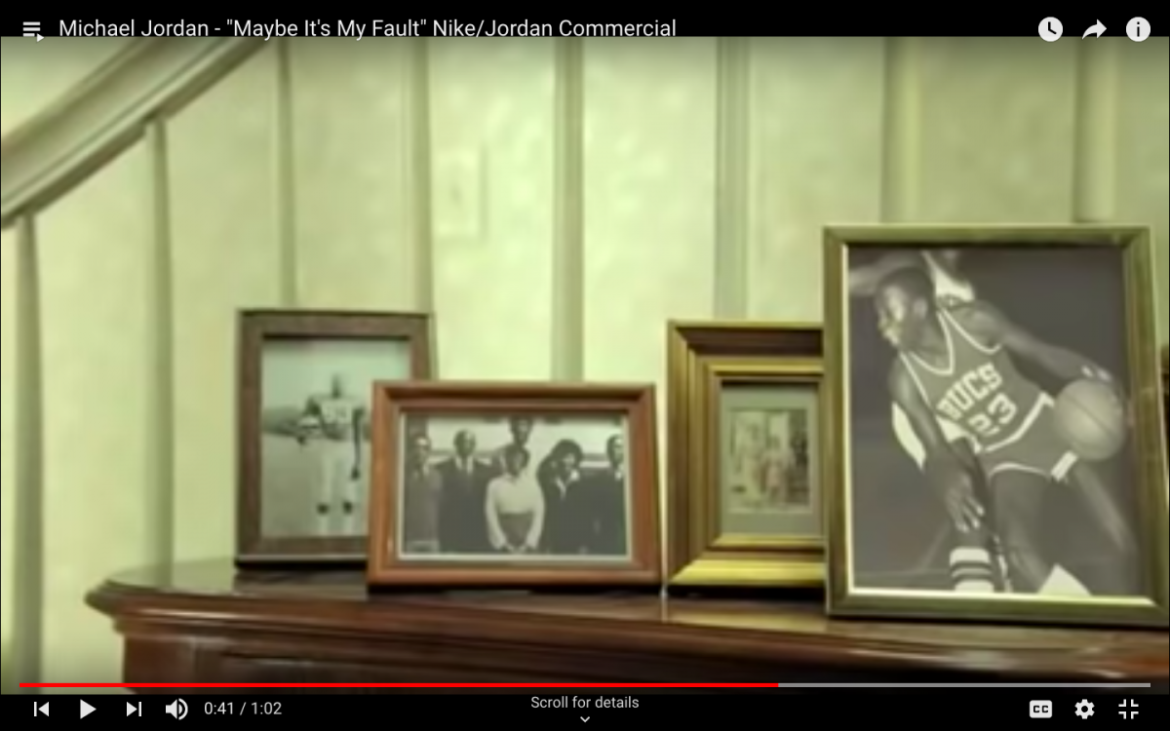
Source: "Maybe It's My Fault" - Michael Jordan for Nike
The Nike commercial is a prime example of a video featuring a hero’s journey.
“How-to” videos can sometimes act as a “mini-documentary,” where the goal is to engage and teach, and the takeaway is learning something new. When it comes to facts, information, or learning a new technique, communicating in a story format will give your videos edge over your competition.
Stories about characters whose lives are transformed are the most interesting to our emotional sense. You want to accomplish transformation with your video-based stories because the goal is to transform your buyer’s lives for the better through your product and/or service.
Every great story contains commonalities that drive emotion. Simply put, the 3-Act Structure is made up of three major turning points:
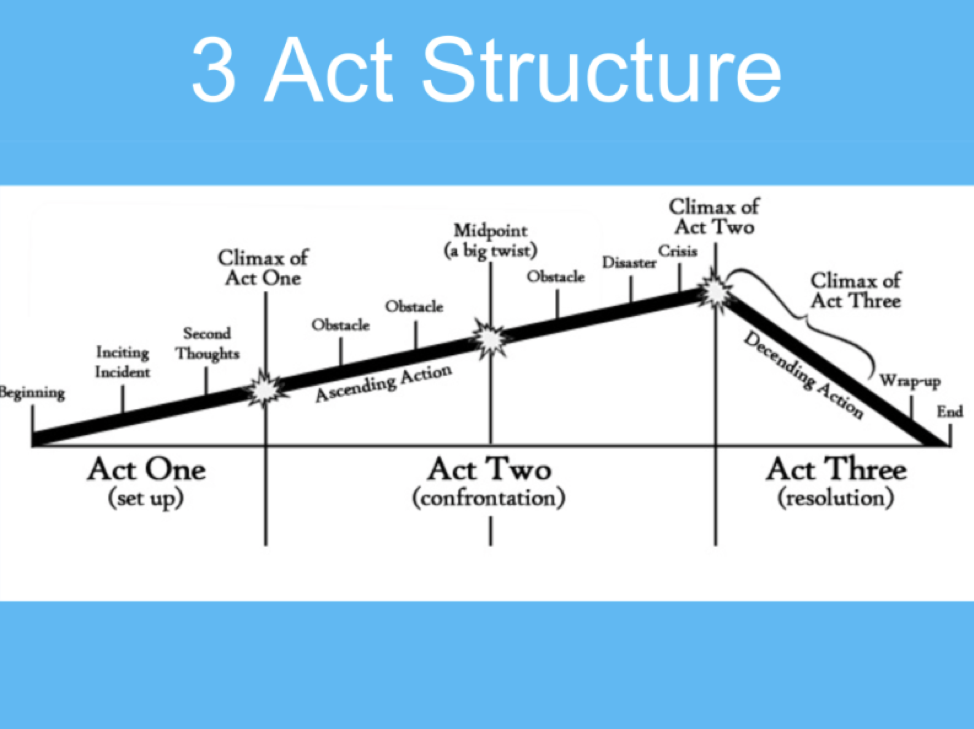
The 3-Act Structure works because it keeps the reader or viewer engaged. It is filled with adversity, high stakes, and a hero’s quest. There are surprises and turning points along the way that perfectly build into climaxes and a final resolution.
If you look at any story you enjoy, you’re sure to find the 3-Act Structure keeping the ups and downs, plus the flow of it all together.
Let’s break these 3 acts down:
The opening of Act One is known as The Setup. Here, the protagonist is introduced, and the antagonist is brought up — though not necessarily seen at this point.
Within the introductory scene, a compelling protagonist will do something likable. This does not mean that our protagonist has to be a “good person” – he or she just has to do something endearing, something that hints to the better or relatable side of his or her character.
For example, our hero robs a bank, but on the way out, he coolly slips a stack of money into the pocket of an old man who was denied a loan earlier. At that moment, we see that our protagonist has guts, but he also has a heart. We have empathy for him.
About a third of the way through Act One, there is a moment that changes our protagonist and moves the hero into action. This moment is called an “inciting incident.” Maybe the main character comes face-to-face with a life-altering problem.
This sets up Act Two.
Things start to get really interesting in Act Two, as the protagonist comes across obstacles. Action rises, the audience’s heart rate spikes, and the video has the audience’s attention.
The midpoint is also known as “a big twist.” This is something that completely throws our protagonist off. The shocker of the story. The partner is the enemy. The bad guy becomes worse. The lover is a spy.
Act Two is all about surprise and confrontation.
From the midpoint, we move on to another obstacle, then a major disaster, which leads to an ultimate crisis. Our hero loses all hope. The main character doesn’t know who to trust or where to go in this moment of crisis.
This leads to the video’s climax.
Act Three starts off with a bang, riding the wave of the final climax of Act Two. The climax of Act Three takes up the first two-thirds of this ending section.
The major component of Act Three consists of descending action. Then we have a wrap-up and the end. Act Three is known as The Resolution in that it ties together all the floating questions from previous scenes.
This is the time for resolution. The Third Act is the place to bring the story together for a great last impression.
You’re close, but you’re still one critical step away.
Lessons 1 through 4 put you in a great spot, but there is a critical next step: testing.
Here are the 5 steps we like to consider when testing video scripts at Rip Media Group:
Once you’ve collected this data, analyze it with a ruthless eye toward making your message as good as it can be.
Writers are often counseled to “kill their darlings,” meaning that every beloved phrase, no matter how clever, may not serve the story. If it does not, it’s time to start pressing “delete.” Every word should lead your viewer to the outcome you are seeking.
Your script may go through several revisions before you are ready. Don’t fret, as this will lead to a better finished product.
The right length for your brand story video depends less on rules and more on where the video will live and how it will be watched. Once that is determined, there are smart length ranges that balance attention, clarity, and impact.
Guidelines for the general length of brand story videos include:
Remember that a brand story video doesn’t need to say everything at once. Each platform rewards different viewing behaviors, and your story should be shaped to match them. A concise, platform-specific edit will almost always outperform a longer, unfocused video, even if the production quality is lower.
Notably, some of the best brand story videos are surprisingly short. When the story is clear and human, even 15 seconds can communicate purpose, values, and connection. The key is intention: every moment should move the story forward or deepen emotional resonance.
If your video feels too long, the solution usually isn’t better editing—it’s a clearer story.
The most effective brand story videos all share one thing in common: they put story first. When you focus on the viewer’s experience, define your audience clearly, choose the right storytelling format, apply strong structure, and refine your message, your video becomes a connection point.
Brand storytelling isn’t limited to video, but video is where story has the greatest impact. A well-crafted brand story video can anchor your website, elevate your marketing campaigns, and clearly position your brand in a crowded market.
If you’re ready to create a brand story video that truly represents your business and resonates with the people you want to reach, working with an experienced video production company can make all the difference. The right partner will help you shape your story, refine your message, and turn it into a video that builds trust and drives long-term results.
 Maury Rogow is CEO of Rip Media Group. He has launched over 100 brands and 3 successful startups using visual storytelling structure. One of his earliest lessons was being a part of selling a start up to Cisco Systems for $2 Billion. He is an out of the box thinker and delivers real results with video first marketing.