
Why Searching for a Specialized Dev Agency Takes Longer Than It Should — And What to Do About It
Looking for a niche software development agency? Learn how to define your requirements, find specialized providers, and vet their experience.
Updated February 19, 2026

Technical debt frustrates engineers, slows down development processes, and can often increase the cost of a project. Whether it’s intentional or unintentional, it’s important to know how to minimize these issues before they become a bigger problem. Poorly managed legacy code, hard-coded values and insufficient testing are just a few examples of what could be costing you.
As a business professional, you know the importance of making quick decisions. Sometimes you only have a short time to make a call before executing a project, particularly in situations where expediency is key..
However, these quick decisions can sometimes lead to technical debt, which can have lasting impacts on your team and business. From delaying development timelines to causing scalability issues, technical debt can increase the cost of software development projects and impact the success of your project. That's why it's important to know how to deal with it when it happens to you.
Looking for a Software Development agency?
Compare our list of top Software Development companies near you
Looking for a software development company? Search for industry-leading developers on Clutch. Filter by client ratings, price, and location to find the perfect partner for your project.
Technical debt often affects software development, and can have serious consequences, like increased costs and hindered future progress. It typically happens from using outdated materials, writing poor-quality code, or lack of documentation. Skipping testing and code reviews can also contribute to technical debt.
There are two types of technical debt you should be aware of: intentional and unintentional.
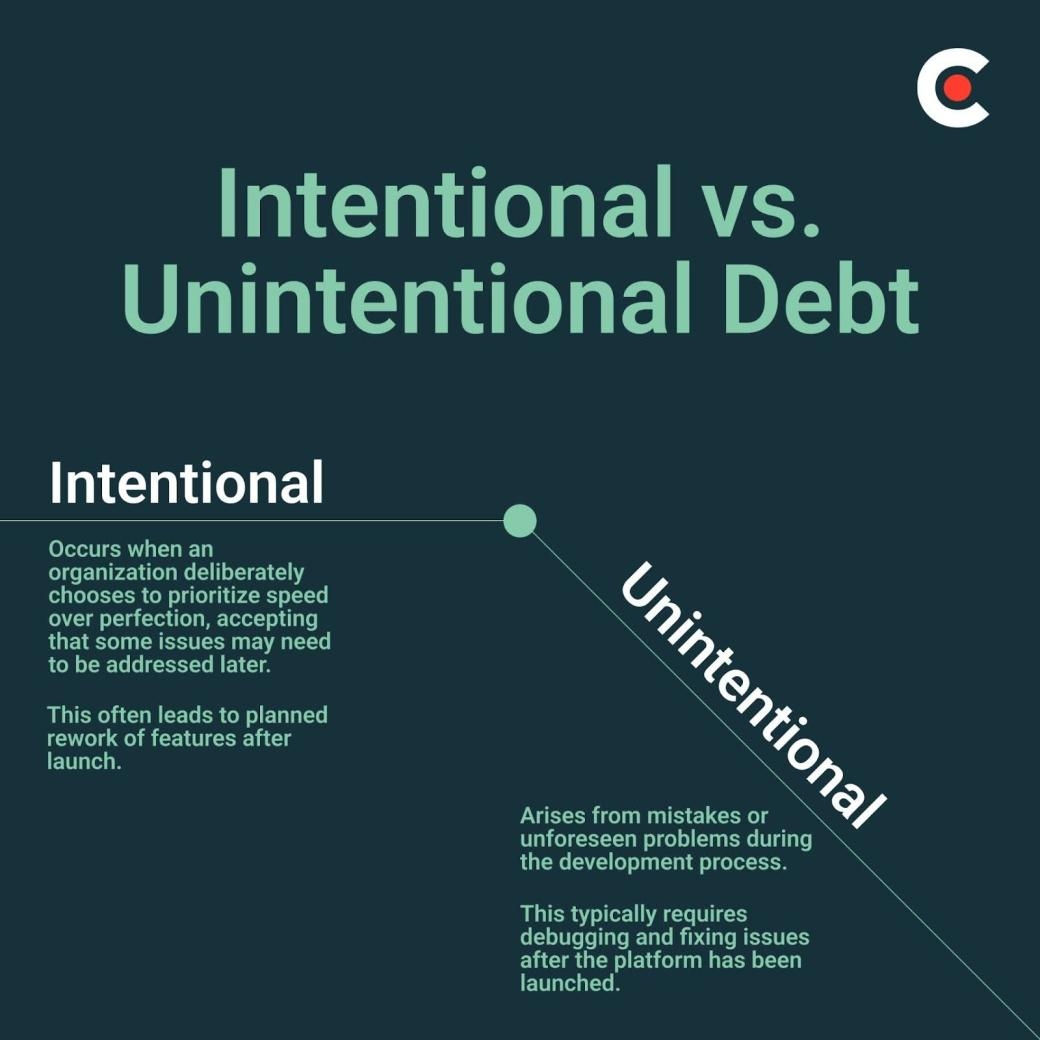
Intentional technical debt usually happens because a business focuses on the present rather than the future, or on their short-term goals over long-term goals. Often, this happens because they're trying to meet a deadline or launch a minimum viable product (MVP).
Creating an early version of a product, even if it's not perfect, is often a strategy for businesses looking to release a product as soon as possible. This allows them to test with users and gain market share in a competitive market. However, this can lead to technical debt that will need to be resolved later on.
Unintentional technical debt typically occurs when there is a lack of understanding surrounding current coding and frameworks. It can also happen due to accidental mistakes or poorly written code that leads to compounding errors. The good news is that by following industry best-practices, many companies can avoid creating technical debt.
Technical debt is a serious problem that can hinder teams in many ways. Your team could face challenges like decreased productivity and compliance issues, among others.
Keith Shields, CEO of the mobile app and web development company Designli, described how they’ve taken over codebases from clients who have significant technical debt. For one project in particular, they worked with poorly documented legacy code.
“This situation led to challenges in scaling the application and integrating new features, forcing us to invest additional time in refactoring the existing code and delaying our timeline for delivering new functionality,” he said.
While this isn’t an uncommon issue for development teams, especially for those taking over codebases from external teams, it can have a huge impact on their ability to scale their software and ultimately meet business objectives. Depending on the source of your technical debt, you could be looking a
Are you dealing with technical debt but unsure how to fix it? Here are 10 technical debt examples and the ways to get back on track from each.
Technology and code are constantly changing, with updated and new languages taking over and support for older languages ending. Those older languages and practices are what is called legacy code, which doesn't align with current best practices or technologies. Worse, it’s often poorly managed. This could be because there's little to no documentation around the code, or because the original developers who worked on the code have left and current developers have a hard time understanding it.
Legacy code can affect future development, leave systems vulnerable to security threats, and require more time and resources to maintain. Dealing with a lack of documentation or old language syntax? Then you're likely dealing with poorly managed legacy code.
If you're looking to resolve poorly managed legacy code within your business, it won't be easy. But it will be worth it. Work on reworking the code to align with current best practices and document as much as you can about the existing code in the meantime.
Hard-coded values, which occur when fixed values and data are embedded directly into a program's source code, are a common detriment to software development teams. This happens when people want to resolve issues quickly rather than spend the time to fix the issues in totality — usually because of a time crunch. Unfortunately, this can cause even more long-term problems because it makes changing the software difficult. It also leaves the software open to errors and potential security risks.
To identify whether or not you're dealing with hard-coded values, simply have your code reviewed. If it turns out that you're dealing with hard-coded values, you can replace them with variables and configurations.
When dealing with software, it's especially important to test the software before releasing it to the public. Going through all the proper tests ensures your software is free from bugs, glitches, and vulnerabilities. Insufficient testing can cause technical debt because it can lead to undetected issues, which can be costly to repair and can harm your reputation with users. For this reason, development teams often need to invest in:
If you're dealing with frequent and unexpected bugs, then you're likely dealing with insufficient testing. If that's the case, it's time to put your resources into expanding your testing methods. This could include automated testing tools and continuous integration.
Suboptimal architecture means you're dealing with a poorly balanced architecture system or system settings. This is caused by insufficient time dedicated to planning the architecture, or the use of a framework that wasn't built to evolve. Unfortunately, this can cause serious consequences in scaling and performance, and may cost more to maintain.
Those performance and scaling difficulties are the two telltale signs that you're dealing with suboptimal architecture. If you're still unsure, perform system reviews and evaluations. To deal with it, you may need to rework the architecture entirely.
Much like legacy code, outdated libraries are programming libraries that are no longer supported. This happens for a variety of reasons: it could be because they have known issues or because they've been retired and replaced. Outdated libraries are often still used due to a lack of knowledge about newer libraries and fearing that implementing the new libraries will break functionalities of existing code.
Using outdated libraries opens the door to security breaches, software crashes, and performance issues. The best way to fix them is to keep informed about newer releases and rework code to align with these new libraries.
Upgrades are important to keeping software running smoothly and reducing performance and security risks. But upgrades take time and money, and when dealing with time crunches or budget limitations, you might hold off on this important task. Deferring upgrades can cause serious harm, including opening the door to security issues and attacks. Your software may also run sluggishly.
Monitor your software and systems to check for upgrades. If an upgrade is needed, proceed. Consider creating a schedule for regular upgrades and implementing a rollback plan in case the upgrade causes issues.
Code has specific standards that need to be followed to avoid errors, security breaches, and poor performance. Non-standard code can also be harder to understand, and newer team members may be unable to adjust. Inconsistent coding standards happen because there's a lack of defined coding standards, or because developers aren't on the same page when it comes to coding style.
If you're dealing with inconsistency in your coding, the best thing you can do is to create clear coding guidelines for your developers to follow.
Tightly-coupled components are designed for one purpose only and are usually not reusable. Some developers may not consider the impact separating these components could cause. Tightly-coupled components can affect scalability and maintainability, increasing costs and the risk of bugs.
To combat tightly-coupled components, consider using the SOLID method and don't be afraid to rework your code.
If you have known issues that you choose to ignore and they keep piling up, this is known as accumulated bug debt. It could happen because you prioritize new features over fixing current issues, or maybe it's because you have limited time, staff, or resources to dedicate to squashing these bugs.
The more bugs that accumulate, the more issues your software may have. You could deal with crashes, failures, and even security risks. If this has happened to you, you'll need to address the bugs as soon as possible and implement regular testing to make sure things are working as they should.
Refactoring means reworking existing code so that it meets current standards. It helps improve performance and keeps the code easy to read and maintain for all involved. However, it does take a lot of time, so some developers may choose not to refactor when they should, especially if deadlines are involved.
Some developers may also fear implementing changes because it might bring up new bugs or bottlenecks.
The best course of action in dealing with technical debt is to prevent it from happening in the first place. By following industry best-practices and maintaining codebases as time goes on, many developers are able to minimize the impact of changing technology and reduce technical debt.
For example, the team at Designli is strategic in how they approach each project. “We prioritize planning and scheduling to include time for code reviews and refactoring in our workflow,” says Shields. “This proactive approach helps us identify and address potential technical debt early, enabling us to maintain efficiency and a clean codebase.”
While outdated libraries, deferred upgrades, and legacy code can often cause technical debt over time, development teams that take the time to review their codebase and make adjustments as needed are often able to avoid technical debt or reduce their impact later on.
Here are a few ways to prevent technical debt.
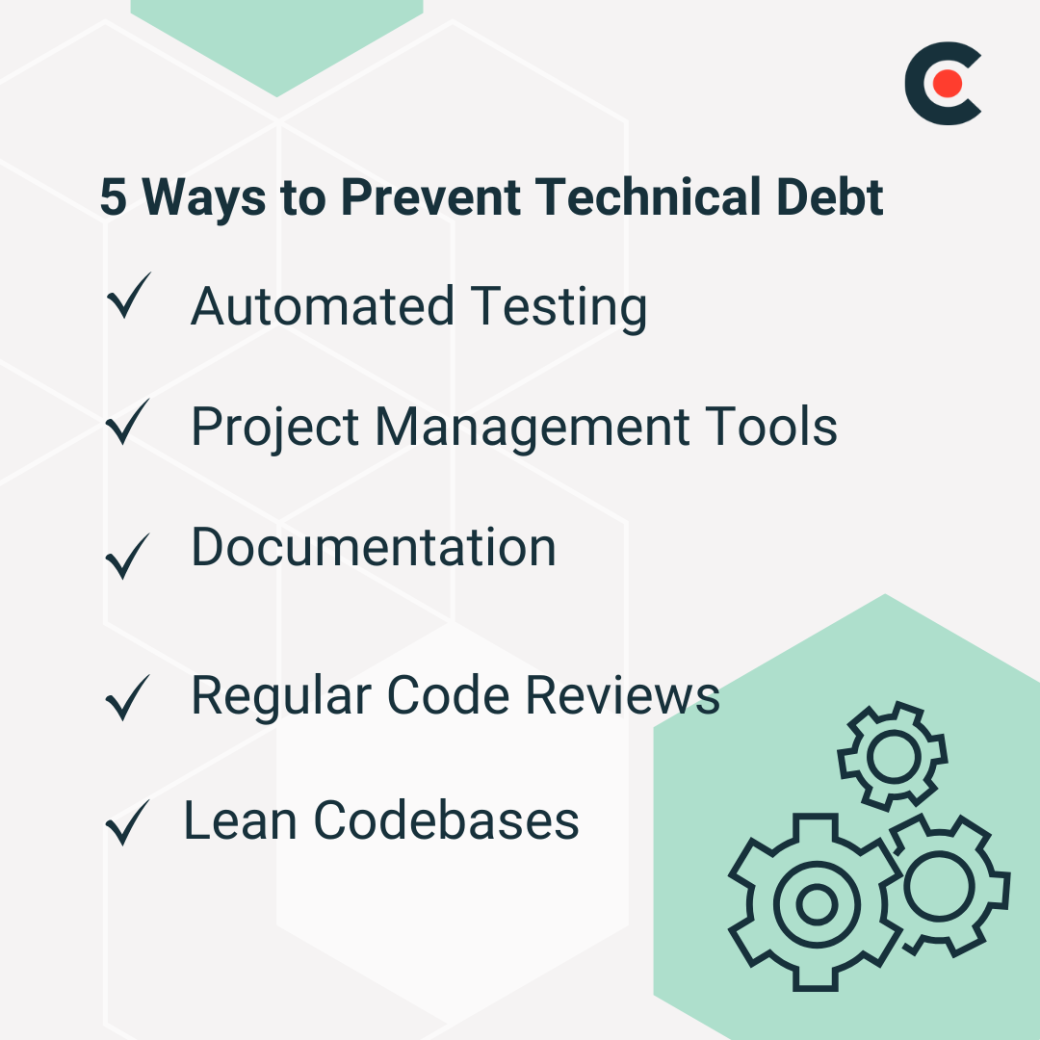
Testing is important, but it can also be time-consuming. That's why you should invest in automated testing. Automated testing uses automated systems to pinpoint bugs and issues, freeing up your human developers’ time. It may not pick up on everything, but it will pick up on most of your issues, allowing you to address them from there.
Another thing you can invest in is the right project management tools. For example, Linters can help identify errors and bugs, while Trello can help developers keep tabs on technical debt and figure out ways to reduce them.
Documentation is always important. Newer team members will be better acclimated with the right documentation, and it allows for better collaboration, improved usability, and better knowledge sharing. It will also assist you in remaining compliant with software standards and regulations.
Finally, submit your code for regular reviews. Code reviews will help improve code quality and identify issues with unstable code and security flaws, which will help prevent technical debt from snowballing.
Large and complex codebases can make it more difficult to be agile. Especially if you are building an early version of a product, keeping your codebase lean allows you to easily make changes if needed. Shield says “It’s also important to keep your Version 1 as lean as possible, which reduces its bloat and allows you to pivot into new feature sets based on market feedback without having to refactor too much of the previous codebase.”
Especially if you are trying to launch a product as quickly as possible — which can lead to intentional technical debt — creating a simple codebase will allow your team to stay flexible and respond to feedback quickly.
Technical debt is a serious issue affecting the scalability and functionality of your products as well your ability to grow your business as needed.
While some issues causing technical debt may be intentional, it’s still important that development teams plan ahead so they can easily update their codebase going forward. Even more importantly, you can easily avoid unintentional technical debt by following industry best-practices like regular code reviews.
You can take appropriate action to prevent technical debt from building in your company by testing your software, using the right tools, and documenting everything.