
The Real Cost of Your MVP in 2027
AI made code cheap, but not software that holds up. See how MVP cost drivers have shifted and why human validation and taste are now what you’re really...
Updated October 22, 2026

Finding a software development agency with the right expertise can take time. Many providers market themselves broadly, making it harder to confirm they have the industry, platform, or tech stack experience your project requires. This guide explains how to narrow your search and find a specialized development partner.
At first glance, finding a software developer seems straightforward: review shortlists and rankings, browse portfolios and client reviews, then schedule an interview.
But when you need a particular tech stack, project type, or industry expertise, finding and vetting providers takes time. Many agencies market themselves as generalists, so confirming they have the experience your project needs can stretch out the search and delay your project.
Looking for a Software Development agency?
Compare our list of top Software Development companies near you
In this piece, we’ll explain what affects the search and how to find a niche software development agency.
Many development companies specialize in a particular industry, technology, platform, or business need. For example, if your team already has a product built with AJAX, you’ll want a developer who knows how to work with it. Your project may also call for expertise in a specific industry, platform, programming language, or development approach.
Here are six common types of specialization:
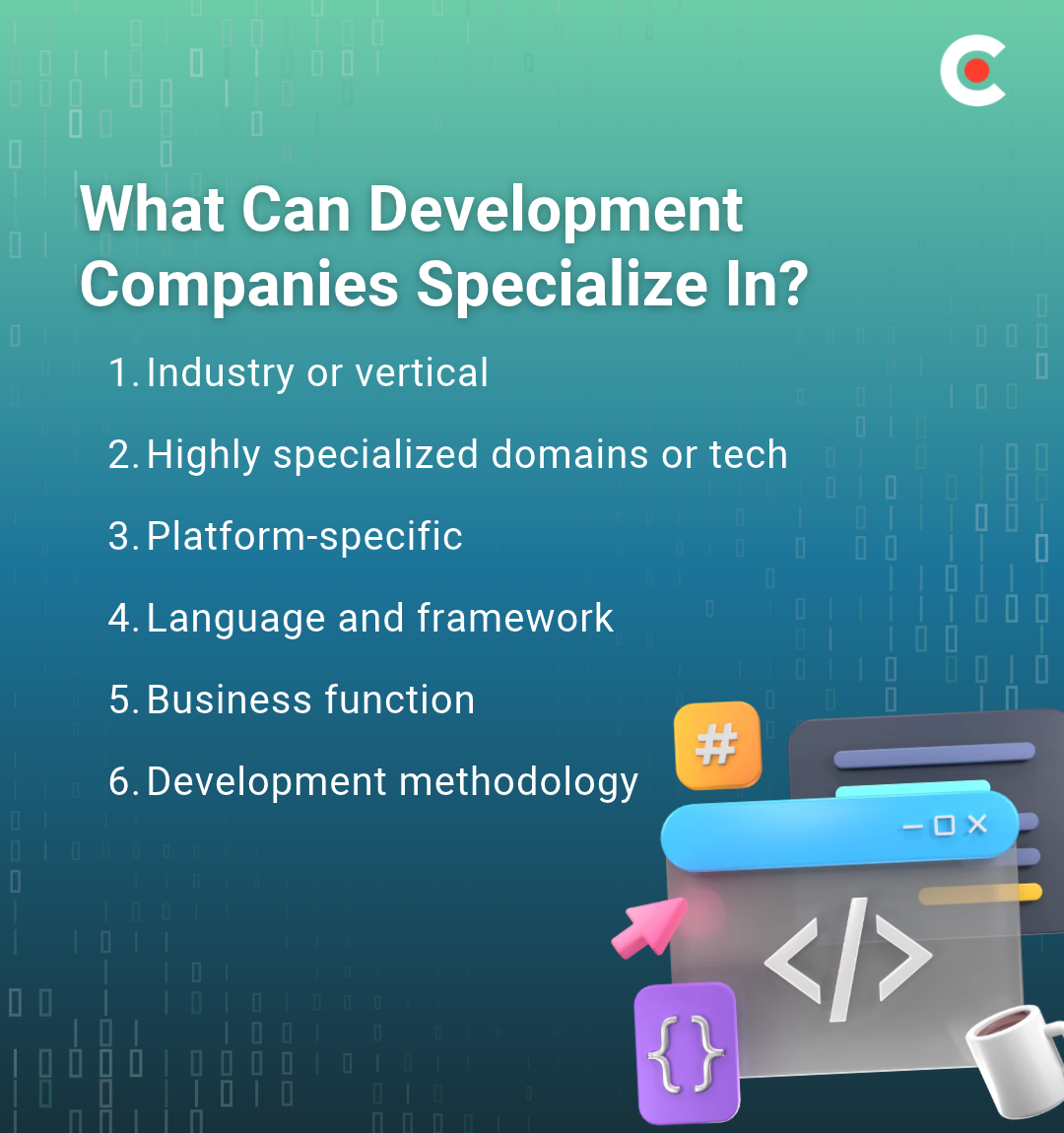
Finding a provider with the specific experience you need can be challenging. Without clear priorities, you may spend time talking to firms that are only a partial fit.
Before you start searching, outline your project’s scope, goals, and requirements. Knowing what matters most will help you narrow the candidate pool and find relevant providers sooner.
Perhaps the biggest factor that prolongs the search for the right specialized developer is how agencies market themselves.
When looking at the pool, many software development agencies list every service they offer, claim experience across various verticals, and publish polished, broad portfolios. This makes it tough to tell whether they truly have in-depth expertise or not. Buyers can't distinguish between a firm that built three fintech platforms and one that helped a fintech client with a single marketing site four years ago.
Buyer tools aren’t typically built to narrow options and specificity. Google, for instance, shows agencies by their SEO rankings, not relevant expertise. At the same time, LinkedIn rewards providers' visibility and doesn’t validate capabilities.
This makes it hard for potential clients to vet vendors, resulting in the slower process of going through shortlists, reviewing a legion of portfolios, and scheduling discovery calls. Each of those steps takes time — and most of the firms in the funnel were never a good fit to begin with.
Even after the lengthy process of shortlisting firms, clients still face vetting challenges.
Case studies can be cherry-picked, vendors curate content to show successful projects, and portfolios don't always reflect current capabilities. References may be hand-selected; agencies will often only present satisfied clients with successful projects.
How can clients efficiently narrow the options? They’ll need to do significant legwork to verify claims, adding a considerable amount of time to the search. There’s no standardized way to identify skilled developers.
Buyers need to know what trustworthy signals look like to help streamline the extraneous search. One reliable indicator is through verified client reviews — real clients, tied to a specific service or project, rated highly, and recent.
Client reviews can detail an agency’s strengths and weaknesses. They can clarify the agency’s role, the project’s scope, and define the type of work performed. In addition, verified reviews can provide credible insights about the engagement, giving context to how the vendor communicates and executes.
It’s important to note that aggregated ratings shouldn’t be the sole basis buyers should look at when reviewing agencies because they could reflect work from five years ago. Instead, you need to view recent reviews that reflect their latest projects.
Clutch Certified is designed to help buyers cut through the clutter and take care of that vetting problem.
The Clutch Certified badge is earned per service line or focus area. It's not purchased and not self-reported. An agency cannot apply for a Clutch Certified badge; it’s earned when verified client reviews confirm they actually delivered that specific work.
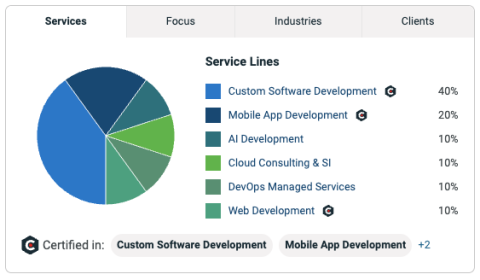
A Clutch Certified badge in a specific service tells you three things:
Clutch Certified badges help clients navigate niche development needs with confidence. When you see a badge, you know the provider has recent, client-verified experience in that specialized service before you even make the call.
By leveraging Clutch Certified badges, you can streamline your search. Follow this process to help structure your vetting process:
Before going contacting agencies, define your project’s parameters — everything from the problem you’re looking to solve down to the outcome you expect. Outline the scope, technical requirements, constraints, budget range, and expected timeline.
A clear understanding of your needs will help build your search criteria, giving you a better basis for comparison and helping you avoid endlessly expanding your search.
Once you define your requirements, search for potential teams on Clutch to view verified reviews tied to specific services, not just overall ratings or self-reported capabilities. Leverage a consistent evaluation structure to objectively compare candidates based on their specialization, relevant project experiences, and delivery reliability.
While a high average overall rating may seem impressive on the surface, those reviews could be from old projects that reflect different development environments. As technology progresses rapidly, reviewing recency is essential to understanding the developer's current capabilities.
Prioritize providers with strong recent reviews showcasing relevant projects. Check feedback on their responsiveness, project management, problem-solving, and adherence to timelines. In addition, be on the lookout for patterns, both negative and positive.
After you’ve checked their reviews, dive into their case studies to look for projects similar in size, complexity, and industry — not just the same vertical label. Don’t focus solely on strong results, try to understand whether the agency has solved similar problems.
Keep your shortlist tight. Consider only 2–3 agencies that demonstrate genuine qualifications.
Limiting your shortlist will help save time and eliminate providers that can’t strongly demonstrate skills required for your development project. A wide funnel will also make it tougher to contact references, verify case studies, and compare results.
Finding the right niche developer shouldn’t take ages if you know what to look for, how to look, and what tools to leverage. Broad marketing, strong SEO rankings, and curated portfolios will make the search tougher, but by making your search more deliberate, you can navigate the specialized development space with more ease.
The bar for a good niche agency isn't complicated: recent clients, relevant work, verified proof. A competent team should have strong expertise, a good understanding of your problem, and can work productively with your team.
Ultimately, it’s about finding the right balance between extending your search and the cost of hiring the wrong team — the upfront effort pays off downstream.