Micro SaaS: How Solo Developers Build Profitable Products
Solo developers now make up 35% of startups. Discover how micro SaaS lets individuals build and launch profitable products without a big team.
Updated May 28, 2026

Small businesses have come a long way with AI in the last year. Using 2023 to dip their toes into the budding technology, they found ways to boost operational efficiency and productivity. Now, companies are preparing to dive headfirst into all AI has to offer.
In 2024, companies aren’t just implementing AI solutions; they're rolling up their sleeves to build AI tools of their own. It’s a bold move, but these new solutions will have the power to deliver unprecedented value for customers.
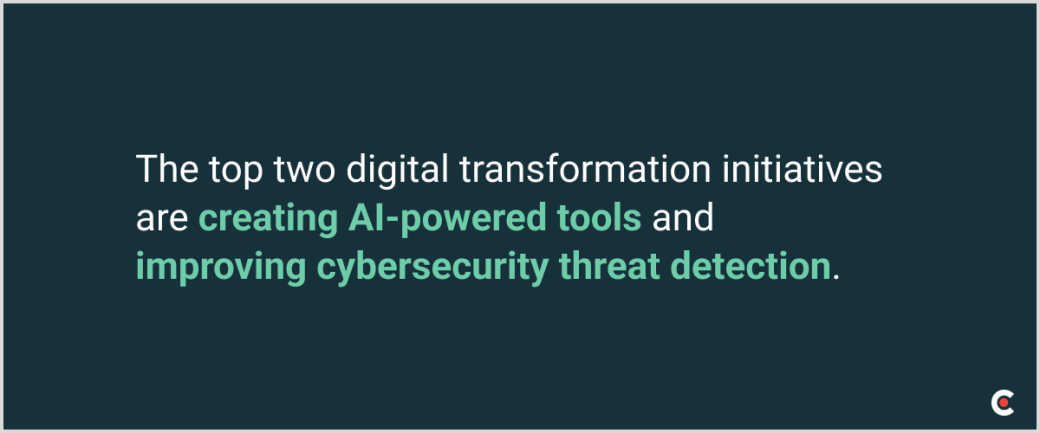
Creating an AI-powered tool was the most popular planned digital transformation project for 2024.
Looking for a Software Development agency?
Compare our list of top Software Development companies near you
Unfortunately, massive AI success isn’t all that simple. Amid the exciting whirlwind of AI innovation, there's also a reality check. Cyber threats have become a serious concern because as AI solutions grow in prominence, so do AI-powered threats.
Threat detection is the second-most prioritized digital initiative for small businesses. Companies understand the delicate balance between innovation and safeguarding digital assets, intending to pair AI growth with professional-level cyber fortification.
Clutch surveyed 500 small business leaders with plans to invest in emerging technologies in 2024 to learn how small businesses are responding to the AI transformation era. We uncovered small businesses' strategies, challenges, and aspirations as they gear up for a pivotal year.
Clutch surveyed 500 small businesses in the US with intentions to invest in digital transformation projects in 2024. The survey accounts for companies with 1,000 employees and fewer across a broad cross-section of industries. Twenty-eight percent (28%) of respondents’ businesses have 2 to 10 employees; 24% have 11 to 50 employees; 27% have 51 to 250 employees; 21% have 251 to 500 employees.