
How to Measure SEO Success When Traffic Declines
Organic traffic is down, but is your SEO failing? Learn which metrics show real SEO success when AI Overviews and zero-click searches are reducing clicks.
Updated March 25, 2026

AI and other technologies are changing how people search. Learn why a traditional SEO strategy may no longer be enough, with expert tips for developing a more diversified, effective approach.
From voice search to AI overviews, the SEO landscape is constantly evolving. This makes overrelying on any single tactic a risky bet. Focus too heavily on an aspect of SEO that begins declining, and your brand could be playing catch-up for years to come.
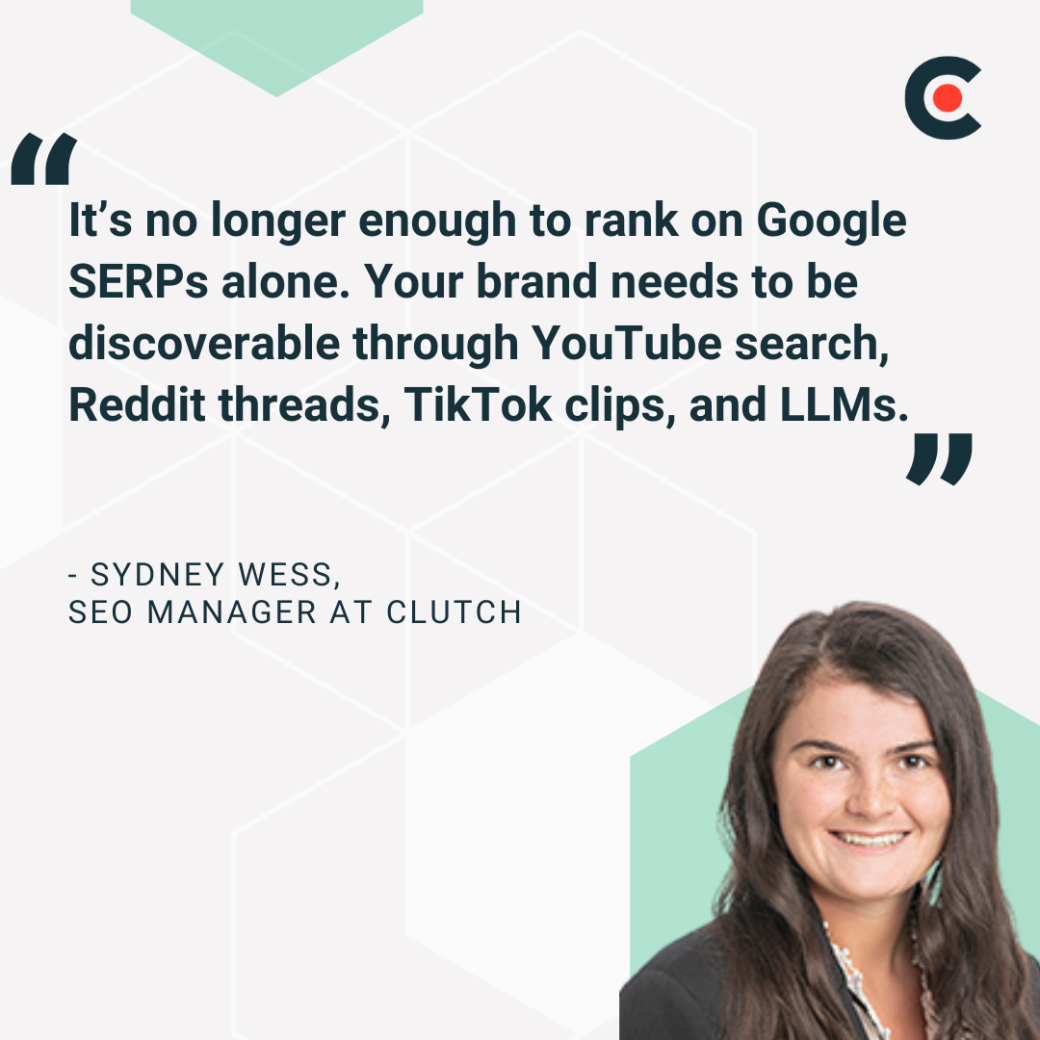
That’s why Sydney Wess, SEO manager at Clutch, believes, “It’s no longer enough to rank on Google SERPs alone. Your brand needs to be discoverable through YouTube search, Reddit threads, TikTok clips, and LLMs.” But how do you achieve that in practice?
Looking for a SEO agency?
Compare our list of top SEO companies near you
This guide to SEO diversification will help you get there. Learn more about why diversifying matters, tips for implementation, and how to track your results.
SEO diversification is the strategy of spreading your search engine optimization efforts across multiple types of search. The general goal is to capture more traffic from alternative but growing sources. For example, you might diversify by targeting AI overviews and voice search results instead of only traditional typed keywords.
Diversification is essential today as we live in a period of transition. People are searching for information in new ways, as technologies such as large language model AIs, like ChatGPT and voice assistants open more avenues for discovery.
Traditional SEO strategies aren’t optimized for these growing traffic sources. Businesses that fail to adapt could see declining SEO performance in the coming years.
Channel diversification is also about minimizing risk. It can prepare your business to overcome each of the following potential challenges.
SEO results are determined by algorithms, which companies like Google update frequently. If you only use one SEO strategy, a sudden algorithm change could render it obsolete and put your company in a bad position.
Diversification helps you avoid this risk. It keeps your business prepared for whatever algorithm changes platforms like Google establish. That way, you can adapt mid-stride instead of feeling like you’re starting over again each time a meaningful change happens.
There’s also a risk tied to consumers' shifting search habits. We've seen the growth of alternative platforms like YouTube, TikTok, and LLMs, and there are more changes to come.
Diversification helps by positioning your content to excel on any platform. It’s about establishing your brand’s presence wherever the audience is, so your business stays relevant no matter what the future brings.
Finally, diversification mitigates the risk of the competition severely impacting your SEO performance. Other brands are targeting the same keywords you are. There’s always the chance of another player coming in to outpace your investment and displace your company from its top result pages.
Diversification spreads out your SEO investment across multiple platforms, keywords, and topic clusters. That way, even if fierce competition disrupts part of your strategy, it won’t tank your SEO performance entirely, as you won’t be overreliant on a single vertical.
Diversification means more than targeting different SEO channels. It’s about creating a well-rounded strategy and preparing your business to thrive no matter what the future brings. You can get there by following these six strategies:
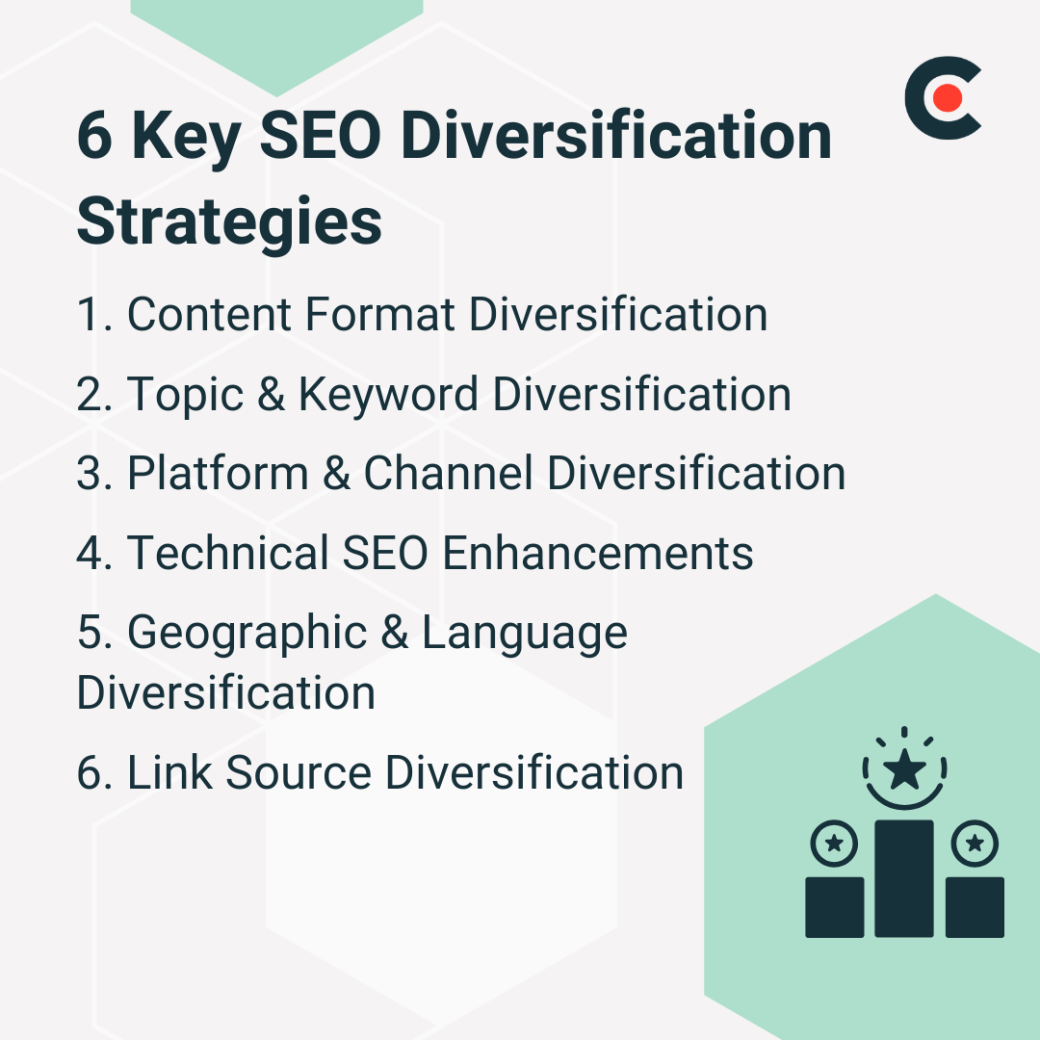
The first step is diversifying the kind of content you distribute. Instead of only posting blogs, you can record videos and podcasts, create detailed data visualizations and infographics, or share downloadable resources with your industry.
The key is engaging your target audience in each type of content they consume. Some users prefer to watch videos, while others would rather get the same information from a blog. By sharing content in each format, you can connect with both groups.
As you expand content creation, try to optimize each vertical for SEO. For example:
Diversifying the type of content you share helps increase reach and engagement while decreasing bounce rates. You can often create multiple forms of content from the same material.
For example, you can turn your podcast into a video that you share on YouTube, then clip the best parts for TikTok. This kind of repurposing can save you a tremendous amount of time.
As you work, make sure to stay true to your brand and its image.
As Wess notes, “Searchers want answers presented in a way that feels authentic.”
If you get too far out of your wheelhouse, it could diminish your brand’s reputation.
Additional Reading: ‘How Social Media Signals Impact SEO’
Next, diversify your content to cover a broader set of keywords and search intents. Focusing on a narrow set of topics to drive most of your traffic exposes you to concentration risk. If you only focus on one thing and it stops working one day, it’ll be hard to recover.
One strategy is to develop topic clusters. These are interlinked pieces of content designed around a major search intent, such as shopping for the best running shoes. Covering the topic from multiple angles helps you build deep subject matter authority, which improves SEO rankings.
In general, the goal is to expand the number of distinct topics you’re targeting. This opens more pathways for driving traffic, so if any given one suddenly stops working, your company won’t be in a tough position.
However, always balance your SEO efforts with a human-centric approach.
It’s important to share content across more platforms than Google. This will reduce your reliance on the site for getting traffic, which is becoming important as more people turn to alternative search platforms. Other channels worth targeting include:
Consider your audience when deciding where to focus your efforts. Each platform has a unique demographic of users. You want to put your time and money into channels that have the highest number of members from your target audience.
Wess explains further: “Younger audiences use platforms like TikTok and Reddit as alternatives to search engines. Platforms like YouTube and Pinterest have mature SEO ecosystems now, with users who show up on the platform intending to engage deeply. A diversified plan doesn’t need to chase every platform, but it intentionally shows up where your audience is asking questions.”
Additional Reading: ‘How to Build Your Reddit Marketing Strategy’
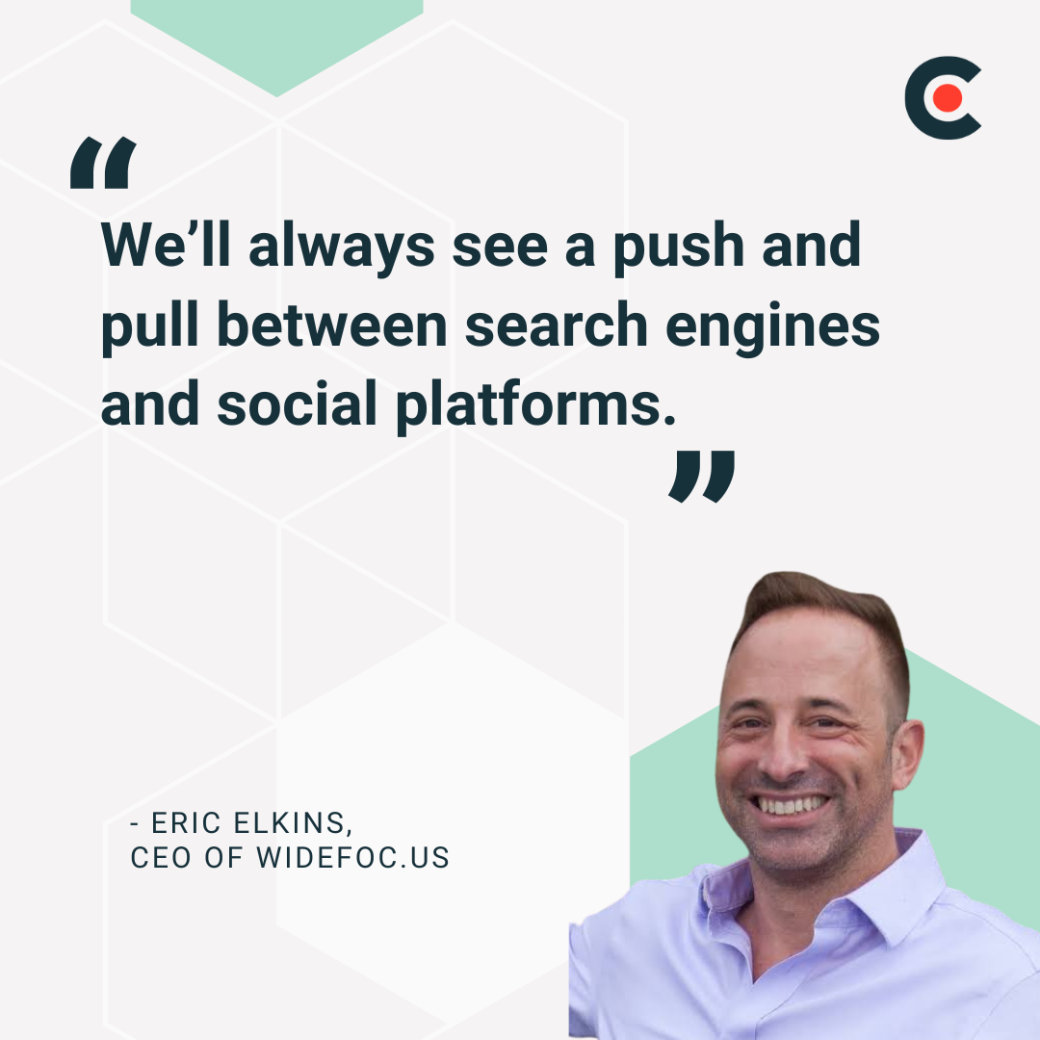
However, just because your audience isn’t using a channel frequently today doesn’t mean it won’t in the future. Eric Elkins, CEO of WideFoc.us, points out, “We’ll always see a push and pull between search engines and social platforms.”
In other words, search habits change over time. To be prepared for whatever changes tomorrow brings, it’s worth establishing at least a basic presence across each of the platforms listed here.
Another aspect of diversifying your SEO falls more on the technical side. You’re already spending a lot of time and money producing great content. So you should make sure that search engines can find and index it easily. That means:
It’s also worth focusing on site speed. When pages load quickly, bounce rates go down while engagement increases. You can make your website faster by compressing images, optimizing your code base, and using a content delivery network instead of hosting pages directly.
Finally, make sure your site is optimized for mobile devices. About 47% of internet traffic in the U.S. comes from mobile phones, so your site should be easy to access no matter how users choose to engage.
The keywords that generate the most traffic in your industry likely already have hundreds of brands competing for them. This can make it difficult to cut through the noise, stand out, and beat out everyone else trying to do the same thing as you. One solution is to diversify with geographic and language-based targeting.
The general idea is to localize your content to match the unique needs of people in a specific part of the world. For example, instead of targeting the keyphrase “best running shoes,” you might target “best running shoes for people in NYC.” These localized keywords tend to have less competition, which makes them easier to rank for.
Also, consider translating your content into multiple languages. Although English is the most widely used language online, it accounts for under 50% of all web content. By only engaging with your audience in a single language, you could be missing out on large groups of potential customers.
Finally, try diversifying your link strategy. Strategic link-building helps you build domain authority, which improves SEO results. It also reduces the risk of Google penalizing your pages for unnatural link patterns.
Try to earn backlinks from a variety of online sources, including blogs, news sites, and social media profiles. To do that, you’ll need to create content that other people find valuable, newsworthy, or helpful. You can also request mutual backlink exchanges from complementary brands to jumpstart the process.
When you take the effort to diversify your SEO, you need ways to track the success of your work. That means watching key performance indicators such as:
You can compare metrics like time on page, conversions, and bounce rates across traffic sources. Then reinvest in your best performers, adapt your approach with the stragglers, and repeat. Over time, this data should guide you toward the right strategies for your brand.
Just don’t read too much into these KPIs too soon. SEO results take time, and people often need to hear a marketing message several times before taking action.
That’s why Wess stresses the Rule of 7, which says that potential customers should encounter a brand seven times before making a purchase decision.
That doesn’t necessarily mean you’ll need to share seven unique pieces of content before seeing results.
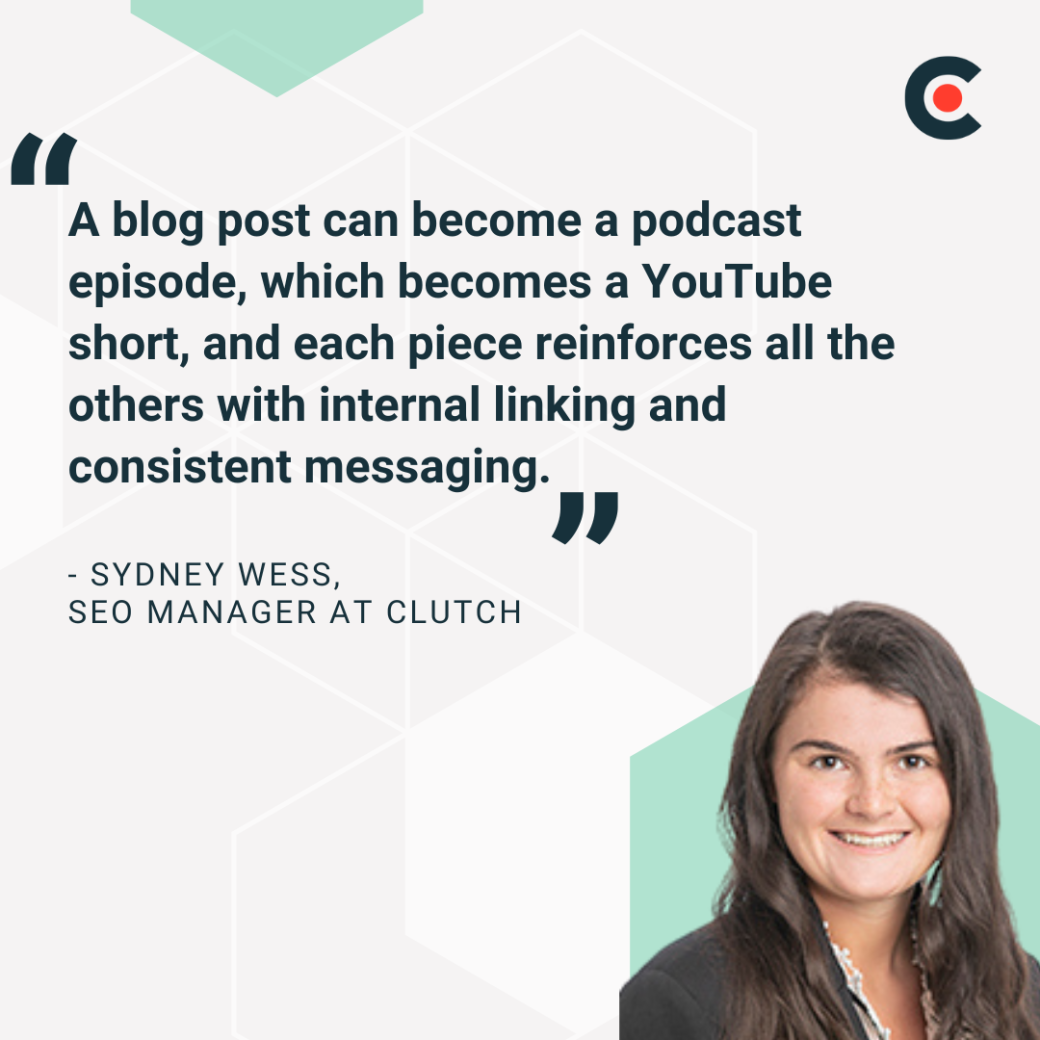
Wess explains, “A blog post can become a podcast episode, which becomes a YouTube short, and each piece reinforces all the others with internal linking and consistent messaging.”
Think critically about what your business can provide in terms of content.
After years of dominance from Google, people are finally starting to use alternative search engines. Social media platforms, LLMs, and even YouTube are becoming more prominent, which is why now could be the perfect time to diversify your SEO strategy. Doing so can help you:
So why wait? You can take the first step today by auditing your company’s current SEO strategies and identifying areas for improvement.