Lead Quality vs. Lead Quantity: Why B2B Teams Are Rethinking Their Funnel in 2026
Bigger buying committees and tighter budgets are forcing B2B teams to rethink lead quality vs. quantity. Here's how top teams rebalance the tradeoff in 2026.
Updated June 19, 2026

Email marketing is one of the most affordable and effective content distribution channels. Discover practical tips for creating great emails that get clicks.
As more businesses discover the magic of digital marketing, the internet has started to feel a little, well, crowded. Creating fabulous content isn’t enough anymore — you need to master content distribution, too. This process helps you share your marketing materials with the right people instead of getting lost in the crowd.
Many companies use email as their distribution tool. According to studioID’s 2025 Content Marketing + Demand Gen Predictions, 38% of respondents believe email marketing will be their most effective way to share content.
Looking for a Digital Marketing agency?
Compare our list of top Digital Marketing companies near you
It’s not hard to see why. Email marketing is a powerful tool for distributing all sorts of content, from coupons to videos. It has a high return on investment (ROI) and lets you reach hundreds or thousands of customers in seconds. Plus, it’s easy to personalize.
Let’s examine the advantages of email marketing for content distribution. We’ll also share expert tips for creating stellar campaigns and avoiding common obstacles.
No matter your industry, there’s a lot to love about email marketing. Here are a few reasons to try out this channel:
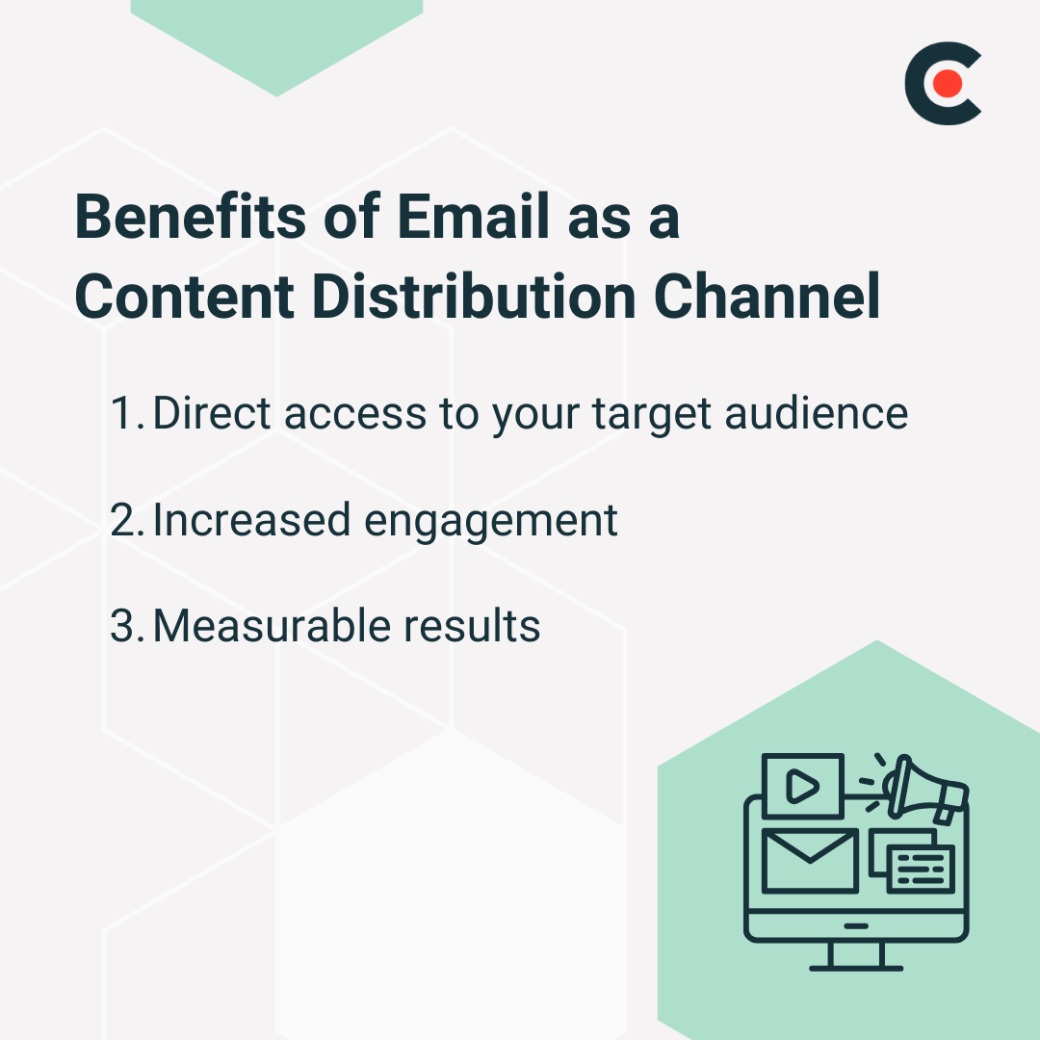
Email helps you build a loyal customer base and stay in touch.
As Bop Design's content marketing director, Rachel Cunningham, explains, “The most valuable aspect of email marketing is the ability to grow and nurture a list of prospects while also reinforcing the value a company provides to its clients.”
It’s one of the best ways to strengthen your relationships.
With their clickable elements, emails naturally encourage customers to interact with your brand. Whether they’re claiming coupons or taking quizzes, these messages help get them involved.
With analytics tools, you don’t have to guess how your emails perform. You can monitor open rates, clicks, and more.
With so many benefits, you might assume email is expensive, but that’s not true. In 2023, email had an average ROI of 44%. That means you could earn $144 for every $100 you invest in email marketing for content distribution.
No marketing channel is perfect. Be aware of these potential drawbacks of email marketing:
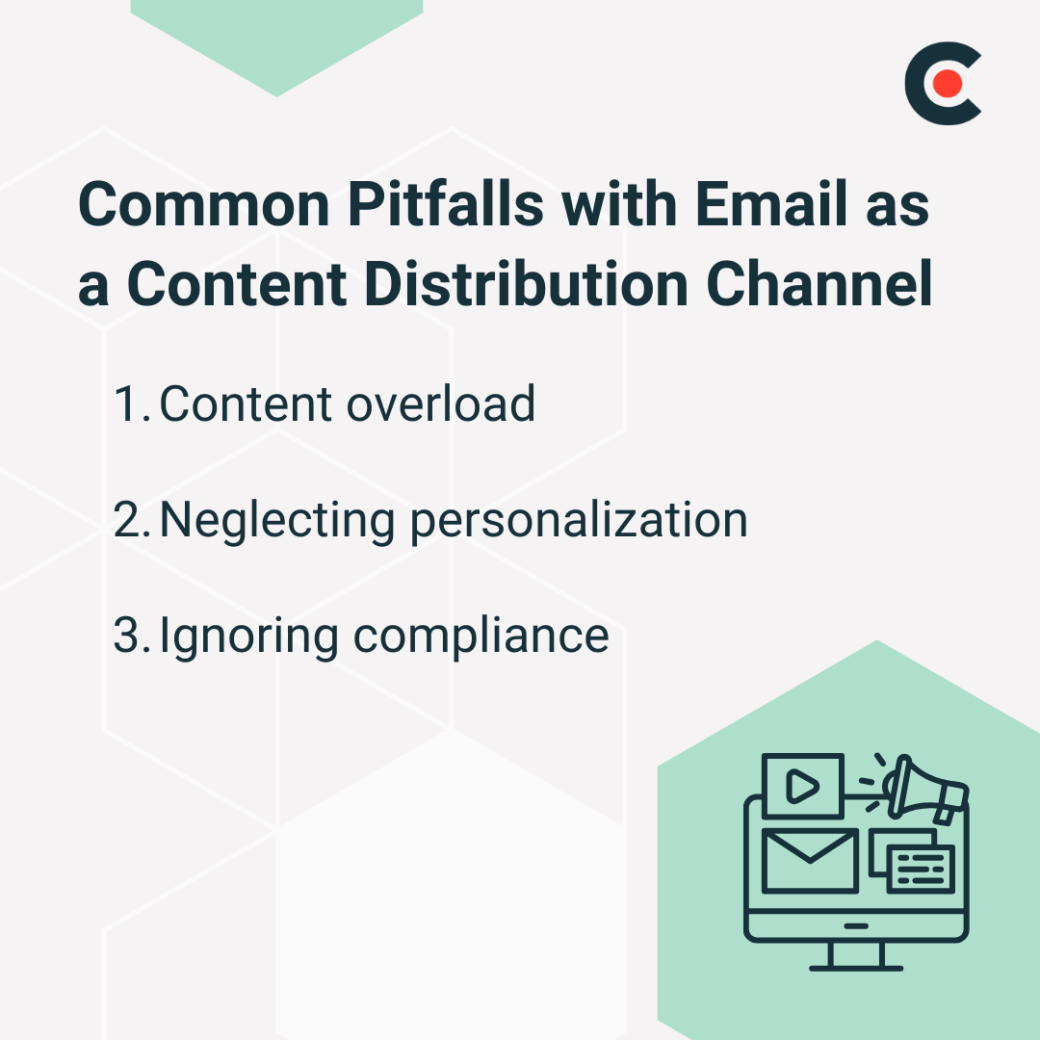
In 2024, people in the United States sent almost 10 billion emails daily — yes, billion. It’s no wonder many customers feel overwhelmed or tune out. Avoid adding to the flood of messages by spacing out your emails. If a message isn’t truly valuable, don’t send it.
No one wants to get spammed by generic, random emails. Show customers you care by personalizing your messages. This might involve tailoring images — like adding nature-themed pictures for hikers — or sending personalized product recommendations.
Sending commercial emails isn’t a free-for-all. Marketers must follow relevant laws, such as the CAN-SPAM Act and Europe’s General Data Protection Regulation. If you don’t comply, you might get hit with steep financial and legal penalties.
In 2022, for instance, the Information Commissioner fined Royal Mail Group Limited £20,000 after they sent emails to over 200,000 customers who had already opted out. Want to avoid this issue? Make sure you understand the laws before you send your first email.
Don’t let these issues deter you. With the right strategies and a little research, email marketing can be a highly effective content distribution channel.
There’s no one-size-fits-all approach to email campaigns. Depending on your goals — and your audience — some types might work better than others.
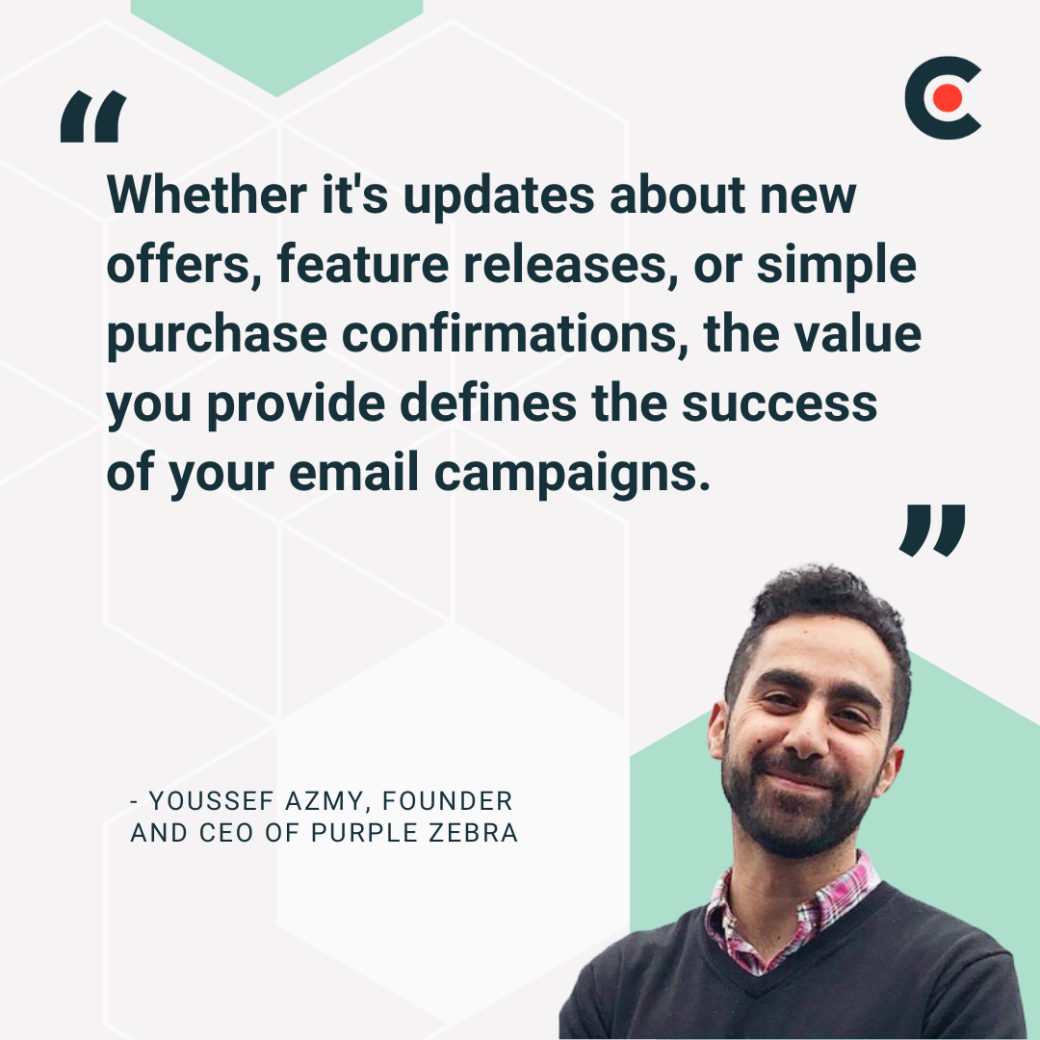
As Youssef Azmy, founder and CEO of Purple Zebra, says, “Whether it’s updates about new offers, feature releases, or simple purchase confirmations, the value you provide defines the success of your email campaigns.”
Here are three kinds of campaigns to explore:
Of course, this brief list is just scratching the surface of email campaigns. As you gain experience, you can experiment with other types, such as abandoned cart emails and surveys.
Email marketing involves more than typing up a quick message and hitting “send.” You need the right tools and strategy to get results — and avoid confusing your customers. Get started with these practical steps:
You may feel tempted to add all your previous customers to your email list but resist the urge. It’s not legal to message people without permission. And you don’t want to get mistaken as a rude spammer.
Build your list the right way by inviting people to opt in on social media and in person. Remember to add a sign-up form to your website, too. Some businesses even offer coupons or free gifts for subscribers. Fake signup protection can also help ensure that only genuine users are added to your list and reduce spam or bot registrations.
While growing your list takes time, it’s well worth it.
Azmy observes, “When targeted properly, email marketing is one of the best ways to build lasting customer relationships and drive meaningful conversions.”
The key word here is “targeted.” Over time, you may gain hundreds or even thousands of subscribers. While these customers all have one thing in common — an interest in your brand — they also have diverse needs.
Divide your list into groups with similar traits, such as “cat owners” or “women under 30.” Then, create emails that appeal to each group’s preferences. This approach helps you share more personalized and relevant content.
Don’t fire off emails on a whim. Plan a content calendar to stay consistent and reach your audience at the perfect time. This might look something like this:
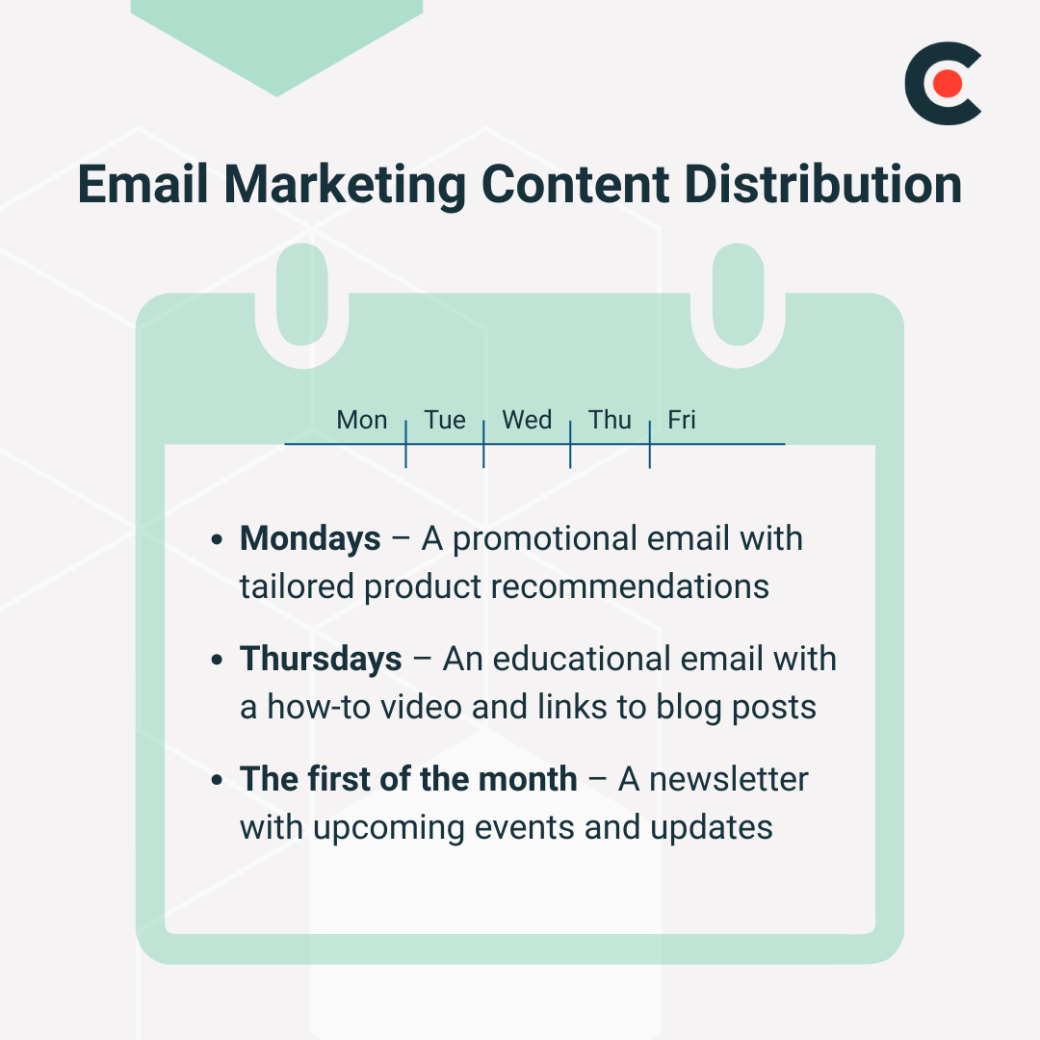
That said, don’t go overboard. If you send a metaphorical flood of emails, customers might get annoyed or even unsubscribe. Play it safe by sending two or three emails a week at most.
When it comes to email marketing, aesthetics matter—a lot. Sure, customers expect insightful content, but they also want it to look great—especially on their phones.
That’s why designing attractive, accessible emails is key. Look for a marketing platform with customizable templates that you can use to create your messages. Or, if you’re tech-savvy, you can build layouts from scratch.
Of course, mobile-friendliness is an absolute necessity. Your emails should automatically adjust to different screen sizes so customers can view them on any device. And keep it simple. A streamlined email is easier to read on a smartphone than one jam-packed with content and fancy effects.
Once you have a stylish foundation, use these strategies to design beautiful emails:
Don’t be afraid to play with your design. You may need to try a few versions before you find a layout that truly clicks with your audience.
The work isn’t over when you hit “send.” Use data analytics tools to monitor how your audience responds to each email. This software lets you track click-through rates, unsubscribes, and more.
These tools make it easy to experiment with different approaches. For example, you might send a pun-filled subject line to some customers while others see a serious one. You can determine your audience’s preferences by comparing their performance and finetune your emails.
Email marketing for content distribution is an incredibly powerful tool. Whether you aim to drive sales or build connections, this channel can help you get there.
Begin by encouraging your current customers to subscribe to your list. Once you’ve gained a few followers — even just four or five will do — create a strategy and share consistent content. Your content can reach an ever-growing, enthusiastic audience with a little patience.