
How to Define Brand Values That Guide Every Business Decision
Brand values are the principles that guide company decisions, define what a brand stands for, and shape how it treats customers, employees, and partners.
Updated May 28, 2026

Your company’s reputation isn’t just a reflection of past performance—it’s a key driver of future success. In the B2B world, where trust and credibility dictate buying decisions, a strong reputation can mean the difference between closing a deal and losing a prospect to a competitor. When businesses perceive you as reliable, knowledgeable, and trustworthy, they’re more likely to choose your offerings—even when faced with similar options at comparable prices. But a positive reputation doesn’t happen by accident—it’s the result of a deliberate strategy.
B2B reputation management is the practice of building and maintaining a company’s image among the businesses that represent its target audience. It extends beyond offering quality products or services; it involves building an online presence that signals credibility, engaging with customers to foster trust, and proactively shaping the narrative around your brand. Companies that master reputation management gain a competitive edge, shortening sales cycles, reducing friction in negotiations, and opening doors to new opportunities.
Looking for a Public Relations agency?
Compare our list of top Public Relations companies near you
So how do you ensure your business stands out for the right reasons?
In this guide, we’ll walk you through the essential steps of a winning B2B reputation management strategy—from assessing your current standing to leveraging content marketing and customer engagement to shape a brand image that inspires confidence and drives growth.
What is a reputation management strategy?
In short, it’s the detailed plan of action your business makes for building, maintaining, and enhancing its reputation. For B2B companies, this strategy specifically focuses on how the businesses you serve (or hope to serve) perceive and value your brand.
A solid reputation management strategy addresses all factors that impact how others view your brand, including quality assurance, customer service and experience, marketing, and more. A comprehensive approach to reputation management ensures that you’re taking advantage of every opportunity to control the narrative around your brand and improve audience perception.
Here's how to craft a winning B2B reputation management strategy:
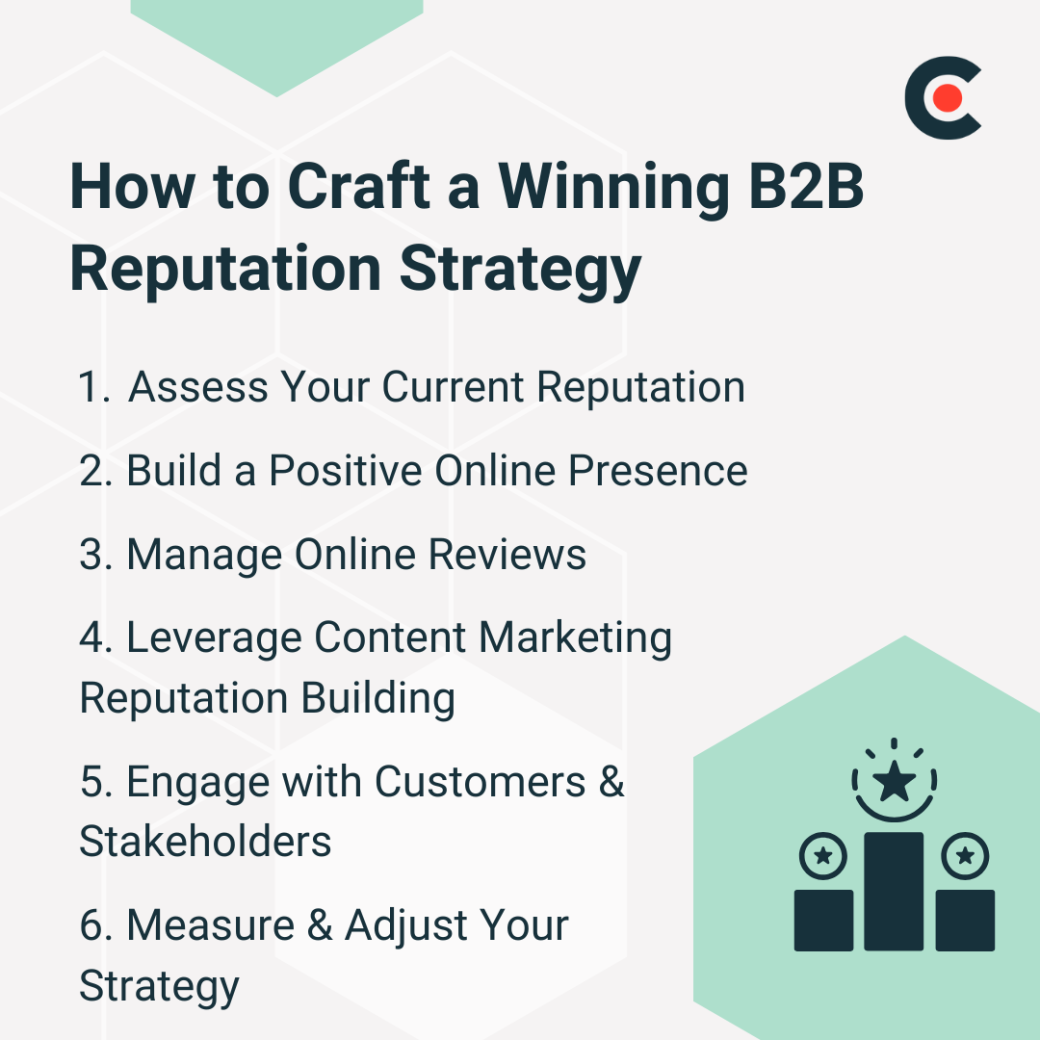
Before we explain each step in detail, let's look at the why before the how. In the world of B2B, your company’s reputation is what your existing customers and potential clients think of your business. It’s influenced by three primary factors: past performance, current performance, and predicted future performance.
For businesses you hope to take on as customers, your company’s reputation strongly indicates whether you can be relied upon to honor your professional commitments. Companies with positive reputations are known for fulfilling their obligations, whether providing high-quality products or delivering invaluable services that other businesses rely on to operate.

A good reputation is one of your company's most powerful assets. With a positive reputation, your sales funnel is fuller because your past and current clients are more likely to vocalize their satisfaction and recommend your services to their professional contacts. In turn, those contacts may be easier to convert into clients based on the recommendation of a trusted third party.
Before creating a brand reputation management strategy, you must first understand your current reputation. Is your company well-regarded in the market? Are you known for providing excellent products and top-notch services? Is there a perception that your employees build successful, enjoyable professional relationships with your clients?
Remember, whether you sell B2B products or offer B2B services, a partnership represents a financial investment to other businesses.
To take stock of your company’s current reputation, consult the following:
Understandably, those businesses want every assurance possible that their investment will yield positive returns. When word of mouth on your company is positive, potential clients will view a partnership as less risky.
These days, your online presence is inseparable from your overall reputation. Businesses, just like consumers, turn to the internet to find out about new companies, research their products or services, and understand a company’s standing in the market.
How your company comes across online serves as the first impression that many of the businesses in your target audience have of your company, and it’s formed long before they reach out for a consultation or come into your shop to make a purchase. In fact, the average B2B buyer has already performed as much as 70% of their decision-making research before they contact you.
That’s why one of the most important reputation marketing tips we can give is to make sure that your company’s internet footprint presents a consistent, unified brand image across all the online channels you use, including your company website, social media accounts, email outreach, digital business listings, and any others. A consistent brand image is instrumental when it comes to:
Of course, some platforms you use are more applicable to B2B reputation marketing than others.
Social media platforms that cater to professional networking are especially important, like LinkedIn and Indeed. You can leverage your presence on these platforms to boost your company’s profile by following other businesses, engaging with profiles by liking, commenting on, and sharing their content, posting your own content, and actively participating in discussions, groups, and online communities.
Client reviews serve as powerful social proof that validates your expertise and reliability. Whether they appear on your company’s website, a B2B review forum, or a third-party marketplace, online reviews can be the deciding factor when prospects are shopping around.
A glowing review from a satisfied customer or client is a powerful asset for reputation-building, so don’t be shy about encouraging them. What is the best way to do that? Ask!
Soliciting reviews from your clients can be as easy as including a request with your invoices, sending a follow-up email, or asking in person. Whatever your request process, make leaving a review as easy (and worthwhile) as possible for your clients. For example, you can:
Of course, not all online reviews will be positive. The good news is that when you know how to handle negative feedback according to common reputation management best practices, you can turn a negative review into an opportunity to positively impact your reputation.
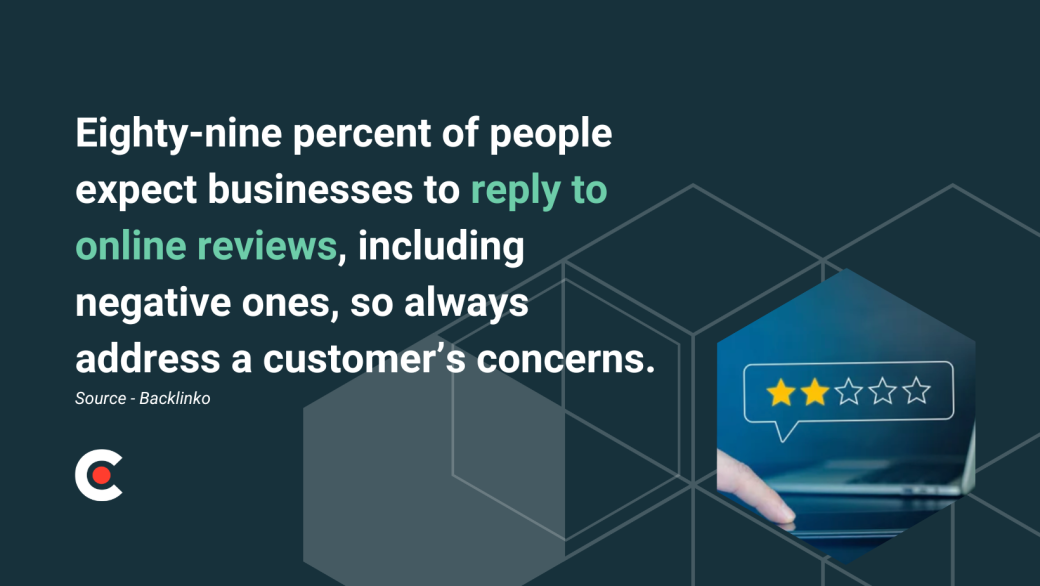
It’s important to reply promptly when your company gets a negative review. Eighty-nine percent of people expect businesses to reply to online reviews, including negative ones, so always address a customer’s concerns. Be sure to demonstrate a sincere interest in resolving the issue and improving the customer experience by offering solutions and being willing to take the conversation offline if necessary.
Content marketing is a useful reputation management strategy to help you build and maintain a positive brand image. Creating digital content — like blogs, email newsletters, and social media posts — generates interest in your company’s products or services without overtly promoting them. Content marketing is beneficial because it:
Quality is key when it comes to content marketing. First, creating quality content allows you to show off your knowledge or expertise on subjects related to your industry, which helps boost your credibility and encourages customer trust.
Second, quality content is valuable to your audience because it addresses their needs or pain points and, importantly, because it offers solutions. It’s helpful or useful information that makes things easier for your audience.
That said, the quality of your digital content is only as good as its reach. You can post the best videos, blogs, or newsletters in the world, but they won't make an impact if they don’t stand out to audiences online.
That’s where search engine optimization (SEO) comes in handy. SEO refers to a range of strategies and tools that improve how online content ranks on search engine results pages (SERPs).
Some of the top SEO techniques include:
Content that ranks highly on SERPs has a better chance of reaching audiences and can collect more clicks, driving traffic to your website or social media account and enhancing your reputation.
Keeping your customers and stakeholders, both present and future, engaged with your company is an important aspect of brand reputation management strategies.
Remember, the primary goal of building your company's reputation is to establish it as trustworthy and reliable. Keeping your company’s name at the forefront of your audience's mind and ensuring that your audience is engaging with your brand regarding your online content are big steps toward accomplishing that.
Communication is key. Regularly communicating with your clients helps them feel connected to your brand even when they aren’t in the midst of a project or transaction, which can present your company as stable and dependable. This is especially true when communications are consistent, professional, and relevant to your audience’s experiences.
When communication runs both ways, your business is better positioned to stay on top of your customers’ shifting needs and preferences. That way, you can exceed their expectations and safeguard your reputation.
Establishing recognized communication channels between your company and your audience enables you to collect, respond to, and act on customer feedback. Popular options include:
Customer feedback isn’t always comfortable, but it’s extremely valuable for businesses. Their insights tell you exactly what works and what doesn't. You can learn your customers’ most pressing pain points and implement improvements that address them. Making adjustments in response to customer feedback helps build trust and lay the groundwork for long-term customer loyalty by showing that your company is committed to growth and delivering the ultimate customer experience.
Once you’ve developed and implemented a reputation management strategy, the next phase involves monitoring your efforts and gauging their success. Track the following key performance indicators (KPIs) to see the impact your efforts are having on your reputation:
Be sure to use the insights gleaned from monitoring and tracking, as well as from customer feedback, to optimize your strategy. By continually assessing and adjusting your efforts, you can build a reputation management strategy that gives you ongoing control of your brand image.
In the world of B2B relationships, reputation is everything. A good reputation drives performance by establishing credibility, enhancing consumer trust, and boosting your company’s profile in your market.
The best reputation management strategy enables businesses to take an active role in influencing audience perception. Crafting that strategy begins with assessing your brand’s current reputation.
Then, consider how the tips outlined in this article — like leveraging content marketing to shape brand image, developing a unique, consistent online presence, and keeping your audience engaged — can help you build a professional reputation beyond reproach.
Maintaining and protecting your brand reputation is easier when you have help. A verification from Clutch Verified could be just the help you need. Thanks to our meticulous, multi-step process, business verification from Clutch is a powerful endorsement of your brand's credibility.
Verify your business with Clutch and elevate your reputation today.