The Real Cost of Your MVP in 2027
AI made code cheap, but not software that holds up. See how MVP cost drivers have shifted and why human validation and taste are now what you’re really...
Updated May 14, 2025

Whether you’re building new software or are creating a physical product to be sold in-stores, product design and development go hand-in-hand. Learn how you can take your project from ideation to launch in this product design and development guide.
While bringing a new product to life is exciting, it can also feel overwhelming. From sketching ideas to selecting the right materials, testing prototypes, and accounting for your target market's needs, there's much to do. Smart product design and development can help tackle all these aspects.
Effective product design extends beyond its appearance. The product needs to solve a problem for real people. When done right, it can set your business apart from the competition and build customer loyalty.
Looking for a Software Development agency?
Compare our list of top Software Development companies near you
Our product design and development guide takes you through the process step by step. You could be creating your first product or refining an existing one; the practical tips in this guide will help you turn great ideas into products people want to buy.
Product design and development are about creating something your customers want to use, not just an item that works. How the product is designed will influence how customers interact with it and whether they want to return for more.
Product design shapes customer experience in more than one way. Think of a product you used that just made sense. It looked good, the buttons were where you would expect them to be, it was easy to use, and it didn't require any complicated instructions.
You must have felt great using the product, didn't you? Thoughtful design satisfies customers since it meets their expectations and usually solves a problem or fulfills a need. Customers who have good experiences with a product will likely recommend it to others.
Then, there's the innovation aspect of product development. A strong product development process helps you respond to changing customer needs and bring fresh solutions to the table.
An innovative and well-functioning product is also directly tied to your brand. If it feels premium, that's how customers will see you. Apple's products are a great example of the product's feel and look relating to the brand's market positioning.
Basically, design helps reinforce your positioning in the market. Whatever your products show, the users associate with your brand.
Good design and product development also help your business grow while keeping costs low. Smart development processes cut unnecessary costs and streamline production. Similarly, a product built with the future in mind is easier to improve and scale.
Netflix serves as a good example here. Their product is designed to be scaled as needed. Initially, the platform had a limited selection of movies and TV series. Now, they've started creating content, and the platform hosts games and live events. In the future, they can also easily expand into other forms of media, such as podcasts or news.
These two terms are often used interchangeably in the context of product creation. However, they differ in their goals and processes.
Product design encompasses how a product looks, feels, and functions from the user's perspective. Development takes that vision and makes it real through engineering and manufacturing. Testing is also essential in product development since it confirms that the design is functional and meets the intended purpose.
The product design and development guide below breaks the process into steps so that it's easy for you to follow.
You need to have a solid idea before you draw sketches or build prototypes. At this stage, it's about clarity. You must be sure about what you're trying to solve or the gap in the market you want to address.
When you pinpoint this exact issue, it gives direction to your design process. If you're vague, the entire development process can go off track quickly.
Once the problem is clear, it's time to get creative. Here, techniques like mind mapping, sketching, or group exercises come into play. Throw around ideas and test wild thoughts to narrow down a few options.
"It all starts with ideation,” says Shoaib Bazaz, a marketing manager at iQuasar LLC, a software development and IT production company. “This is where all those brainstorming sessions happen, focusing on customer needs.”
Then, take a look at what's already out there in the market. Conduct market research and trend analysis to determine what customers are asking for or what competitors are doing. The research stage helps you move from the "cool idea" phase to a viable solution.
Once you have a promising idea, you must gauge the demand of your product. You must test your assumptions before pouring time and money into development.
“This phase is all about digging deeper — talking to your users, analyzing your competitors, and figuring out what's feasible,” explained Bazaz.
First, figure out who you're designing for. Find out who experiences the problem you're trying to solve, what they care about, and where they hang out online. You can use this information to build detailed customer personas.
Then, look at what others are doing. Competitor analysis includes checking who else is offering something similar to your idea and where they fall short. You're not copying but finding your edge. Extensive competitor research will give you insight into market expectations and gaps you might be able to fill.
However, don't just guess what people want. Instead, surveys and interviews are used to determine what users think and feel. You can also use small focus groups to test your idea.
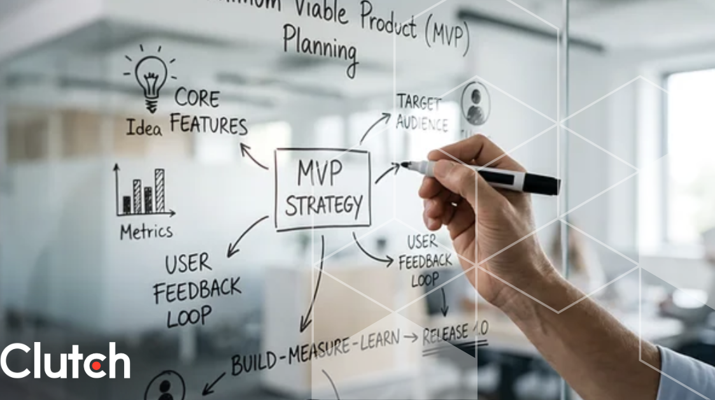
Once you've gathered feedback, test your concept in the real world. However, you don't have to launch a full-blown product at this stage. A minimum viable product (MVP), the rough version of your product with just the core features, can help you gather more feedback and make changes as needed.
Now, you're moving to the hands-on phase, where your ideas undergo testing. You don't have to jump straight into polished mockups. Instead, you can start with basic sketches and wireframes early on to map out the user flow and functionality. It will keep things flexible and cheap so that you can explore different directions.
Since design is rarely perfect on the first try, iteration is key in production design and development. Use a blend of internal team reviews and test your prototypes with actual users to refine and improve the product.
While at it, don't overlook user experience (UX) and interface (UI). Keep considerations like intuitiveness, colors, buttons, typography, and ease of navigation in mind. Include questions about UI/UX in your feedback surveys to learn what's working and what can be better.
You can also use different tools for prototyping, depending on your product. For example, Sketch and Figma are widely used to create detailed wireframes and mockups.
After you've tested the prototype, it's time to build the actual product. The steps involved in the development process will vary based on the product. They could include writing the code, selecting components, or configuring the machines needed to build it, depending on whether it's software, hardware, or a physical product.
Things turn out best at this stage when there's tight communication between designers and engineers. While designers make sure the UI/UX and general usage principles are met, engineers think in terms of performance and feasibility. Both sides must be in sync to make the product beautiful and functional.
If you're building something physical, like a gadget or some equipment, material selection and product methods will come into play. The material you select will impact durability and cost. At the same time, the cost of production for digital platforms and software varies dramatically based on the scope of the project, features, and more.
Similarly, the production method also influences these factors in addition to skill requirements, sustainability, speed, and efficiency. In both these steps, you must account for quality and cost. The material and product method should result in high-quality products without exceeding your budget.
Before going into full-scale production, you must check if everything works the way it should. For that, you need to conduct stress tests, usability tests, quality assurance checks, safety checks, and any other tests that apply to your product type.
Besides in-house tests, you can involve external stakeholders and end users to get more feedback on your product. For example, in software design, you can create staging environments where end-users can test your product and give feedback before the official release.
In this step, identify the users' pain points and note the improvements you need to make. Collect feedback through in-app surveys, user interviews, support tickets, or ratings. Then, iterate on your product based on these insights.
By this point, your product is ready to meet the world. However, you need a solid go-to-market strategy to get serious traction for your product.
Double-check everything behind the scenes beforehand. Make sure your support systems are ready, and you have the right inventory or server capacity to handle a surge in interest. A soft launch or beta release can help you spot last-minute issues before going wide.
Start by teasing your launch on social media and creating content that speaks to your audience's pain points. You can also work with influencers to get the word out. Create a launch video or a countdown to build anticipation.
You also need to be strategic about how and where you will sell. For example, will you go direct-to-consumer through your website or use intermediaries? The platform you select should align with where your audience shops.
As for pricing, think beyond just covering the costs. Consider the perceived value, competitor pricing, and your long-term profit goals. Then, you can adjust this pricing over time.
Once your product is out for sale, your job is now to support customers. Make it easy for them to get help and share their feedback. Stay responsive to their questions and reviews since it helps build trust.
Product design and development come with many challenges, such as teams getting out of sync, assumptions going untested, poor market research, and so on. The process can get messy fast, especially when there's pressure to move quickly.
However, there are ways to keep things on track. The following tips will help you do just that.
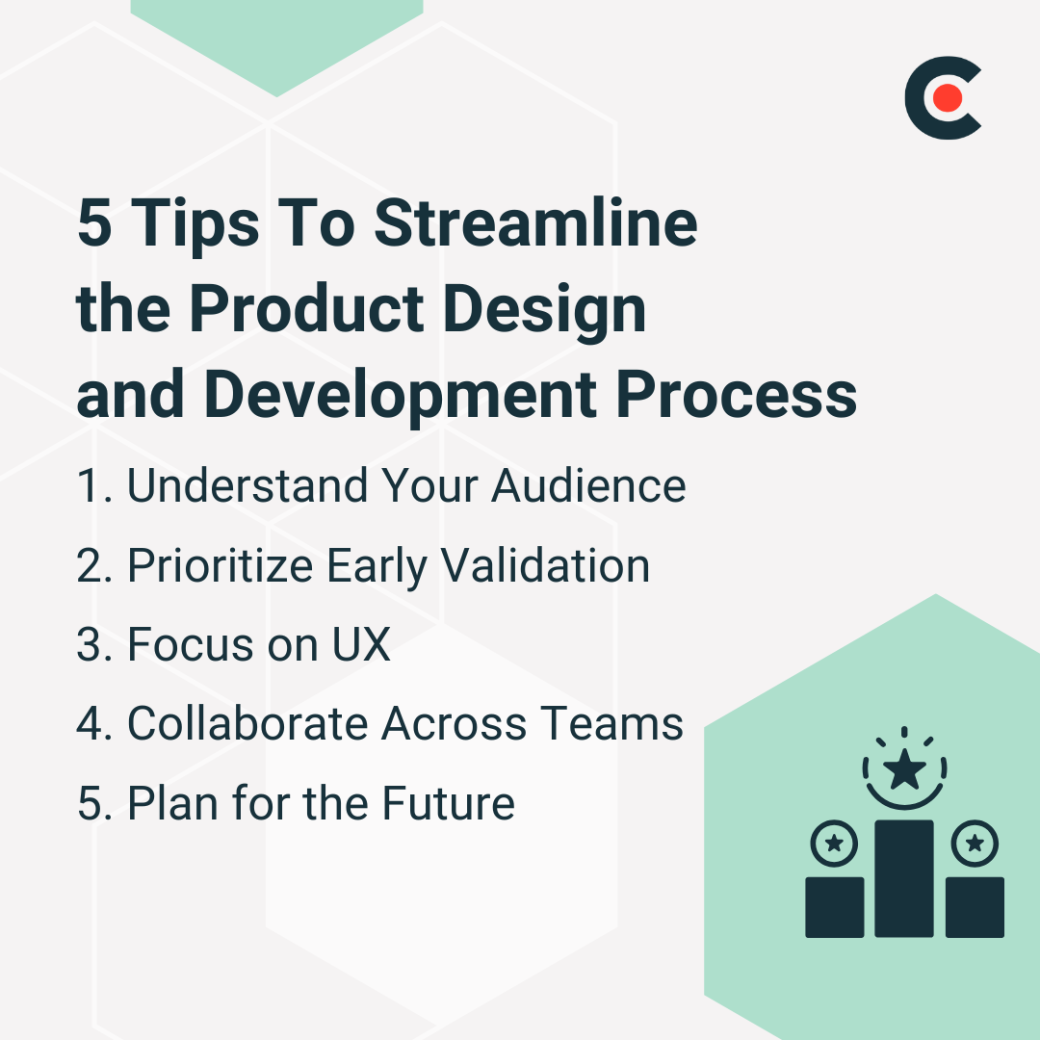
The product you're creating is less about your visionary idea and more about what people actually need. So, you must know your audience on a deep level.
Look beyond demographics. Cover things like pain points and motivations to discover what your target market needs in a product. The better you know your users, the better aligned your product will be to them. That ultimately means more sales and higher customer satisfaction.
Testing early and often is imperative in product design. Build simple prototypes and get them in front of real people to validate your ideas.
Bazaz further explains, "One aspect I would strongly emphasize is prioritizing early validation. This is extremely important. Before diving headfirst into development, spend time validating your ideas with real users. It will save you so much time and effort in the long run." Plus, you also avoid wasting resources chasing the wrong idea.
Your product is as good as its usability. If it's efficient and enjoyable, people are more likely to use it, which means they'll buy it or subscribe to it more often. So, you should pay attention to your product's UX during the design process. Minimize friction and make the product effortless to use so that people keep coming back.
When teams work in silos during design and development, ideas can shift, and the end product can feel disjointed. The best results come from early and continuous collaboration between teams.
"Another very important aspect is integrating your teams from the start,” said Bazaz. “When designers, developers, marketers, and salespeople collaborate from day one, a shared vision keeps everyone aligned. Do this, and your design and development process will be much more streamlined." More importantly, you can meet timelines and build cohesive products.
Businesses often overlook the importance of looking ahead. "I also often see businesses not considering how their product will scale or adapt in the future," Bazaz shares.
If you don't think about the future, your product will only meet today's needs and become obsolete. "Focusing solely on immediate needs can lead to challenges down the road," Bazaz explains further. "Product design and development is like building a house; it's not something you do every day, so it's crucial to plan thoroughly from the beginning. Otherwise, you'll constantly find yourself dismantling and rebuilding everything from the ground up."
When you plan for the future, you don't have to overhaul the product whenever a new feature is needed. Plus, you can accommodate a larger user base going forward.
Product design and development involves understanding your audience, conducting market research, validating early, focusing on UX, fostering collaboration, and planning for the future. An integrated, iterative approach helps teams stay aligned and responsive while meeting the needs of end consumers.
Now's the time to put what you've learned into practice and start building. Whether refining an idea or starting fresh, the best products begin with action.