
12 Years With Clutch: How Intuz Builds on a Partnership That Delivers
A Relationship That Has Stood the Test of Time Intuz is an AI consulting and development company established in 2008, with operations in Silicon Valley...
Updated May 7, 2025

Mobile technology has taken over everyday life, so we can only live normally with smartphones. Can you imagine such a life? This has undoubtedly brought the surge of mobile commerce in the market, which changed the trajectory of consumers' digital purchases, how brands interact with their users, and, more importantly, the browsing experiences.
To cater to the audience correctly, m-commerce helps brands maintain consistency while rendering a seamless experience with various purchasing methods. Thus, by 2028, the global omnichannel retail commerce systems market is predicted to increase from $6.57 billion to $11.24 billion.
However, all e-commerce business owners must keep tabs on emerging mobile commerce advances, as well as how new trends are introduced to consumers. Mobile device consumers play a significant role in the current digital economy.
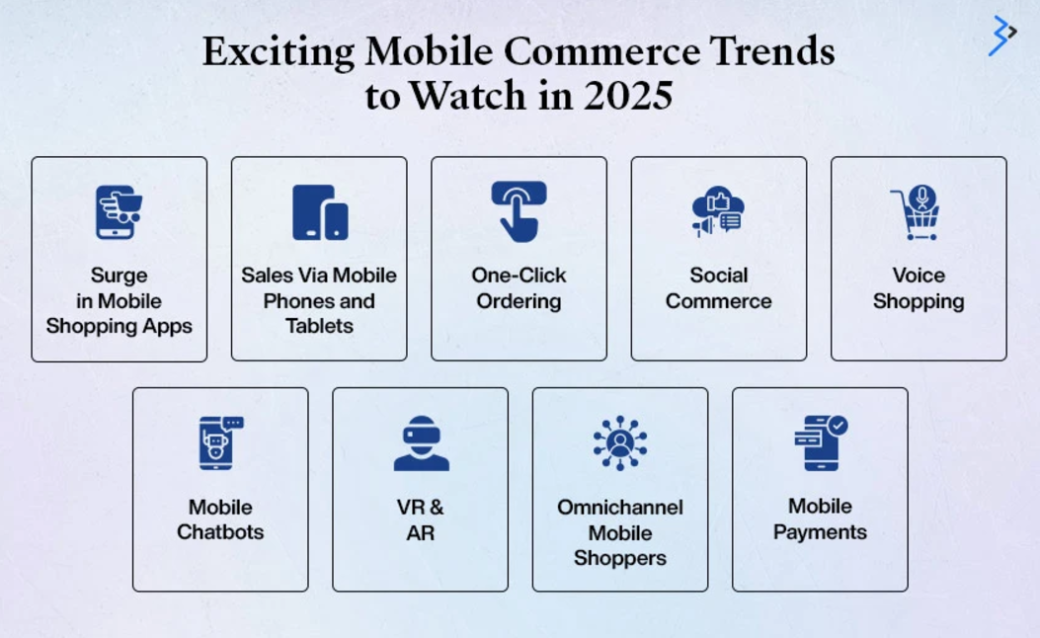
So here we are, with all the essential mobile trends for you that will lead 2025. Let’s walk through the advent trends and have your business walk ahead in the ever-changing market without any doubts.
Our team compiled a list focusing on the current industry trends, simplified the observations, and compiled some suggestions. Here's all you need to know to flourish in the 2025 m-commerce world.
You are familiar with the online purchasing experience and using the mobile app for the first time. We all know that the most convenient way to make online purchases is through mobile apps rather than desktop websites.
There are several advantages of apps over mobile websites, such as better loading times, as per user behavior—personalized experience, and additional features like loyalty programs and push alerts. According to a study published by BMC Software, 85% of users would choose an app instead.
However, these gadgets are influencing consumers to alter their buying patterns.
As per PEW Research, almost 60% of American buyers have looked at a product's details using an app on their phone.
Industry experts predict that by 2025, most retailers will pivot from mobile-friendly websites to specialized mobile apps. This will eventually lead to better conversion rates and a more tailored customer experience.
The convenience of mobile apps certainly boosts user engagement and retention rate. Mobile shopping apps that are easy to use and packed with features are necessary for companies looking to attract and retain "on-the-go" consumers in the modern market.
Nearly two-thirds of mobile buyers said that recommendations from prominent influencers influenced their purchases. Revenues from mobile commerce will reach $488 billion by 2025, accounting for more than 44% of all online transactions.
With everyone bringing their lives to phones and having the world at the click of their fingers, it’s unsurprising that mobile usage dominates the market worldwide. With music, movies, books, and even food ordering on mobile apps, consumers do more than simply look through apps; they are purchasing.
The average order value via a mobile app is $102, vs $92 from a mobile website.
However, anyone can open mobile apps and websites on different devices. Mobile devices are usually divided into two categories: smartphones and tablets.
Which devices do individuals buy the most? Let's look at Business Insider's newest m-commerce volume projection.
A Comparative Table of Mobile Commerce Sales
| Year | Smartphones (in billions) | Tablets (in billions) | Tablet Sales as % of Total Mobile Sales |
|---|---|---|---|
| 2019 |
$128.4 |
$28.5 |
18.2% |
| 2020 |
$170.3 |
$34.7 |
16.9% |
| 2021 |
$221.2 |
$41.8 |
15.9% |
| 2022 |
$276.1 |
$48.1 |
14.8% |
| 2023 |
$344.5 |
$56.7 |
14.1% |
| 2024 |
$418.9 |
$69.1 |
12.0% (projected) |
*Source: Business Insider (with projections for 2024)
As you can see, smartphones are the dominant device in this category. Smartphones are estimated to account for $418.9 billion in mobile commerce sales by the end of 2024, while tablets will account for $69.1 billion.
As per these reports, mobile phones will have more sales than tablets.
For example, when you create an app for your Shopify store, you may send push alerts to app users. These communications should include real-time offers depending on location or activity.
A push notice announcing a flash sale to a tablet will be less successful than sending identical information to a smartphone. Unlike the smartphone notice, the tablet message is unlikely to be viewed immediately.
The dominance of smartphones in mobile commerce highlights the importance of optimizing marketing strategies for these devices. As mobile commerce continues to grow, leveraging smartphone capabilities can offer businesses a competitive edge in reaching their audience effectively.
The simplicity of one-click purchasing is revolutionizing mobile e-commerce by removing the long checkout procedure that is often necessary when making items online. Entering personal information such as names, addresses (billing and shipping), credit card numbers, and more on mobile websites may be a pain due to the smaller displays.
Positive aspects:
Thanks to in-app buying, users can make purchases with just one swipe. This improved shopping experience makes customers more satisfied and likely to purchase.
Businesses see a boost in sales as customers enjoy the convenience of immediate product discovery and purchase. Furthermore, statistics show that app users spend twice as much as those using desktop or mobile web, highlighting the importance of this feature for e-commerce success in 2025.
Now, social platforms are on the rise, directly impacting the brands and purchase market for businesses. Social media has become and will continue to be one of the influencer markets for users to buy their items. Brands may now include shoppable product tags in postings on social media platforms like Instagram and Facebook. Users may purchase products straight from these articles inside the app, skipping the usual steps to an e-commerce website.
The success of this streamlined purchasing process was shown by the brands' 20% increase in revenue and 1,416% increase in visits after the implementation of shoppable content.
By reaching out to consumers who spend a lot of time on social media, brands can boost their exposure and make the purchase process more manageable. If shoppable posts continue to be used, more businesses will have a better chance of turning social media likes into sales by 2024.
Voice assistants are influencing many consumers to alter their purchasing behaviors. Forecasts indicate that the market for voice-activated shopping assistants will grow at a CAGR of more than 19.50% between 2024 and 2032.
Thanks to voice commands, which account for twenty percent of all smartphone searches, shoppers can now research, compare prices, and even complete purchases without ever lifting a finger.
Retailers have a chance to enhance their websites that support voice search, providing more vocal-friendly apps for users, especially Gen Z.
Nowadays, users need to have voice assistance to make purchases, so simplifying the speech-activated purchasing process is critical. The voice search tool may simplify things for users and increase the number of individuals who convert from browsing to purchasing.
Whether interacting with other online companies or customer service, you could have encountered chatbots daily. For many years, they have served the public. Using chatbots on your eCommerce website to streamline customer service is becoming more popular, and you may be one of those people.
While chatbots have taken the web by storm, they are only beginning to make waves in mobile applications even if chatbots aren't included in many applications, that should change by 2025.
There are many applications for chatbots. There are many advantages to using bots on your website. One of them is faster customer service response times. Another is automated resolutions. Lastly, bots improve the user experience.
What if chatbots were integrated into a mobile shopping app? Would these advantages change? No, that's not correct. Incorporating chatbots into m-commerce applications is a foregone conclusion for eCommerce shop owners since all the benefits of web-based chatbots extend flawlessly to mobile apps.
Here’s a notable statistic: 54% of consumers would consistently prefer interacting with a chatbot over a human representative if it saves time. Businesses in the e-commerce sector know how important it is to respond quickly to customer feedback and issues. Quick service when customers purchase online improves the customer experience and saves a lot of money for the business.
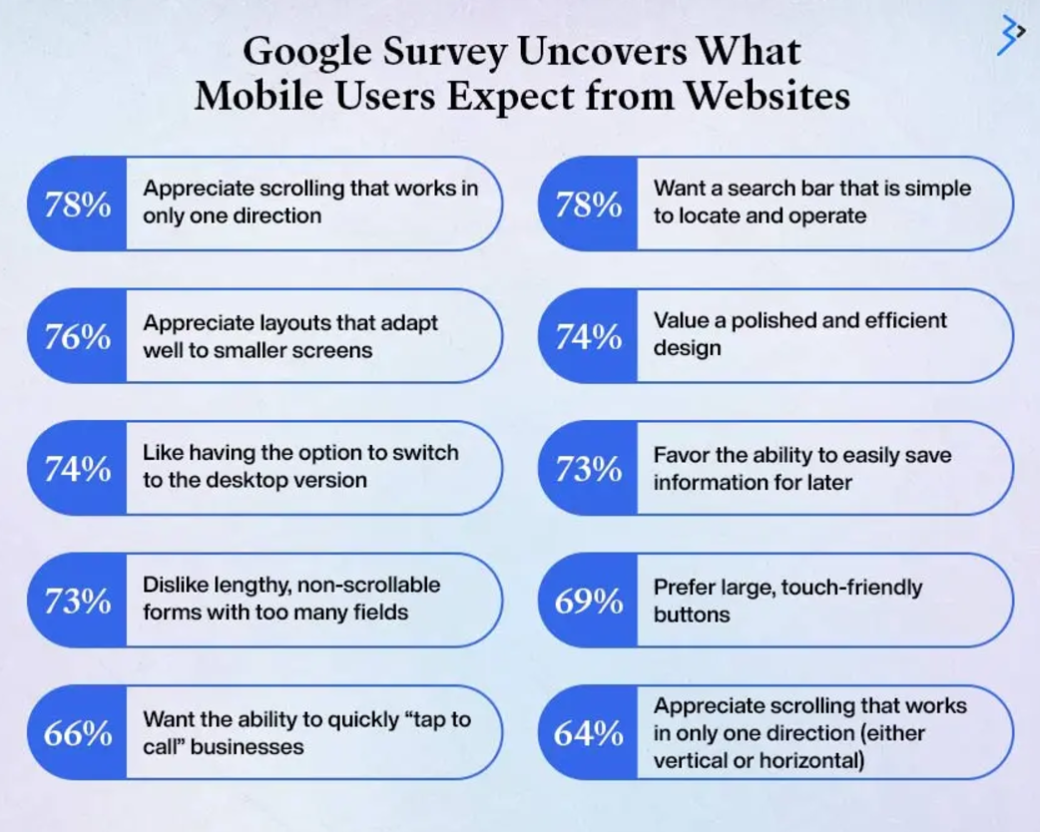
By 2025, mobile chatbots will have solidified their place in eCommerce, boosting sales and customer satisfaction and paving the way for m-commerce to continue expanding. The rise of chatbots for mobile commerce will have a profound impact on the future of online buying.
Thanks to their numerous potential applications, virtual and augmented reality have been popular topics in the IT sector for quite a while. Augmented reality is already enhancing customers' mobile shopping experiences.

Although $1.6 billion is a little percentage of the total augmented reality and virtual reality industry, it is a necessary beginning point for expansion. In 2025, we can expect a significant shift in mobile commerce for augmented and virtual reality, driven by their growing popularity and innovative applications.
Starting in 2024 and moving forward, we can expect to see even more creative and unconventional applications of AR and VR in mobile shopping. This technology could significantly enhance how engaged and satisfied consumers feel across various markets.
Omnichannel retailing involves selling products through multiple channels, such as an online store, a mobile app, and a physical shop.
Being Ready for Mobile Omnichannel Shoppers:
When a customer enters your brick-and-mortar business, you can send them a push notice through your e-commerce app. Customers are more likely to purchase if offered a discount or promotion.
Take it a notch further by making ads and suggestions directly related to your surfing history. For example, you may provide a discount on the identical product that a consumer has researched on your app when they visit your physical store. This strategy results in a more streamlined omnichannel buying experience and more conversions.
A concerning 65 percent of all fraudulent transactions now begin on mobile devices, highlighting an increasing issue with mobile fraud. Reliable eCommerce platforms are crucial for maintaining consumer trust amid the constantly evolving world of cybercrime. Mobile applications offer better security features, like data encryption and two-factor authentication, than mobile browsers.
Apps reduce the chances of phishing attempts and data breaches by removing the need to input payment information manually. Mobile apps also create a secure shopping experience by safeguarding personal information, helping customers feel confident about making purchases again.
An increasing number of individuals are turning to mobile wallets, enhancing the safety and convenience of their transactions. With mobile payments, users can buy things with just a few clicks, removing the hassle of entering credit or debit card details. Predictions show that the global digital payments market is set to grow significantly, increasing from its 2021 value of $7.36 trillion to an impressive $15.19 trillion by 2027, reflecting a compound annual growth rate (CAGR) of 12.4%.
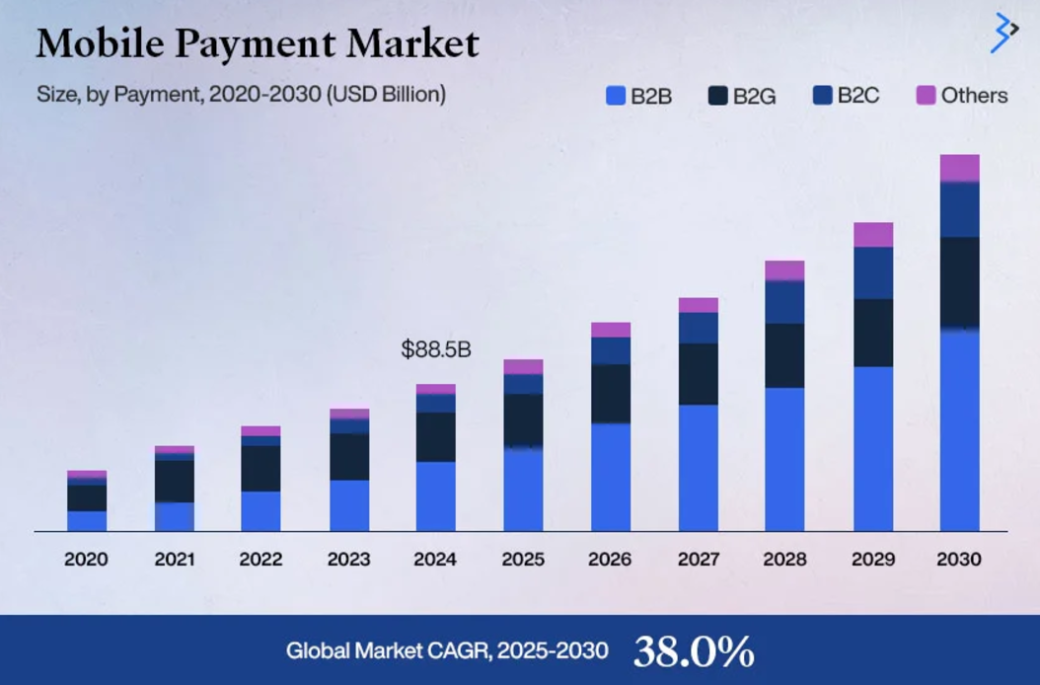
Due to customer requests for quick and contactless transactions, wearables like smartwatches make mobile payments much more effortless. AI-driven payment solutions let businesses cross the bridge with a broader audience, enhancing the user experience and reducing the likelihood of cart abandonment.
There’s no doubt that 2025 is going to bring so many new waves for mobile commerce. As time progresses, mobile trends will influence our lives significantly along with the e-commerce industry. And if you want to rise to the top, it’s wise to stay updated with all the latest and upcoming mobile commerce trends.
Leveraging these trends can help your e-commerce business thrive; better user understanding can enhance engagement, improve the conversion rate, and build a loyal relationship with your customers.
Businesses of all sizes must invest in mobile commerce strategies to stay competitive in the future. Adopting these trends ensures your company flourishes in the dynamic mobile shopping landscape.
With over 23+ years in technology, Chintan Shah has led hyper-growth ventures like Idhasoft and Grey Matter India before Brainvire. He is a member of the Forbes Technology Council, recognized as a Leader in Time of Crisis by Great Place to Work, and a 2024 EY Entrepreneur of the Year finalist.
Under his visionary leadership, Brainvire has ranked among the Fastest-Growing Companies multiple times in the prestigious Inc. 5000, Deloitte Technology Fast 500, and Dallas 100 lists.