How Intelligent Systems Are Changing Logistics and Freight Management
From fixed rules and manual checks to systems that review, suggest, and learn.
Updated April 29, 2026

In 2026, the global e-commerce logistics market is projected to exceed $700 billion as brands shift from centralized models to decentralized, AI-driven distribution. This transformation prioritizes regionalized inventory, vertical warehouse density, and rigorous regulatory compliance to meet a universal standard for two-day delivery.
If you take a pulse on the e-commerce world today, it is painfully obvious that we have moved past the days when shipping was just a line item on a spreadsheet or a back-office chore. As we navigate through 2026, the logistics side of the business has officially claimed its seat at the boardroom table.
It is no longer just about moving boxes from one point to another. Instead, it has become a high-stakes strategic pivot for any brand trying to grow beyond its home turf. The global e-commerce logistics market is currently valued at approximately 624 billion dollars and is climbing toward staggering new heights. In this environment, the brands winning the race are not necessarily the ones with the flashiest marketing.
Looking for a Logistics & Supply Chain Consulting agency?
Compare our list of top Logistics & Supply Chain Consulting companies near you
Instead, they are the ones who have mastered the messy and complex mechanics of the final mile. They are delivering products with a level of speed and precision that used to be a luxury reserved for the industry giants. To keep up, companies everywhere are tearing up their old logistics playbooks and starting from scratch to meet a new and much higher standard of customer expectations.
Let us be real about the state of the world today. Global trade in 2026 is a moving target. Between shifting trade policies, regional instability, and occasional logistical bottlenecks, relying on a single, long-distance supply chain is a massive gamble.
We have seen too many brands get burned by putting all their inventory in one basket halfway across the world. The smartest move we are seeing this year is a hard lean toward localization.
By setting up domestic inventory home bases within target markets, whether that is in Europe, North America, or Southeast Asia, brands are effectively building a moat around their customer experience.
When you have stock sitting locally, you are not just saving on shipping costs. You are bypassing the sudden customs headaches and tariff spikes that can paralyze a business overnight. It is all about predictability.
In a year where a shipping lane can be blocked, or a trade deal can go sideways in a week, having your products already sitting in the country is the only way to ensure your customers actually get their packages on time.
This shift is reflected in the data as well, with domestic e-commerce operations now accounting for over 65 percent of the total logistics market share. Brands are realizing that proximity to the end user is the ultimate hedge against geopolitical volatility.
The demand for immediate delivery has gone global. We are seeing data this year that confirms something we have suspected for a while. High shipping fees and long wait times remain the top killers of an e-commerce sale. Current benchmarks show that the average online shopping cart abandonment rate is just over 70 percent, with nearly half of those shoppers leaving due to unexpected checkout costs. Furthermore, almost 41 percent of consumers now consider two-day shipping to be the absolute baseline for a positive experience. If a customer sees a five-day delivery estimate, there is a very high chance they will simply walk away.
To fight this, brands are moving away from the old-school model of shipping everything from one central hub. Instead, they are using a multi-node strategy. In a massive market like Canada, that usually means having a presence on both coasts (like Toronto and Vancouver) to effectively cover the population.

This is not just about speed. It is about survival. By spreading your inventory across multiple regional hubs, you are cutting out shipping costs that eat your margins alive. Plus, it builds a safety net into your business. If a blizzard shuts down your East Coast facility, your West Coast hubs can pick up the slack. For any brand trying to scale globally in 2026, finding a logistics partner with a multi-facility footprint is the only logical way to grow without losing money on every shipment.
Industrial real estate prices have reached eye-watering levels. This is especially true near major transit ports and urban centers. Since most brands cannot afford to keep building outward, the industry is building upward. We have seen a huge shift this year toward vertical density. High-tech warehouses are now packed with automated storage and retrieval systems that use every available square foot.
However, the real secret sauce in 2026 is not just the hardware. It is the artificial intelligence running them. These systems are now smart enough to predict exactly what will sell based on real-time trends and historical data. The AI looks at the information and moves your high-velocity items to the front of the line. This means less travel time for workers, faster packing, and a much smoother operation during the absolute chaos of peak season. Modern automation can reduce labor costs by up to 30 percent while increasing fulfillment speeds by up to 300 percent.
There is a reality check here that we must acknowledge. Most brands do not have the capital needed to build a qualified warehouse from the ground up. This is exactly why 2026 is the year of the third-party logistics partnership. It allows brands to rent world-class infrastructure that used to be completely out of reach.
As e-commerce moves into more sensitive areas like health supplements, high-end skincare, and specialized pet nutrition, regulatory hurdles are growing.
Compliance is no longer something you can just figure out later.
Whether it is the new customs reforms in the European Union or the updated health standards from agencies like the FDA or Health Canada, you need a logistics partner who actually understands the rules of the road.
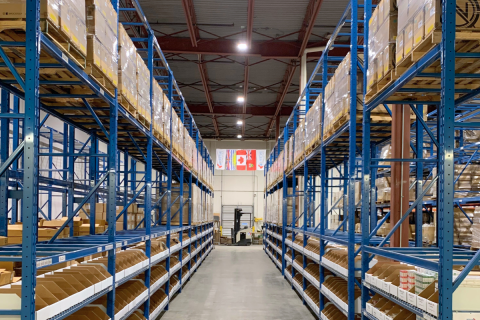
We are seeing a massive influx of brands seeking out site-licensed facilities that follow good manufacturing practices. Trying to navigate the maze of lot tracking, temperature controls, and expiry dates on your own is a recipe for a legal and financial headache. Recent updates to regulatory policies for low-risk wellness devices and digital health tools have only added to the complexity.
It is far more efficient to plug into an existing and compliant facility that already has the licenses and systems in place.
This protects your brand and ensures that you are not one recall away from a total business shutdown. In this new era, a logistics provider is as much a compliance officer as they are a warehouse manager.
If there is one definitive takeaway from the logistics world in 2026, it is that the lone wolf approach is effectively dead. The most resilient brands today are the ones building hybrid models. They are keeping their core strategy and product development in-house while leaning on specialized external partners for the heavy lifting of fulfillment.
When companies go looking for a logistics partner today, they are not just looking for a building with some racks and a forklift. They are looking for a partner that brings technology, accountability, and a future-proof mindset to the table.
Successful partners offer immediate access to technologies that would otherwise be too expensive to develop internally. This includes everything from advanced order management systems to mobile barcode scanning and real-time inventory visibility.
By handing off the technical mess of fulfillment, you are finally free to focus on what you actually started the business for in the first place: making great products and finding new people to love them. The efficiency frontier is moving fast.
The brands that stay ahead will not be the ones with the biggest warehouses. They will be the ones with the smartest partnerships and the most agile supply chains.
As we look toward the final half of 2026, the global market will only become more competitive and more digital. Investing in a sound fulfillment strategy today is the only way to ensure that your brand is still standing when the next major shift in consumer behavior arrives.
Whether through vertical density, multi-node distribution, or rigorous regulatory compliance, the goal remains the same: getting the right product to the right person at exactly the right time.