
Podcast SEO in 2027: How to Make Business Episodes Findable
Learn how transcripts, question-led titles, structured data, and guest links help business podcasts get found on YouTube, Apple Podcasts, and Google.
Updated June 19, 2026

Content selling is becoming increasingly important for businesses that market to their target audiences online. This article explains what content selling is and how to do it effectively.
It may or may not come as a surprise that customers don’t just buy a new product or service after seeing one well-placed advertisement. In fact, Content Journey, a content creation company, reported that almost half of all customers surveyed look at three to five pieces of content before engaging with that brand. Because of this, having a content-selling strategy is an essential step to growing your business.
If you’re asking, "What does selling content mean?" you’ve come to the right place. Content selling can help your business drive sales, build brand awareness, and engage with your audience.
Looking for a Content Marketing agency?
Compare our list of top Content Marketing companies near you
This article will teach you everything you need to know about content selling and how to use it to your advantage.
Despite the name, content selling doesn't explicitly mean selling content.
Instead, your business will be using content to convince leads who have already entered your sales funnel to make a purchase. Businesses use content selling to engage, inform, and educate people who have already shown interest in your product or service, whether that’s signing up for a newsletter, requesting more information, or following your company’s social media accounts.
Content selling mixes strategies from social media advertising, content marketing, and traditional marketing to get potential customers who are on the fence or interested in the business to buy in.
Rachel Cunningham, the content marketing director of Bop Design, says, “Since [social media] content is highly targeted to niche audiences, the audiences are often receptive and interested in the content — enticed to learn about companies offering services or products they need.”
In other words, developing an effective content-selling strategy that mirrors traditional digital marketing promotion is an excellent way to get your products and services to those who want them.
Content selling and distribution are key marketing campaign elements, but they aren’t the same thing. Content distribution means establishing your company’s online presence by pushing content via multiple channels, such as Facebook ads, YouTube videos, ebooks, and blogs. In essence, you’re pushing your content to a wide audience to try and lure them into your sales funnel.
Content selling is different because the people you send your content to are already in the sales funnel. This is a more focused approach where you send different types of content to potentially interested customers to close a sale.
Content selling isn’t a one-size-fits-all approach. Content comes in all shapes and sizes, which you can use to engage potential buyers differently.
When crafting your content-selling strategy, you should consider all three of these content types:
Each type of content selling has its own advantages, so finding a way to incorporate all three allows you to cast a wider net to gain more interest and sales.
Content sellers must put together effective content-selling strategies, which takes proper planning. For the best results, determine which types of content you need and how you will create and distribute it. Here are the steps you should take to make your content-selling strategy successful.
The first step to creating an effective content-selling strategy is knowing what you’re trying to accomplish. Coming up with your goals will make the rest of this process more manageable because you’ll have a focus.
For example, if you’re trying to convert leads into sales, you may want to focus on creating case studies that address pain points before the leads even think about them. Or, if your goal is to upsell or cross-sell existing customers, you may want to create video demos that show the benefits of your newest products.
If you don’t understand your target audience, you won’t know what content will resonate with them. However, understanding your target audience will mean getting your hands dirty.
Conduct market research through surveys, interviews, and competitor analysis to determine your leads’ needs, motivators, and pain points. Once you know your potential buyers' habits and desires, you can tweak your content for maximum effect.
Taking the time to develop your goals and research your target audience will make content creation much easier. Using that information, you can determine what combination of written, visual, and interactive content will provide the best results.
Also, when creating content, it’s crucial to tell a story rather than simply listing features and tossing out sales pitches. Tamara Hofer, a senior copywriter for the branding agency The Branx, says, “It’s not about the product—it’s about the customer. That’s storytelling 101.”
Centering content around your potential customers and their needs will lead to better content and more conversions.
Social proof is a powerful tool that can build credibility and trust. Social proof can include reviews, testimonials, and case studies that vouch for your product or service and the business as a whole. When potential buyers know others are satisfied with their purchases, they’re more likely to buy what you’re selling and recommend it to others.
Customers are more likely to buy when you make content that speaks to them, so personalizing content should be a key element of your content-selling strategy.
Lufti Aydeniz, CEO of FascinatID, says, “We always advise clients to maintain an integrated [marketing] approach—leveraging their website for foundational content, showcasing expertise targeting potential buyers, nurturing leads through personalized email campaigns, and reinforcing messaging via social media.”
In other words, taking the time to send relevant information and content rather than casting a general net will result in a more fruitful campaign.
You must know what is and is not working for the best results. Selecting the best tools for tracking your content-selling performance will keep you from wasting time and money on content that will flop.
Using tools like Google Analytics, Hubspot, and other marketing platforms can give you insight into how your audience reacts to your content. You’ll get a sense of your content's web traffic, clicks, engagement, and reach, giving you a better understanding of customer behavior.
You can use all of the data and metrics you accrue from your tracking tools to make informed decisions about the future of your content-selling campaigns. Regularly analyze the available information to determine which content effectively converts customers and what doesn’t. Online trends always change, so you must constantly adapt your strategy to fit what’s working.
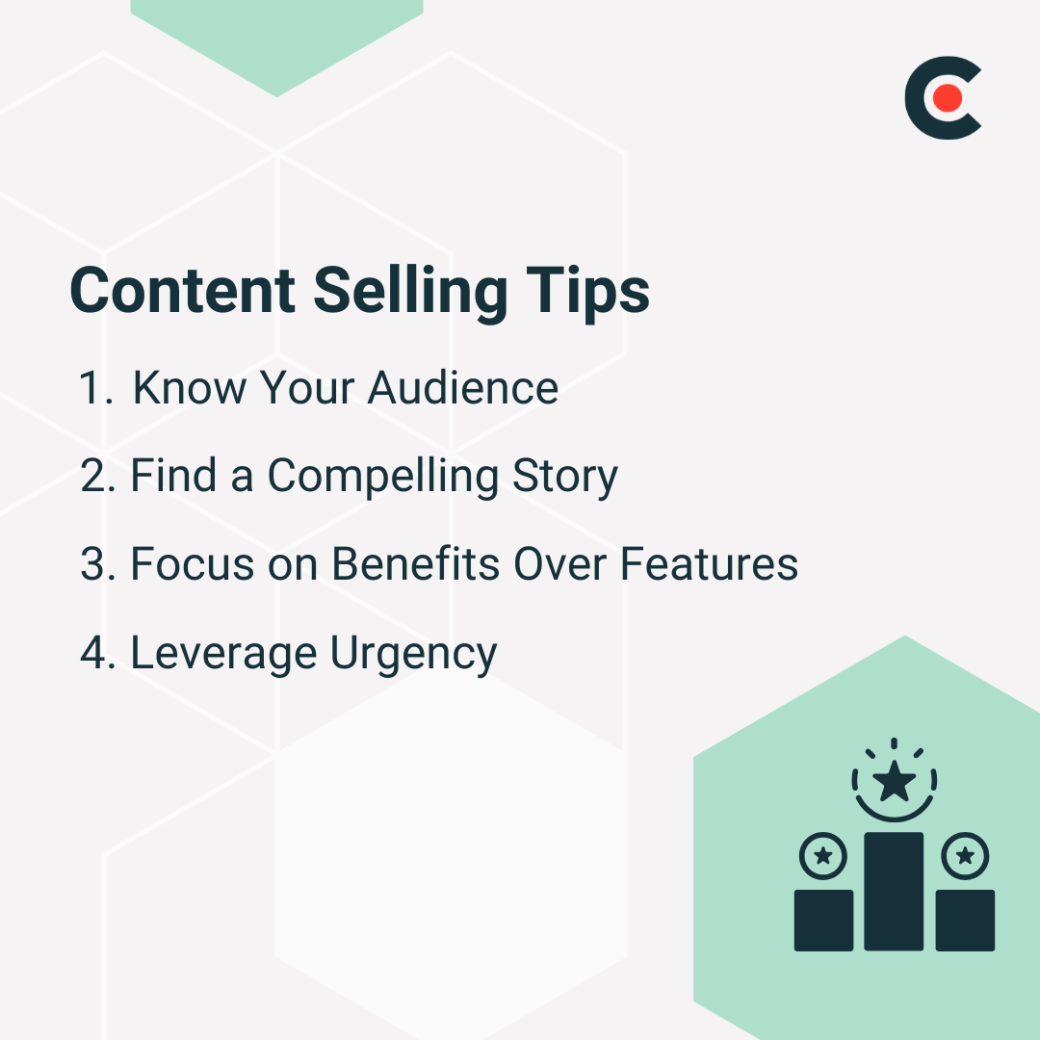
Once you’ve fleshed out your content-selling strategy, you’ll be on your way to increasing your sales and expanding your customer base. However, there are always more things you can do to improve your content and customer experience.
Here are some content-selling tips to consider to optimize your strategy.
Knowing your audience cannot be understated. If you don’t understand what they are looking for, you won’t know how to convince them to click the “Buy” button.
Aydeniz puts it like this: “...content tailored precisely to audience pain points, coupled with strategic remarketing campaigns, provides significant ROI.” Do what it takes to know everything about your audience, and then go the extra mile to learn even more. Each new insight you gain about your potential customers could be the tipping point that causes an avalanche of sales.
Instead of stating the facts about why your product or service would improve your customers' lives, turn it into a story. Stories are tools that humans have used for tens of thousands of years to build emotional connections, explain complex concepts, and create memorable ideas.
Stories will make your pitch more engaging and interesting while demonstrating the value of what your business brings to the table. Finding a compelling story and translating it into the channels and platforms you’re using will boost your conversion rate.
If you showcase your product or service and show all the cool gadgets and gizmos it comes with, people might think it’s neat, but that doesn't mean they'll be quick to buy it. A better way to present your goods is to focus on what’s in it for the buyer.
Show how your offerings benefit the customer and what problems they will solve. This will make it easier for customers to understand the value of your product or service as it relates to them.
Urgency can be a great motivator. When customers think they have limited time to make a purchase, they might jump at the chance in fear of missing out, or FOMO. Strategies like offering limited-time discounts or having a finite number of products can push people over the edge to buy — and buy quickly.
Content selling is the practice of creating content geared toward potential customers who are already in your sales funnel. Employing the best strategies, creating engaging content, and tracking and tweaking your plan will help your business succeed.