
Website ROI: How to Measure, Calculate, and Improve Your Return
Website ROI measures the value your site generates relative to what you spend. Learn how to calculate it, track the right KPIs, and improve your return.
Updated March 5, 2026

Before the rise of generative AI, most crawlers indexed websites to improve visibility on search engines like Google and Bing. While they still serve that purpose, many AI companies now deploy crawlers to collect data for training models. This means the information on your site might be helping businesses create profitable AI tools without compensating you for the data.
Cloudflare has introduced a solution, called pay per crawl. It lets businesses monetize access to their content. If you receive a substantial amount of web traffic, it could become a valuable new revenue source for you. However, it's not suitable for every company. This article covers what you need to know about Cloudflare's pay per crawl so you can decide if it's a good fit for your site.
Pay per crawl is a Cloudflare feature that allows publishers to charge AI crawlers, search engines, and other data scrapers for access to their content.
This differs from the traditional model, which allows unlimited free crawling. Companies have historically accepted the traditional model because it improves visibility and supports traffic generation. For example, when Google crawls your site, it indexes each page so that people can find it when they search for relevant keywords. If crawlers didn't do that, users might struggle to find you when searching for you online. That would mean less traffic and fewer leads for your funnel.
However, generative AI crawlers access websites for a very different reason. Their goal isn't to help people find you, but to take your data and learn from it. As a business, you see no benefit from this. You're essentially allowing other for-profit companies to access your intellectual property without any form of compensation.
Cloudflare has introduced the pay per crawl model to help companies monetize their website information in this new era. Through it, you earn a small fee each time a crawler wants to access a page on your site. These fees can add up to a meaningful new revenue source for businesses that receive significant traffic. Even if your site doesn't experience much traffic, you may want to use pay per crawl as a tool for protecting valuable IP. Instead of giving away free information, you can safeguard it so that your company receives some compensation if an AI company wants to use it to train its models.
Pay per crawl has the potential to redefine the relationship between publishers and search engines. If it gains traction, it could usher in a new era of content licensing — one where generative AI platforms compensate companies for access to their data. However, there are downsides to consider before embracing this new model.
AI companies and search engines may be willing to pay for access to your web content, but there are no guarantees. If you start charging crawlers to train on your data, they may ignore your site and move on to others that don't charge. This could lead to your business not being featured in AI assistants like ChatGPT and Google Gemini. Tools like these may begin referencing your competitors instead, which could hurt traffic and negatively impact revenue.
Ultimately, it comes down to balancing visibility in AI assistants and search engines against the cost of giving away data for free. If crawlers refuse to pay, your business could lose exposure. But if they are willing to pay for your data, it could unlock a new revenue source you never knew you had. There's currently no reliable way to predict whether the company behind a crawler will pay or not. So, by charging for all access, you could either find new revenue or lose leads. The answer will depend on how valuable your data is to your users.
For example, if your site hosts thought leadership content, surveys, and industry data that crawlers find valuable, paying a small fee to access these resources seems reasonable. On the other hand, if your site is mostly an advertisement for your services, crawlers may see no reason to include you in their search results or train on your data.
The minimum price per crawl today is $0.01. The amount you charge would multiply across each crawl access, so the more traffic you get, the more you earn. Some forecasters believe that high-traffic sites could generate as much as $50,000 to $200,000 per month in new revenue, but the vast majority won't earn that much. To estimate your potential earnings, multiply the number of crawl accesses your site receives each month by the amount you'd charge.
Some of the key factors influencing your earning potential include:
Over a longer time frame, we may see a standardized price structure develop for crawl access. There might also be marketplaces in the future where you would be able to see how much AI companies are willing to pay for your information. However, the model is still very new and will take time to develop.
One reason to use pay per crawl is to protect your valuable content from free use.
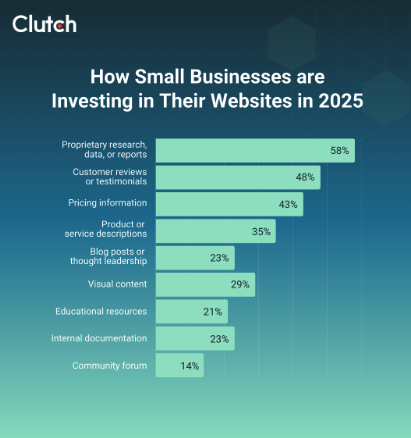
For example, a business may want to safeguard data such as:
It might make sense to use different models for different pages. For instance, your marketing materials are key to keeping your business visible, and probably don't contain the kind of uniquely valuable information crawlers are willing to pay for. You could allow free access to these, while putting your valuable IP or customer data behind a pay per crawl paywall.
As part of this process, it's worth reviewing how this tool from Cloudflare fits into the broader toolkit for controlling crawler access. Here are some key takeaways:
You may want to use each of these tools for different resources on your site. It will depend on the kind of content you have and how serious you are about protecting it from free use.
Should you adopt pay per crawl? Or stick with the legacy model? Here are three key questions to ask yourself:
Another factor to consider is that this marketplace for web content is still in its earliest stages. Even if you think pay per crawl could work for your business, you may want to wait until AI companies and search engines are more willing to pay for content.
To answer this question, start by considering the kind of data available on your site. If you've published industry reports, thought leadership content, and other uniquely valuable insights, pay per crawl can help you capitalize on the work you put in to create them. However, making the switch could also limit your visibility and lead to fewer prospects for your funnel.
The best strategy for now may be to apply pay per crawl to only those pages that host your most valuable materials. That way, AI companies can't use the information for free, but your marketing content still reaches Google, AI assistants, and other search engines. Explore this guide for more information on how small and medium-sized companies approach this issue.