
Website ROI: How to Measure, Calculate, and Improve Your Return
Website ROI measures the value your site generates relative to what you spend. Learn how to calculate it, track the right KPIs, and improve your return.
Updated February 12, 2026

Many B2B teams default to full website rebuilds when performance stalls. This article explores why that approach often fails to deliver growth, and how post-click optimization and ongoing performance models are replacing rebuild-led strategies.
For years, the standard response to an underperforming website has been a rebuild.
Conversion rates flatten. Campaign performance slips. Stakeholders lose confidence. The solution? A full redesign or rebuild, often a six-month project costing tens or hundreds of thousands of dollars, was sold on the promise that “this time it will convert”.
Yet for many B2B organizations, the results rarely justify the disruption.
As digital acquisition costs rise across paid media, SEO, and partnerships, websites are no longer brand brochures. They are commercial infrastructure. And increasingly, marketing leaders are questioning whether rebuilds are solving the real problem, or simply masking it.
This shift is forcing a rethink of how websites should be built, managed, and optimized for growth.
Rebuilds have become the industry’s default reaction to underperformance.
The logic is familiar: the site feels outdated, competitors look sharper, conversion rates have stalled - therefore, the website must be rebuilt.
What’s often overlooked is the value already present in a live site.
Traffic behavior, SEO authority, conversion paths, user friction points, and historical performance data are embedded in an existing website. A full rebuild frequently discards that intelligence, resets momentum, and introduces new risk.
In practice, many performance issues are incremental, not structural:
These are rarely problems that require a six-month reinvention. They require diagnosis, prioritization, and targeted optimization.
For mid-market B2B teams, rebuilds carry an additional hidden cost: opportunity loss. While internal teams wait for delivery, campaigns continue to run, traffic keeps landing, and revenue leaks go unnoticed.
The role of a website has fundamentally shifted.
Modern B2B buyers arrive informed. They self-educate through search, peer reviews, AI-driven summaries, and automated research tools long before speaking to sales. By the time a prospect lands on a website, the site is expected to answer complex questions instantly and credibly.
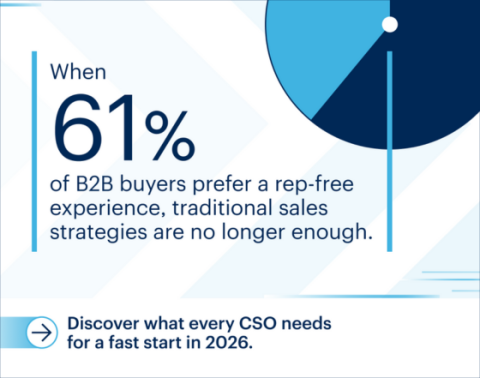
Modern B2B buyers conduct most of their research online and increasingly prefer rep-free buying experiences, with 61% expressing strong preference for digital self-service before engagement with sales reps.
In this environment, websites are no longer destinations, they are decision environments.
Performance is no longer limited to page speed or design quality. It includes:
The ability to evolve alongside campaigns
Slow load times and poor navigation dramatically increase bounce rates and reduce engagement, making performance optimization a core growth priority.
Yet many agency models still treat performance as a phase at the end of a project, rather than a responsibility that continues long after launch.
This mismatch is becoming increasingly costly for marketing teams under pressure to prove ROI.
One of the biggest misconceptions in web delivery is that performance can be “finished”.
In reality, performance is an operating model.
True web performance is not just about how fast a site loads. It’s about how reliably a website converts traffic into outcomes over time. That includes speed, as well as UX clarity, technical resilience, data accuracy, and the ability to respond quickly as campaigns evolve.
When performance is treated as ongoing, websites shift from being static assets to adaptive growth platforms.
This is where post-click optimization comes into play.
Post-click optimization reframes the role of a website entirely.
Instead of asking, “How should the site look?”, the question becomes:
“What happens after traffic arrives, and where is value being lost?”
This approach prioritizes:
For B2B marketing teams running continuous campaigns, this model aligns far more naturally with how work actually happens. Campaigns launch weekly. Messaging evolves. Traffic sources change. The website must keep up.
Under a post-click optimization model, rebuilds become the exception, not the default.
Delivering continuous optimization consistently is not just a process challenge; it’s a talent one.
Traditional web developers often operate far from the marketing context. Marketers, on the other hand, understand growth objectives but lack the technical depth to execute changes quickly and safely.
This gap creates friction, delays, and missed opportunities.
A growing number of agencies are responding by developing hybrid roles that blend development, UX, and marketing thinking, and by hiring specialists who can translate commercial goals into technical action without handovers or delays.
For B2B teams, this hybrid capability reduces dependency, shortens feedback loops, and turns websites into active contributors to growth rather than bottlenecks.
Another shift reshaping the web industry is collaboration.
Performance marketing agencies, SEO consultancies, and growth teams increasingly recognise that websites are not their core specialism, but their success depends on them functioning flawlessly.
Rather than competing for ownership, more agencies are forming technical partnerships that allow each party to focus on what they do best.
In this model:
This partnership-first approach is gaining traction, particularly in mature markets like North America, where acquisition costs are higher, and performance gaps carry greater commercial risk.
As performance expectations rise, geography matters less, reliability matters more.
Websites don’t operate on office hours. Campaigns don’t pause for time zones. Issues need to be resolved when they happen, not when teams come online.
This reality is pushing agencies to rethink delivery models, investing in distributed teams and always-on support structures that keep pace with modern marketing.
For B2B organizations operating across regions, this shift reduces risk and increases confidence that their website infrastructure can support growth at scale.
For marketing leaders, the takeaway is clear:
The most effective teams are moving away from large, disruptive projects and toward optimization models that prioritize learning, iteration, and measurable outcomes.
In an environment where every click is more expensive, performance after the click is where competitive advantage is increasingly won, or lost.
The web industry is entering a new phase.
One is defined less by production and more by performance. Less by projects and more by partnerships. Less by reinvention and more by optimization.
For B2B marketing teams under pressure to deliver results in increasingly complex environments, this shift is not optional; it’s inevitable.
The agencies and partners that recognize this early will help shape what comes next.