
Evaluating an Marketing Agency in the AI Search Era
AI search has completely changed how people interact with online content. When an AI summary appears at the top of search results, Google users only click a...
Updated May 29, 2026

Understanding why your business fails to convert leads into paying customers is important for any business. Many companies struggle to achieve high conversion rates despite investing in lead generation. In this article, Mike Hakob, founder of FormStory, explores the top reasons for lead conversion failures, highlights common mistakes in the process, and provides proven strategies to optimize efforts and get better results.
Lead conversion transforms a lead or website visitor into a paying customer by guiding them through your marketing or sales pipeline. This is achieved through personalized outreach, targeted campaigns, persuasive sales strategies, and seamless communication to nurture interest, facilitate engagement, and build trust.
A conversion occurs when a lead takes a desired action that moves them closer to becoming a paying customer, such as filling out a form, requesting a demo, scheduling a consultation, signing up for a trial, or purchasing.
Tracking your lead conversions can provide your business with the following benefits:
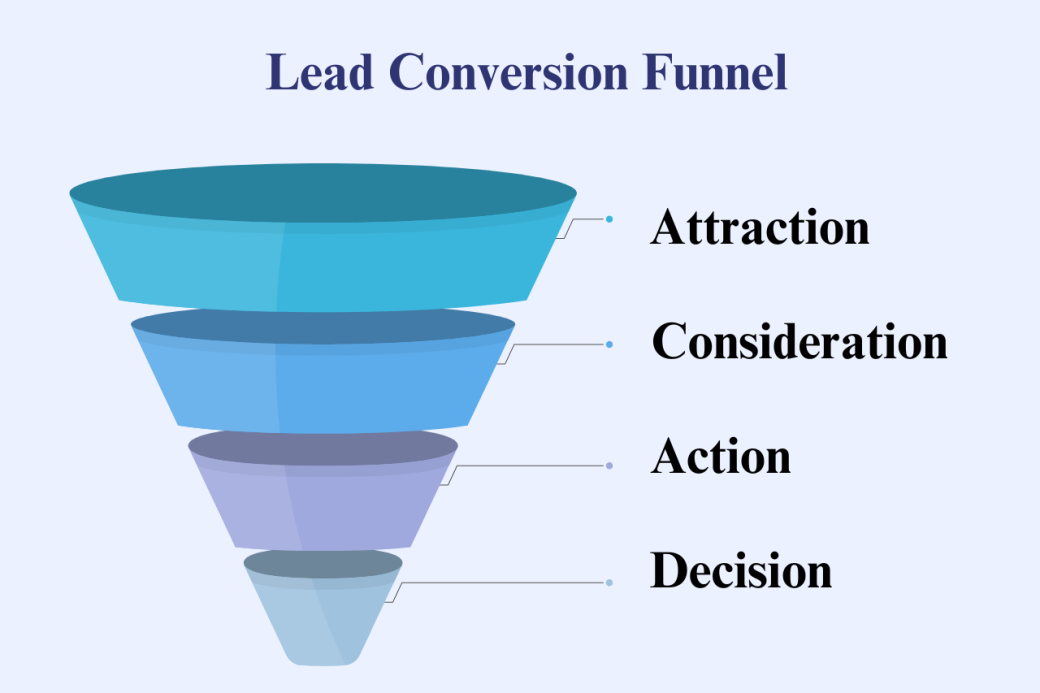
It’s essential to understand how lead conversion funnels operate to analyze why prospects are converting into paying customers or why they are not. A lead conversion funnel outlines the journey a potential customer takes.
The funnel begins with businesses building awareness, generating interest, and collecting contact information from potential customers. This is followed by the sales phase, which focuses on turning those leads into paying customers.
Potential customers go through different stages in the lead conversion funnel:
In this stage, potential customers become aware of your brand or recognize a problem that needs a solution. Use targeted strategies like social media campaigns or search engine optimization to capture attention and draw leads into your funnel.
Leads begin evaluating solutions to their problem. Provide valuable, informative content through emails, webinars, or case studies to position your brand as a trusted choice.
Leads choose a brand to address their needs. Retargeting ads or limited-time discounts may motivate them to decide and take action.
At this point, leads convert into paying customers. To improve the customer experience, ensure smooth checkout processes, fast delivery, and attractive post-purchase perks like loyalty programs or referral incentives.
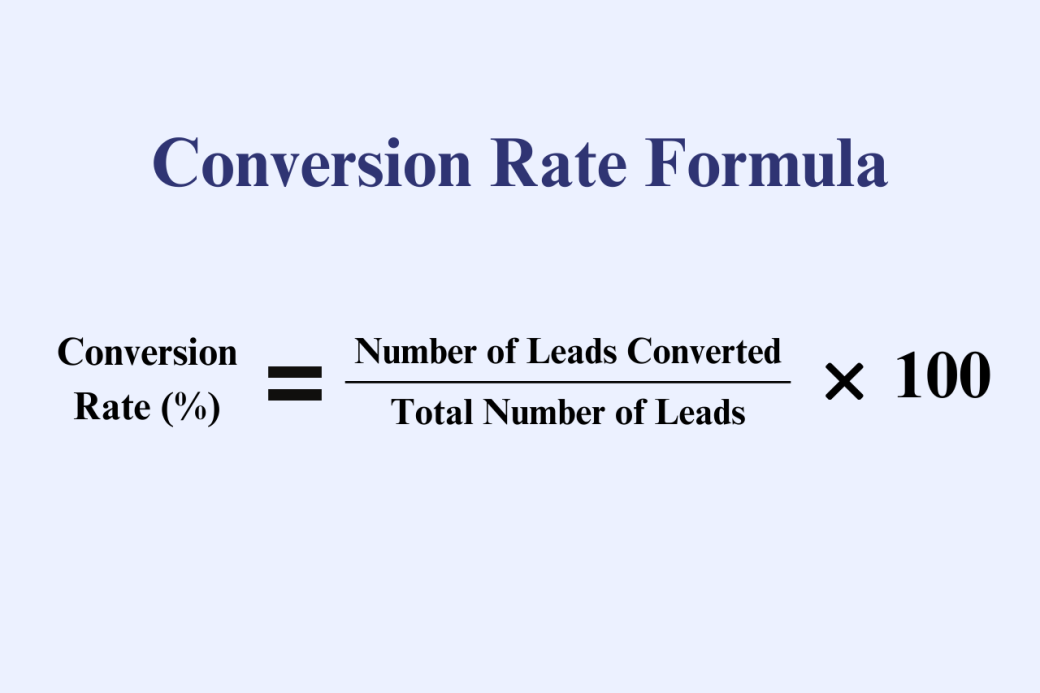
To measure lead conversion, you must calculate the LCR (lead conversion rate). This metric is used to determine the effectiveness of your marketing and sales efforts because it shows the percentage of leads that are converted into paying customers.
The formula for calculating the lead conversion rate is:
Lead Conversion Rate = (Number of Leads Converted / Total Number of Leads) x 100
Suppose your business has generated 500 leads in the month. Out of those, 50 became paying customers. In that case, your lead conversion rate would be:
Lead Conversion Rate = (50 / 500) x 100 = 10%
A good lead conversion rate is determined by the type of industry, quality of leads, marketing cost, and the campaigns' goals.
For instance, industries like healthcare and finance with long sales cycles and complex services tend to have low conversion rates. Conversely, e-commerce and retail often have much higher rates because of shorter sales cycles.
Most businesses might know the basics of lead conversion discussed above. Yet, many teams face a frustrating reality: conversions remain alarmingly low.
Let’s explore the culprits behind conversion failures:
Gaps in website analysis occur when businesses need to pay more attention to critical issues during evaluations, which prevents them from identifying factors that negatively affect user experience and conversion rates.
For example, if issues like unresponsive layouts, outdated content, or slow page loading times are not flagged during analysis or are left unresolved, it can lead to high bounce rates and low engagement.
Understanding your target audience is critical for effective marketing. Per parcellab’s 2022 research, nearly half of users disengage when targeted incorrectly.
For example, promoting products meant for people in their twenties to older audiences wastes time and resources. Additionally, neglecting important groups through poor audience segmentation reduces conversions.
Poorly designed web forms can lead to confusion, frustration, and lost conversions. Site visitors will abandon your form if they encounter complications. A common issue is unclear error messages. When users make a mistake, they should see specific messages explaining what went wrong and how to fix it. Often, error messages appear next to a field but are out of view, requiring users to scroll back, especially with large forms on mobile devices.
User experience refers to how users interact with your website or product. It covers design, navigation, and load speed.
A positive UX encourages engagement and actions like purchases or form submissions. In contrast, poor UX, such as slow-loading pages or confusing navigation, frustrates users, causing them to abandon the website and move on to the next.
Without user feedback, knowing what’s working or needs improvement is hard. Feedback helps you improve your website and campaigns while increasing conversions.
According to ReviewTrackers’ 2022 Online Reviews Statistics and Trends Report, 45% of consumers are more inclined to visit a business's website when it actively responds to negative reviews.
Thus, ask customers what stops them from finishing purchases at checkout. Or, learn from lead generation campaigns by asking what made them fill out forms. These insights can help you make better decisions and improve results.
A well-crafted call to action bridges the gap between attracting visitors and turning them into customers. Yet, According to Sixth City Marketing, 70% of small B2B websites lack a CTA.
CTAs that feature vague or confusing language fail to highlight practical value or solutions or are difficult to visualize, which can quickly cause users to lose interest.
Fortunately, there are effective techniques for generating more valuable leads and increasing the possibility of turning contacts into paying and loyal customers. Let’s explore them in detail:
A revenue goal is a financial target set for a specific period. It represents the cash flow a business needs to generate to cover its expenses and create profits.
Establishing clear, measurable, and achievable revenue goals is critical for business success. They help guide operations, motivate and align teams, and identify gaps in performance or management.
When setting these targets, consider market conditions, key performance indicators (KPIs), product placement, and customer demand.
Website analysis provides valuable insights into your site’s performance and user experience. Routine analysis helps identify areas needing updates or modifications, optimize the site to attract new visitors, and encourage return traffic.
It lets you deliver the best possible experience for current and potential customers. Regular analysis keeps you competitive by monitoring competitors’ websites, identifying new keywords, and discovering content opportunities.
A form monitoring system allows you to capture lead information, such as email addresses, even when users abandon your forms or technical issues cause your forms to fail.
This ensures valuable data isn’t lost and enables you to reconnect with prospects. Use the stored details to address their inquiries, nurture leads, and resolve problems behind form abandonment.
According to Wisernotify, personalized CTAs perform 202% better than basic ones. Personalization allows you to tailor CTAs to users' needs, preferences, and behaviors to deliver targeted and relevant messages that drive engagement and conversions.
Leveraging past visitor data further enhances conversions. For example, offering a free trial or demo to prospects who previously showed interest increases their likelihood of taking action.
An effective lead generation strategy is enabling value exchanges, where you offer incentives like gifts or giveaways in exchange for customer data, such as demographics, email addresses, or reviews. A study found that 74% of American adults are willing to share personal information for deals or perks.
Your audience gains value without spending a dime. Moreover, these incentives attract engaged subscribers already interested in your brand, increasing their chances of becoming paying customers.
You can provide free tools and resources or useful tips and strategies to educate your audience, build trust, and warm them up for future sales.
Apply customer feedback to refine your marketing messages. Highlight features and benefits customers value while addressing concerns and misconceptions.
Use insights to improve products or services, such as incorporating recommended improvements and innovations to meet expectations. Finally, improve the overall customer experience by resolving issues related to website usability, customer support, or delivery.
You don’t want the excitement of generating leads to become disappointed when they fail to convert into customers. If your conversion rates are low, you should investigate the underlying issues.
Common reasons include poor website analysis, targeting the wrong audience, web form problems, bad user experience, lack of feedback, and unclear calls to action. To address these, set clear revenue goals, analyze your website regularly, implement form tracking, leverage customer feedback, use personalized CTAs, and offer valuable incentives.
Improving conversion rates isn’t easy, but by examining issues and applying the right strategies, you’ll ensure that no lead slips through the cracks.