Is Your Phone Spying On You? (And How to Stop It)
Do you worry your phone is spying on you? You’re not alone. Learn how smartphones collect your data and what you can do to reduce what you share.
Updated March 14, 2025

Businesses are increasingly outsourcing their cybersecurity to specialists. Jane Frankland, CEO of KnewStart, breaks down which cybersecurity tasks should be prioritized for outsourcing by companies looking to expand their bandwidth.
Cybersecurity is a critical component of your digital infrastructure. Every asset, from the systems that power your business processes to the applications your customers use, is a potential target for cyberattacks. When addressing this necessary and critical component of your business, take a step back and deliberate exactly which cybersecurity responsibilities you want to outsource.
It’s not uncommon for businesses to outsource all facets of cybersecurity to a service provider. However, some companies may prefer to retain some control of their digital security policy and apparatus. Which components of cybersecurity should be outsourced first, and why?
Looking for a IT Services agency?
Compare our list of top IT Services companies near you
Jane Frankland, CEO of KnewStart, gives her opinion on which cybersecurity tasks should be outsourced first based on her experience.
Spending on cybersecurity is increasing year over year. In 2024, it’s poised to cross $80 billion. Digital security is essential for business growth, consumer trust, and compliance, so with threats increasing, it's necessary to meet and combat them.
For businesses looking to work with partners on cybersecurity, it may make sense to do so in phases. Any provider overseeing security may handle sensitive information, proprietary systems, and third-party data. It is advisable to take a phased approach and delegate responsibilities individually as you see fit.
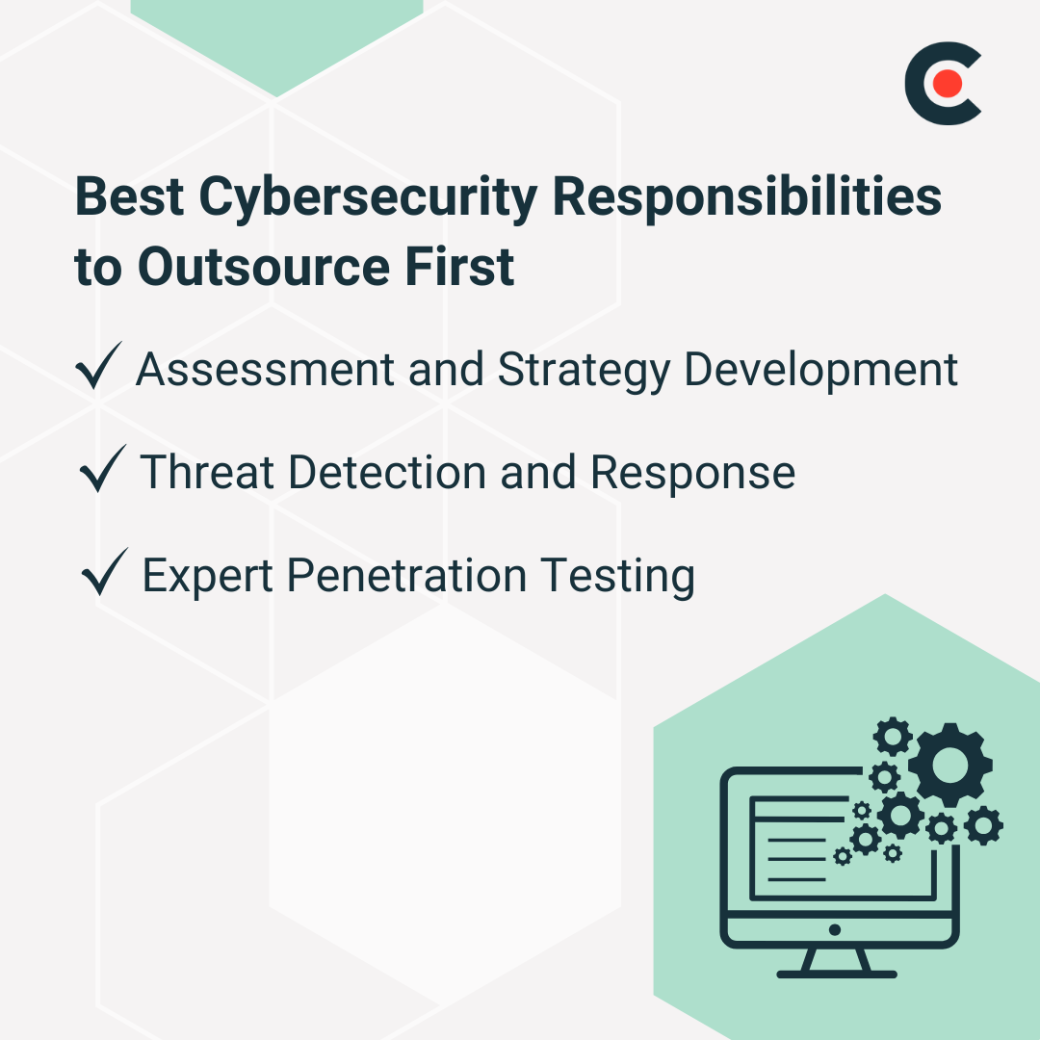
Here are three recommendations for outsourcing cybersecurity responsibilities in parts to a service provider.
The first step that a business considering outsourcing cybersecurity may take is seeking a consultation. This is different from hiring a provider to handle cybersecurity and simply involves devising a cybersecurity strategy and policy with an expert or team of experts.
The first step is to hire a cybersecurity consultant or work with a virtual Chief Information Security Officer (vCISO). This collaboration will assess your cybersecurity provisions, tools, and policies. Such an assessment aims to see which cybersecurity methods best serve your business’s needs and whether your existing systems are up to current standards.
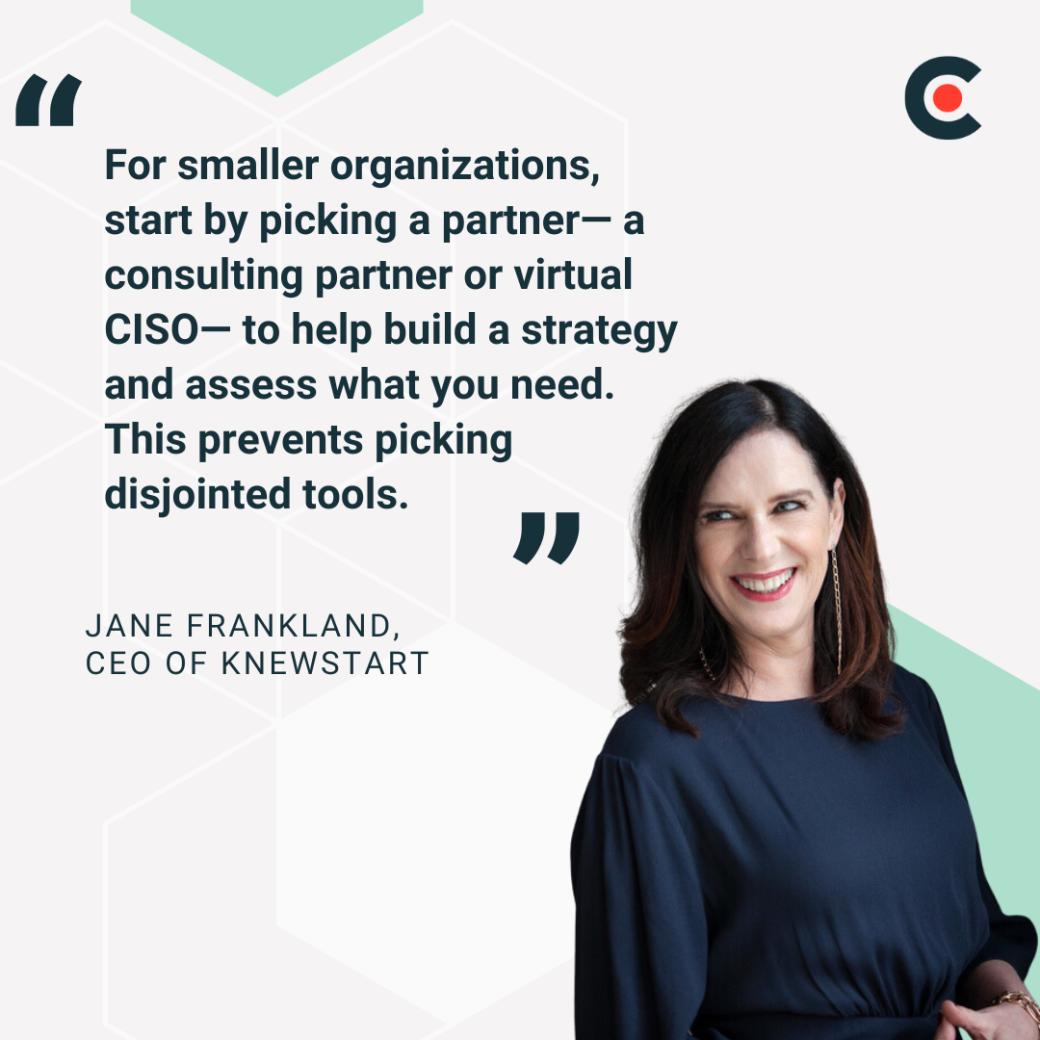
“For smaller organizations, start by picking a partner— a consulting partner or virtual CISO— to help build a strategy and assess what you need. This prevents picking disjointed tools," said Frankland.
After assessment, the consultant or vCISO can help guide the development of your strategy. Every organization has unique security needs so a one-size-fits-all approach won’t work. With their expertise and experience, they can develop a strong and uniquely tailored strategy, recommending any necessary changes and additions. However, they won’t implement the strategy — you'll have to do that in-house or by outsourcing it.
Here’s what your outsourced cybersecurity strategy may include:
If you want to outsource most of your cybersecurity responsibilities to a specialist, begin with threat detection and response. This is where Managed Detection and Response (MDR) services come into play. MDR providers offer a proactive approach to cybersecurity by delivering real-time monitoring, swift incident response, and continuous threat analysis.
“For threat detection and response, consider outsourcing your security operations center or using a managed threat detection and response service,” said Frankland during our talk. “This provides 24/7 real-time monitoring, skilled analysts, and threat intelligence without building it internally.”
MDR services typically include 24/7 monitoring by a team of skilled analysts. The provider gives you access to its engineers and technicians, who use cutting-edge threat intelligence to detect potential attacks before they can cause harm. Automated systems can also flag suspicious activities, but MDR combines monitoring tools and expert human analysis to confirm threats and determine the best course of action.
In MDR, threat detection and response are equally important. Detection without response is ineffective, and vice versa. Simply identifying a threat isn’t enough—rapid incident response is critical to containing and mitigating the impact of a breach. Conversely, response efforts are futile if threats go undetected.
By outsourcing to an MDR provider, businesses ensure a comprehensive approach to cybersecurity that addresses both fronts.
Working with an MDR provider is recommended for businesses without onboard cybersecurity specialists and dedicated tools. You will want to choose a provider with expertise, proven experience, and unwavering commitment. Because the MDR team will be able to access highly sensitive assets, it’s important to feel confident in your provider.
Cybersecurity experts highly recommend penetration testing. It involves stimulating real-world scenarios of attacks to see if your network, systems, and applications can be breached. The point of penetration testing is to see if your cybersecurity works as it should.
Depending on the size and complexity of your IT infrastructure, penetration testing may require careful planning, implementation, and reporting. That requires resources and time, but it isn't necessary for an in-house team to handle it. In fact, it is one of the most natural aspects of cybersecurity to outsource.
Expert cybersecurity providers conduct extensive penetration testing, typically on-site, to detect and report vulnerabilities. Hiring an outsider for this specific responsibility can be beneficial. It frees your IT teams to focus on more pressing needs while bringing in experts — who, like real attackers, won't necessarily have inside information — to test your system.
Here’s what a typical penetration testing process looks like:
Outsourcing penetration testing to experts ensures that your company continuously identifies and fixes weaknesses in its security infrastructure. It also provides an objective perspective, helping you stay one step ahead of potential attackers.
Cybersecurity shouldn’t be an afterthought. It should form a cornerstone of your business strategy. Not only does it help you avoid costly attacks, but it also gives you an edge over the competition. Whether you deal with other businesses or consumers, having solid digital security makes you a trustworthy provider.
If you can’t do it all yourself, hire professionals to help. Outsourcing some parts of cybersecurity can help relieve your IT teams and even be the most cost-effective approach. You don’t need to outsource all aspects of cybersecurity at once. You may want to start with periodic or occasional responsibilities like policy creation or penetration testing.
Poor cybersecurity practices, or lack thereof, expose the business to attacks. Even a small incident can have a domino effect, ending in expensive recovery efforts. Such unfortunate incidents are preventable with a strong cybersecurity strategy, reliable tools, and knowledgeable staff. Outsourcing to fill in any gaps allows you to offer your staff and clients the best.

Jane Frankland is a globally recognized cybersecurity expert, entrepreneur, and author, known for her extensive work in building effective cybersecurity strategies and fostering diversity in the tech industry. With over two decades of experience, she has advised top companies on risk management, threat intelligence, and incident response, helping them stay ahead of emerging threats.