No-Code AI Agent Platforms For Every Team
No-code AI agent platforms make building AI agents simple and accessible. Clutch breaks down the best tools by team, including marketing, sales, and support.
Updated October 13, 2026

Today, if you search for anything on Google, you have a 48% to 50% chance of seeing an AI overview result. This variation in search trends has significantly changed the SEO landscape. The rumor is that SEO is dead, but it is not. SEO is still valid, as most Google AI overview results are pulled from the top 10 Google search results.
Now, businesses planning to boost online visibility in 2026-2027 must understand that traffic is no longer determined solely by ranking higher. Besides SEO, AEO and GEO have changed the game. Moreover, content type matters too. Listicles make up around 63% of all content cited by AI search engines and LLMs.
Let’s have a look at some stats:
Looking for a Artificial Intelligence agency?
Compare our list of top Artificial Intelligence companies near you
The idea is clear here. If you want more traffic, you must optimize for AI, and to do that, you need to create listicle content that’s working now, but not just self-promotional ones. This article covers tested ways to build a thought leadership format that favors AI search.
Earlier, brands competed for top Google positions, but today the trend has shifted toward AEO and GEO search. Lean into understanding and using GEO tools to help you set up the strategy and monitor the results of your GEO strategy. For B2B marketers, understanding this matters a lot, and for good reason.
Before optimizing for this shift, B2B teams need to understand how prepared their existing digital presence is for AI-driven discovery. For businesses looking to operationalize this shift, AI integration services can help connect AI capabilities with existing websites, marketing platforms, customer data, and business workflows.
Arobis AI’s AI Readiness Report provides a practical benchmark for assessing a brand’s current AI search readiness and identifying areas that may need improvement as discovery moves beyond traditional search.
These aspects reinforce the need for AI search visibility for B2B marketers.
First, a listicle is a short-form content piece or article with a specific structure, i.e., a numbered or bulleted list. Top-ranking listicle articles share several traits that make them a top choice for B2B businesses.
Also, a few minor tweaks can help the content rank better in AI search. These include clear, number-based headings, semantic formatting & schema markup.
As AI search and LLMs evolve, B2B businesses can implement the following strategies to help their listicles perform well.
If you have noticed, this was a good practice in the SEO era, too. Based on the title of your page, place a relevant content snippet at the beginning of the article. For example, for the article on “How to Choose the Best AI Tools”, write a content snippet featuring the factors to consider, top AI tool choices, and pricing info at the top of the article.
This snippet has to be crisp and concise. As it answers the direct query, the chances of being extracted by the AI engine are high. Avoid burying such a content snippet in the middle or at the end of the article.
As you noticed, generic listicles no longer work because they present conclusions without evidence. People now search for real, transparent proof and experience that show value and build trust.
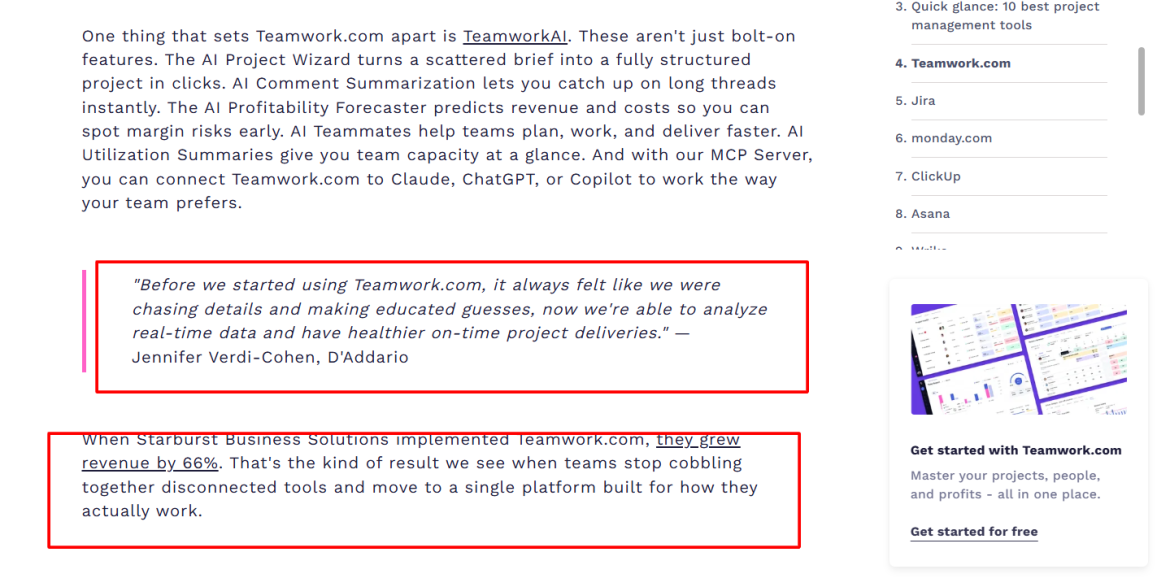
People need the so-called “thought leadership” approach to rank higher in AI search. Princeton discovered that this method significantly increased visibility by nearly 40 percent.
This means that if you want long-term organic visibility in AI search, you need to include citations and quotes from real sources, real user examples, statistics, evidence, and clear arguments in your answer. B2B content about AI voice agents can strengthen its authority by including real use cases, performance data, and evidence rather than relying only on general claims. Focus on quality and persuasiveness to get results.
For B2B companies looking to turn that visibility into a pipeline, working with experienced GTM firms can help connect content strategy with targeting, outbound, and sales execution.
A TL;DR section just after the intro of the listicle article is the perfect place. This section includes about 5 to 6 one-liners that cover the entire article in 200-300 words. This section is entirely different from the initial snippet section. While the first section answers the main query, the TL;DR section provides you with a more comprehensive yet quicker overview of the entire article.
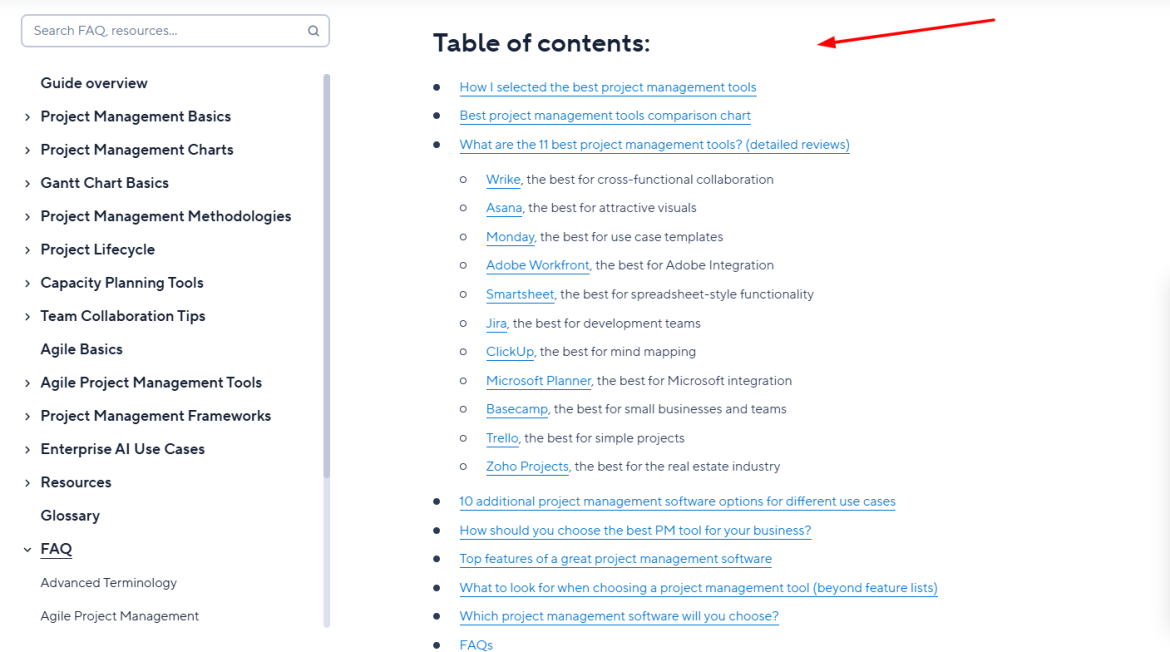
This section highlights content covered beyond the core sections. This content is for users who want to skim the article faster. For content based on interviews, webinars, or podcasts, a transcription service can also help turn spoken material into text that is easier to structure and reuse.
One of the best ways to rank in AI search is by using comparison tables in the article. Besides bulleted lists & pointers, LLMs and AI search love comparison tables. AI engines prioritize extracting clear, modular table blocks to answer user queries.
This works especially well for product-heavy businesses, such as brands investing in ecommerce website development, where buyers often compare features, pricing, and specifications side by side before deciding.
In the case of our example, you can create a table for the best AI tools of 2026 with table columns as:
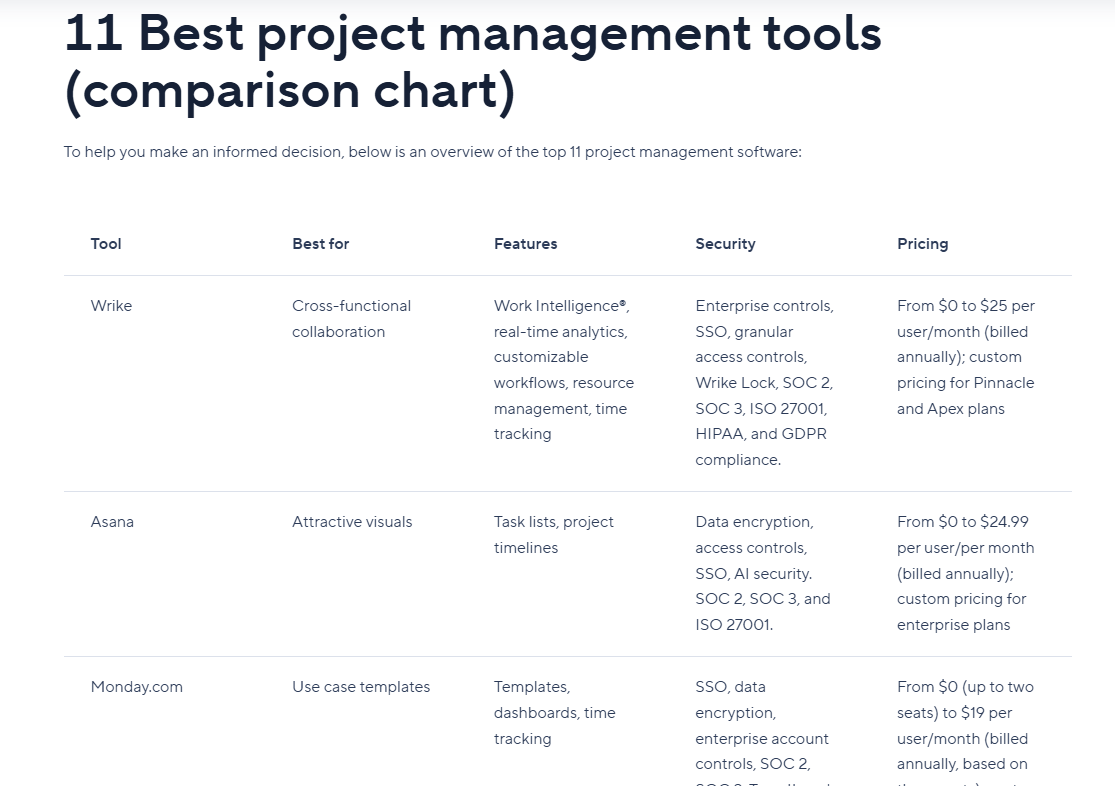
For example, if the listicle covers AI tools for content creation, you could include an AI image generator alongside other tools and compare their features, use cases, pricing, and standout capabilities.
And more. By carefully filtering target user queries, you can add table columns for better visibility.
Though the intent of your listicle can be commercial or transactional, it is better to include one informational query section at the beginning of the article. Not all users may be familiar with the product or service. This section can provide base-level information.
Furthermore, content with informational intent can
As an example, you can include a section titled, “How we shortlisted these AI tools in the article.” This helps reduce bias and boost user confidence while purchasing the product or service.
Recency signals are among the top KPIs AI engines use to evaluate your content. As discussed, fresh content is more likely to be cited by AI engines. The team at NetHustler saw this firsthand: “Once we started updating our guides regularly and moving the main answer to the top, our pages began appearing in Google’s AI Overviews for searches where they hadn’t shown up before.”
Now, the recency or freshness quotient of the content can be ensured in several ways, such a
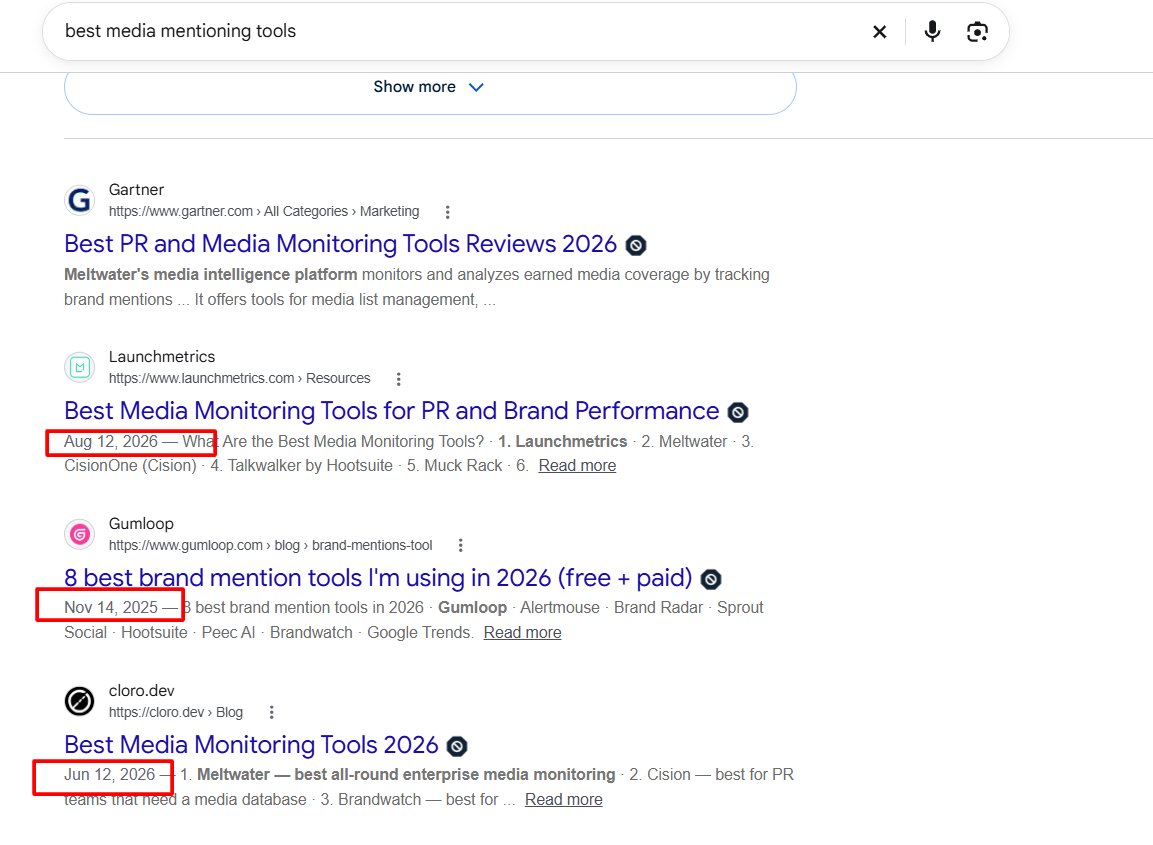
After analyzing many listicles, it is shown that listicles dated within the past 2 years appear in the top 3 on over 70% of search pages. This suggests that freshness is an important signal for AI success.
Include an Author or About Section. Social links have become a primary target for AI in ensuring E.E.A.T. Adding an author bio or an About the Author section can help build E-E-A-T trust signals. Also, linking the author bio to a dedicated LinkedIn account can further boost authority and legitimacy.
Another way to improve your listicles is to add an FAQ Block. Some queries may be critical to the article but cannot be fully covered in it. Cover these queries in the FAQ section. Businesses must ensure that these queries are actual conversational-format questions asked by users. These can also include follow-up questions that users may ask. The FAQ section is also a place to cover informational-intent queries.
In earlier days, users searched for a query and clicked through multiple blue links to find the B2B information they needed. But in the era of AI search, this has changed entirely. Today, LLMs provide ready-to-skim answers within seconds. This has increased zero-click searches and reduced top-of-funnel discovery.
In a landscape like this, B2B businesses must optimize their content for AI searches, whether it is a listicle or another format. To ensure your listicle lands in AI search, make sure it has fresh content, answers user queries directly, follows a clear structure, covers most query-related content, matches intent, and targets the right audience. By building topical authority and content clusters, it becomes easier to achieve AEO and GEO dominance.