Updated March 25, 2025
Network security hiring is a key step for modern-day businesses to protect themselves against today's latest cyberattacks. Learn what services to look for and how to make the best choice.
Network security services involve the practices and technologies used to shield businesses from cyber threats that compromise the security and privacy of their computer networks. Digital threats are only becoming more sophisticated and common, and their effects can cause serious financial harm. In fact, the average global cost of a cyberattack in 2024 is estimated at $4.88 million.
Many businesses have chosen to solve this by undergoing network security hiring. Network security organizations have the experience and expertise to identify and mitigate cybersecurity risks, which ensures that organizations can maintain business continuity, protect sensitive data, and even improve their productivity. In this network security services guide, we'll outline all the criteria and questions to ask network security teams to find the perfect match for your business.
Browse Related Network Security Firms
What Is Network Security?
Network security: A combination of policies, practices, and methods designed to prevent and monitor unauthorized access, misuse, or disruption of a computer network.
Network security uses a variety of technological methods and strategies to protect the confidentiality and integrity of data. It encompasses a wide variety of solutions, from security testing to installation of antivirus software to managed access control. A network security partner will take the time to understand your company's security stance, including potential vulnerabilities, and work to address them using proven strategic security solutions.
Network security services can also help businesses achieve wider security goals. Their work ensures your company adheres to compliance guidelines and protects intellectual property from cyber theft, ensuring your business is trustworthy. Moreover, network security teams take over the daily administrative tasks associated with cybersecurity, allowing you to focus on growth and innovation for your business.
Network Security Firms by Country
-
 United States
Network Security Services
5,521 Providers
-
 Canada
Network Security Services
512 Providers
-
 Australia
Network Security Services
419 Providers
-
 United Kingdom
Network Security Services
637 Providers
-
 India
India
Network Security Services
673 Providers
-
 Pakistan
Network Security Services
87 Providers
-
 Philippines
Network Security Services
25 Providers
Network Security Firms by City
-
 New York City
Network Security Services
476 Providers
-
 Los Angeles
Network Security Services
294 Providers
-
 Houston
Network Security Services
142 Providers
-
 Chicago
Network Security Services
222 Providers
-
 London
Network Security Services
395 Providers
-
 Sydney
Network Security Services
157 Providers
-
 Dubai
Dubai
Network Security Services
176 Providers
5 Benefits of Network Security
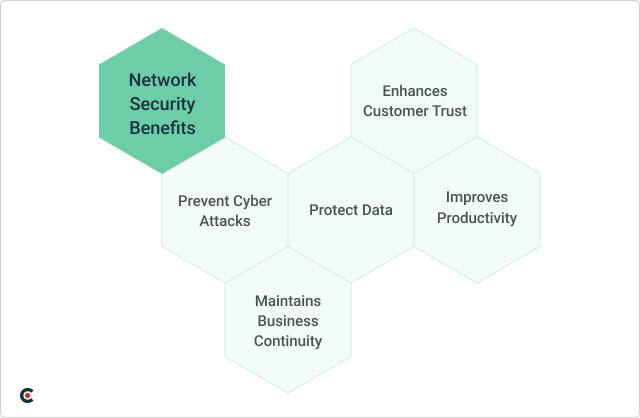
Network security services offer numerous advantages for all kinds of business owners. Some of the most beneficial results include:
- Prevents Cyber Attacks: By implementing robust network security measures, businesses can proactively detect and prevent cyberattacks before they escalate into larger problems. This proactive approach not only prevents costly disruptions but also helps avoid the reputational damage that often accompanies a major security incident.
- Protects Data: Data protection is essential for maintaining the overall integrity of business operations, especially in industries handling large volumes of personal or financial data. By keeping this information safe, businesses can avoid legal consequences, maintain data compliance, and preserve their competitive edge.
- Maintains Business Continuity: Nothing can cause more damage to a business than hefty downtime. By thwarting cyber threats, companies can avoid system outages that could lead to financial losses and other damaging repercussions. Uninterrupted service delivery is vital for ensuring the overall success of the business.
- Enhances Customer Trust: Customers are more aware than ever before of security threats, and they expect businesses to make security a top priority. By preventing data breaches and protecting sensitive information — and assuring clients that this is an organizational priority — businesses build credibility and create stronger relationships with their customers.
- Improves Productivity: Secure networks create an environment where employees can focus on their work without the constant worry of security breaches. With network security systems in place, threats are identified and mitigated before they impact daily operations, minimizing distractions and reducing the need for emergency fixes.
What Services Do Network Security Companies Provide?
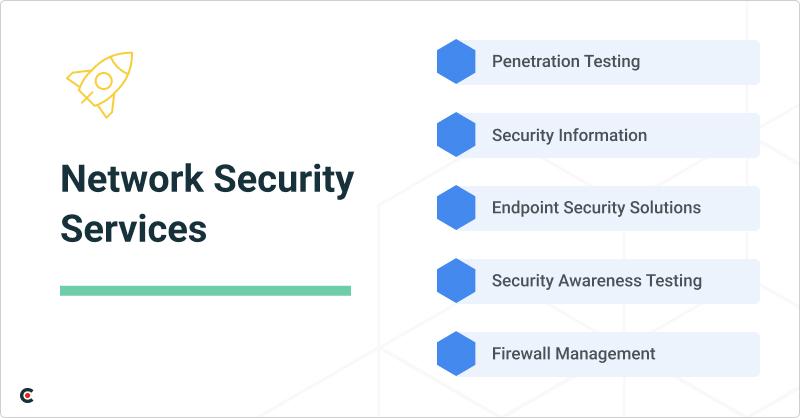
Network security companies offer a variety of services tailored to meet the unique needs of every business. Depending on your security goals, these can include:

- Penetration testing
- Security information
- Endpoint security solutions
- Security awareness testing
- Incident response and forensics
- Firewall management
Penetration Testing
Penetration testing simulates cyberattacks on a network to evaluate its security. The goal is to identify vulnerabilities and address them before a malicious actor can exploit them. This proactive approach ensures businesses stay one step ahead of potential hackers.
On a broader scale, penetration tests allow businesses to assess their current security structure and make more informed decisions on what security tools, methods, and processes to invest in.
Security Information & Event Management
Known as SIEM for short, security information and event management consists of collecting and analyzing data from various sources across a company's network. The purpose is to detect threats — such as unusual network behavior, suspicious activities, or security incidents — as they unfold in real time so they can be addressed immediately.
With real-time threat intelligence, network security organizations can respond to threats swiftly and efficiently, assuring businesses that their security is consistently monitored at all times.
Endpoint Security Solutions
Beyond networks, endpoint security solutions aim to protect employees’ devices, including laptops, desktops, mobile phones, and tablets. These devices are often hotspots for hackers looking to infiltrate an organization's network for data theft, misuse, or other malicious purposes.
Endpoint security solutions can include antivirus software, encryption, and even application whitelisting. The solutions come with the ability to allow network security administrators to manage and monitor endpoint devices remotely, ensuring employees are protected from wherever they access the organization’s network.
Security Awareness & Testing
Security awareness remains one of the best lines of defense for companies to protect their network. It involves teaching employees how to recognize and respond to potential security threats in a timely and efficient manner. It also encompasses cybersecurity best practices, including setting strong passwords and properly handling sensitive information.
With security awareness testing, network security teams will simulate real cyberattacks, such as fake phishing emails, to see how well employees respond to them. This helps identify areas where more education is needed in order to help employees continuously improve their cybersecurity knowledge.
Incident Response & Forensics
Incident response includes the immediate identification and mitigation of security attacks. A response team will quickly contain a threat and take the necessary steps to restore normal operations. It helps businesses minimize damages, avoid hefty financial losses, and protect their reputation.
Forensics takes it a step further, with network security teams conducting a thorough analysis of the security attack. They work to understand the incident's root cause and what vulnerabilities were exploited, as well as to identify the perpetrator of the cyberattack. This comprehensive approach provides another layer of security, helping businesses understand and address potential weaknesses in their security structure.
Firewall Management
Lastly, many network security companies will undertake firewall management. With this service, they configure and manage firewalls to ensure that only authorized access is permitted. By establishing rules for access management based on criteria such as IP addresses, port numbers, and protocols, network security teams create a controlled environment that filters out malicious traffic while allowing legitimate data to pass through safely.
In addition to setting up these rules, firewall management includes continuous monitoring and regular updates to adapt to new threats. This proactive management reduces the risk of breaches, keeps the network stable, and allows businesses to operate with greater confidence in their cybersecurity defenses.
How To Assess Network Security Services
An essential aspect of network security services is tracking key security metrics. It allows you to understand what services are working and which are lacking to ensure that your partnership with a network security service provider is meeting your expectations.
Though there are many security metrics you can track, these remain the most effective:
- Incident Response Time: This metric measures the speed at which network security teams respond to cyberattacks. A shorter response time is essential to minimize the consequences of an attack, while a longer one widens the possibility of bigger damage, including financial, legal, or reputational harm.
- Threat Detection Rate: This reflects the percentage of cyber threats identified and neutralized by security systems before they can cause damage. A high threat detection rate shows that your security tools and strategies effectively catch threats early.
- Security Training Completion Rates: To ensure your security awareness and training are effective, you will want to track its completion rate. It will show you that employees are educated on security best practices and are able to identify threats, leading to a decrease in human error.
- Phishing Click Rates: A phishing click rate measures the amount of employees who click on a phishing scam. This rate is another good indicator of how capable your employees are of understanding security threats and can indicate where additional training may be necessary.
- Patch Management Compliance: Updates are imperative to a strong security posture, and patch management compliance metrics can give you insight into how often you are updating your security tools. Outdated systems or unpatched software can open up your network to greater security threats.
What Is a Network Security Team?
Many network security services offer a diverse team of individuals who handle varying aspects of a company's network.
While roles can differ based on organization, they usually consist of:
- Chief information security officer: They oversee the entire network security strategy, including developing security policies and managing the security budget. On a larger scale, they ensure the security strategy aligns with a business's broader goals.
- Security Analysts: They are responsible for continuously monitoring network activity to spot unusual behavior, security vulnerabilities, or signs of a cyberattack. If a threat does occur, security analysts will work to neutralize it and ensure operations return to normal.
- Network security engineers: They handle the technical aspects of a security strategy, including firewalls, intrusion detection and protection systems, and encryption processes. Additionally, they are the ones who perform penetration tests and other security assessments.
- Incident Responders: They are the go-to team members who immediately respond to security threats and mitigate damage. Beyond this, they also spend time understanding the nature of the attack, how it was able to occur, and what steps need to be taken further to prevent a similar attack in the future.
- Security Awareness Trainers: They head the security awareness and training initiatives, educating employees on cybersecurity best practices. They also perform assessments to test employees' knowledge and awareness of common security attacks.
What To Look For When Hiring a Network Security Company
Finding a network security team that thoroughly understands your company's security needs is essential to ensuring the continued protection of sensitive data and information.
It’s important to take the time to evaluate your options, considering both your immediate needs and long-term goals. Look for a team that has a strong track record, expertise in your industry, and a commitment to transparency.
Criteria for Hiring a Network Security Company
- Proven experience in your industry
- Customizable solutions
- Transparent pricing and service offerings
- Compliance with industry regulations and standards
- Positive client testimonials and case studies
- Certifications and accreditations in cybersecurity
Before opting for any network security organization, research different options and discuss them with your team. Consider their experience with companies like yours, how well-received their services have been with other clients, and what cybersecurity accreditations they hold. Platforms like Clutch can be helpful in finding and reviewing network security services.
10 Questions To Ask When Hiring a Network Security Company
- What specific security services do you offer?
- Can you provide case studies or testimonials?
- What is your approach to tackling security incidents?
- What kind of security training do you provide?
- What is your threat detection rate?
- What is your incident response time?
- How do you ensure compliance with data and privacy regulations?
- What certifications does your team hold?
- Can you describe your experience within my industry?
- What is your pricing structure?
These questions are a constructive starting part to a meeting with a potential network security partner. Other key tips are to be transparent about your expectations, timeline, and security goals. Ensuring you are on the same page as a prospective partner can save potential headaches down the road, and it reassures you that you are making the right choice in a partner.
Search for Network Security Services Based on Project Requirements
Clutch offers a thorough and easy-to-use network security directory that lets you view potential security partners by location, certifications, and focus area. This allows you to narrow down potential network security partners by your specific security needs so you can find the exact match you're looking for and then review previous clients’ experiences with them.
Improve Your Security With Network Security Services
Working with a network security partner can greatly decrease your risk of facing a cyberattack and its consequences. By understanding their offerings, advantages, and key security metrics, you can make an informed decision about choosing a partner who can successfully protect your network, improve your team's productivity, and allow you to focus on the growth of your business.
Look through Clutch's directory for network security services to ease your search efforts and find the perfect match for you today.