
How to Choose a 3PL: 5 Mistakes E-Commerce Brands Make
Learn how to choose a 3PL that fits your channel mix, avoids hidden costs, and scales with your brand. Real selection criteria, and top providers compared.
Updated April 23, 2026

Before hiring a service provider to streamline your back office operations, it’s essential that you create a comprehensive BPO budget. Download Clutch’s back office budget template to get started on your hiring process.
The back office plays a crucial role in supporting the front office operations and ensuring the smooth functioning of the entire organization. Investing in these processes can help your business run more efficiently and save you time and money in the long run.
Whether you plan to hire internally or are planning to outsource your back office operations, creating a budget can help with financial planning and gives you more control over your expenses.
Looking for a BPO agency?
Compare our list of top BPO companies near you
This article will explain what you should consider when creating a back office budget as well as the factors that can influence the cost of these services.
Table of Contents
Search top back office outsourcing companies on Clutch.
When breaking down your budget for back office services, you must consider everything that you will need to support your project. These categories make up the majority of the expenses you will incur when investing in back office services:
By mapping out what fees are included when you hire a back office service provider, you can create a realistic budget that helps you keep costs down.
Back office services actually refer to many different business processes and functions that are essential to operating your business. This can include:
The specific back office services that your business is looking to outsource can also have a major impact on the cost of hiring a partner. While BPO providers usually charge an hourly rate, the price range varies depending on the expertise you require.
For instance, finance and accounting services are significantly more expensive than data entry. Still, prices range from less than $25 to $150 per hour.
As you begin to create your BPO budget, make sure you conduct research about the specific services you need to create an accurate budget.
Learn more about how much it costs to hire specific BPO services in Clutch’s Back Office Outsourcing Pricing Guide.
Companies hire back office service providers for various reasons. Some may be looking to reduce costs while increasing efficiency in certain areas of their business while others are looking to scale up their skills and expertise.
By outsourcing, companies can ensure that they’re working with industry experts. This comes with a myriad of benefits: this mitigates data security risks and prevents compliance issues, makes these processes more efficient and effective, and allows your internal team to focus on what they do best.
To create specific goals, think about what challenges your business faces and how the specific services you are looking to hire can impact your business processes.
Knowing how much support your team needs is essential to accurately estimating how much your project will cost. This will depend on your project's scope, what you need help with, and the size of your internal team.
Naturally, larger organizations will require more back office support than small businesses. But also consider how many processes need support. Are you just hiring for data entry? Or do you need financial services as well as legal counseling?
As we discussed, BPO companies usually charge hourly rates. The more time and resources dedicated to your business, the more expensive your project will be.
As discussed above, the size and scale of your project can impact overall costs. The bigger the team is working on your project, the more costly it will be.
In addition to the type of services being provided, how many team members will you realistically need to accomplish your goals.
Consider that if you already have an internal team working on back office processes, you may only need to hire a small team to provide additional support. However, if you need support for several back office processes, you may need several new team members and not just one.
The additional support means that you will need to set aside more money towards hiring a BPO provider.
At the end of the day, you need to do what is right for your business. While for most businesses, this means hiring a BPO provider, creating those roles within your organization is also an option.
Keep in mind that outsourcing is generally a more affordable option, especially for small businesses. Hiring an external provider gives your team additional flexibility, allows you to scale as needed, and prevents additional costs like software fees.
That being said, large companies that need extensive back office support may find that hiring internally is the better option for their business even though they also have to budget for salaries, benefits, and ongoing professional development costs.
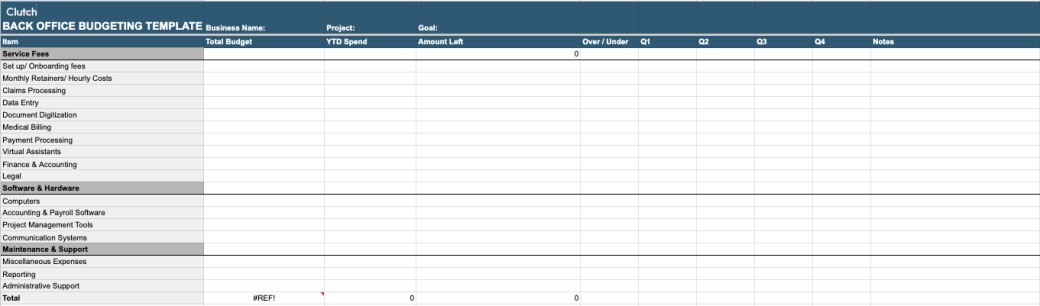
Download the Back Office budget template.
The overall cost of hiring a back office outsourcing partner can range between a few thousand dollars to tens of thousands. You can estimate the overall cost of your project by considering the following factors:
Keep in mind that the more complex your project and the services provided will require a larger team, and therefore increase the overall cost of your partnership. However, companies can often save money by hiring back office providers in areas where labor costs are lower.
Because back office operations refer to several business processes that you need to keep your business up and running, it can be difficult to create an accurate budget. By considering what your goals are in investing in back office operations and the specific services you need to invest in, you can gain a better understanding of the expenses you may incur.
With a solid budget in place, you’ll be able to find the perfect partner to streamline your operations.