
How App Companies Can Build Trust with Customers
Learn how app companies can build customer trust through better privacy practices, transparent communication, and stronger security to improve retention and...
Updated December 16, 2025

jQuery Mobile, Reach Native, NativeScript, Ionic, Titanium, and Meteor are all JavaScript Frameworks that are advantageous for app development. Learn which one is right for your business.
Updated on June 29, 2022
Even as app development becomes increasingly robust and complex, JavaScript remains one of the most popular programming languages. Data from 2021 says that about 65% of developers use it more often than any other language. That makes it the top language worldwide.
Looking for a Mobile App Development agency?
Compare our list of top Mobile App Development companies near you
Exploring the Java syntax also comes with a variety of options - this article dives into the top frameworks for businesses of all sizes.
JavaScript frameworks are well-suited to mobile app development, as they can be used across a number of platforms, including iOS, Android, and Windows.
In search of some development support? Connect with an experienced JavaScript development team today to jumpstart your mobile app development project.
The top 6 JavaScript frameworks for mobile apps are:
At BairesDev, we specialize in providing JavaScript development services. We’ve developed applications for Google, Viacom, Univision, and SiriusXM, which places us in a unique position to explore the most popular JavaScript frameworks.
Let’s take a look at each of these top JavaScript frameworks in more detail.
Perhaps the biggest advantage of building apps using jQuery Mobile is the speed at which the applications load.
As a lightweight framework, it’s based on the jQuery library and has a strong focus on compatibility with a specific runtime environment, so it can be used for all of the following products:
Along with asynchronous loading, jQuery eliminates the need for device-specific languages, so developers can use standards such as JavaScript, HTML5, and CSS3. It also mitigates cross-browser issues and supports a number of display sizes and screen resolutions.
jQuery can also be used to create custom themes using the ThemeRoller web app. It provides various tools that make editing themes straightforward, including its drag-and-drop color picker, page layouts, and header templates.
Using these themes can create a supreme user experience with any web browser or mobile app.
Thinking of something reactive?
As an open-source framework, React Native can be used for building cross-platform native apps. When used in combination with JavaScript, React Native applications are indistinguishable from apps built using other languages such as Swift, Java, and Objective-C.
React Native has the edge over other frameworks due to its declarative programming style and reusable components for user interfaces.
It can be combined with native code written in other programming languages, making the React framework very flexible and a good choice for adding new features to existing applications.
With the introduction of a new feature called Hooks, the popularity of the framework among JavaScript development services will likely continue.
The feature enables developers to access React's features without writing a class, which makes for a more intuitive approach.
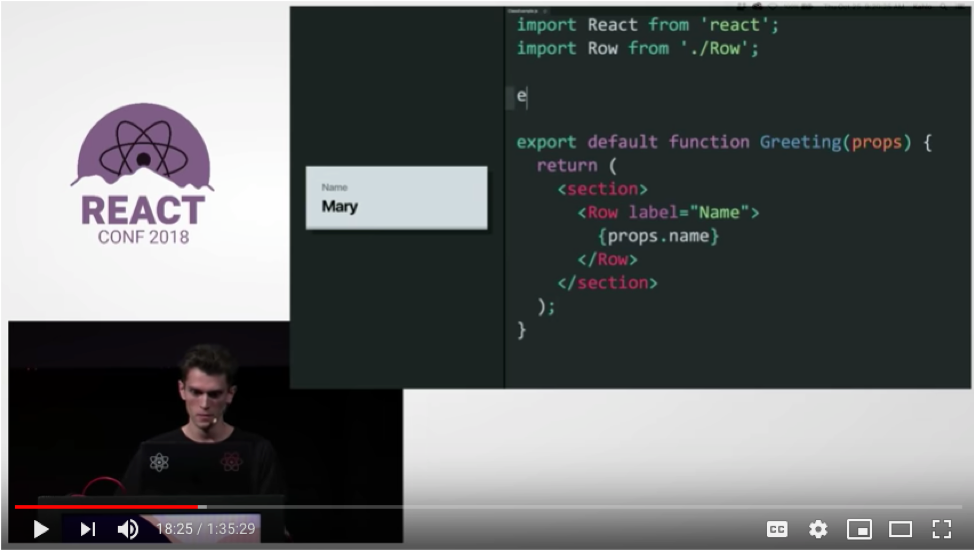
For an overview of the new Hooks feature, take a look at this video from React Conf.
As a cross-platform JS framework, web applications and mobile apps can utilize React.js. Your company should explore which ecosystem works best on the server side and on the client side of communication.
Developers with existing JavaScript skills can transition to the NativeScript framework fairly easily.
NativeScript can be used to build multi-platform native apps or web pages from a single code source.
It uses a “write once, use everywhere” approach and enables code to be reused between platforms, which makes development time quicker. Because it’s open-source and free, there are no associated costs of working with the framework.
NativeScript provides developers with access to hundreds of plugins via CocoaPods for iOS and Gradle for Android.
The framework also has its own exclusive plugins. Additionally, the NativeScript community creates hundreds of additional new plugins each year.
Interested in learning more about front-end development services? Check out a beginner’s guide that dives into the importance of annotated wireframes.
Developers who are already familiar with app or software development will understand easily the structure of the Ionic framework. Its hybrid app codebase enables developers to build apps for multiple platforms, reducing overall development costs and the application’s time to market.
With Ionic, developers have access to Cordova plugins that enhance the performance and scalability of the framework and enable developers to expand its use. This improves the accessibility of scripting. The flexibility with Ionic can also halt the occurrence of debugging.
Application testing is easy with Ionic as there are four options, enabling developers to choose the approach that suits them best.
Testing can be carried out on a desktop using the WebKit browser, in an iOS or Android simulator, in a mobile browser, or as a native app on the device itself.
Titanium, developed by mobile technology company Appcelerator, is one of the oldest frameworks available for hybrid mobile apps. It provides easy access to functionalities that enable developers to build high-performance applications.
One of the main benefits of Titanium is that it enables fast prototyping as part of its integrated environment. This allows developers to create working applications quickly in order to validate ideas and design approaches.
The framework also lets developers reuse 60% to 90% of code when supporting multiple platforms, and there are hundreds of modules that provide additional capabilities.
To date, mobile developers have deployed more than 75,000 mobile apps on 280 million devices using Titanium, making it a very popular web framework.
Meteor (or meteor.js) is a full-stack Javascript framework that caters especially well to small businesses and startups that are looking to get a product off the ground quickly without sacrificing modern features that customers have come to expect.
Written in Node.js, Meteor easily fits into a MEAN stack, which is growing in popularity with developers in recent years. Meteor is known for being easy to learn, allowing small businesses to launch fully-functioning apps in weeks rather than months.
While the framework is highly preferred by web developers, it is easy for teams to convert web products to mobile apps.
The framework is a huge time-saver and offers a great deal of support, both from the company itself and through community-created content.
Is your application development process running wild while thinking about downloads for your new app? Unsure where to start when it comes to the mobile app development journey.
Explore what the top Javascript frameworks have to offer your business and clients. All of them have a different user experience that can become an added benefit to your company’s overall performance and API.
In summary, jQuery Mobile can be used to build effective applications that load quickly.
The flexibility of React Native makes it a top choice for integrating with other programming languages and adding new features to existing applications.
NativeScript uses a “write once, use everywhere” approach that saves developers time by enabling code to be reused.
Ionic uses a hybrid app codebase so apps can be built for multiple platforms, which reduces development costs and the app’s time to market.
Titanium’s integrated environment makes it an ideal framework for creating prototypes.
Meteor enables teams to bring a great deal of efficiency into app development projects.
These six JavaScript Frameworks can all suit different businesses depending on their needs and projects.
Outside of these, there are other JavaScript frameworks that include: ember.js, Angular.js, vue.js, next.js, Svelte, and other single-page applications in the JavaScript library.
For any of these frameworks, explore tutorials to get ahead of the learning curve when it comes to application development and JavaScript code.
Additional Reading