Mobile Apps vs. Web Apps vs. Websites: What Does Your Business Need?
Should you build a mobile app, web app, or website? Learn the key differences, costs, and use cases to choose the right platform for your product and users.
Updated March 2, 2026

Used in conjunction with wearable technology, health and fitness apps are all the rage among consumers seeking to boost their fitness, adopt a healthy diet, and improve their sleep. The fitness app market has an estimated value of over $12 billion in 2025 and is projected to reach nearly $34 billion by 2033.
In such a competitive landscape, fitness mobile app development calls for incorporating robust features customers won't pass up. This includes usable insights that users can leverage to meet whatever health or fitness goal they're trying to achieve.
Clutch analyzed the core features consumers rely on across both wearable devices and their companion health and fitness apps, uncovering the tools that deliver the most day-to-day value. The findings? Activity tracking, heart rate monitoring, and sleep tracking top the list, but accuracy and clarity matter above all else. Here's what we discovered in our analysis.
Looking for a Mobile App Development agency?
Compare our list of top Mobile App Development companies near you
Search for industry-leading app development companies on Clutch.
Anyone starting a new fitness or diet routine can benefit from tracking progress. These app features provide objective data on workouts, sleep, and food intake to support various health goals.
64% of wearable tech owners report using their devices to track their steps, workouts, and movement more than any other feature. These fitness trackers form the foundation of any health app, and allow consumers to see at a glance how much they exercise every day.
Heart rate monitoring delivers critical insights into cardiovascular health, workout intensity, and recovery. According to Clutch data, more than half (52%) of wearable owners actively use this feature, making it one of the most relied-on tools for tracking overall wellness.
Users can track their heart rate changes while working out or performing everyday activities. It's also helpful for people with cardiovascular conditions, as it can detect irregular heart activity.
The U.S. Centers for Disease Control and Prevention (CDC) recommends at least seven hours of sleep for adults between 18 and 60 years of age. However, medical conditions and environmental factors can affect sleep, which in turn impacts physical and mental health.
That’s why so 45% of wearable owners use sleep tracking to monitor their sleep health and stages. Wearables that include a sleep tracking feature can inform users of their rest quality and recovery patterns, helpful for uncovering hidden sleep issues.
Good health isn't all diet and exercise, it also encompasses mental wellness. App features that allow users to monitor stress levels and moods support holistic health, and 22% of health app customers report utilizing them. These tools allow users to better understand their emotions and behaviors over time.
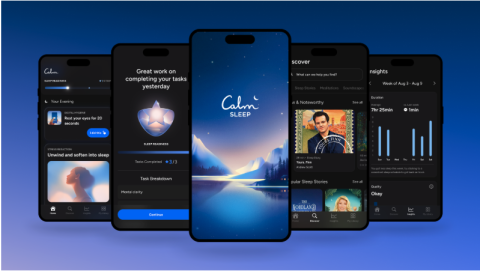
For example, Calm includes check-ins where members can log how they're feeling throughout the day or what they're grateful for, similar to a written journal.
People seeking to lose, gain, or maintain weight rely on nutrition tracking to monitor their food intake. Using their app, they can input the foods they eat to track calories, protein, fats, carbohydrates, and more. Among wearable tech owners, 18% report using a nutrition tracking feature to support their weight and fueling goals.
Outdoor fitness enthusiasts appreciate GPS and route mapping, which track hiking, biking, running, and walking paths. GPS features may include data about the terrain or elevation to help users determine their workout difficulty.
Some apps include a sharing feature, which other members in the app community can use to discover new routes. Approximately 19% of users take advantage of GPS and route mapping in their health and fitness apps.
New fitness challenges can be tough to stick with. Health and fitness apps employ engagement and utility features to keep users focused on their goals.
Apps may ask for a user's permission to send texts, app alerts, or even phone call reminders. These notifications pop up without opening the app and encourage users to continue making progress toward their goal. Based on our data, 38% of users prioritize notifications from their health and fitness apps.
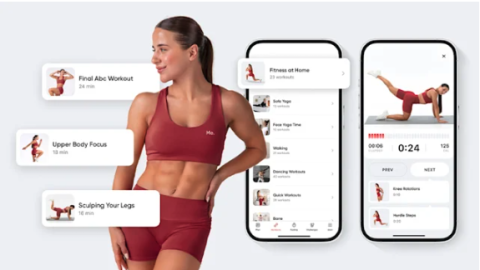
One example of an app that handles notifications well is BetterMe. It provides workout and food logging reminders that customers can schedule at their preferred time.
Most fitness goals require regular consistency to achieve. With goal-setting and progress report features, users can track their headway over time, keeping them motivated and accountable. Our findings show that 15% of users engage with these features.
Runna keeps new runners on track with its goal-setting and progress monitors. Users can plug in a goal, such as running a 5K, and share their availability to get a personalized fitness schedule. The app tracks every workout, allowing users to monitor improvements in their running journeys.
Many fitness enthusiasts enjoy sharing their workouts and even engaging in a little friendly competition. To serve their interests, apps can include social aspects where users can interact with their community. Roughly 6% of users engage with these features.
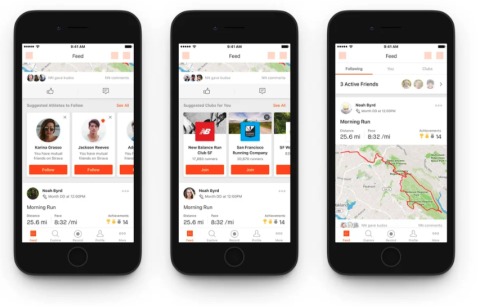
An example of a community-focused app is Strava. It includes a social feed where users can share their latest runs, hikes, or walks. Users can also participate in challenges or attend local events in their community.
Not all users share the same health goals. For this reason, apps that let users personalize their experience are highly valued, with 19% of users reporting that they customize their apps.
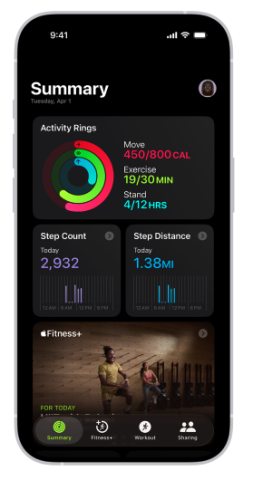
The Apple Fitness watch app offers easy customization for its Activity Rings. Users can modify their movement, exercise, and stand goals to fit their preferences.
An option to export previous health data allows customers to view insights outside the app. Optionally, they can share their data with their health providers.
MyFitnessPal allows exports for its Premium users. They can download nutrition and exercise history as CSV files for additional analysis or to share with a personal trainer.
Fitness apps that integrate with other platforms give users a more complete, connected view of their health data. Instead of keeping workout stats, heart rate, sleep data, and nutrition metrics siloed across separate tools, integrations allow users to unify their information in one ecosystem. This not only saves time but also makes it easier to identify trends, measure long-term progress, and avoid duplicate tracking.
For example, Nike Run Club connects with Apple Health, enabling users to automatically sync their run data—such as distance, pace, and calories burned—across both apps. This seamless data sharing ensures workouts logged in Nike Run Club contribute to broader health insights stored in Apple Health, alongside metrics from wearables and other fitness apps.
By supporting cross-platform compatibility, fitness apps make it easier for users to build a cohesive, personalized wellness system rather than juggling disconnected tools.
Features that support the user experience can lead to increased customer satisfaction and app downloads.
Accurate and timely data is a top-valued characteristic among 28% of fitness app customers. Users want apps that reflect their actual performance, rather than just providing estimates.
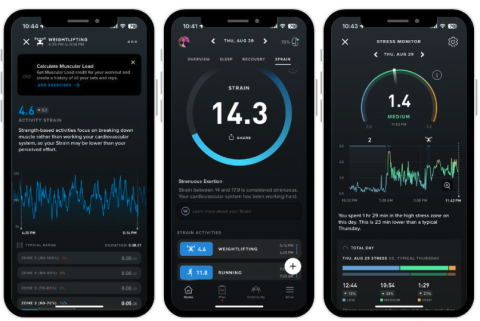
A stand-out app that delivers robust analytics is Whoop. It monitors your body 24/7, analyzing heart health, activity levels, blood pressure, and more. Those insights help users optimize workouts and rest days.
No user wants to dig through a mountain of data just to find what matters. Clear, intuitive interfaces that surface the most relevant insights, without overwhelming users, are a priority for many consumers, with 25% saying they value simplicity over feature overload.
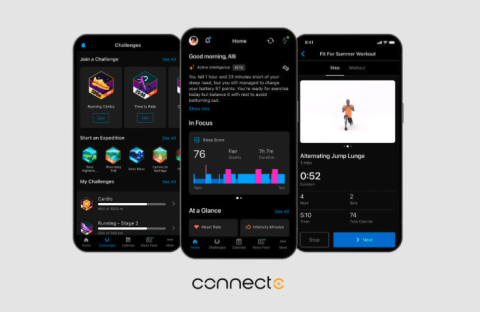
One strong example is Garmin Connect+, which offers a user-friendly, web-based performance dashboard displaying metrics like VO2 max, Fitness Age, average heart rate, and more in a streamlined, easy-to-navigate format.
Many fitness apps track health data through wearable devices such as watches or rings. A fast, reliable data flow from the wearable to the app is prized by 13% of users. For example, numerous fitness apps sync with the Apple Watch, including Strava, MyFitnessPal, and Calm.
Clutch data shows that 7% of users prioritize managing their personal information on wearable tech apps.
For instance, the Peloton app provides a privacy control center where users can set their profile to public or private and disable cookies and trackers. This demonstrates transparency and helps build trust among its user base.
Some fitness apps go beyond simply tracking steps or heart rate by delivering tailored guidance designed to help users make measurable progress toward their goals. For example, Fitbit Premium offers an AI-powered fitness coach that creates personalized workout plans based on a user’s activity levels, preferences, and performance data.
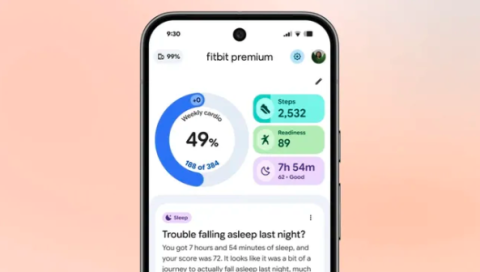
These types of adaptive, goal-oriented features appeal to users who want more structure and accountability, though they remain a niche benefit, with 7% of consumers identifying them as particularly valuable.
Gentle reminders and notifications can help users stay on top of their fitness goals. Sworkit lets users schedule custom alerts at their preferred time. The app also includes inactivity reminder options if the user goes several days without a workout.
An appealing user interface (UI) captures the eye and keeps users engaged. While only 2% of users in our survey singled out good design as a top priority, poorly designed UI can frustrate users and cause them to lose interest.
One standout example is Headspace. Its soft, cheerful color palette, rounded typography, and playful illustrations create an inviting, low-pressure environment that aligns with its focus on mindfulness and stress reduction.
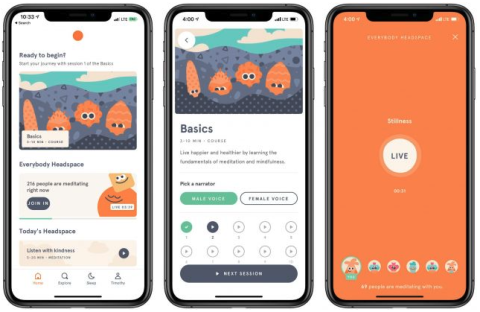
The app’s clean navigation and guided, step-by-step flows make it easy for users to start a meditation session within seconds, removing friction and reinforcing a sense of calm from the very first interaction.
App developers are embracing the latest tech to bring new features to their platforms.
AI has an uncanny knack for identifying patterns and trends. In a fitness app, these tools can quickly decipher previous data and goals to deliver personalized insights and recommendations. For instance, Fitbod's AI features suggest strength workouts based on a user's training history, recovery, and goals.
Apps that incorporate AI and predictive analytics can evaluate a user's current health data and provide early warning for potential issues. One example is SickPredict, which tracks a range of metrics, including body temperature, heart rate variability, and active energy, to assess a user's likelihood of getting sick.
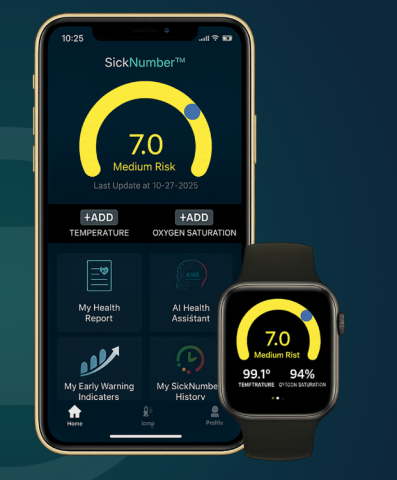
Standard wearable sensors track single data points for specific health metrics. However, multimodal sensors can combine data on a user's heart rate, motion, sleep, and GPS for deeper insights.
Without a data or Wi-Fi connection, apps or wearables may be unable to capture health information. Introducing an offline mode reassures users that their apps won't miss out on critical data.
It's not always possible to manually interact with health apps, especially when engaging in activities such as running or cycling. Voice support and smart assistants allow hands-free interaction without opening the app.
For example, RunGo is designed specifically with outdoor runners in mind. The app provides turn-by-turn spoken navigation through headphones, alerting users when to turn and helping them stay on route without ever glancing at their phone.
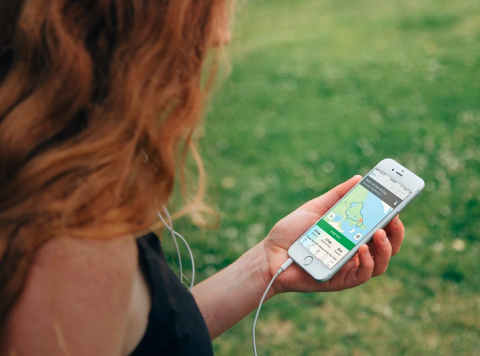
This feature is especially useful for exploring unfamiliar trails or urban routes, reducing the risk of getting lost and allowing runners to maintain pace and flow. By blending navigation with audio cues, apps like RunGo demonstrate how voice-enabled functionality can enhance both safety and overall workout experience.
Some apps include dynamic goal-setting features that adjust based on a user's progress. Macrofactor is one example. It dynamically calibrates a user's diet plan for shifts in metabolism and body weight.
When it comes to health and fitness, customers want more than a flashy UI and pre-recorded workout videos. The ultimate value of a fitness app is in its metrics — the personal data that keeps users working toward their health goals.
As a developer, it's critical to prioritize both essential and advanced features to stay competitive in wearable tech. Providing accurate, clear insights enhanced by these desired features can make your app stand out in a crowded market.