
How to Vet a Software Development Agency in 2026: 8 Signals That Actually Predict Project Success
Does the agency live up to its proposal? These eight signals help you tell the difference before you sign anything.
Updated December 19, 2024

Vue.js stands out as the top choice for front-end development due to its simplicity, powerful tools, and vibrant ecosystem, helping companies build scalable apps quickly and efficiently. This article will discuss the top five reasons businesses choose Vue as their go-to front-end framework.
If you're building a web app and not quite sure which front-end framework to choose from, let me tell you why Vue.js should be at the top of your list. Vue.js is an open-source JavaScript framework with a robust ecosystem that helps companies build quality products quickly. It includes some essential tools like Pinia and vue-router that make state management simple to handle.

Looking for a Software Development agency?
Compare our list of top Software Development companies near you
Let’s face it - businesses need to move rapidly. The faster they can build and launch, the quicker they get feedback, iterate, and stand out. And here’s why Vue.js outshines all the other alternatives - it’s easy to pick up, has a straightforward structure, and helps development teams collaborate effectively without getting stuck in a loop of so-called “development hell.”
Your team will also have all the resources and assistance they need, thanks to its vibrant community and rich ecosystem.
So, let's break down the top five reasons that make Vue.js so special and why it can be a top choice for companies looking to build fast, responsive, and scalable apps.
Vue.js comes packed with a set of pre-written code and templates, which means you don’t have to reinvent the wheel every time you start a new project. It has a gentle learning curve that makes it easy to pick up, even for those new to modern frameworks.
Vue's syntax is pretty straightforward. It includes components that are split into three main sections:
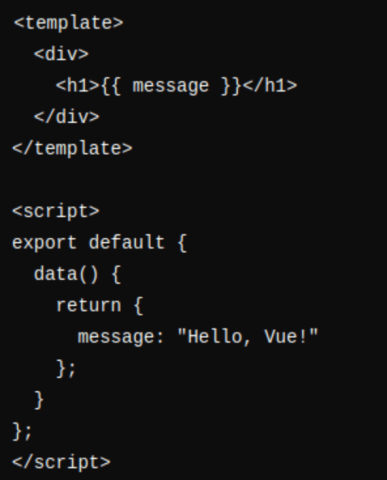
You can declare all three sections (template, script, and style) in a single file with a .vue extension. This makes it easier to understand how everything fits together. Each Vue component can be reused in different parts of your app, so it promotes better development practices and saves developers a ton of time.

Plus, Vue.js has some of the comprehensive documentation around. It’s clear, well-organized, and comes with step-by-step tutorials and examples.
So, if you're just starting out, you’ll find everything you need to get up to speed quickly.
Vue.js smoothly integrates with existing projects, whether small or large, making it an adaptable solution for different development needs.
It features compile-time optimizations that ensure efficient DOM updates through its rendering method. Thanks to Vue's component-driven architecture, it enables modular and scalable development, which implies that code can be reused in multiple places.
If you're a startup working on your first MVP, you need something quick and simple to help you get to market fast. Vue.js is perfect for this, and here's why: you can start small with Vue's scaffolded code and build interactive web apps that let users navigate and update content without reloading the page. If you already have some working code for your MVP, you can integrate Vue for specific features or components without switching to Vue.
Later, you can reuse this Vue code in other parts of your project.
You can start with a single feature or page, test it, iterate on it, and grow from there. No need to invest in heavy-duty architecture before you even know if your product will take off.
On the flip side, if you’re an established Vue development company building a massive, complex platform with multiple interactive features, maybe even across different markets. Vue.js doesn’t blink. It can scale right along with you, handling the complexity without losing its efficiency. Plus, it supports TypeScript, which allows you to build robust, type-safe applications.
Therefore, from a bigger-picture perspective, Vue.js allows you to grow your project at your own pace, whether building something simple today or planning for something much larger tomorrow.
Efficient data handling in Vue.js involves optimizing how data is managed, updated, and rendered in your app.
Vue’s reactive system automatically tracks dependencies and updates the necessary part of the DOM when data changes. A data binding system allows developers to create dynamic, real-time applications and optimize user interactions.
To maximize Vue's data handling, avoid using deep watchers unless absolutely necessary, as they can get resource-intensive. Instead, make use of computed properties whenever possible. Since they are cached, they only get re-evaluated when their dependencies change, which helps keep your app’s performance sharp.
When reactive data changes, Vulazy loading and code splitting can improve app performance. Dynamic imports, like import(), can also automatically re-renders the relevant components. You can prevent this by using v-if or v-show to conditionally render large or complex sections of the DOM.
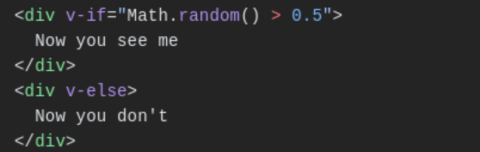
When rendering lists with v-for, always use v-bind:key to bind a unique key to each element. This way, Vue can track any changes in the list and update the relevant items much faster.

For larger applications, lazy loading and code splitting can improve app performance. Dynamic imports, like import(), can also reduce initial load times and increase your app's overall responsiveness.
Vue.js offers several performance advantages that make it a great choice for building fast, responsive applications.
The first and most important feature is virtual DOM (vDOM). Instead of directly interacting with the real DOM, which can be slow, Vue uses vDOM to make updates much faster. It compares the virtual DOM to the actual DOM and only updates the changed parts. This ensures a smooth user experience and keeps your app running quickly, even with heavy data or complex UI.
Vue also integrates smoothly with modern build tools like Vite and Webpack, which support tree-shaking and code-splitting capabilities. This means that only the necessary parts of the code are included in the final build, and any unused code is stripped out. You can also split code into smaller chunks so that only the required JavaScript is loaded when users visit specific pages or sections of your app.
Vue also minimizes unnecessary re-renders through smart diffing and data observation. Components are only updated when the reactive data they depend on changes, which leads to faster DOM updates and much-optimized memory usage.
Vue even supports component-level caching with the
Another noteworthy fact about Vue.js's performance advantages is its core library, which is just around 20KB min+gzip. This small size means faster download times and less overhead for your applications, making it a great fit for both small projects and large-scale enterprise apps.
Finally, what truly makes Vue the top choice for front-end development is its friendly and constantly active Vue community. This joint network provides developers with official tutorials and guides and community-driven content like blogs, video tutorials, and forums. Developers can get responses to their questions anytime on the Vue.js Discord server.
This represents quite a wealthy information database. It helps developers fix their issues and bugs immediately and facilitates companies' staying updated, growing fast, and speeding up their software development workflow.
Vue's beginner-friendly nature, efficient data handling, powerful performance, and rich ecosystem make it a top choice for companies looking to build responsive, scalable applications. Whether you're a startup or a large enterprise, Vue allows you to move quickly without sacrificing quality. So, if you’re looking for a front-end framework that balances simplicity and power, Vue.js might just be the perfect fit for your project.
Keti Getiashvili is an SEO Content Writer at Redberry, specializing in writing tech-focused blogs covering various topics in software development.