
The Real Cost of Your MVP in 2027
AI made code cheap, but not software that holds up. See how MVP cost drivers have shifted and why human validation and taste are now what you’re really...
Updated July 23, 2025

Unified commerce isn’t just a buzzword. It’s what separates scalable ecommerce brands from those stuck with disconnected systems, broken customer experiences, and rising operational costs. This post breaks down what true unified commerce looks like—and how to spot the cracks in your own stack.
If you’re in ecommerce, you’ve heard the term “unified commerce.” But understanding what it actually looks like inside a business is a different story.
At its core, unified commerce means your systems are connected in real time so your customers have a consistent, seamless experience regardless of where or how they shop.
Looking for a Software Development agency?
Compare our list of top Software Development companies near you
That consistency directly impacts revenue. Nearly three out of four customers interact with more than one channel during a single shopping journey. If your ecommerce site, store, app, and marketing tools aren’t aligned, you’re making customers do the hard work—and that friction shows up in lower conversions, higher churn, and rising support tickets.
Too often, disconnected systems create experiences that feel disjointed: inventory that shows as available online but is sold out in-store, loyalty points that can’t be used across channels, or marketing emails that miss the mark because they don’t reflect recent behavior.
In this article, we’ll break down what real unified commerce looks like, where most brands get it wrong, and how to assess whether your own setup is quietly holding you back.
Many e-commerce businesses assume they’ve built a unified system when they’re really managing disconnected channels stitched together with workarounds.
Multichannel means selling in more than one place. Omnichannel aims for a cohesive experience across those places. Unified commerce goes further by aligning systems and data in real time so both the business and the customer operate from a single, accurate source of truth.
Unified commerce starts with a shared data foundation. Every platform, from ecommerce and marketing to POS and support, should access the same real-time customer, product, and inventory data. When a shopper makes an in-store purchase, that action should instantly update their profile, influence follow-up messaging, and inform future interactions across any other touchpoint.
Customers expect accurate availability, regardless of how or where they shop. If your site shows a product in stock but the warehouse is already out, you risk overselling, issuing refunds, and damaging customer trust. Real-time inventory sync prevents these disconnects by ensuring consistency across e-commerce, POS, and third-party channels.
Fragmented customer data leads to irrelevant outreach, poor segmentation, and support teams working with incomplete histories. When loyalty data, purchase behavior, communication preferences, and service interactions are combined into a single view, your business can personalize more effectively, reduce resolution time, and deliver a smoother experience.
Customers expect fluid transitions between devices, platforms, and sessions. A cart started on mobile should appear on desktop. A product viewed online should influence recommendations later in email or on-site. When these interactions align, customers feel understood and in control. When they don’t, even a minor inconsistency can create hesitation or drop-off.
Unified commerce isn’t about perfection. It’s about building a system that reflects how people actually shop, making the entire experience much more seamless, across moments and channels.
When your commerce systems aren’t aligned, the cracks show up across the entire customer journey. Shoppers may not describe it as a technical issue, but they feel it, and they respond by abandoning carts, churning faster, or reaching out to support for problems that should have been avoided altogether.
The signs often start subtly, but they build quickly. You might notice:
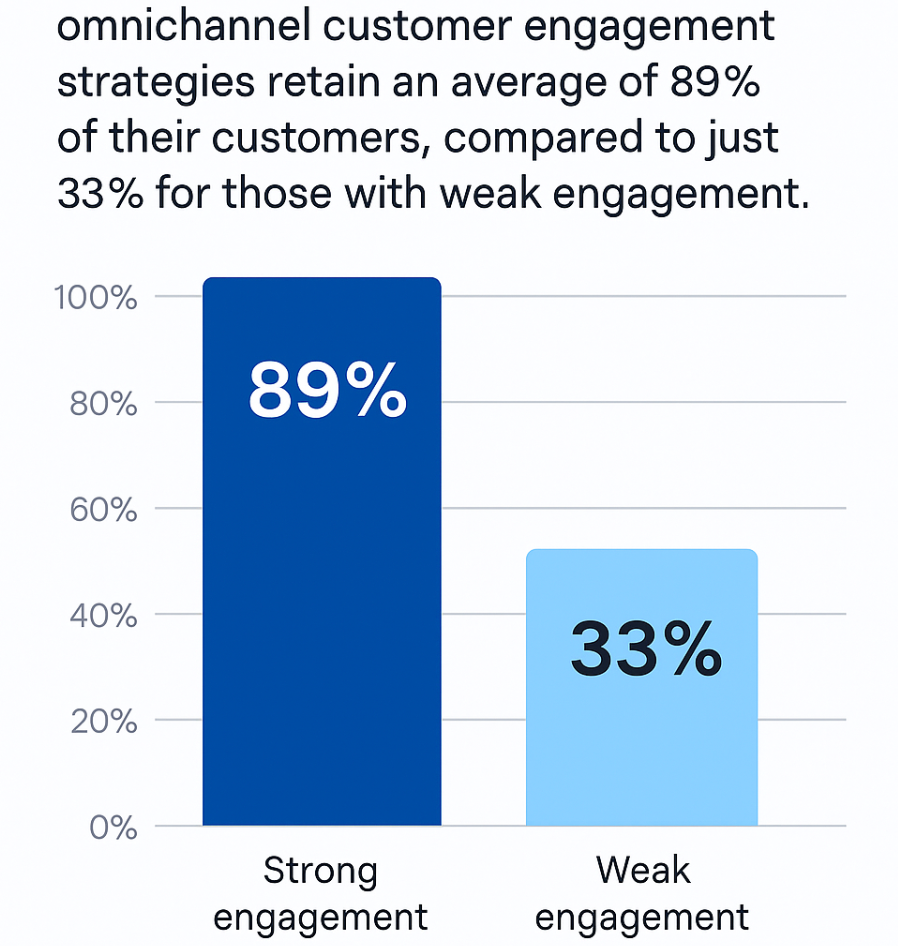
These friction points don’t just hurt the experience. They hurt retention. Companies with strong omnichannel customer engagement strategies retain an average of 89% of their customers, compared to just 33% for those with weak engagement.
The challenge is that most of these problems don’t stem from bad tools. They come from disconnected systems that weren’t built to speak to one another. Over time, the cost of inaction is greater than the cost of solving it.
To fix a fragmented commerce experience, you don’t need to rebuild everything from scratch. Many businesses are solving these disconnects by focusing on integration rather than replacement.
They’re not chasing an all-in-one solution. They’re identifying the areas where disconnection is most visible to the customer and making targeted changes to unify systems behind the scenes.
Some of the most effective moves include:
These steps reduce operational complexity and make the experience feel seamless to the customer, even if your tech stack is still evolving.
This is where companies often bring in outside support. At Bighorn, we work with teams to audit system touchpoints, recommend integration layers, and close the gaps without disrupting what already works.
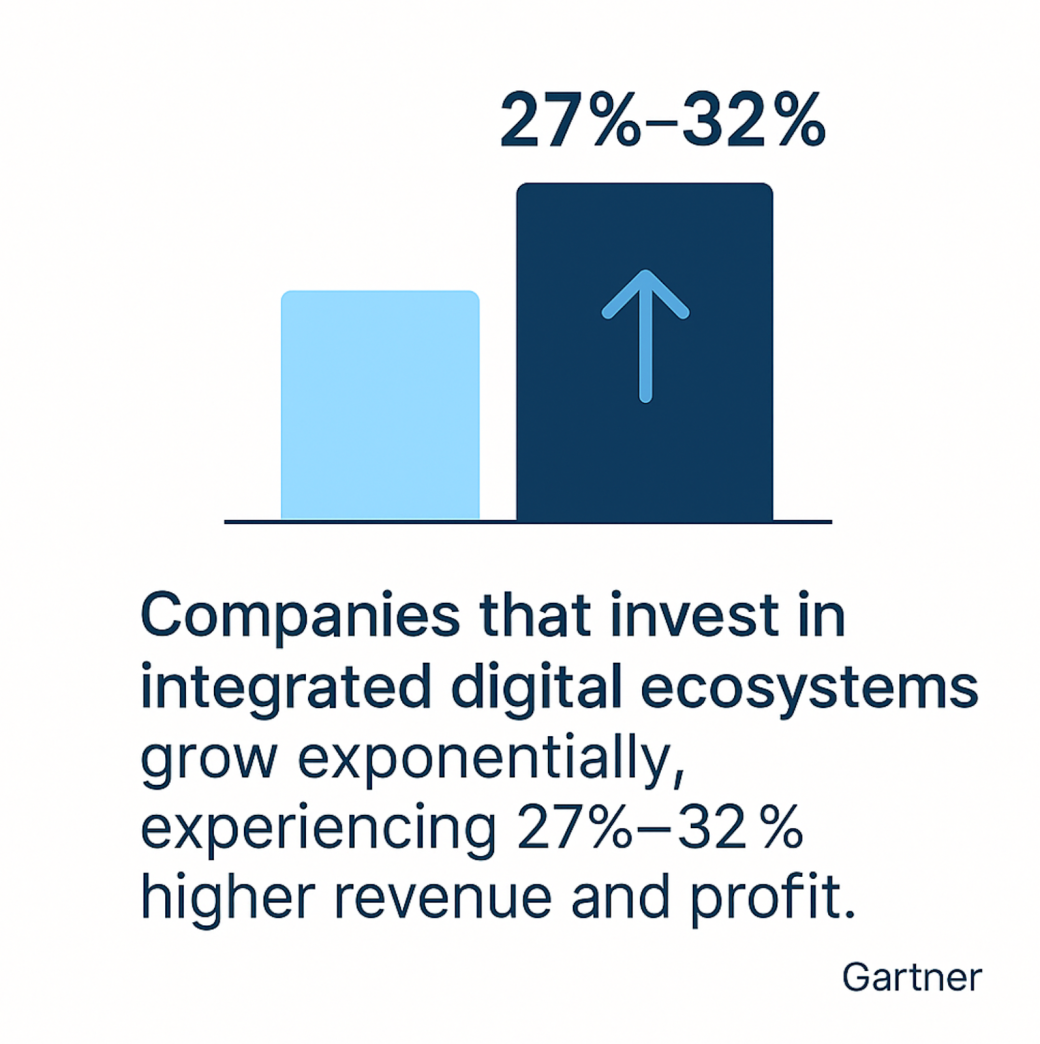
The impact is measurable. Companies that invest in integrated digital ecosystems grow exponentially, experiencing 27%- 32% higher revenue and profit.
Unifying your stack isn’t about perfection. It’s about progress in the places that matter most.
It’s easy to assume your systems are working together until a breakdown shows up in your customer experience or operations. This checklist will help you identify the gaps before they start costing you more.
If you can’t confidently say “yes” to most of the questions below, it may be time to reassess how unified your commerce setup really is.
You don’t need to check every single box to make progress. But if most of these answers are unclear or inconsistent, that’s a signal your systems may be costing you more than you realize.
Unified commerce is not a buzzword. It’s the infrastructure that allows your business to deliver the kind of experience customers now expect by default. When your systems are aligned, everything feels smoother, ensuring inventory is accurate, messages are relevant, and customer service is efficient.
When they’re not, the friction shows up in abandoned carts, lost loyalty, and operational costs that never seem to shrink.
To move forward, you don’t need to overhaul your entire stack. Most brands start by identifying a few critical disconnects and fixing them with the right integrations, data visibility, and customer context.
That’s how you scale smarter.