
How to Delegate: A Step-by-Step Guide for Agency Owners
Learn how to delegate effectively as an agency owner — what to delegate first, how to hand off work without losing quality, and the hiring sequence that...
Updated March 13, 2025

Bringing a new product to market is a huge investment, and the wrong team can cost you time and money. With competition moving faster than ever, you need the perfect balance of true capabilities vs. good salesmanship. Explore insights from Jake Dluhy-Smith, Founder & CEO of OAK’S Lab.
Bringing a new product to market is a turning point for any growing business — especially for startups and companies trying to enter new markets. But with 18.6 million patents filed in 2023 alone, a great idea alone won’t cut it. Your product needs to stand out, not just in design but in execution.
The difference between a market hit and a forgotten concept often comes down to the team behind it. Product development involves research, engineering, testing, and refining — all under pressure from changing consumer demands. To put it simply, speed and efficiency matter.
That’s why you’ll need to find a capable product development team that delivers the perfect balance of true capabilities vs. good salesmanship.
Jake Dluhy-Smith, Founder and CEO of OAK’S LAB, shares his thoughts on going beyond the pitch in the world of development.
A great sales pitch can make any product development team sound like the perfect fit. But remember: sales decks are designed to impress, not necessarily to tell the whole story. Some will overpromise, some will gloss over challenges, and others might say what they think you want to hear.
Speaking from his experience, Jack Dluhy-Smith shares how sales can influence how clients may perceive the service provider’s capabilities. Dluhy-Smith says “Yeah, it's really tricky because sales teams are out there to sell and can create captivating proposals. But when you kick off the collaboration, you often find it's quite different from the sales pitch.”
He also adds “...the sales team can create an amazing deck, but when you're outsourcing your technology, you're buying much more than just a few slides.”
That’s why you need to dig deeper before making a hiring decision. Here’s how to separate truth from reality and find your ideal product development partner:
A good presentation means nothing if the team can’t execute. You'll hire a product development team that delivers results by asking the right questions and looking past the sales pitch.
You don’t buy a car just because it looks good in the showroom. The paint job might be incredible, the features might sound high-tech, and the salesperson might be convincing. But if you don’t pop the hood and check what’s underneath, you could have a massive problem.
During our interview, Dluhy-Smith shared his recent meeting with a client who knew how to look deeper.
“What really impressed me was a founder who recently reached out to us during the sales process,” Dluhy-Smith shares as he recalls his experience. “He said, 'I don't want to see a proposal in a PDF presentation. I just want you to walk me through the product development process…’”
The client asked Dluhy-Smith and his team to walk them through the process. Dluhy-Smith recalls their conversation, sharing “‘[the client told them to] pick one of your most recent projects. Walk me through how you do documentation. Open up the Figma file with the product designs, show me how you structure it. Open up the codebase and let me take a look under the hood. Then walk me through the demo environment and give me access so I can click around myself.' We thought that's the best way to vet a development company.”
The same goes for hiring a product development team. You need to move past the rehearsed sales pitch and take a closer look at their true capabilities. A great team won’t just talk; they’ll also have the processes, past work, and technical depth to prove they can execute.
Here’s how to look under the hood:
A structured development process is the key to any successful product. If a team can’t clearly explain how they bring an idea to life, that’s a problem.
Start by requesting a step-by-step breakdown. Ask how they go from concept to market-ready product. They should be able to explain each stage, from research and prototyping to testing and launch.
This will help you understand their development methodology. Remember, different teams follow different frameworks, so it's crucial to understand or have an idea of each before you discuss it with potential service providers. Here are the three common types of product development methodologies:
Equipping yourself with key knowledge of those frameworks can help you assess their research and prototyping approach. Do they conduct user research? How do they validate ideas before full development? Strong teams have a clear testing phase to refine their concepts before launch.
Past work speaks louder than any pitch deck. A solid product development team should be able to show proof of their problem-solving abilities in real-world projects. Request a case study — something relevant either in your industry or a project with a similar level of complexity.
Then, evaluate its complexity. A simple project doesn’t tell you much. Look for cases where they handled technical challenges, large-scale development, or tight deadlines.
Most importantly, you need to assess how they solve challenges. A great team will also show you how they have identified, tackled, and overcome roadblocks.
Finally, check the budget and timelines. Did they deliver on time? Did they stay within budget? A history of delays or scope creep is a big red flag.
A well-documented project is a well-managed project. Proper documentation allows teams to maintain clarity, consistency, and accountability throughout development.
Check their documentation practices. Do they keep detailed records of specifications, iterations, and testing results? Sloppy or missing documentation can lead to miscommunication and costly errors.
Don’t forget to ask about their workflow tools. Strong teams use platforms like JIRA, Asana, or Trello to track tasks, updates, and deadlines. If they don’t use any structured tools, expect a messy process.
A demo environment is a test version of the product where you can explore functionality before full deployment. This is your chance to see if their work actually functions as promised.
As you explore the demo environment, make sure you test for these three points:
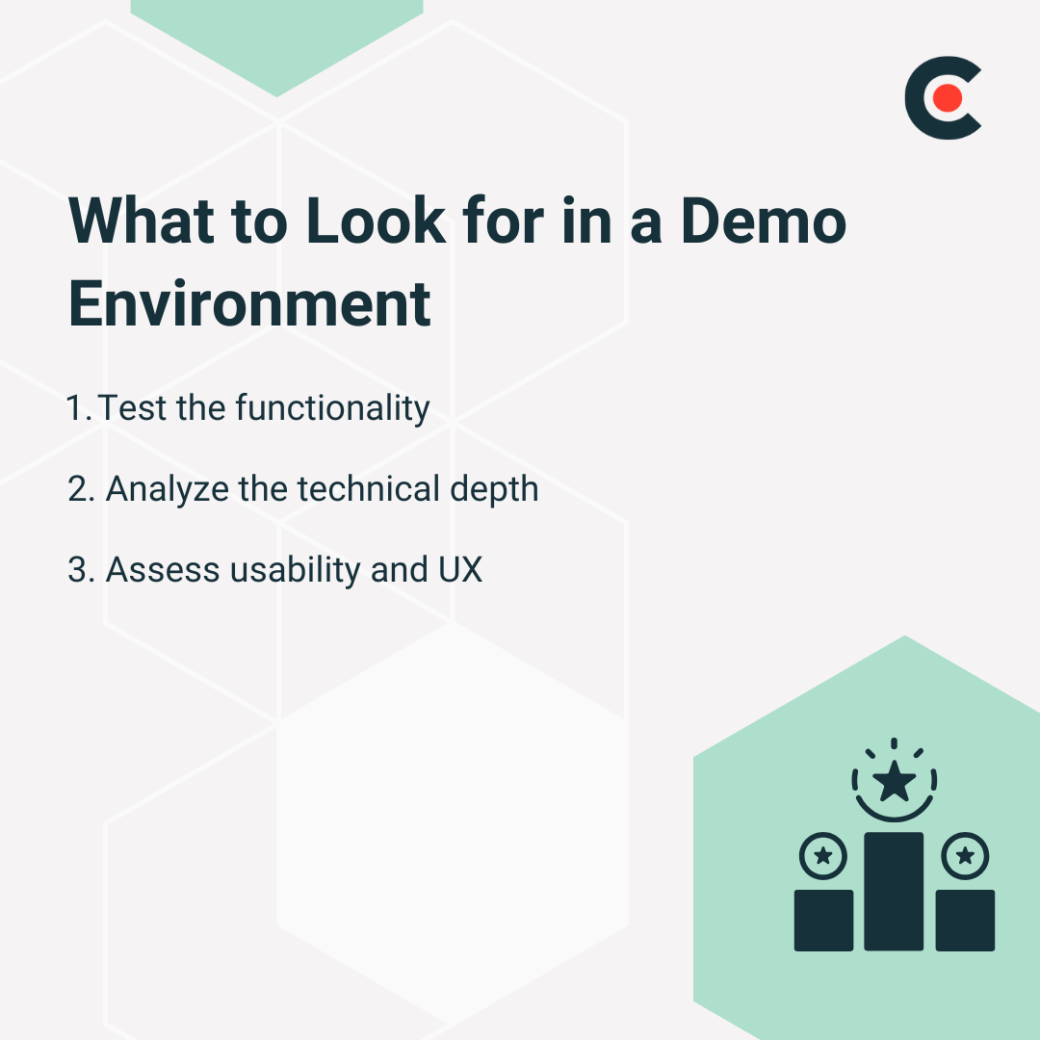
In product development, demo environments are critical to ensuring the product’s effectiveness. It allows you to gain hands-on experience of how it fundamentally works and solves problems.
Not every project requires a service provider with deep industry experience. A talented team with strong technical skills can get the job done for simpler tasks like staff augmentation or working on straightforward product designs, even if they’re new to your industry.
“I think it really depends on what industry the company is in and more importantly, what role they're looking for their product development partner to provide,” Dluhy-Smith shares his opinion on the importance of industry experience when sourcing potential product development partners.
He adds, “If it's just staff augmentation on the delivery side to deliver features quickly and with high quality, then industry experience isn't that significant. But if they're looking for a partner to drive product strategy and discovery, industry experience can speed up the process and avoid a high learning curve.”
As Dluhy-Smith highlights, industry experience can be a major advantage if your project involves product strategy, discovery, or market positioning. A team that knows your market, audience, and competitive landscape can help refine your vision, avoid common mistakes, and provide insights that an outsider might miss.
That’s why it's essential to understand your project’s needs first. If execution is your only concern, focus on technical expertise and workflow efficiency. If you need strategic input, choose a team with relevant industry knowledge.
Making this distinction also helps you see past flashy sales pitches. Some teams might sell their experience as a must-have when it’s not actually relevant. Others may lack industry experience but excel in innovation and execution. The goal is to find the right fit for your project’s actual needs, not just what sounds impressive on paper.
At the end of the day, execution matters. A polished sales pitch, industry buzzwords, or impressive portfolio mean nothing if a service provider can’t deliver on its promises.
That’s why due diligence is non-negotiable. Before entering a partnership, verify everything. Ask for case studies, check the development process, test the demo environment, and explore the workflow tools.
Choosing the right team is a big investment, and making the wrong choice can cost you time, money, and momentum.

Jake Dluhy-Smith is the Founder & CEO of OAK’S LAB, a startup tech partner built by Jake and his brother Theo, focused on creating custom web and mobile applications for business innovators. Jake has a background in product management, having led over 20 greenfield software product builds.