Brands have a hard time understanding how to communicate ROI from their social media marketing efforts effectively. This article will provide a clear explanation of how social media ROI is measured.
Trying to explain social media ROI will depend on who your audience is. If you are speaking to a business owner or a C-suite executive, you will need to really focus your ROI on sales. Sales can be generated from social media from both paid and organic efforts.
If you are speaking to a marketer, there is going to be a different ROI. This can be more focused on brand ROI, which is awareness, which can be measured specifically on social media in 50 different ways.
Looking for a Social Media Marketing agency?
Compare our list of top Social Media Marketing companies near you
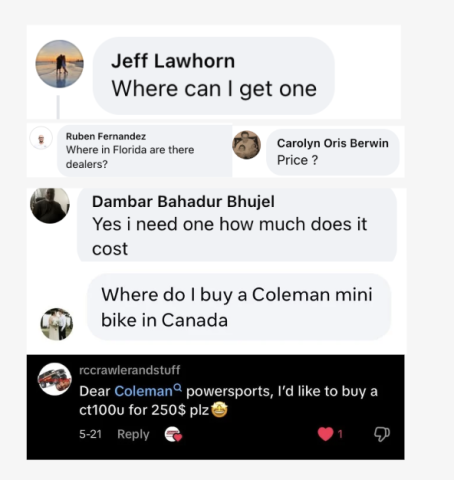
If you are getting comments like these, you are proving purchase intent!
Source
Here is the easiest way to break down social media ROI:
- Sales – More Money
- Community Building – More followers, engagement, impressions, sentiment, etc.
Social media marketing extends beyond likes, comments, saves, and shares. It helps drive sales into the business, not only sometimes, but could be the main source of revenue for your business if done the right way. Sales are clear to all business owners, leaders, etc.
The community building ROI bucket is hazy to a lot of people because there is not always a direct correlation between your efforts and dollars. But we have to remember the reason social media started and how it's still used today.
Let’s quickly talk about the two ways to achieve ROI through social media marketing:
- Organic – Earn it
- Paid – Accelerated to sales
Organic is earned. Earning is hard.
Earned is going to take your social media team longer to get to the ROI stage, unless they get lucky by going viral.
Earning is spending every day in the social media trenches to build momentum to have a community of customers that love your brand on social media, and if they love your brand on social media, they are going to choose your brand over others because they are engaged with your brand every day on social media.
Building a community is VERY difficult. Convincing customers (existing and new ones) to follow, like, and share your business posts is challenging. Luckily, at Fresh Content Society, we specialize in that! Once you have a community, they are your ROI; customers asking questions about your business are conversations happening low in the sales funnel.
A customer telling you they are going to purchase in your comments, in your inbox, etc. Creators are reaching out to your brand, and that is all ROI.
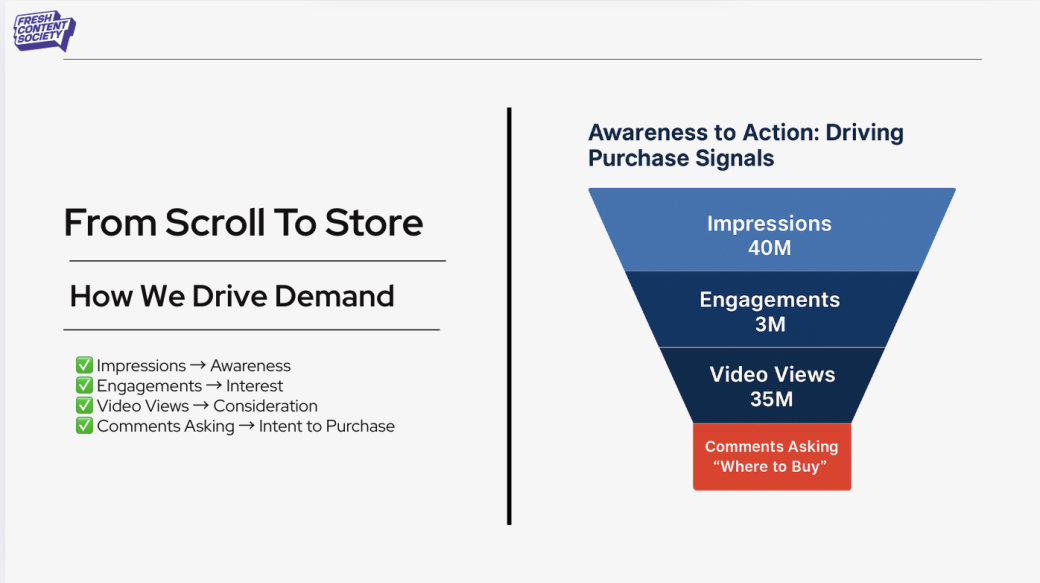
So, organic ROI is variable, but community will lead to sales. Here is an example social media funnel:
Your social media manager is struggling. Not because they are untalented or unfit, but because in today's world, social media management is a team job and not a single role.
Even with a hard work ethic, being in charge of strategy, content, engagement, influencer, and paid marketing is not manageable.
With five moving pieces, all best suited for different kinds of people, there is no way to maximize personalization, profit, efficiency, and happiness for both workers and clients.
Social Media Team Requirements
You need a team; breaking down each role will help to understand the importance.
Strategist
A strategist, or a team of strategists, is in charge of concepts, direction, and goals. They will do the research and behind-the-scenes work to discover which kind of content will best benefit your company — when to post it, where to post it, and more.
They also tend to be at the forefront of communications with the brand to ensure that they are both happy with the plan. A type-A person will thrive in this role as it involves continuous growth and research while organizing it to send a message to the team.
Content
Those in charge of content will create posts, write captions, film videos, and take photos for posting. This is a creative's dream — they have the freedom to do as they see fit to best match the brief while creating new and exciting content for the brand.
The content you post tells your consumer who your audience is. Being able to create posts that bring your audience back to see more is key.
Engagement
Engaging with your consumer is increasingly important as it builds a reputation and community around the product. This can include responding to comments on posts, direct messages, emails, commenting on posts that include the product, and more.
Having an engaged and loyal community increases the likelihood of repeat purchases and customer satisfaction because it demonstrates care. Replying to a consumer can also act as organic marketing, as replying to them can result in them sharing it with their friends and family.
Influencer
Working to establish influencer connections is more than finding your favorite social media star and trying to get in touch. It involves being aware of trending creators, finding people who have an authentic connection to your brand, creating a personal bridge between a company and a person, and reaching new audiences.
If the brand doesn’t fit correctly with the creator's typical niche, it will not be seen as genuine by audiences and will negatively impact both parties. A successful influencer and brand pairing will benefit both, which is why it is essential to have the right people on your team to match them.
Paid
Paid marketing is a person or team that monitors and tracks all paid assets and identifies where to allocate funds. They work closely with all other parts of the team to decide which channels need more funding, whether the money is being used correctly, the payoff of each paid decision, manage bought ads on social media, and more. The paid marketing job is essential to ensuring that the money is being used where it is needed and strengthening your company's marketing.
It is important to remember that spreading out tasks benefits everyone. Diversifying your team and forming a company ready to handle social media marketing and succeed can be difficult, but important.
Paid social media drives ROI for brands by enabling precise targeting, scalable reach, and measurable outcomes. By leveraging audience data and platform algorithms, brands can reach the right people at the right time with content that converts—whether the goal is to drive traffic, generate leads, or boost sales.
Unlike organic efforts that take time to build, paid campaigns offer immediate visibility and performance insights, allowing brands to optimize in real time for maximum efficiency.
When executed strategically, paid social acts as a powerful accelerator that complements organic content and helps brands achieve tangible business growth.
ROI can be simplified if you have the right plan to meet your business goals.
Defining Social Media ROI for Businesses
Business leaders and marketers have a hard time explaining social media ROI to their cohorts. Social media ROI is actually very simple to understand, once you have the right mindset and terminology locked down.
When I say mindset, I mean shifting your expectations from only revenue. ROI comes in many different shapes and sizes – your business should be prepared to adapt depending on your goals.