
How to Define Brand Values That Guide Every Business Decision
Brand values are the principles that guide company decisions, define what a brand stands for, and shape how it treats customers, employees, and partners.
Updated February 18, 2026

SEO is no longer an afterthought of public relations but an essential component. Here is how to harness your PR efforts to enhance your brand’s search engine visibility.
Public relations and SEO go hand-in-hand. As a PR expert, it is important to understand how to leverage search engine friendliness to maximize the ROI of your campaigns.
Here is everything you need to know to make your PR initiatives SEO-friendly and maximize your brand’s exposure and reputation.
Looking for a Public Relations agency?
Compare our list of top Public Relations companies near you
SEO, or search engine optimization, is the process of enhancing the organic (nonpaid) visibility of your brand’s website (or other websites that mention your brand) within search engines.
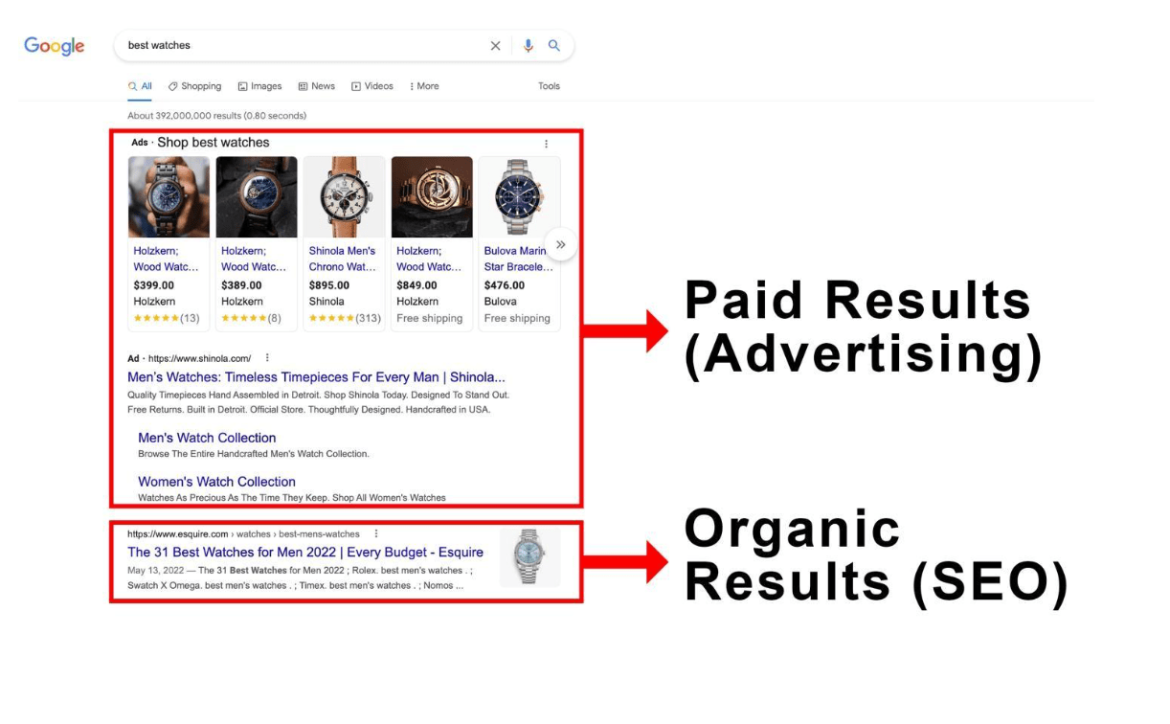
SEO is implemented by creating and modifying content on your own website (on-page SEO) and by creating and optimizing the content on other people’s websites (off-page SEO).
As a PR professional, your main concern is off-page SEO. In fact, digital PR is one of the most effective off-page SEO methods for enhancing organic search engine visibility. Here’s why....
A strong search engine presence is no longer just important for managing the public’s perception of a brand - it is essential. That’s because 93% of online experiences begin with a search engine, and the top 5 organic results account for 67.6% of that traffic, while less than 1% of searchers click on a second-page result.
In the past, the roles between PR and SEO were clearly separated. PR focused on front-end relationship building while SEO focused on back-end technical optimizations. That line has blurred greatly within the last decade primarily due to the evolution of search engines’ ranking algorithms.
Search engines went from heavily weighting technical elements in their ranking equation to looking for human signals. Specifically, search engines look for the Expertise, Authoritativeness, and Trustworthiness (EAT) of a website and its authors.
The best way to build up a website’s EAT is through PR. Brand mentions and backlinks from third party publications show search engines that they can trust (and rank) these websites.
PR is an incredibly effective off-page SEO tactic for building up the expertise, authoritativeness, and trustworthiness of a brand and website.
As a PR expert, you can leverage your authoritative network with some small SEO tweaks and tasks for a big positive impact on search engines. Here’s how:
When people think of SEO, they generally think of optimizing for transactional intent keywords such as “Best Shoes”, “Apartments for Rent”, “Plumbers Near me”, and so on.
Yes, transactional keywords are a big focus in SEO, but as a PR expert, you are probably more concerned with brand-related keywords. Branded keywords play a big role in SEO and a company's public image.
Here’s an example of a branded keyword:
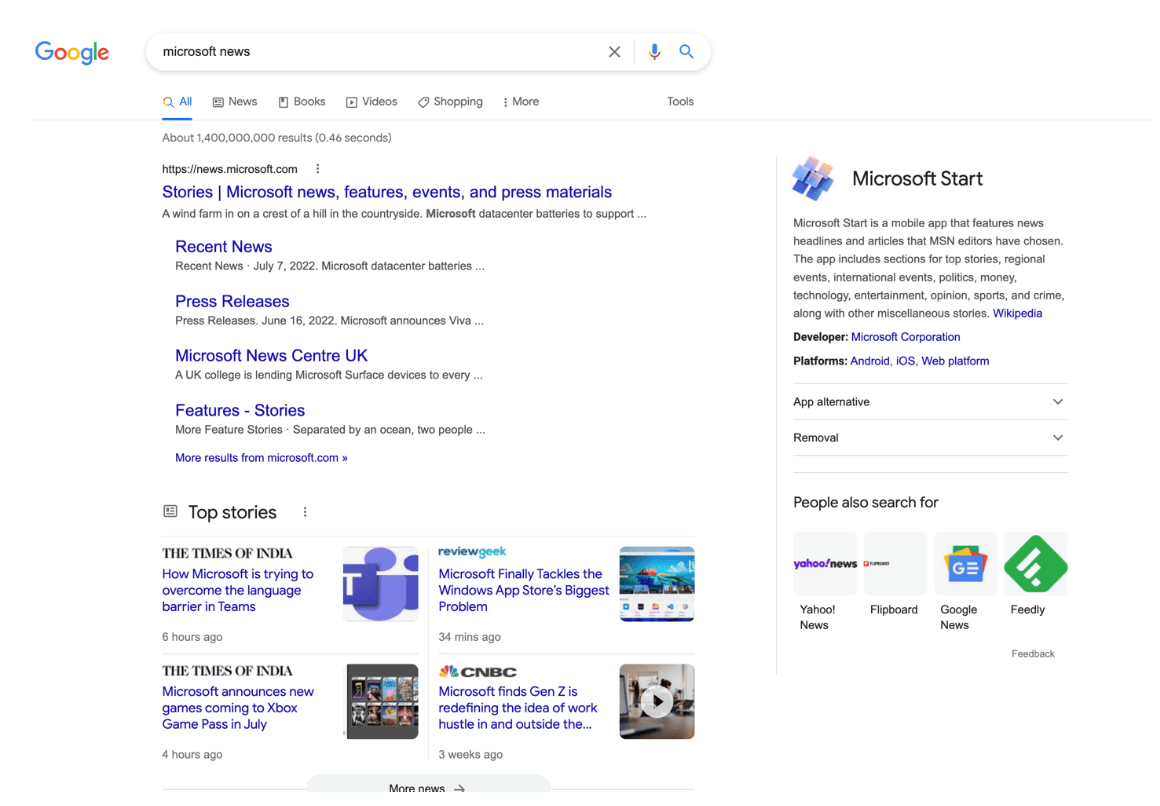
In this example, the search term “Microsoft news” is the branded search term. As a PR professional, you want to make sure your content and stories are the ones showing up in the search results by implementing off-page SEO practices.
Here’s another example of a branded search term:
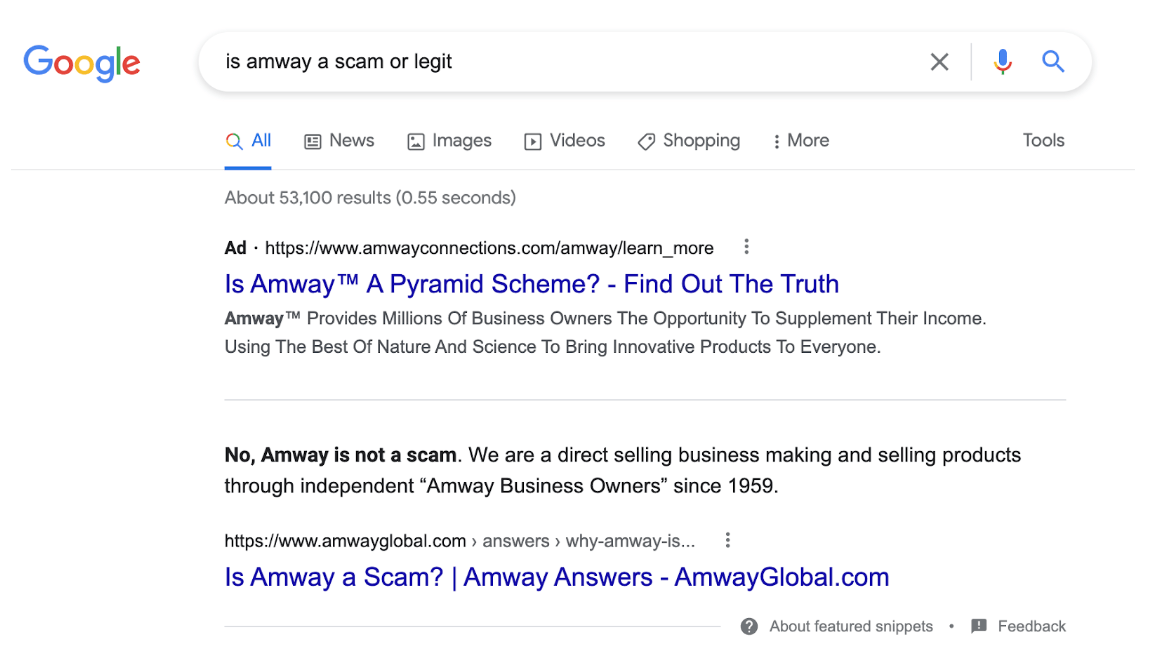
The above branded search term for “Is Amway a scam or legit” returns the first organic (SEO) result from Amway’s own website. Are you surprised that their answer to this question is “no?”
Speculation aside, you can see why that from a PR perspective, ranking this search term #1 is incredibly important for Amway in managing their reputation and combatting negative PR.
Understanding what people are searching and making sure that the right content is served first in the search engine results is a big benefit of PR SEO.
To find keyword opportunities and assess their volume and competition levels, you will need a keyword research tool. Google Ads’ free “Keyword Planner” tool is a great start.
For more in-depth data, you can use a paid tool like Ahrefs’ “Keywords Explorer” tool.
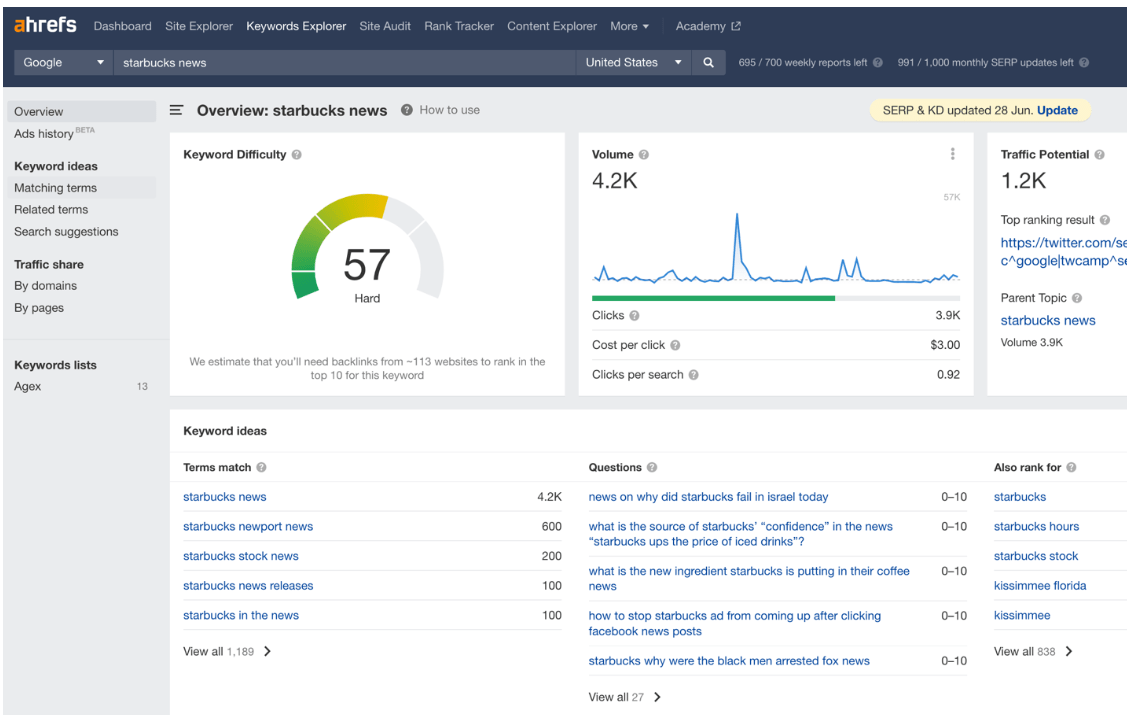
This example shows keyword data for “Starbucks”, including search volume, competition levels, and related keyword ideas. Gaining an understanding of what keywords people are using in your niche allows you to create optimized PR content that has a positive impact on your audience.
Now that you have a good grasp of the keywords you want to target, you need to use them in the right places.
A big and easy way to use a keyword is in the title of a press release. If possible, use your target keyword at the beginning of your title.
You also want to include that keyword at least once towards the beginning of the body copy and include variations/synonyms of that keyword throughout the copy.
Let’s say I am submitting a press release for Apple announcing the release date of the Apple Car.
I check my keyword research tools and see that the search term “Apple car release date” is a highly searched term. I choose that as my target keyword so that when people enter that phrase into a search engine, they see my article first.
To target the keyword phrase “Apple car release date” in my press release, I use that keyword at the beginning of my title, with something like: “Apple car release date announced”.
I would also include “Apple car release date” in my body copy and include variations of that search term in the body copy.
When using keywords within your copy, it is important to not overuse them. Overusing keywords in an attempt to manipulate search engine rankings is referred to as “keyword stuffing”. The practice of keyword stuffing used to work, but Google’s Panda Update back in 2011 made this spammy tactic obsolete.
In a post-Panda age, the best way to use your keywords is in a way that reads naturally for your audience. Writing the same keyword over and over in an effort to rank is not good for your audience or for SEO.
A big part of SEO is simply choosing the right target keywords and creating high quality, engaging content centered around these search terms.
A backlink is when one website links from their website to your website. Search engines consider these inbound backlinks votes of confidence and use them when deciding what websites to rank.
Since these inbound backlinks help a website show up in search engines, then building them is a big focus in search engine optimization.
What are the most valuable types of backlinks? Those from high authority, trustworthy publications.
Who has the relationships with these publications? PR experts.
So simply put, those in the PR industry have a huge upper hand in building high authority backlinks.
When partnering with companies and publications, keep inbound backlinks to your website in mind.
Writing a press release? Include a link from that release to your site.
Does a website feature you on their website but not link to it? Simply contact them asking if they’ll link to you.
Exploring new PR partnerships? Be sure to ask them about their backlinking policy.
Obtaining inbound backlinks from influential websites is a huge part of SEO. As a PR expert with existing relationships with those publications you can use this to your advantage.
Additional Reading: '5 Public Relations Trends for Human Resources Providers'
As mentioned, a search engine’s interpretation of a website’s expertise, authority, and trustworthiness (EAT).
In a way, PR is about doing the exact same thing, just with humans – building a positive and trustworthy brand perception for the public. As search engine algorithms progress, the line between what a search engine likes and what a human likes continues to blur.
Just like getting a brand feature from an influential and well-respected publication like USA Today or The Wall Street Journal is a huge PR win, it’s also a huge SEO win. So really, good PR is good SEO, and vice versa.
While there is lots of overlap between PR and SEO, they are still different on a fundamental level. PR is human-facing, and SEO deals more with technical elements and how websites are built.
If you work for a larger agency that has its own SEO branch, lean on them to help with some of the optimizations. If you don’t have an SEO department, consider hiring a consultant or agency to help dial in the SEO side of your PR campaigns.
By having close communication with SEO experts, you can create a synergistic effect on both your PR and your SEO.
In a web-dominated world, it is increasingly important to ensure that your public relations coverage is readily accessible to search engines.
To leverage your PR efforts into SEO; gain a strong understanding of your keywords, use those keywords in the right places within your media, and network with your contacts to impact your brand’s visibility on 3rd party websites.
Take those simple steps, working closely with your SEO department or a consultant, and your PR and SEO efforts will have a compounding effect, creating maximum visibility for your brand.
Hire a public relations agency to help your business.
Additional Reading: