Why Searching for a Specialized Dev Agency Takes Longer Than It Should — And What to Do About It
Looking for a niche software development agency? Learn how to define your requirements, find specialized providers, and vet their experience.
Updated March 31, 2026

Many startups believe that coming up with a great idea is half the battle. However, it’s not enough. Nearly 90% of companies fail, often due to poor product-market fit. With the rapid change in the business environment, smart, rapid product discovery has become essential for startups. Validating your idea quickly and efficiently can become a core difference between success and another forgotten launch.
In this guide, we’ll describe how modern teams approach product discovery, what to test and what to skip, and which tools can help you move from concept to successful launch.
Product discovery is the process of validating whether your business idea of creating and launching a new IT product on the market really solves an existing problem for a specific audience. This stage is very important before writing a single line of production code. But today’s discovery has changed. To succeed with the project, your validation process needs to be fast, smart, and adaptive to changes.
Looking for a Software Development agency?
Compare our list of top Software Development companies near you
Modern product discovery isn’t something you do just once and forget about. It’s a continuous process that repeats as your users’ needs and the market change. Teams need to move quickly from assumption to insight using experiments and real-time data. The main goal is to analyze fast and reduce risk early.
Today, product discovery involves learning before building and using smart tools to do it more effectively than ever.
According to recent data, businesses fail not because of bad design, ineffective code, or lack of branding. The top reasons include a lack of funding, running out of cash, poor timing, legal challenges, and a lack of a clear business model. Think wider, and you’ll notice a pattern: most failures happen not because the product was badly built, but because it was built on unvalidated assumptions.
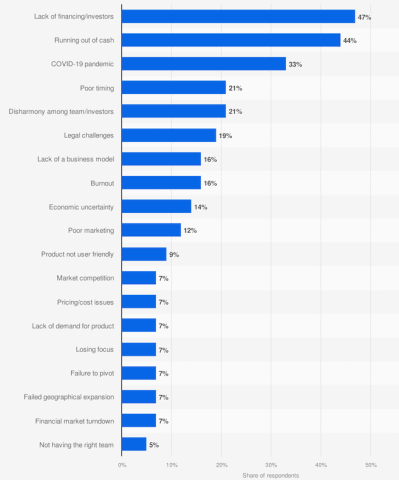
That’s why smart businessmen prioritize validation before development. It’s the best and safest way to avoid wasting time, money, and energy on something people don’t need, the market already has, or customers wouldn’t pay for.
Now, let’s examine the issues that are obligatory to validate.
One of the main stages of your validation process is making sure you’re solving a real problem and your target audience is ready to pay for it. In this case, you’ll need to consult with users, analyze the market, and test your assumptions.
At the beginning of your project, your main goal is not to create a product that works, but to deliver value that people truly need and are willing to pay for.
Some stages are really important, although they may become considerable distractions if done too early. In the beginning, don’t over-invest in:
Having considerable experience in product development, we recommend building the simplest version of your solution, getting it into users’ hands, and analyzing their reactions.
Speed is a key success factor when developing something new. However, effective validation needs to include testing assumptions with real users before investing time and budget.
Here are some lifehacks to validate your startup idea without complicated backend code writing.
A good idea is to use tools like Bubble or Glide to create functional versions of your product. These platforms allow you to launch interactive MVPs without hiring a full development team. They are perfect for testing flows, basic features, and early UX.
Consider setting up a landing page that describes your value proposition and includes a CTA like “Join the waitlist” or “Get early access.” You can then launch an advertisement on this landing page or simply share it with your network. If people click or leave emails, it’s a signal of interest. It’s a great option to test the demand even before building anything.
A cost-effective way to test an idea is to design the prototype in tools like Figma and InVision. They allow for simulating the app or web flows of your future product. As a result, potential customers get an opportunity to experience your product journey, and you gather feedback.
You can also create surveys using Typeform or Google Forms to gather feedback on your product idea. In such a way, you’ll get fast insights on pain points, patterns, preferences, language, and sentiment. You can also analyze responses using ChatGPT or other AI tools to combine data quickly and automatically.
Talking to real people is a simple but effective method. We often use structured interviews to see the motivations, problems, and behavior patterns of potential customers. The JTBD framework helps to move beyond surface-level feedback and understand the real “job” users hire your product to do.
Nothing validates the demand better than people who are ready to buy the product. Consider launching a limited-time pre-order or sign-up list. In such a way, you’ll see who’s ready to pay.
| Method | Tools | Time to Set Up | Cost | Best For |
| No-code MVPs | Bubble, Glide | 3-7 days | $0–$50/mo | Feature testing, early user feedback |
| Landing Page Smoke Test | Carrd, Webflow + analytics | 1-2 days | $0–$20/m | Market demand, messaging validation |
| Clickable Prototypes | Figma, InVision | 1-3 days | 1–3 days Free–$15/mo |
Usability, concept feedback |
| AI-Analyzed Surveys | Typeform + ChatGPT | 2-4 days | Free–$30/mo | Scalable user research |
| JTBD Customer Interviews | Google Meet, Condens, Notion | 1 week | Free–$20/mo | Deep insights, roadmap prioritization |
| Pre-orders/Waitlists | Gumroad, Outseta | 1-3 days | % per sale | % per sale Monetization, pricing validation |
Even experienced teams can make mistakes in product development. If you're building something new, keep an eye on the list of traps and avoid them.
Many business owners choose to delay testing because they want everything to be perfect before they test their product with customers. However, the longer you wait, the more time and money you spend working in the dark. You can’t improve anything if you don’t assess it.
We recommend starting testing as early as possible. Even if it seems to be a rough prototype or a landing page with a form. Real feedback will help you move more quickly and effectively.
It’s natural to want users to love your idea, but that can lead to incorrect research data. Ensure you’re not asking questions that confirm your assumptions. It’s better to ask open-ended questions. Your primary goal is to understand what users truly want, not to receive compliments on your brilliant idea.
Sometimes it seems that data analysts, marketers, and professional developers can have a more objective opinion. But if you’re not talking to real users, you’re guessing. If you are not talking to users, you might build something impressive that nobody actually needs.
Many teams treat discovery as something you do once at the start of your project launch. You need to remember that markets change fast, users become more demanding, and new challenges emerge. Solutions that worked six months ago may no longer be effective today. The core recommendation is to integrate product discovery into your ongoing process.
Don’t be afraid that product discovery will slow down the launch. Validation allows you to identify whether you’re solving the actual problem for your audience. It’s your chance to pause, ask questions, and listen before spending months on development.
Exploration and validation are crucial before you build and invest.