
How to Define Brand Values That Guide Every Business Decision
Brand values are the principles that guide company decisions, define what a brand stands for, and shape how it treats customers, employees, and partners.
Updated March 30, 2026

Is paid or earned media better for your business? Learn when to use each with this guide.
The modern PR landscape is more complex than ever. Companies today use a variety of paid and earned media strategies across channels as diverse as local TV news and Instagram. But how should your company prioritize its placements?
Do you spend a large percentage of your budget on paid ads, or do you focus more on earned media for organic buzz? The answers depend on your goals and budget, among other factors.
Looking for a Public Relations agency?
Compare our list of top Public Relations companies near you
This guide will help you develop an optimal paid vs. earned media strategy for your company. It covers the pros and cons of each, tips from experts, and recommendations on when to use both.
Let’s start with some definitions. Here are the key things you need to know about paid and earned media.
Paid media encompasses any strategy that involves paying a third-party platform to promote your content or brand. This includes:
So, as the name suggests, any content placements you pay for are technically paid media. But the value you get will vary substantially based on the quality of the content you promote and where you feature it. That’s why it’s important to think carefully about how you spend your budget and to focus on the platforms where your target audience spends the most time.
Earned media includes any publicity your brand gets without paying for it. For example, your company could be featured on:
Answers from large language models (LLMs) like ChatGPT
Earned media can be a powerful tool for spreading brand awareness, and you don’t have to pay for it. However, third-party publishers have little incentive to give your company a free ad.
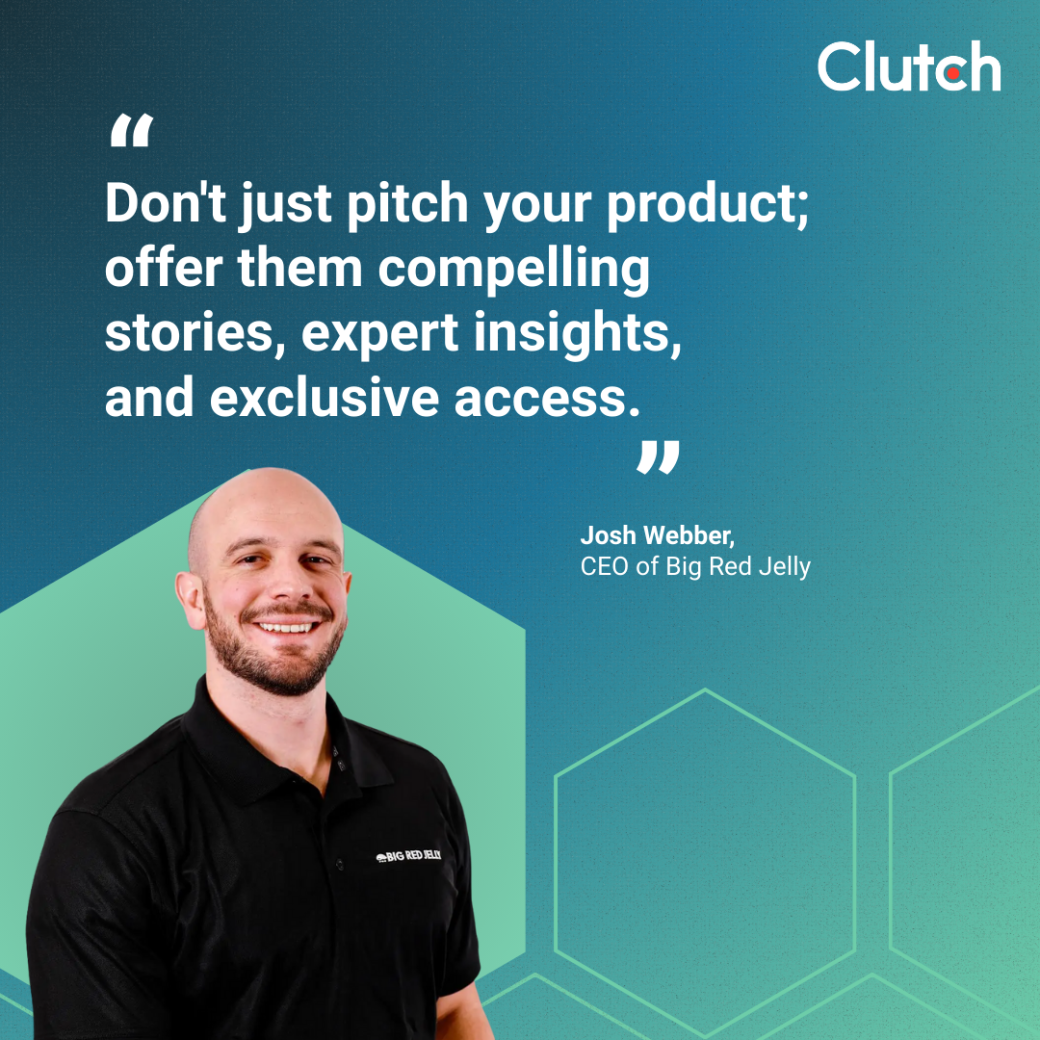
This is where the name “earned media” comes from. You have to find a way to earn placement, even when you’d typically have to pay for similar exposure. Josh Webber, CEO of Big Red Jelly, says, “Don't just pitch your product; offer them compelling stories, expert insights, and exclusive access. Build relationships based on mutual respect and trust.”
That can feel easier said than done. But you’ll get better at pitching stories and framing them for public audiences over time. Just make sure to track your results so you can see what types of content, subject lines, and stories see the best results. These are the ones you’ll want to prioritize moving forward.
Now that you know the basics, let’s take a closer look at the pros and cons of each marketing strategy.
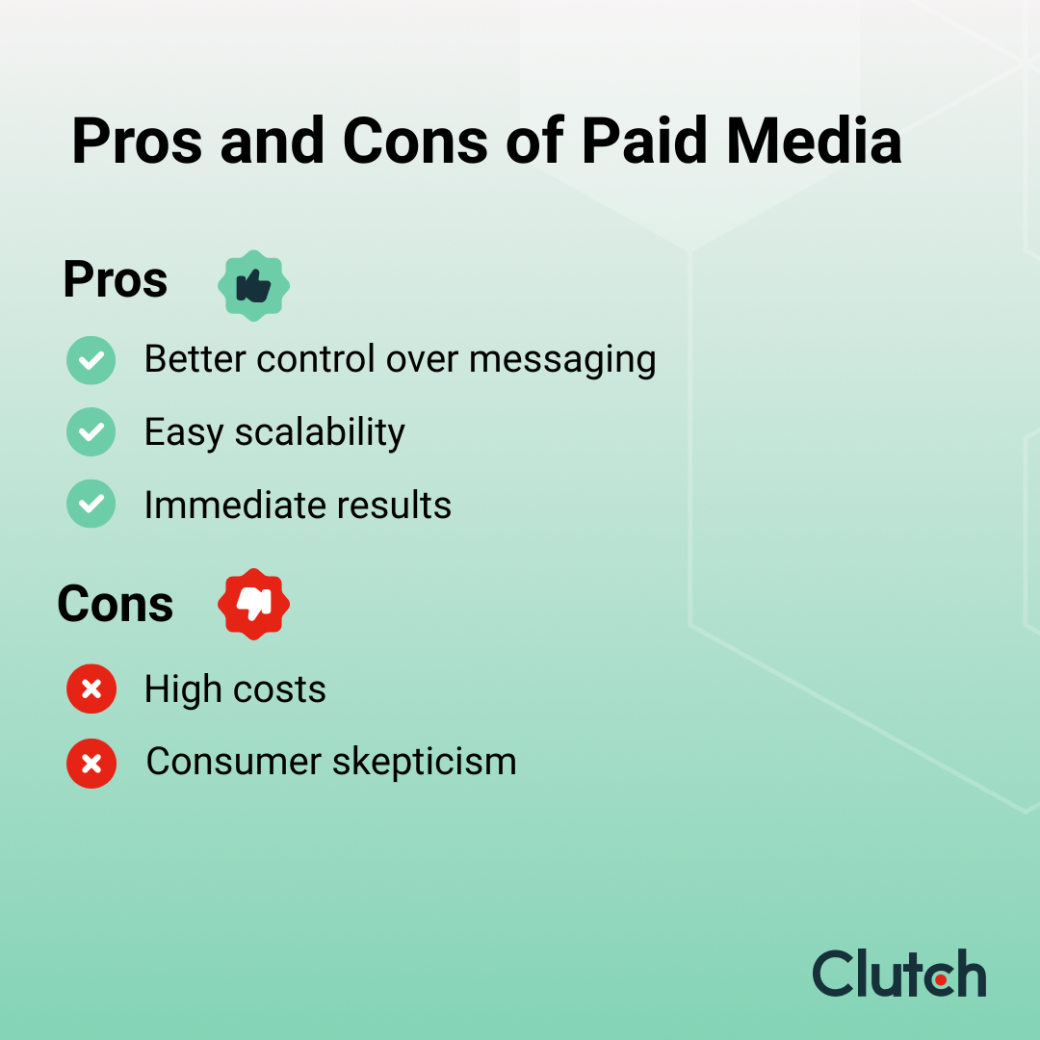
Paid media gives your brand more control. It lets you choose where to feature your content, shape the message, and track the results with integrated tools. For example, you can pay to advertise on Google, use any message you want, and leverage Google Analytics to track your results.
This is also a highly scalable type of marketing. When a message performs well, you can pay more to expand its reach without having to build new relationships or create new content.
So, paid media offers control over messaging, easy scalability, and immediate visibility into results. This makes it easy to see whether your approach is delivering a positive return on investment (ROI) or if you’ll need to make changes to get there.
The biggest downside to paid media is the cost. You’ll have to pay a fee for every placement or user engagement, which can add up over time. So, if you have a small marketing budget, you may not be able to get the level of reach you want from paid media.
Consumers also tend to view paid ads more skeptically than organic placements. This means you may see a higher conversion rate from earned media, even if you get more reach from your paid campaigns.
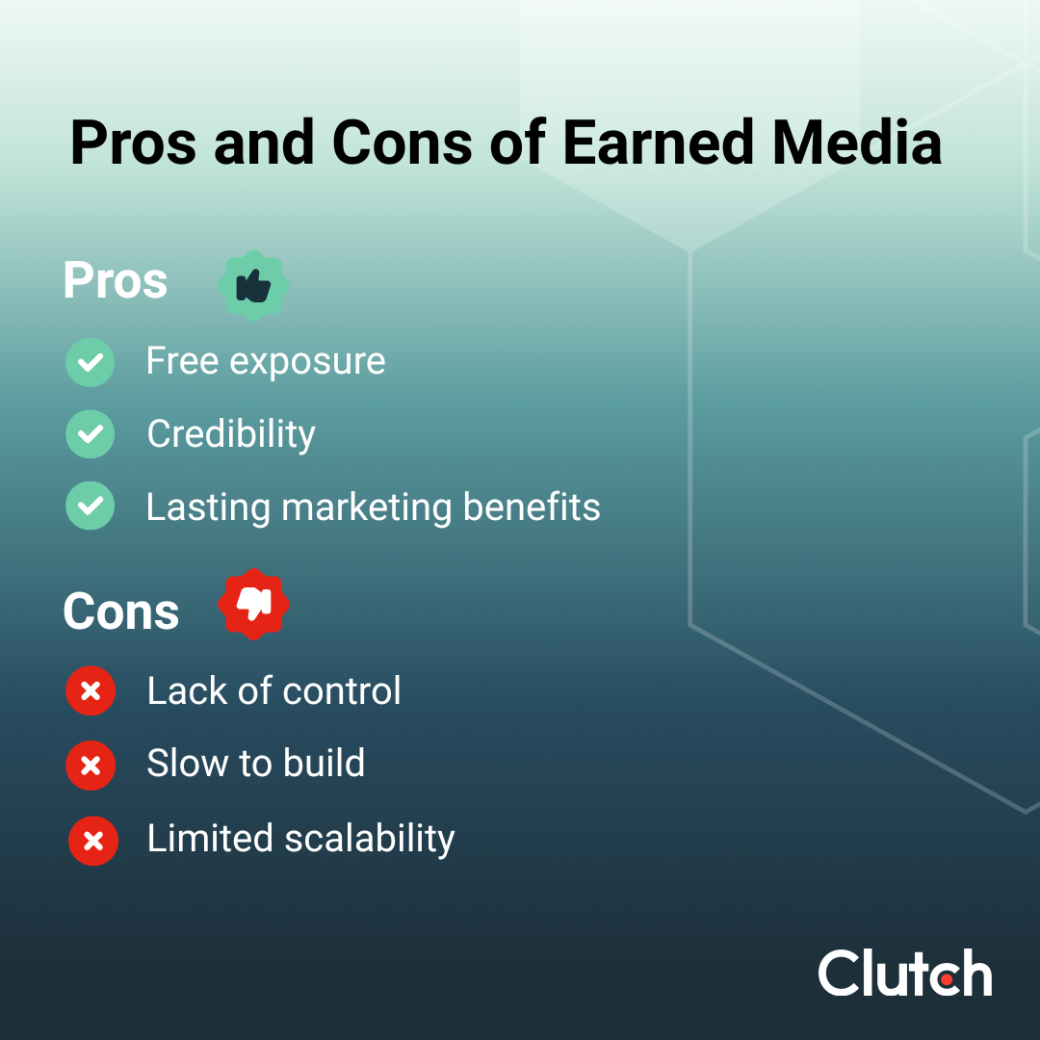
Earned media’s biggest advantage is that it’s free. Your company gets exposure and doesn’t have to drain its marketing budget to do it. Another benefit is that the public tends to view earned mentions more favorably than paid ones. Your content becomes more persuasive when people know that an outlet they trust is sharing it on their own accord.
Earned media can also provide lasting marketing benefits in a way that paid placements can’t match. For example, if your blog is the top result for a major search engine optimization (SEO) term, that could generate free leads for years without ongoing spending. But if you paid for that placement instead, you’d have to continue spending for as long as you want to see results.
Webber says, “Stories that resonate with the audience and provide value tend to generate the most earned media.” So, you’ll need a keen understanding of your target audience and their needs to share content that earns media placement.
There’s a lot to like about earned media, but it’s also significantly harder to control than paid placements. For example, even if a news station agrees to talk about your company’s new location, you can’t control how they do so. This can impact how people see your brand.
Earned media can also take time to build, especially SEO. You might have to publish content for months or even years before reaching the top of key Google search pages. It can take a long time before you see meaningful results.
The last major con of earned media is its lack of scalability. Even if an earned placement does well, you may struggle to convince other outlets to share it. You can compare that to paid media, where scaling is usually only a question of spending more money.
Most companies use a blend of paid and earned media strategies to take advantage of the unique benefits offered by each approach. The question is when to use each:
Paid media tends to work better for spreading brand awareness. It’s a straightforward way to get your company and products in front of a large, targeted audience. You can use that for many purposes, including crisis management, spreading the word about new product launches, and promoting limited-time offers.
Earned media is often more effective for long-term goals. It helps establish a brand’s reputation, build customer loyalty, and expand reach over extended time frames. Many companies target earned media with blogs, white papers, studies, and other forms of content that provide lasting value to a target audience.
Paid and earned media strategies offer distinct benefits, so it’s worth using both to pursue your marketing goals.
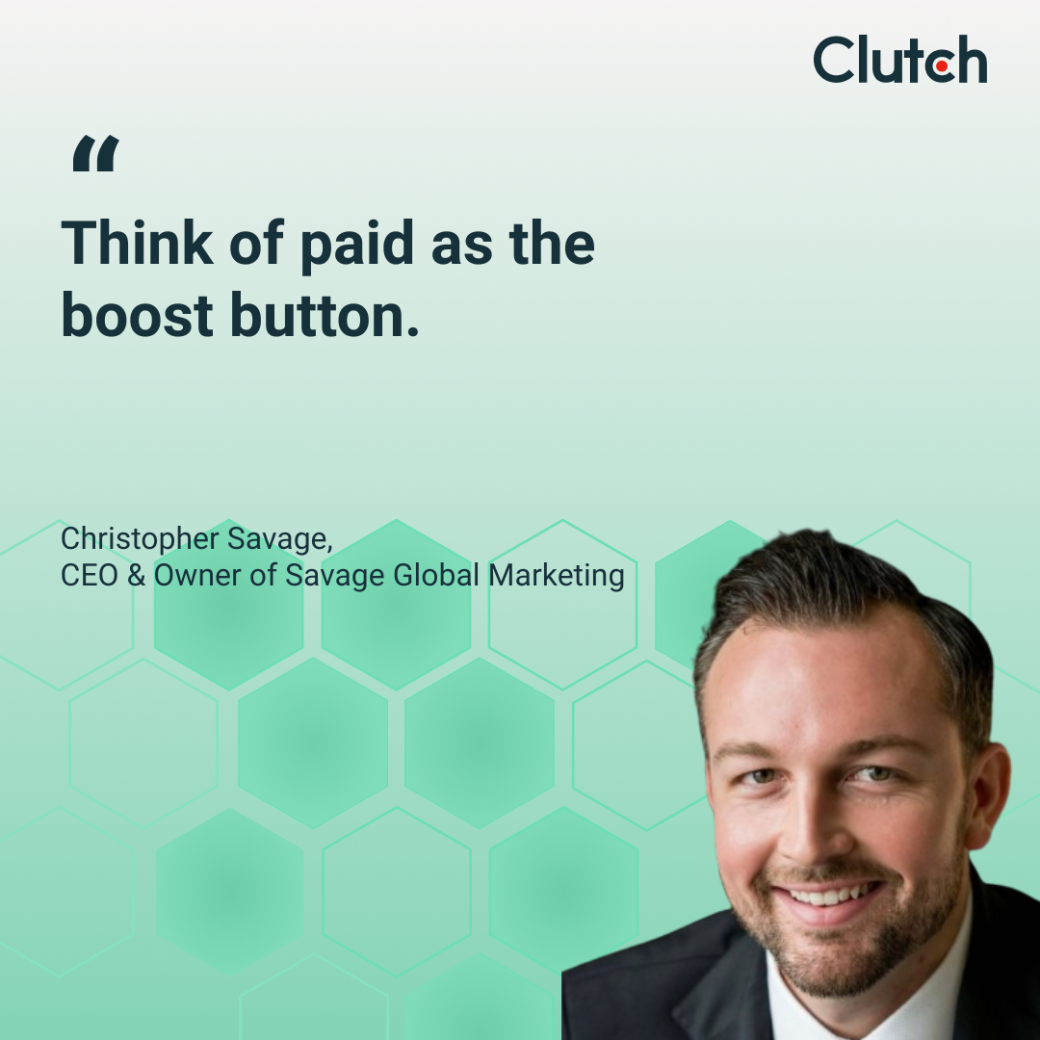
The two strategies can even be complementary, as Christopher Savage, CEO of Savage Global Marketing, explains: “Think of paid as the boost button. You’ve got a great story, your platforms are ready, and now paid gets it all in front of the right eyes fast. When it's all working together, the impact multiplies.”
Earned media builds trust by featuring your company and its products in content your target audience already consumes. Paid media can boost the reach of this content to amplify your biggest earned media wins. Using both strategies together will help your message come across as more authentic, while sharing it with the large audience you need to meet your prospecting goals.
In general, you can use earned media to see which messages resonate best with your audience. Then, pay to boost that content so it reaches more people. Just be strategic about the ads you amplify. You don't want to pay to advertise an earned media win before you know if the message is effective.
Earned and paid media are two effective strategies for getting your company and its products in front of a target audience. But your performance can vary widely. It'll depend on factors like how well you use the tactics together and which channels you target. For the best results, remember the distinct pros and cons of paid and earned media, then use these to inform your strategy.
Remember, it's not paid vs. earned media, but paid with earned. That makes developing a hybrid strategy that evolves with your company's goals essential. You may need to try a few approaches, track results, and refine over time to develop your ideal plan of action. It may also be worth partnering with an agency to get some help with strategy if you'd like to see results as quickly as possible.