
Generative AI vs. Agentic AI: What's the Difference?
What's the difference between generative AI vs. agentic AI? Clutch explains both types, their impact on your work, and what to consider before using them.
Updated February 4, 2026

If you don't have an e-commerce AI strategy for your online store, now's the time to create one. Shoppers are using AI agents for planning assistance, product discovery, and price alerts.
According to a recent Clutch survey, 70% of consumers use AI for shopping research. For brands, this represents a significant upheaval in traditional online shopping. Search engine rankings, while still important, are no longer the sole marketing goal because there's a new guy in town: AI citations and recommendations.
In this guide, we take a step-by-step look at the typical customer journey touchpoints in online shopping and how brands can optimize for AI discovery to drive higher adoption and conversions.
Looking for a Artificial Intelligence agency?
Compare our list of top Artificial Intelligence companies near you
Imagine a friend's birthday is coming up, and you need a little gift inspiration. You could sort through Amazon's bestsellers or peruse a local store, but both can be time-consuming. There's also no guarantee you'll find a gift your friend will like.
Or you could use your phone to start a conversation with your favorite AI chatbot.
AI tools are uniquely suited for online shopping. They use the details you give them to scour the web and find relevant data. Using the gift example, you could describe your friend's likes and dislikes and ask the chatbot to suggest products within your price range. Within seconds, you'd have a list of items sourced from thousands of e-commerce stores without browsing a single website.
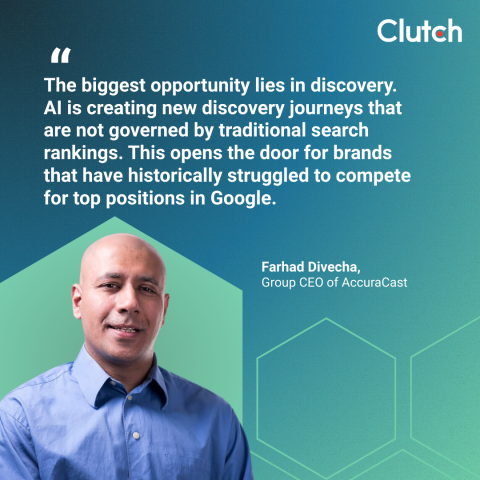
Farhad Divecha, Group CEO of AccuraCast, points out that "the biggest opportunity lies in discovery. AI is creating new discovery journeys that are not governed by traditional search rankings. This opens the door for brands that have historically struggled to compete for top positions in Google."
Using AI, shoppers can save time, compare options, and discover products they might not find on their own. But how can your brand land AI shopping recommendations with potential customers?
Focus on these tactics:
An organized e-commerce site is easy for AI to navigate, increasing the chances that your products are discovered and shared in chats.
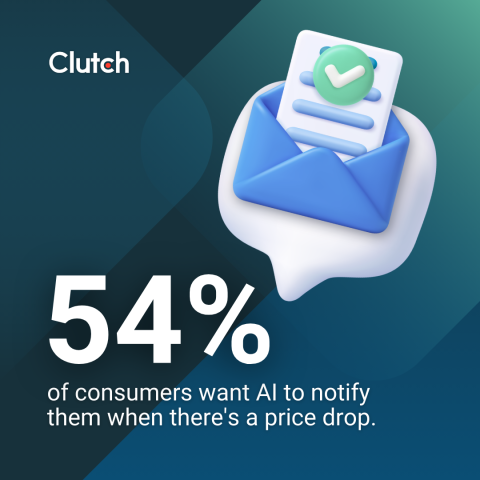
Consumers are always on the lookout for a good deal. The most price-conscious will hold out on buying a product until it goes on sale or until a coupon is available. But prices aren't easily tracked manually. That's why 54% of consumers want AI to notify them when there's a price drop.
With agentic commerce, consumers can monitor savings over time. They can ask their AI chatbot to alert them when a product's price changes. According to our recent survey, for most shoppers, tracking savings is more important than allowing AI to make instant purchase decisions for them.
Why is this beneficial for brands?
Divecha explains, "Agentic commerce has the potential to simplify decision-making and remove unnecessary steps in the buying journey." Someone with an AI agent alert already wants to buy the product — they're just waiting for a fair price. When one arrives, they're likely to jump on it.
To capture budget-minded customers through AI agents, brands can:
These tactics improve user experience for both customers and AI shopping assistants, resulting in more sales.
Aside from great products and good deals, shoppers also want effective customer service and planning assistance.
According to Clutch data, 24% of consumers expect help managing their subscriptions, 22% want assistance with seasonal or time-sensitive purchases, and 19% are interested in automated reorders.
For instance, suppose you have a customer who signs up for a monthly subscription box. Instead of automatically fulfilling their monthly order until they cancel it, you could integrate AI-powered alerts and reminders based on their preferences. This gives them more control over their subscription.
Several best practices that e-commerce stores use to improve planning assistance include:
Planning tools show customers that you care about their experience. Tools can also reduce refund requests caused by unexpected reorders or ongoing subscriptions.
As AI becomes part of the everyday shopping journey, the question for brands isn’t whether consumers will use AI — it’s if and how your products show up when they do. AI agents are already influencing discovery, price tracking, and planning decisions.
Brands that take the time to optimize their product data, pricing signals, and customer experience now will be better positioned to earn visibility, trust, and conversions as agentic commerce continues to evolve.
Divecha explains it this way: "Brands should be mapping out their strategy and execution plan now, understanding where agentic commerce could sit within their customer journeys." By doing so, online stores can leap ahead of their competition and enjoy more traffic and conversions.
If you're ready to optimize your online store for AI, hire an e-commerce agency today. Your team can ready your business for the future of online shopping with agentic commerce.