4 Benefits of Annotated Wireframes for Mobile Apps
Annotated wireframes provide organization and structure to any mobile app development project. Learn more about how to use them in this article.
Updated December 16, 2024

In order to get your app in front of your target audience, you need to understand how to optimize the app's rankings on the Apple App Store. Learn the factors that impact ranking, then choose the right keywords.
Updated June 8, 2022
People search the app store for the apps they need every day.
Looking for a Mobile App Development agency?
Compare our list of top Mobile App Development companies near you
In 2021, over 230 billion apps were downloaded worldwide. That’s why more brands are investing in app store optimization, or improving their rank in the Apple App Store for the search terms their target audience is using.
If you’re interested in launching a successful app, ensuring that your app is optimized for the app store is key. In 2022, Apple shared these app store stats:
These numbers show just how many people use the app store – and how many dollars go through it.
Understanding how to rank in the app store is an important factor in app development and promotion (after creating a great product).
First, learn the app store ranking system, then choose relevant keywords.
Hire a mobile app development company today to bring more value to the iOS app store.
One of the most effective ways to get app downloads after launch is through app store optimization (ASO).
There are four elements that determine how well you rank in both Apple and Android app searches within the Google Play store:
Be sure to include the importance of keywords in app store ranking factors.
According to MobileDevHQ (now TUNE), putting keywords in the app name has a major impact on app store search rankings. Apps with keywords in the title have a 10.3% higher ranking than apps without.
Try creating an app name that’s memorable and specific to your app. The name should also be relevant to what the app does. Think of keywords your audience might use when looking for your app.
For example, the fitness app category is competitive, and it can be challenging to stand out. That’s why companies like Grokker and Asana Rebel have chosen more descriptive titles for their yoga apps:
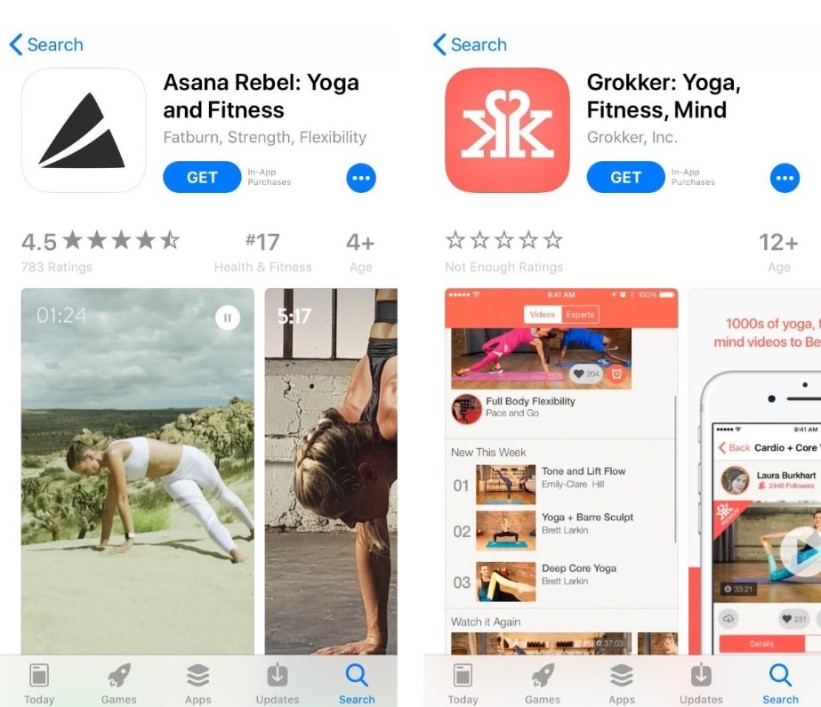
Both include the words “yoga” and “fitness” in the name, rather than leaving them as “Asana Rebel” and “Grokker.”
Using relevant keywords in the title helps your app to rank for keywords that users are likely to be searching for.
Relevant keywords will have your app rank higher and increase its discoverability for potential app users.
First impressions matter, especially in the app store.
If someone is on the hunt for an app in a competitive space, then app product shots and app iconswill influence what they choose to download.
The meditation app Calm’s product shots are aesthetically pleasing, and they show exactly what the app does.
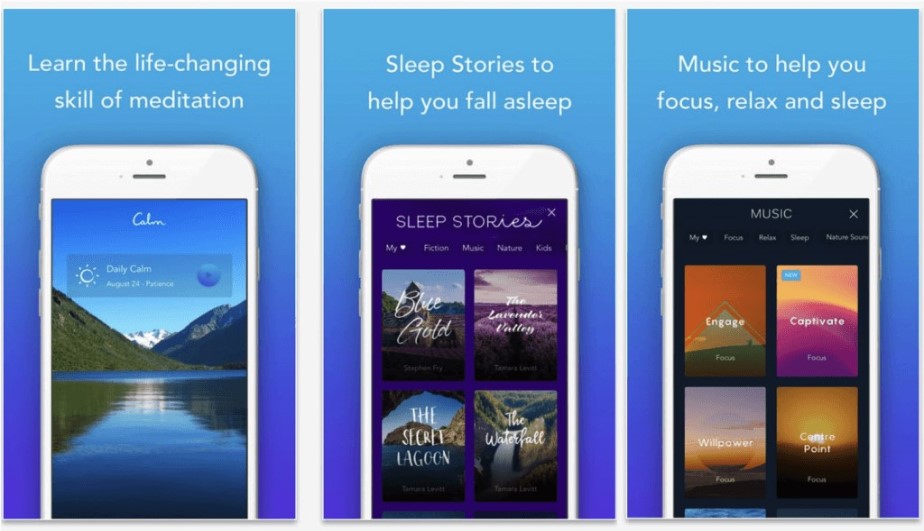
Some mobile apps use basic product screenshots, while others get creative and combine typography and rich visuals to connect with the audience. Either approach works; just choose the one that fits the tone of your app.
The overall user experience of your app will impact the retention rate of users. Thinking about the visuals and branding within your app might seem like another task, but your team can easily include it in your marketing strategy.
Thinking about app marketing? Read this: “What is Mobile Content Marketing?”
Downloads have an impact on an app’s search result ranking. If your app is able to sustain growth, the app store will reward you for that success.
Some experts suggest that volume of downloads within 24 hours is the most important metric, followed by downloads from the last 72 hours.
Success in the app store often begets more success. Apple gives priority placement to the apps it thinks users want to download the most, which drives more downloads and transactions in the app store ecosystem.
If people consistently download and use your app, it’s more likely that you will get a quality placement in the app store.
Apple doesn’t want their users to have negative experiences with an app. That’s why Apple considers the number of positive reviews (not negative reviews) on your app compared to others when determining your rank.
There are plenty of tactics you can try to generate and sustain better app store reviews—and in turn, influence your ranking. Here are two tactics that we’ve seen work well:
Pay close attention to new apps in the market and their reach on social media. See how competitors are performing, and that might benefit your overall strategy.
When you upload your app to the App Store, you have the ability to leverage keywords to increase the likelihood of having your app show up in search. This is important because according to studies, at least half of iOS apps are found through search.
Here’s what you’ll be met with:
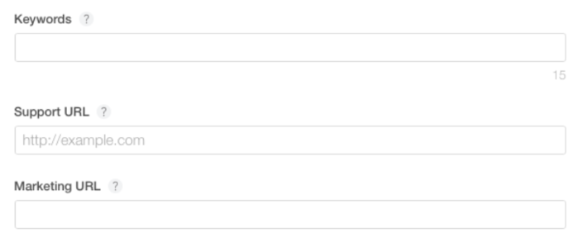
When you’re adding keywords to your app listing, remember to include keywords that are relevant to your audience—keywords they might be searching for.
However, realize that some very popular keywords are unlikely to have an impact on rankings, while others could be optimization gold.
The more descriptive your keywords, the better your chances of ranking in the app store for relevant search queries.
For example, if your app targets people who are interested in sports, relevant but weak keywords include play, sports, fun, cool, best, or games. These keywords are vague since thousands of apps could be considered “cool” or “fun."
On the flip side, specific keywords are usually stronger. Consider Olympics, multiplayer, sports competition, boxing game, basketball, soccer, or hockey.
Here’s a bit of wisdom directly from the Apple guidelines:
Choose keywords based on words you think your audience will use to find an app like yours. Be specific when describing your app’s features and functionality to help the search algorithm surface your app in relevant searches.
We’ve found the following guidelines helpful for choosing keywords:
In addition, follow Apple’s guidelines for iOS app developers. The guidelines state that your app is likely to be rejected if your keywords include:
By including the keywords that will help users find your app, you’ll also help yourself, your app's conversion rate, and your rankings.
Interested in the overall iOS lifecycle? Read this: ‘5 States of an iOS App Lifecycle’
While it might seem like Apple App Store optimization can be a daunting task, remember the approaches shared in this piece:
When you embrace these ideas and invest time in truly understanding your audience, your chances of ranking better improve.
Concerned about your app store rating or the app store ranking algorithm? Hire an app development company to do the heavy lifting.
Bill Wilson is the founder and CEO of the mobile design and development studio MindSea, where he helps brands go mobile through creative mobile app solutions. Over the years, he's been a mentor to many entrepreneurs and a guest lecturer at universities discussing the power of mobile.
See full profile