Demonstrating a commitment to inclusivity and accessibility can enhance your brand's reputation, build trust with consumers, and reach a broader audience. Learn how to create inclusive social media content that appeals to all audiences.
An inclusive social media strategy challenges even experienced marketers but significantly expands audience reach and brand trust. Target audiences can be diverse, and factors like geographic location, socioeconomic background, age, gender, political affiliation, and disability requirements can all demand special consideration in developing a social content strategy.
When publishing content on social media, it’s important to consider accessibility factors for your audience. Reading and listening to your content clearly without difficulty is important in building an affinity between an audience and a brand.
Looking for a Social Media Marketing agency?
Compare our list of top Social Media Marketing companies near you
With this in mind, let’s take a deeper look at how brands can make it easier to reach all audiences through their social media posts.
The POUR Model: A Framework for Digital Accessibility
Before diving into specific tactics, it's essential to understand the framework that underpins modern accessibility standards. To ensure your social media strategy meets international standards like WCAG 2.1 AA, you must follow the POUR model: Perceivable, Operable, Understandable, and Robust.
Each pillar of the POUR model addresses a critical dimension of accessibility:
- Perceivable: Information and user interface components must be presentable to users in ways they can perceive. This means providing text alternatives for non-text content, captions for multimedia, and ensuring content can be presented in different ways without losing meaning.
- Operable: User interface components and navigation must be operable by all users, including those who rely on assistive technologies, keyboard navigation, or have limited dexterity.
- Understandable: Information and the operation of the user interface must be understandable. Content should be readable, predictable, and provide input assistance to help users avoid and correct mistakes.
- Robust: Content must be robust enough to be interpreted reliably by a wide variety of user agents, including current and future assistive technologies.
By aligning your social media content with these four principles, you create a foundation for genuine inclusivity that goes beyond surface-level adjustments. The tactics that follow each map back to one or more of these pillars, giving you a structured approach to accessibility rather than a checklist of disconnected fixes.
1. Use Inclusive Language
Marketers frequently misunderstand 'inclusive language' despite its common use in social media planning. By incorporating inclusive language, brands can empower their audience to feel valued and heard. This isn’t a matter of political correctness, but instead invites everybody to feel actively involved in a brand.
To build social media inclusivity, it’s important to avoid the following common pitfalls within your posts:
- Don’t use sexist expressions like ‘man up.’
- Avoid gender-biased language, like specifying that a driver is a woman when it’s redundant to the content.
- Never make generalizations or assumptions that may alienate or offend your audience. However, it’s also important to avoid believing all genders, demographics, and age ranges are the same.
- Remember that cultural references, everyday phrases, and idioms can all translate poorly for global audiences, so bear this in mind when creating content with a more conversational tone.
Fortunately, many tools can help brands uphold their inclusivity on social media.
2. Focus on Readability
Effective social media posts demand careful consideration of font, size, and color combinations to ensure readability for all users.
With this in mind, it’s worth considering that studies suggest fonts like Arial, Tahoma, and Verdana are among the most readable for users with dyslexia. Furthermore, the use of calligraphy and serif fonts can be more difficult for some screen readers to interpret for visually impaired audiences.
Additionally, abbreviations, acronyms, and alternating caps – LiKe ThIs – can be a great way of participating in memes and social trends, but screen readers will interpret them as nonsensical. Adding asterisks to replace letters in words can also be highly problematic for screen readers.
Tools like Hemingway Editor or Readable help marketers evaluate the readability of their social media content. Here, it’s important to aim for Grade 8 or lower comprehension levels to comply with WCAG standards.
3. Utilize Alt Text
Always accompany published images with Alt Text to ensure content is accessible to the 2.2 billion visually impaired users worldwide.
Using a written description, alternative text enables assistive tools like screen readers to narrate the contents of images.
When creating alt texts for your images, there are a few things to keep in mind to ensure your content is as accessible as possible:
- Here, it’s important to describe what’s actually in the image. For instance, ‘a couple walking hand-in-hand on a Spanish beach’, rather than ‘two people on a beach.’
- There’s no need to add ‘photo of’ or ‘image of’ when it comes to alt text.
- Alt text doesn’t need to be formal and can explain any jokes within the image.
- If your image features any text, include it within the alt text. If it takes longer to narrate alt text than to view it, so be sure to keep your content succinct.
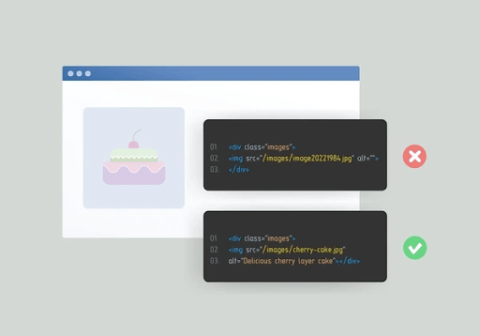
Standardized Alt Text and detailed captions significantly bolster content accessibility for all users. Your descriptions should seek to include more information about the people displayed, as well as their clothing and surroundings.
4. Subtitles are Essential in Video Content
Captions are non-negotiable for social media video content, serving the projected 2.5 billion people who will have hearing loss by 2050.
Adding subtitles to video content brings benefits and greater levels of accessibility that can serve those without difficulties in hearing, too. For the many global social media users who may interact with your content, subtitles can bring greater comprehension for non-English speakers.
Furthermore, about 83% of US social media users watch content with no sound. This is because it can be impractical to have the volume switched on when using public transport or at night, which can be popular times to use social networks.
Most social media and video hosting platforms offer auto-captions to users and can provide comprehensive levels of accessibility for a range of content. However, it’s important to ensure that your captions are free of spelling and grammatical errors that could confuse viewers.
In addition to this, it’s important to ensure that your captions aren’t obstructed from view by any overlaid content when published and that you’ve used a sufficient level of color contrast to ensure that the captions are visible at all times during the video. Again, free tools like the color contrast analyzer from TPGI can ensure that your content is easy to understand.
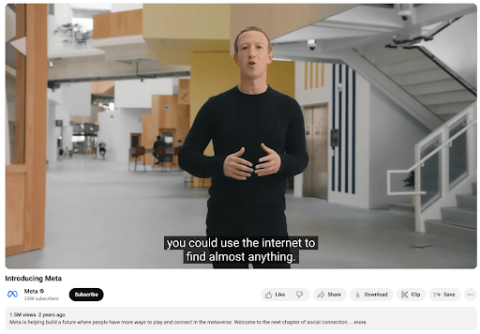
Two forms of captions can be used to accompany video content. While open captions are actively part of the video, closed captions allow your audience to turn them on or off.
5. Use Hashtags Wisely
There’s no doubt that hashtags have become a powerful social media tool. In fact, Instagram posts containing one or more hashtags have been found to accumulate 12.6% more engagement than those without.
Despite this, hashtags can also risk interrupting your drive for truly inclusive content across networks. Many approaches can be used to remedy this:
- One approach is to use Pascal Case, which involves capitalizing every word in your hashtag to help screen readers interpret them properly, such as #ThrowbackThursday.
- It’s also possible to use Camel Case, which instead avoids capitalizing the first word in the hashtag. For instance, #throwbackThursday.
- To maximize readability, only include hashtags at the end of your caption. Adding them in the middle of the sentence can hinder the performance of screen readers.
Using many hashtags can be useful if you’re looking to appeal directly to groups or a collective of relevant trends, but it’s best to add them as a comment, rather than at the end of a caption.
6. Remember Emojis and Memes Don’t Always Translate
Using emojis and memes has become big business in the modern social media landscape, and it can be hard for brands to avoid the temptation of using them to boost engagement. However, there are some considerations to make before bolstering your account’s meme credentials.
For those who are visually impaired, emojis can be misinterpreted by screen readers. Although those familiar with popular emojis can take contextual cues, others, such as the widely used three stars emoji (✨) can be interpreted as ‘sparkles’, which may be at odds with the message being conveyed.
Similar issues are rife in the usage of memes. While international audiences may struggle to understand memes due to the use of language, slang, or cultural references in the content, those with visual impairments could miss out completely.
"Memes that involve using all uppercase letters aren't accessible to people who use screen readers, who are blind or have low vision,” warned Julia Métraux, disability and public health journalist at Mother Jones. “It just spells the letters out like an acronym."
Emojis and memes can be vital for building exposure on social media, but there are a few measures that can be taken to ensure this form of content is truly accessible to all:
- Use alt text to your advantage in describing the memes you use or create, and explaining the humor can be a great way to involve everyone in a joke.
- The use of ASCII art memes like that featured in this recent post from McDonald’s can be popular on text-based social networks like X but are extremely confusing for assistive tools to interpret. Instead, sharing the art as an image that can be described using Alt Text is a great solution.
- Avoid using emojis at the beginning or middle of a caption or sentence if possible. This can disrupt the flow of screen readers.
- Although repeating emojis can be great for comic relief, remember that they can be extremely time-consuming for assistive tools to describe.
Final Thoughts: Create Inclusive Social Media Moving Forward
According to World Health Organization figures, the number of social media users with hearing or visual impairment is likely to reach far into the billions over the coming years. This makes it essential to be inclusive when devising your content strategy.
This doesn’t mean you should stop using memes, emojis, and ASCII text when creating posts. Inclusive content must prioritize the needs of your entire audience by featuring useful alt text in every post.
About the Author
Dmytro Spilka
Director and Founder at Solvid
Dmytro is a Head Wizard at Solvid, a creative inbound marketing & software development agency in London. His work has been featured and mentioned in a wide range of publications, including The Next Web, Business2Community, Huff Post, Kissmetrics, Crazy Egg, Sitepoint, SEMRush, and more.
See full profile