Why Searching for a Specialized Dev Agency Takes Longer Than It Should — And What to Do About It
Looking for a niche software development agency? Learn how to define your requirements, find specialized providers, and vet their experience.
Updated March 30, 2026

Any company that wants to be successful nowadays and keep pace with progress should think about switching to using first-party data and develop an effective strategy connected to it. The issue is that third-party data, which people and businesses have used to, is getting less and less relevant due to tightening rules and privacy regulations.
The chances of your business getting into legal trouble for using information received from questionable sources that may have received it in questionable ways are getting higher almost on a daily basis.
First-party data, on the contrary, comes directly from the customers and with their consent. This makes it a much more reliable and safe data source for companies (especially those working in the B2B segment).
Looking for a Software Development agency?
Compare our list of top Software Development companies near you

If you are intrigued but have a blurred vision of what a first-party data strategy is and how to develop it, we will do our best to help you at least with the basics.
Surprisingly, in the B2B segment, first-party data is one of the most valuable assets (if not the most valuable one) that a company can own. It is so because this type of data is collected directly from the customers. Which means it is cleaner, more reliable, and more up-to-date. This helps to improve the business’s decision-making, build stronger relationships with the customers, and guarantee more effective marketing activity.
We understand that “more reliable” and “more up-to-date” may sound too abstract, and we are ready to come up with a more detailed review of all the advantages that first-party data has for B2B.
Of course, we should also not forget about the evergreen issue of customer privacy. Data acquired from the third-party platforms is not compliant with GDPR and CCPA, and thus, using it may bring legal issues to your business.
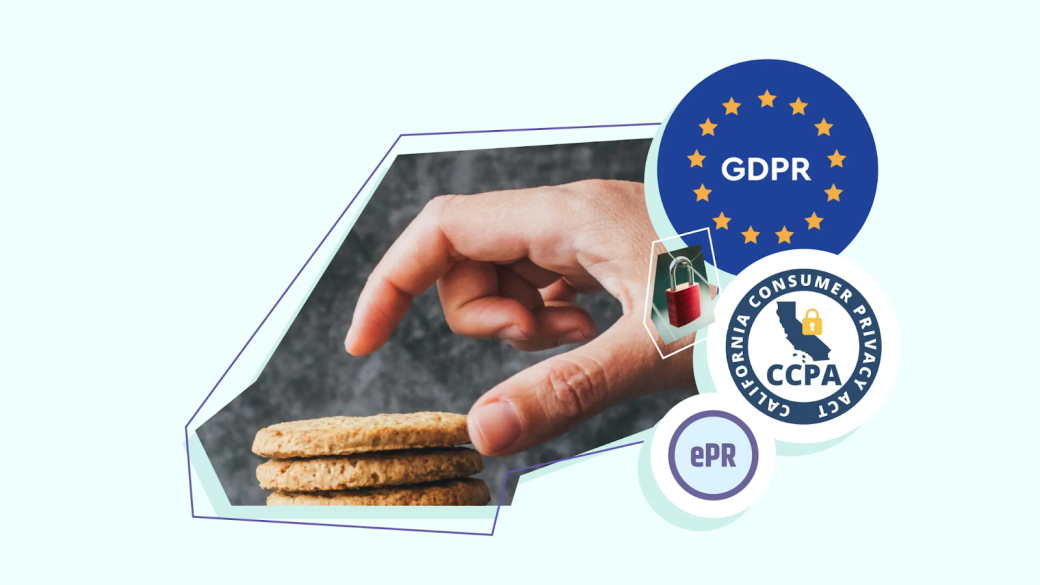
When it comes to first-party data, customers must give their permission for the process. Therefore, such data is considered legally acquired and can be used for analytics without any hesitation.
If there are no questions left about why first-party data is so crucial for the B2B segment, it is time to move to the topic of its collecting, leveraging, and managing. In its essence, the whole process can be divided into 4 basic stages.
Stage 1. Decide on what data is essential for the business. Here is a list of the most popular types of customer information companies working in the B2B segment are interested in obtaining.
Clarify your needs and expected results to get a clear picture of what customer data you need.
Stage 2. Start integrating into your business data collection tools that would best fit the type of data needed.
Select the most convenient method, or several; there is no rule that you must only stick to one of them.
Stage 3. Set up data storage and management practices. Collecting data is only half a task. After you do that, you must organize and secure storage for this data where it can be managed effectively. There are two main points you must focus on.
One possible solution to this matter is using a data warehouse. However, cloud storage is becoming increasingly popular nowadays.
Stage 4. Have a data utilization plan. If you are serious about a first-party data strategy, you must have an idea of how you will effectively utilize all the received and gathered data. Data should be segmented and categorized. All your teams must have easy access to the data and the analytics results.
Ensure that the data is not only gathered but also used effectively, and that you consider all the information it provides in your further work.
Of course, each case is individual, and depending on the industry you work in and the processes you have set up, the whole strategy may be more complicated. However, the steps provided here are the basics to scaffold your first-party data collection and usage, and build all the additional aspects you may need on top of it.
The main point to realize when using first-party data is that it is used not only to execute marketing campaigns but also to optimize and improve them constantly.
When you have a better understanding of what is working and what is not, you have more flexibility in actions and a clearer view of your business's future. Now, we will provide you with some applied examples of how first-party data can be beneficial for B2B marketing.
A software company that operates in the B2B segment collects first-party data through its website: pages viewed, interactions, account details, etc. This information can be later used for better personalization.
For instance, a prospect from the healthcare industry downloads a brochure from the website.
The company can follow up with a personalized email that describes the services the business offers in the healthcare sector and scaffolds it with case studies and success stories. This will enhance the likelihood of conversion and generally improve the customer experience.
A B2B cybersecurity company collects data about accounts that engage with their content and constantly read their blogs. This allows them to identify a pool of potential customers who are already highly interested in the topic and run an account-based marketing campaign.
The cybersecurity company can customize its offers to address the potential risks of its potential clients and even offer personalized demos. Needless to say, such an approach drastically increases the chances of getting new clients.
A B2B firm that sells enterprise software observes which pages potential clients open on their website. If a lead has viewed the page with payment plans multiple times but hasn’t requested a demo or purchased any of the plans, the company can offer a personalized promotion or personal consultation. Such an approach improves the chances of closing the deal and makes the overall conversation more relevant.
There are only a few examples of how a clear and effective first-party data strategy can be useful for a B2B company. Of course, they are not the only ones, and depending on each particular business, there can be dozens. If you are already using first-party data in your company, do not hesitate to share your cases and examples!
Businesses that want to be successful in the current realia must adapt to the new trends and industry requirements. Usage of first-party data is not a must yet, but it may become so soon. In addition to that, it already helps B2B companies to improve their services and increase the level of personalization when working with their clients.
Thus, having a clear and effective first-party data strategy now is a huge plus, and companies that already have one definitely have an advantage over those that don’t.