
Evaluating an Marketing Agency in the AI Search Era
AI search has completely changed how people interact with online content. When an AI summary appears at the top of search results, Google users only click a...
Updated March 5, 2026

Regardless of industry or niche, videos are essential assets for any business. While video content was viewed as a luxury in the past, new tools and technologies have made it more accessible to companies and organizations, allowing them to easily create tailored content for their projects and needs. In this article, we’ll break down 5 essential B2B video tactics that can help your brand stand out.
When we open any social media platform today, it is full of videos—not just funny ones but also branded ads. Video has become one of the go-to methods for brand marketing, and why should it not be? According to wyzowl, 89% of consumers want to see more videos from brands in 2024.
Moreover, 87% of B2B marketers integrate video into their marketing strategies. The success stories of these experts, who use video to experience 49% faster revenue growth, can inspire and motivate others in the field.
Now, the question arises: is this achievable for your B2B brand? Yes, it is.
When brands implement specific tactics and strategies correctly, they can attract significant revenue for a B2B business. Let's examine these tactics that can bring optimism and hope to your B2B brand.
B2B marketing is an umbrella term that encompasses strategies for marketing products and services to other businesses. One of the most common approaches is to create introductory or explainer videos about the products and services to increase leads, sales, and revenue.
Besides that, some other video types in B2B video marketing are:
Implementing these methods allows B2B businesses to highlight their unique selling points and target their best leads. Brands can also post videos on their websites and social media platforms for maximum exposure.
Here’s an image that shows how marketers leverage B2B video ads for social media marketing:
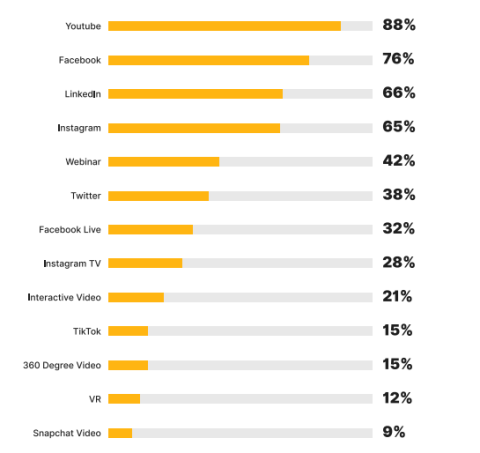
Creating B2B videos for social media is increasingly trusted, and 63% of B2B buyers turn to them to make informed decisions. Moreover, they can perfectly align with their businesses.
Pro-tip: Use email sign-up forms within the videos, as they can provide the highest conversion rate of 23%.
The digital video advertising market is currently racing toward the $268 billion mark at a CAGR of 6.61% (projected to reach in 2029). These numbers prove there is a lot of potential in video ads. Here are some advantages of B2B video marketing:
We would be more inclined to buy a product after watching a video than reading a review.
The video's visual input paints a clear picture of the product and makes it more relatable when in action. Furthermore, a video appeals to prospects personally, making them more informed and reassured. This reassurance helps establish trust among the audience and makes them click the buy button.
Testimonial videos are the best for building trust. Around 42% of customers think video testimonials are more relatable because they convey real customer stories.
With the right analytics tools, branded video ads can quickly help you learn about your customer preferences. Access to instances where the users pause or rewatch the video can help you understand what they like, making you feel more informed and strategic in your approach.
Add-on features like heatmaps and rewatch pattern tracking can help comprehend user attention spans. These insights can also help improve video ads, resulting in better reach, leads, and conversions.
It is well-known that onboarding a new customer is more complicated than retaining one. However, video marketing can make the onboarding process much more manageable. According to statistics, around 84% of people are ready to buy a product or service after watching a brand’s video.
Indeed, videos featuring real users providing actual insights about their experience with the product or service make prospects more likely to relate to them. These social proofs help build customer loyalty.
Learning where your prospects pause the video and how many times they rewatch it can help you create a buyer's persona. Based on this information, B2B businesses can create better content to target specific brands or companies.
That can also help drive account-based marketing (ABM). In ABM, businesses create high-impact video ads with personalized elements to address specific pain points. ABM helps target the right leads rather than more leads.
Example: Roman Austin Personal Injury Lawyers, a law firm, used Facebook video ads to lower its overall cost per action by 22%.

One of the clever things in this video ad is that they humanized their law firm by showcasing their care, testimonials, and attention to detail that make clients feel confident, supported, and empowered and stress less without any filler.
Now, video marketing is not solely about making great videos. It goes deeper, requiring a careful mapping and understanding of every step in the user’s journey and the production of suitable video content. From the start of the user journey, B2B businesses have to map each video type to a specific prospect at the right time. Here is how you can do it:
There is no one-size-fits-all kind of thing with video ads. Every prospect is different, and you have to target them strategically. Hence, before you start creating video ads, it is crucial to understand your audience and their problem.
When analyzing the video analytics, carefully check the time users viewed the video, drop-off points, and conversion rates. These factors will help you understand the missing elements in the video. These elements can include limited information, a long-duration video, a specific type of video, or a lack of getting to the point factor.
Based on these video elements, you can build buyer personas and create specific content for each segment. For example, women are 50% more likely than men to watch how-to videos on YouTube regularly. Therefore, for this buyer persona segment, how-to videos are the go-to way to garner more conversions.
A good story makes the video more relatable. We all remember a product based on its presentation rather than its utility and features. So, how do we create a story?
If you have seen Instagram reels, the key part of engagement is the hook. It should be powerful enough to glue the users to the video. Make it more relatable based on the buyer's persona. Highlight the challenges the target audience faces smartly to establish empathy and further pique interest.
For instance, if your audience struggles with time management, you could show how your product or service can save them time. Based on the pain points, provide a solution with real-life applications. Finally, give a persuasive, clear CTA.
Google Earth harnessed 2.8 million in product advertisements through storytelling. Using an emotional story, Google highlighted that its product goes beyond its commercial purpose.
Why do you think short-form content is more viral on social media? A user's attention span was 8.25 seconds in 2024, and it is constantly reducing. Therefore, if B2B businesses can create video ads that deliver every relevant piece of information quickly, they can surely make the most of video ads.
Here are some tips:
Using these tips, you can examine how Ledge created video ads by making them short and focused and including bullet points to deliver the main message to their target audience. That helped them get more clicks, engagement, and customers.

Customers should clearly understand your product's benefits and what they agree to in three steps or less. Try simplifying your process to help them grasp your product story quickly.
Most users access it on their mobile devices, whether it is Facebook, Instagram, or any other social media channel. Therefore, to ensure maximum exposure of video ads, you need to aim for mobile optimization.
You can do several things to optimize the videos for mobile viewing:
B2B companies must focus on video production's creative and technical aspects to effectively engage a target audience on mobile devices. By considering different perspectives and using the strategies mentioned, businesses can ensure their videos are seen and are impactful.
Social proof is a surefire way to convert more leads into customers. People easily trust a product if their peers use it. The same is true for B2B brands. According to statistics, 92% of B2B buyers are more likely to buy a product after reading a trusted review.
Social proof can take several forms, such as previous customer reviews, expert social proof, and testimonials from friends and family. You can also include real customer stories highlighting their issues and how the product solved them.
Share industry-specific reviews to garner leads from the same industry as yours. That can make the social proof more relevant and persuasive.
The Rare Beauty website is an excellent example of social proof.
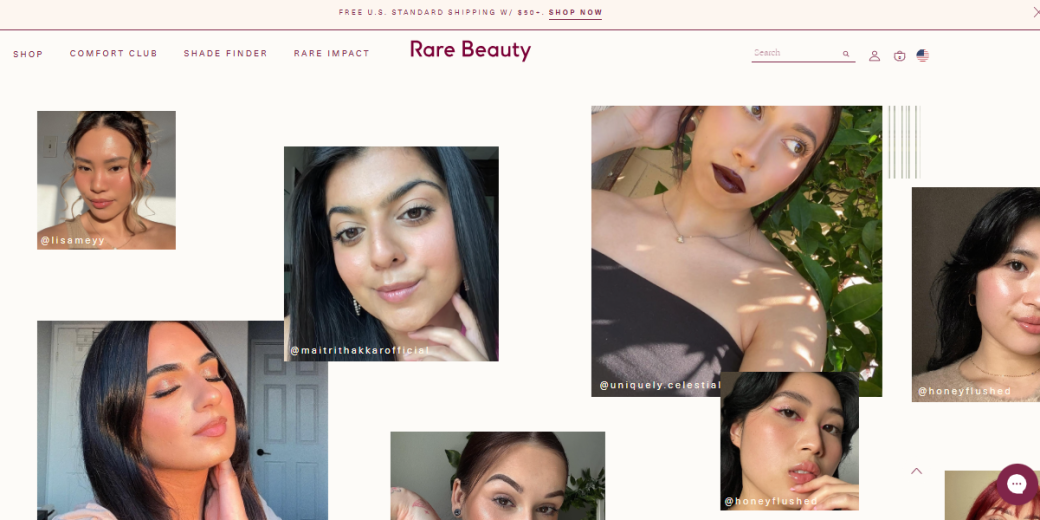
It features images of live social media posts from customers who have used the product.
Pro-tip: Adding actual success numbers to the social proof can make the social proof more believable.
“Always remember that you are pitching to a human handling the B2B business. So, it is best to keep yourself as natural as possible,” said Brad Parker, Founder of Parker Law Firm Injury Lawyers. “Be straight to the point while being personable and sometimes silly. Sarcasm can help your video ad stand out and may also become a key identifier of your content.
B2B social media influencers have much power today because people prefer hearing from real individuals with personalities. You must sound accurate and sociable if you want people to listen to you.
Video is one of the best ways to reach and convince a broader market quickly. However, it comes at the price of strategizing properly. As the market competition is stiff, keeping an eye on the ongoing and upcoming trends is crucial. Aligning your video ads with the trends while maintaining the originality of the message will help you get more exposure.
That will directly impact B2B leads and conversions. Learn from the brands in your industry and implement the strategies that drive results faster.