
Mobile Apps vs. Web Apps vs. Websites: What Does Your Business Need?
Should you build a mobile app, web app, or website? Learn the key differences, costs, and use cases to choose the right platform for your product and users.
Updated December 17, 2025

Online shopping has become the norm for countless customers. Nothing beats the rush of ordering something from the couch at 10 p.m. Retro roller skates? Dog treats? You can get them on your stoop by the end of the week.
As shopping goes digital, e-commerce apps have become a not-so-secret weapon for small businesses. These mobile and cloud-based tools let you sell products and run your company from anywhere. They also simplify marketing, so you can spend less time tweaking ads and perfecting your email newsletter.
Naturally, the quality and complexity of these apps vary. Pricing, features, and usability can differ widely, and some platforms require more time to learn than others. As someone juggling the demands of running a business, you need tools that streamline your workload and simplify daily tasks rather than create additional layers of effort.
Looking for a Mobile App Development agency?
Compare our list of top Mobile App Development companies near you
This article walks you through the benefits of apps for e-commerce and four popular options used by all sorts of small businesses.
Maybe you've been relying on in-person sales, or you have a basic website where people can order products. That’s a solid start, but it likely means you’re missing out on additional revenue and potential customers. Here are a few reasons to invest in an e-commerce app.
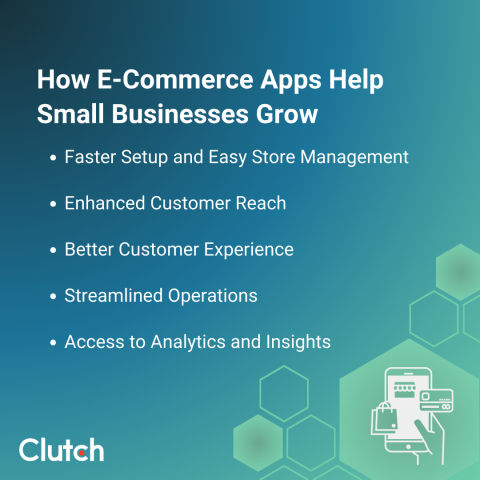
Even if you have the technical know-how, building a custom online store can be time-consuming. E-commerce apps let you skip the coding and other groundwork. You can quickly start uploading your products and tracking inventory.
Plus, the app developers handle the necessary updates. If there's a bug or security vulnerability, they're responsible for fixing it.
E-commerce apps focus on providing the best mobile shopping experience. That helps attract new customers who may not have the patience to click through a clunky or sluggish website.
These tools also typically come with built-in marketing and search engine optimization (SEO) features. Shopify users, for instance, can automatically send welcome emails to people who sign up for their mailing lists.
Nearly half (49%) of customers will abandon a site that's confusing to navigate, according to Clutch data. With an e-commerce app, you can build a smooth checkout process that guides them directly from Point A to B. Your website can also include order tracking and even personalized product recommendations. These features improve customer satisfaction and keep shoppers coming back.
Like any small business owner, you probably spend too much time squinting at spreadsheets and lugging boxes to the post office. E-commerce apps integrate with your existing tech stack to help automate the more tedious tasks on your list.
Start by syncing your online store with your point-of-sale (POS) system and fulfillment services. This lets you automate shipping and customer communications, such as sending emails when orders ship. You can also integrate accounting tools to manage payments and taxes.
E-commerce apps offer far more than a snapshot of sales or revenue. They gather a wide range of data points, including customer behavior, channel performance, and return on ad spend, giving you a broader view of what actually drives results. With these insights, you can refine pricing, adjust product offerings, and shape more effective promotions. For example, if most of your traffic is consistently coming from TikTok and Google, it may make sense to reduce your investment in Meta Ads and redirect your budget toward the channels delivering stronger performance.
Here are the e-commerce apps small business owners use most often, based on Clutch data:
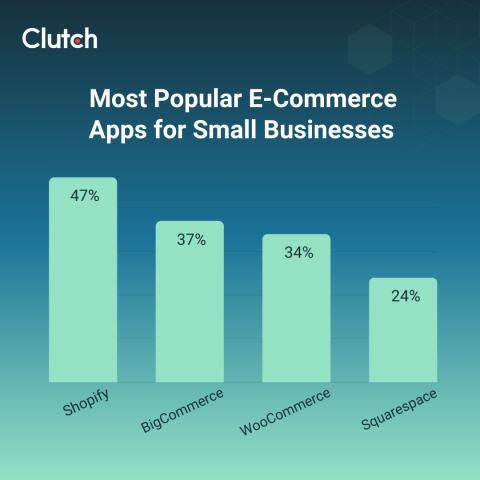
These platforms have different levels of customization and technical requirements. Pricing and scalability also vary. Understanding these differences is key to finding the best app for your company.
Every tool has benefits and drawbacks, and e-commerce apps are no exception. Here's a quick breakdown of the four most popular apps.
Shopify aptly bills itself as "the one commerce platform behind it all." Its huge suite of tools supports online and in-person sales for businesses of all sizes.
The app's artificial intelligence (AI) builder can spin up a custom website in seconds, or you can tweak one of its templates to fit your business's style. Once you've built your website, it's easy to add and manage products. You could have a basic store ready to share with customers within a few hours.
Shopify also offers many advanced features, including local currencies for international sales and social media marketing tools. For instance, you can make your YouTube and TikTok videos shoppable to connect with Gen Z clients.

Magic Spoon relies on Shopify to sell its healthy cereal, which reimagines childhood favorites for grown-up wellness enthusiasts. Customers can build a bundle or just buy a box or two to satisfy their cereal cravings. According to Shopify, Magic Spoon increased its subscription opt-ins by 29% and earned seven figures with its TikTok channel after switching to the app.
BigCommerce is a scalable e-commerce platform designed for businesses with complex operations. Like Shopify, it lets you build and launch your online storefront quickly.
This platform has more robust selling features. For example, you can design multiple storefronts for different audiences or brands. You can also offer over 70 promotions and customize the browsing experience for each customer segment. More personalization means a more satisfying shopping experience.
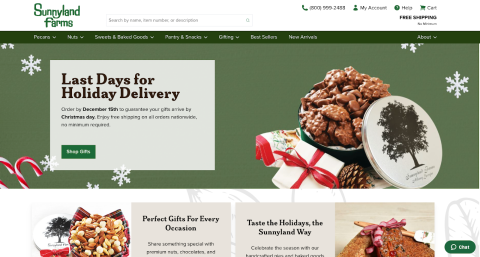
When Sunnyland Farms needed to upgrade an outdated storefront, it turned to BigCommerce. The app allowed the gourmet food seller to create a more sophisticated checkout process with custom messaging and scheduled delivery windows. After making the switch, Sunnyland boosted its retention and conversion rates. Employees also spend much less time manually updating the site and looking for workarounds.
WooCommerce is a WordPress plugin with advanced e-commerce features for selling products and customizing the checkout experience. If you deliver products locally, for instance, you can remove the shipping address field for nearby shoppers. The app also offers robust marketing tools, including rewards programs and cross-selling recommendations.
Unlike the other options on this list, WooCommerce doesn't let you build a standalone storefront. You must create a WordPress site before you can use it.
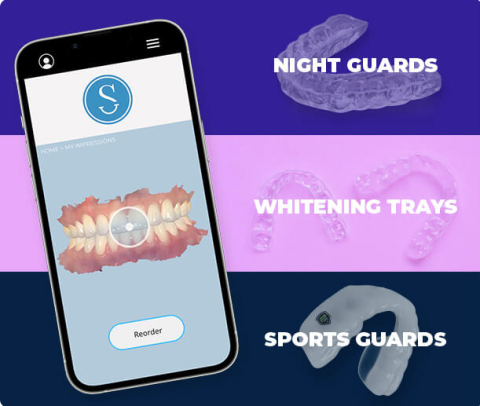
Smile Brilliant uses WooCommerce to sell its dental hygiene products. Its colorful storefront features before-and-after photos and videos, along with traditional product photos. Customers can also pay with their HSA and FSA cards at checkout. The company grew its revenue by 47% in one year after using WooCommerce to automate marketing.
Squarespace is a user-friendly website builder with e-commerce features. Users can create a site with Squarespace AI or customize a template. The platform also includes basic inventory management and marketing tools. For example, you can design email campaigns and generate SEO-friendly product descriptions to improve search rankings.
This app stands out because it focuses on web design first and selling second. It offers fewer e-commerce tools than the other options, but it's also more intuitive for beginners.

Plant lovers can shop for new greenery and pots at Soilboy. Built with Squarespace, the website's minimalist design lets the aesthetic product photos shine. Visitors can also sign up for workshops for wiring bonsai and other crafts.
Migrating your business to a new platform isn't easy, especially for busy business owners. These considerations will help you pick the right one from the start.
How many stock-keeping units (SKUs) do you offer? Businesses like Soilboy that only sell a handful of products may prefer the simplicity of Squarespace. If you have thousands of SKUs, go with a more robust option like BigCommerce or Shopify.
An e-commerce app should help you earn money, not wipe out your bank account. Look for platforms that fit your budget, and keep an eye out for hidden expenses. Some apps charge a flat monthly rate, while others tack on hosting costs and transaction fees.
Squarespace and Shopify are relatively beginner-friendly, especially if you only need a basic website. If you need more customization, consider an open-source plugin like WooCommerce.
Don't be afraid to outsource if you need help. An experienced web developer can build the foundation of your site, then hand it off to your team.
Even if your business is small today, you probably have bigger ambitions for the future. Choose an app that will help you grow your company across channels and markets. If your three-year plan includes a European launch, look for platforms that support international sales.
Do you want a beautiful website without coding? Go for a platform with pre-built templates. For more custom options, hire a designer or try an open-source option.
Your e-commerce tools should support the rest of your tech stack, not stick in the gears of your operations. Look for an app that's compatible with your POS system, customer relationship management (CRM) software, fulfillment tools, and marketing technology.
With a smartphone in practically every pocket, it's safe to say that online shopping is here to stay. E-commerce apps help small businesses adapt to this change and stay competitive. They let you build branded websites and manage every step of the sales process, from checkouts to returns.
Most small businesses rely on Shopify, BigCommerce, WooCommerce, or Squarespace. Each platform has different pros and cons, so weigh your needs carefully. Once you've made your pick, focus on creating a smooth, positive shopping experience. Your customers will thank you.