How App Companies Can Build Trust with Customers
Learn how app companies can build customer trust through better privacy practices, transparent communication, and stronger security to improve retention and...
Updated April 22, 2026

MVPs (minimum viable products) offer a chance to test your idea on real-life users and deploy a product with all its core functions before building the whole package. Following specific steps to develop an MVP will help you avoid potential traps throughout the process.
As the first draft of a product, an MVP is a “living” functional prototype that should showcase its core functionality. Once complete, developers can expand it in the future by adding new features.
Following a set schedule with defined steps will make it easier to finalize your concept and bring the completed version to the market.
Looking for a Mobile App Development agency?
Compare our list of top Mobile App Development companies near you
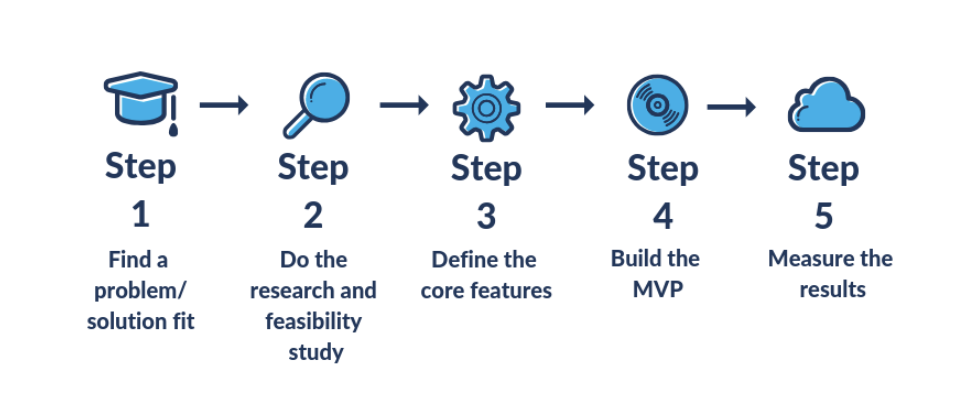
There are five stages of MVP development to consider:
Think of an MVP as the stage in your product’s lifecycle when users can see its basic features and discover the value it brings. Don’t limit your conception of what it can offer; an MVP is much more than a path to early delivery or direct engagement with the general public.
MVPs help you allocate resources while developing a product without a fully-formed scope. The primary purpose of deploying an MVP is to provide a feedback loop as you test initial hypotheses, minimize development waste, and enable growth.
All the while, maintain a focus on your users, namely the people who will verify the product during testing.
Take the first step towards making your idea a reality by defining a problem and the solution that fits best.
During development, conduct a feasibility study to assess the practicality of your proposed solution. Outline the concept, share it with your target audience, and gather feedback to visualize the future of your product. In your feasibility study, make sure to consider:
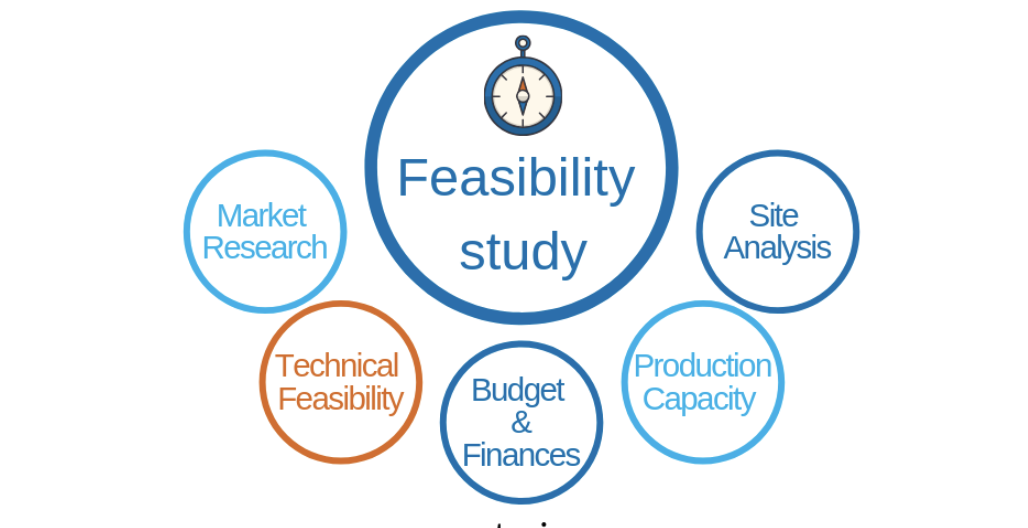
Even if it feels tempting to skip out on all the dimensions of a feasibility study, each one serves an important purpose and will yield useful insight. Don’t take shortcuts; short-sighted attempts to save time up front will make your project take longer in the future.
First and foremost, your product should offer a solution that adds value. Identify a common problem your customers deal with and find a way to solve it. The best goal is to find a solution that’s 10 times better than what consumers currently use.
Since a product’s primary value lies in its potential to solve users’ problems, testing your solution for relevance is crucial to determine your startup’s market viability.
For example, which of the following is a better solution for laundry struggles:
Being unique is overrated, but being useful is not; keep your focus on the core idea of your product.
If your idea is to rent electric bikes, use the MVP to test the feasibility of your service rather than customer loyalty packages or add-ons. The priority should be to assess how efficiently these vehicles can bring customers from point A to point B.
Defining your target demographics requires not only understanding who your users are, but also their full backgrounds, specific needs, and which devices they use. Based on these findings, organize bite-sized pieces of common characteristics into user stories.
Examples could include:
User stories like these are useful tools for discovering your customers’ pain points and what they serve to gain from your product.
Methods such as the Kano Model, Feature Priority Matrix, and Feature Buckets each provide a different approach towards feature prioritization for future users. The concierge MVP option involves solving customers’ problems manually.
Taking this approach will yield a keen understanding of what your customers need. Integrating feedback can transform a list of services into a product that users are willing to pay for, driving you closer to a profitable solution. Get customers excited about your solution, but also make sure it will successfully fulfill an existing need.
MVP building requires thoughtful feature prioritization. As you prepare to bring the idea you had in the beginning to life, consider “what if’s” like the ones that follow:
Failing to prioritize the development is like choosing shower curtains before even laying the foundation of your new dream house. Keep all your desired add-ons in mind for later, but don’t let them obscure the fundamental elements.
A well-prepared user flow determines how users will interact with your product. At this stage, hold off on adding all the bells and whistles until you complete a functional final product. Defining the user journey will help you refine the most important components and ensure user satisfaction.
Make this product understandable, easy to use, and fitting the core needs of your users. Start with the smallest effort to test if your concept will work.
When building an MVP, consider the "Learn → Build → Measure" loop.
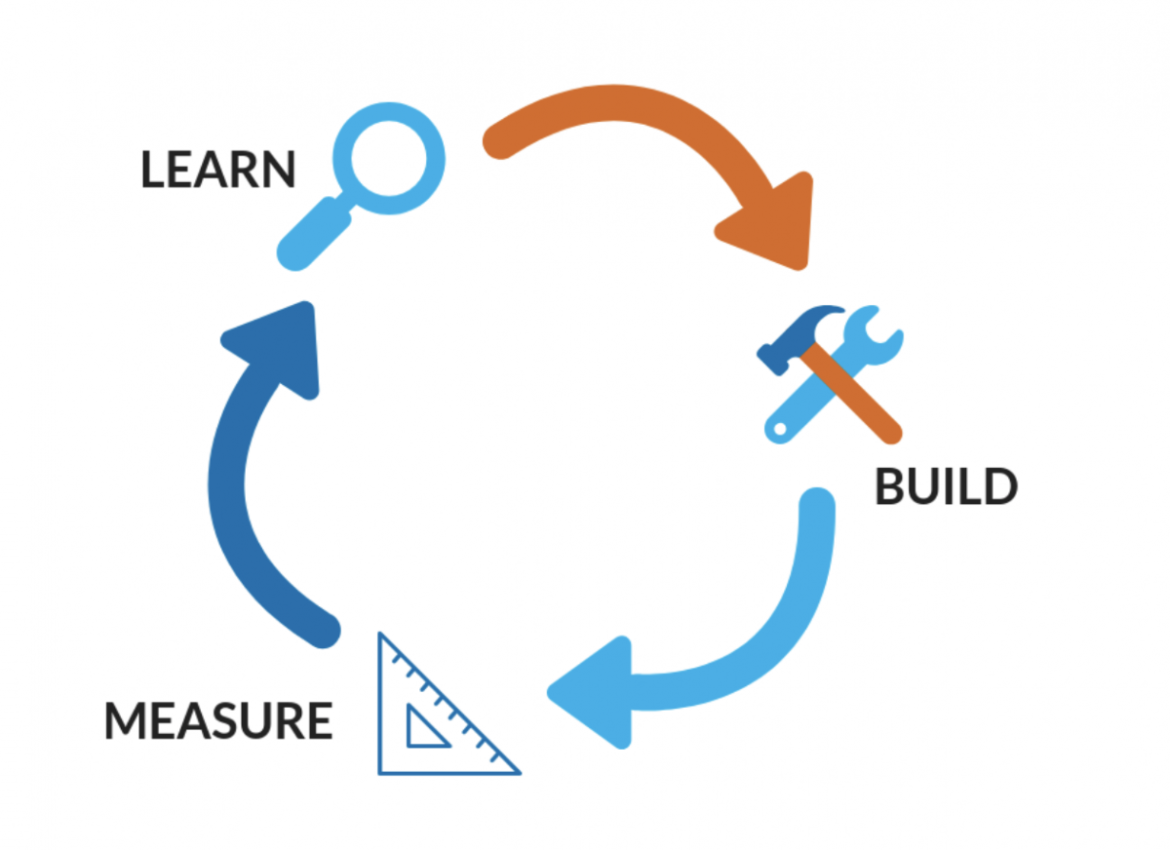
Learn-Build-Measure can be described in even simpler terms: develop, test, learn.
The founders of Airbnb didn’t have the necessary resources to fully develop their idea right away. Instead, they posted pictures of an apartment to rent for short-term periods on a website, went to a nearby design conference and tested the idea directly on their possible customers. Almost immediately, they found 3 interested renters which showed there was a market for renting private apartments.
This realization paved the way for the founders to approach investors and build Airbnb as we know it. Avoid making excuses; innovate instead.
The best strategy is always to under-promise and over-deliver. Create a product that will empower people to succeed. Find a way for your deliverable to tangibly improve your customers' lives. In the meantime, analyze customer acquisition cost based on these questions:
Comparing the necessary cost it takes to win a customer with the potential gain will help you verify the profitability of your idea before launching the product. These numbers should indicate that you’ve found a cost-effective way to acquire consumers. If they don’t, rethink your strategy: change your target market, product, and audience.
One of Neoteric's startups, Appoint.ly, underwent a by-the-book product build. We identified the need for easy, one-step appointment scheduling, noted a scarcity of available solutions, and decided to come up with our own product.
We started the development phase with detailed market research and surveying the target audience. Through a carefully planned process, we had the prototype ready to deploy within 11 weeks.
Appoint.ly launched with the core functionalities necessary to easily schedule meetings:
As we’ve added additional features over the 3 years since it deployed, it now serves thousands of users worldwide. The MVP environment enabled us to add features once we measure the app’s relevance or receive feedback from our customers, instead of including every possible function we could think of when it first launched.
Building an MVP is meant to release your idea into the real world and gather impressions of first real-life users.
Remember that the goal of developing an MVP is more than transforming your idea into a product; the entire process will help you better understand your users, the market, and the solution itself.
 Jowita Kessler is a copywriter at Neoteric. Compulsive reader and writer, in a relentless search for knowledge. Inquisitive researcher. Humanist dedicated to IT. Privately: Daydreamer and nightwalker, fan of cats and bats.
Copywriter at Neoteric. Compulsive reader and writer, in a relentless search for knowledge. Inquisitive researcher. Humanist dedicated to IT. Privately: Daydreamer and nightwalker, fan of cats and bats.
See full profile