
Generative AI vs. Agentic AI: What's the Difference?
What's the difference between generative AI vs. agentic AI? Clutch explains both types, their impact on your work, and what to consider before using them.
Updated February 13, 2026

Movies and pop culture have told us that artificial intelligence (AI) is an ominous future threat. In reality, it’s a valuable tool in our current digital world. Brands are already leveraging AI to provide a smoother, more personalized customer experience.
Capable artificial intelligence (AI) is no longer just a concept from a science-fiction future; it’s here, and we’re living with it.
In fact, it’s shaping the design and workings of our future technology landscape. Presently, we see it in the context of machine learning and deep learning.
Looking for a Artificial Intelligence agency?
Compare our list of top Artificial Intelligence companies near you
As defined in Forbes, artificial intelligence is: “the broader concept of machines being able to carry out tasks in a way that we would consider 'smart.'"
This implies that AI has everything to do with solving problems as humans would. It follows that AI-enhanced technology is working to enhance our everyday lives.
Given that we spend a whole lot of time on the internet, it would be fair to say that websites are integral to our lives. Have you ever wondered how AI contributes to your favorite brands’ customer experience?
Below, I’m going to explore five current applications of AI in customer experience:
When we shop on mobile apps and desktops, we pray for a seamless experience full of recommendations we love. If we’re editing photos, a brightening tool that picks out obscured objects is crucial.
Both these conveniences rely on AI-powered computer vision and image recognition. Popular apps like Instagram and Snapchat leverage this technology to deliver personalized content.
One of the highest-profile uses to date is Apple’s FaceID. Users previously had to unlock their phone with a numeric code or their fingerprint. Now, they can hold their face up to the phone screen and allow the camera to analyze it. The phone uses machine learning to plot 30,000 dots on the owner’s face, creating a 3D map for security confirmation.
Beyond the digital world, AI helps us interact with our physical reality. Visual search allows users to identify objects they’re seeing in real life and find similar ones online.

This is an especially handy feature when shopping for clothes.
Slyce recognized this and decided to create a visual search-powered shopping application system.
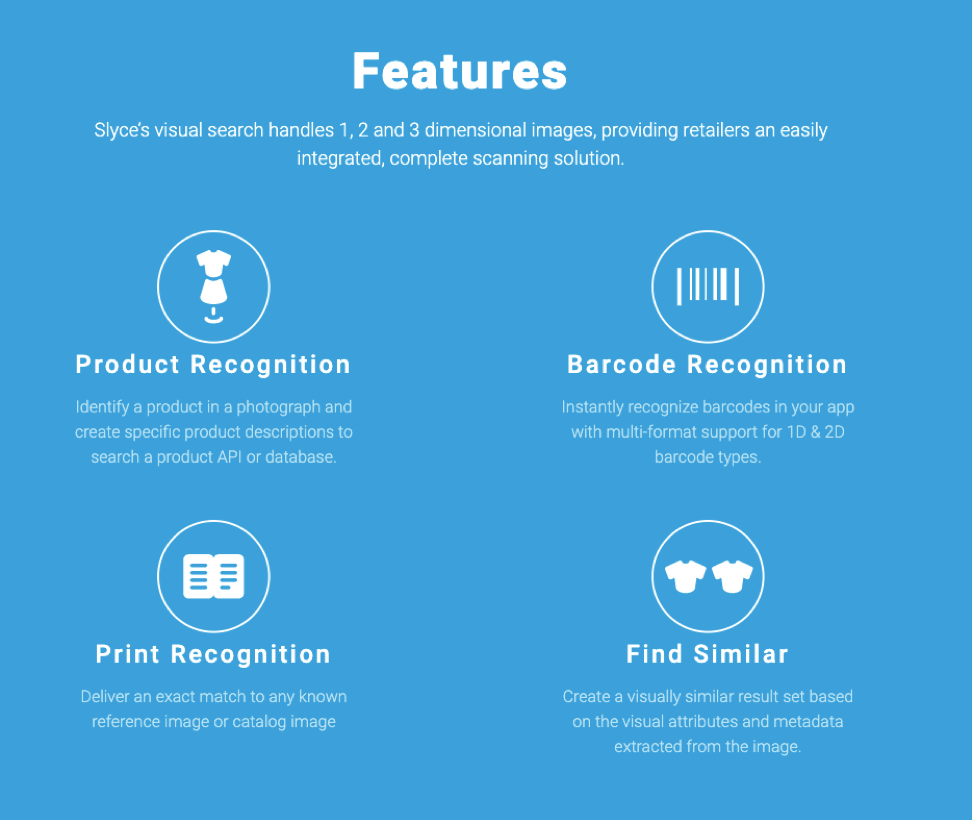 Their software development kit (SDK) for mobile apps helps users find online versions of their favorite styles based on images or barcodes.
Forever 21, for example, proved the value of visual search. After launching a “Discover Your Style” feature on their web and mobile home pages, they saw a 20% increase in average purchase value.
Instead of clicking on terms, web shoppers click on pictures that represent the clothes and styles of clothes they want. There are even images for smaller components, including skirt fits and shirt necklines.
AI-infused products seem to have significantly benefited the wearable tech industry.
Key players like Apple (Apple Watch) and Fitbit collect data on users’ vital statistics and then provide tailored recommendations.
In the future, wearable AI products may also help identify health issues, including respiratory and cardiovascular disease. Researchers suggest the highly specific data that smart clothing collects could be a huge boon for healthcare professionals.
According to Zendesk CEO Tom Eggemeier, we are advancing toward a world where 100% of customer interactions involve AI in some form.
Laced with AI-powered features, websites are now starting to offer instant online support to visitors with the help of chatbots, emails, and DMs.
Chatbots integrated with websites are smarter and more intuitive than their previous iterations.
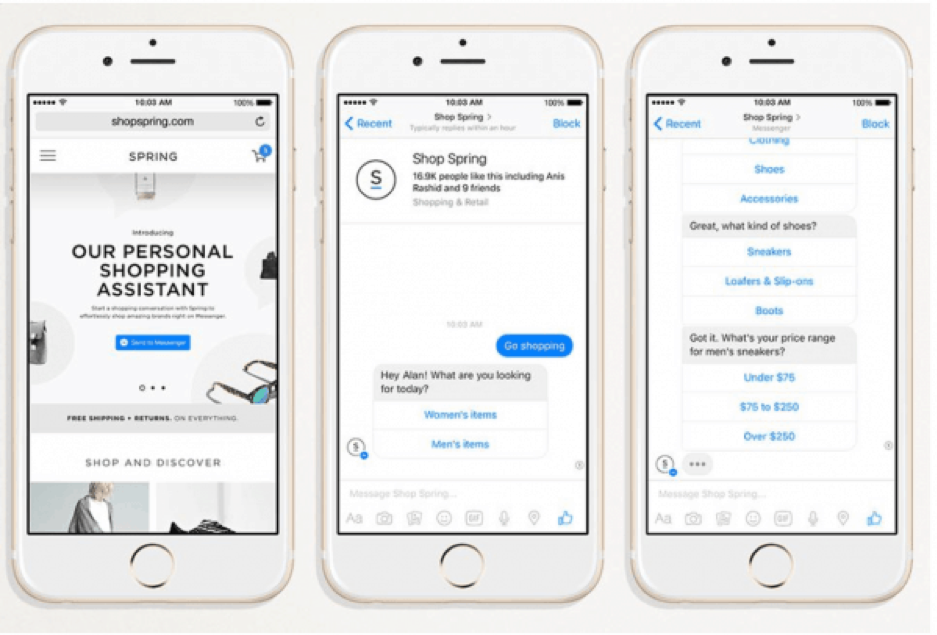
AI learning techniques have replaced scripted, repetitive replies, enabling chatbots to provide users with relevant responses in real time.
Brands are using these chatbots to gather personal information about users and their preferences, which then facilitates their sales and marketing acceleration efforts.
Websites are employing AI to process large amounts of complex data. The speed advantages of AI-aided data processing enable them to do so more quickly than a team of data experts could on their own.
Based on this timeline, businesses can quickly churn data, learn more about their target audience, and establish customized relationships with these people.
The e-commerce sector is effectively employing AI across platforms to enhance customers’ purchasing experience and drive more sales. They do this with the aid of improved search results and custom blog content.
Giants in the AI realm like Google, Microsoft, and Amazon have unlocked AI’s superpowers. They’re driven by a shared goal: delivering faster, more seamless customer experiences at scale.
Websites and mobile apps powered by well-implemented AI can build trust quickly by reducing friction, personalizing interactions, and resolving issues in real time. However, these advancements also introduce new — and sometimes unexpected — risks.
One of the most widely discussed concerns is data privacy. In fact, in a recent Clutch survey on data privacy, consumers shared:
This skepticism is justified. For example. Amazon and Google have both come under scrutiny for manually reviewing audio snippets collected by their AI assistants, Alexa and Siri. Designed to listen for “trigger words,” these tools have occasionally been activated unintentionally, capturing private conversations without users’ awareness.
While voice technology is only one example, it highlights a broader tension in AI customer care: the balance between convenience and surveillance.
Driven in part by new brands prioritizing customer experience in their solutions, AI has progressed rapidly in the last five years. From visual search and wearable technology to AI-powered customer care and real-time data processing, brands are using AI to create faster, more personalized, and more intuitive interactions across the customer journey.
As adoption grows, so do customer expectations. Businesses must balance innovation with responsibility, ensuring their AI experiences are transparent, accurate, and human-centered.
For organizations ready to take the next step, partnering with experienced AI developers can make implementation smoother and more impactful.
Explore top-rated AI development companies to start building smarter customer experiences.
Catherrine Garcia is a web developer and passionate blogger. She along with her group of freelance developers are experts in creating websites on CMS.
See full profile