Why Searching for a Specialized Dev Agency Takes Longer Than It Should — And What to Do About It
Looking for a niche software development agency? Learn how to define your requirements, find specialized providers, and vet their experience.
Updated February 16, 2026

The right software solution can automate repetitive tasks, streamline operations, and help you differentiate your business in a competitive market. But choosing between developing custom software vs. an off-the-shelf solution can be challenging for many businesses. Learn more about what you should consider before hiring a software development partner.
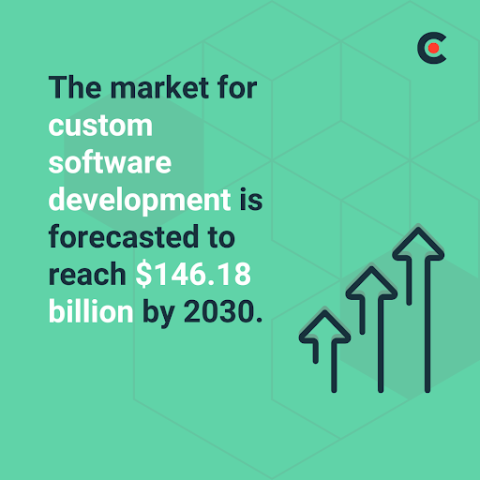
Recent data suggests that companies are increasingly seeking customized software solutions. In fact, the market for custom software development is forecasted to grow from $43.16 billion in 2024 to $146.18 billion by 2030, expanding at more than 20% CAGR.
Looking for a Software Development agency?
Compare our list of top Software Development companies near you
Many business leaders believe that custom software is ideal because it can be used to address complex operational needs and help them scale quickly. However, it’s not always the best solution for every business. It can also be costly and requires a lot more resources than off-the-shelf software, which still offers plenty of customizable integrations and can meet most project requirements.
If you’re looking to grow your business with a new software solution, you need to be able to assess the value of custom software vs. off-the-shelf before launching a new project.
Custom software refers to software that is specifically designed and developed to meet the unique requirements of a particular organization or business. It is tailored to address specific needs, workflows, and business processes.
Off-the-shelf software, on the other hand, provides a ready-to-use-solution. Often, it is pre-built and available for purchase or use without any modifications, but certain features and functions can be developed It is developed to serve a broader user base and caters to common functionalities and requirements.
Custom Software Development |
Off-the-Shelf Software |
||
Pros |
Cons |
Pros |
Cons |
|
|
|
|
Compared to off-the-shelf software, bespoke software is often more effective, efficient, and adaptable. It can be built to scale alongside an organization’s growth, integrate seamlessly with existing systems, and manage large volumes of data or user traffic with ease. This makes it a powerful option for businesses that need technology tailored to their specific processes and long-term goals.
One of the biggest benefits of custom software development is that it’s designed specifically for your business’s unique needs.
Unlike off-the-shelf solutions, which force you to adapt to prebuilt features and workflows, custom software is built around your processes, goals, and challenges. This means you get exactly the tools and functionality you need—nothing more, nothing less—resulting in a system that streamlines operations, eliminates inefficiencies, and supports the way your team actually works.
By aligning technology with your business rather than the other way around, custom software empowers you to operate more effectively and gain a true competitive edge.
Unlike off-the-shelf solutions, a custom-built system is designed with your long-term vision in mind, allowing you to easily add new features, expand your bandwidth, or integrate additional tools as your operations grow.
This flexibility ensures that your technology won’t hold you back when you enter new markets, adjust workflows, or adopt emerging innovations. Over time, you can add new features, increase bandwidth for more users, and add new integrations. By providing a foundation that adapts rather than constrains, custom software empowers your business to stay agile, efficient, and competitive over time.
Custom software provides unique solutions that can give you an edge over competitors relying on generic tools. It also allows you to innovate with features or services tailored to your market, helping you stand out in ways that prepackaged software can’t support.
Over time, this differentiation not only improves productivity but also strengthens customer loyalty and positions your business as a leader in its space.
Designed to work smoothly with your current tools, databases, or third-party apps, custom software can reduce friction and inefficiencies.
Since most businesses rely on multiple tools — such as legacy systems, internal and external databases, and various third-party applications — to manage different parts of their operations, being able to integrate your new software with these solutions is critical for operations.
Integrations ensure a smoother workflow, reduces manual data transfers, and prevents the operational bottlenecks often associated with disparate systems.
While custom software often costs more upfront, businesses can avoid recurring licensing fees that are associated with off-the-shelf software. Additionally, this gives you control over maintenance costs rather than having to rely on vendor pricing models that may fluctuate over time.
Custom software can be more secure than off-the-shelf solutions because it’s built specifically for your business and isn’t widely available to the public. The codebase is unique and less predictable, making it harder for cybercriminals to attack at scale. You also have full control over updates, data storage, and access management, ensuring security standards are maintained and you comply with industry-specific regulations.
When you build your own software, you decide the roadmap, which updates you need, and when you want to upgrade. There is significantly less flexibility when working with off-the-shelf software, especially if you depend on a vendor to add any new features.
You're also able to retain control of your intellectual property and data when you build your own software. In comparison, those that use off-the-shelf software are subject to changes in vendor policies, pricing, or even product availability.
Designed with your employees’ or customers’ workflows in mind, custom software can make adoption much easier. Especially because custom software is tailored to match existing processes, the interface may feel more comfortable compared to generic solutions.
While custom software is a great option for many businesses, it’s not the best solution for everybody. Ultimately, you need to consider whether the customization is worth the increase in cost and resource needs. This may depend on the type of software you’re building and how your business plans to use it.
Generally, the initial cost of custom software development is typically much larger than buying an off-the-shelf product. This is because it is built from the ground up to meet your business’s unique requirements. This requires specialized skills, like planning, designing, coding, and testing, which takes time and resources. However, the investment may pay off over time by helping you avoid inefficiencies and licensing fees.
Developing software from scratch can take months (or longer), depending on the scope of your project and your requirements. The development process can take even longer if requirements change or scope expands. In comparison, off-the-shelf tools are ready to use nearly immediately.
There still may be some development required to set up your teams and ensure that the tool you purchase has the functionality you’re looking for, but it should still take significantly less time to set up.
Most off-the-shelf solutions provide a support team to make sure that the software is operating the way you need it to. However, if you build a custom solution, your team will be responsible for updates, bug fixes, and security patches. If you don’t have an internal team, you will need to outsource development services for ongoing support, which can become costly if not budgeted for properly.
Especially if your business hasn’t developed custom software before, the development process can be intensive. You will need to hire either an internal team or outsource development to bring your vision to life. Not only does this mean that you will be spending more on development, but both of these options require significant involvement from your existing team. Depending on the solution you’re looking to build, they will need to spend time testing solutions and providing feedback. This can take focus away from other business priorities during development.
Off-the-shelf software is pre-designed for a wide range of customers, which can often lower costs. While some worry that this means that off-the-shelf software won’t provide the customization they need, many solutions provide as much functionality as most businesses need.
The cost of an off-the-shelf solution is often much lower because development costs are shared across thousands of users. Additionally, subscription/licensing pricing models are transparent and easier to budget for compared to unpredictable custom development expenses.
One of the biggest benefits of off-the-shelf software is that vendors provide regular updates, ensuring that the solution is secure, reliable, and up to date without extra effort from your internal team.
Regular updates patch security vulnerabilities, protecting sensitive data from evolving cyber threats. They also deliver performance improvements, fix bugs, and often add new features that keep businesses aligned with the latest technology trends.
This means companies can focus on running their operations instead of worrying about maintaining or modernizing their tools. In short, vendor updates help businesses save time, reduce risk, and stay competitive with minimal overhead.
Most off-the-shelf software solutions often come with APIs or plug-and-play integrations for other common tools. This makes it easy to integrate your new software solution with other internal tools and streamline operations. It also allows you to add new features or upgrade to higher tiers as your business grows.
Finally, one of the benefits of using off-the-shelf software are the robust communities that can provide support as you’re learning to use new tools. A large user base means you can find more tutorials, FAQs, and community forums online to troubleshoot problems. This can make it easier to onboard new employees since many are already familiar with popular tools.
While off-the-shelf software can be affordable and quick to implement, it isn’t without its limitations. Because these solutions are designed for a broad audience, they often fall short when it comes to meeting the unique needs of individual businesses.
While off-the-shelf software usually provides a lot of customization and integration options, it can’t be fully tailored to your unique workflows or needs. It may not connect seamlessly with all your existing systems. As a result, you’ll need to find workarounds or third-party connectors.
Instead, you may have to adapt your business processes. This may mean that your team is not quite as efficient as it could be, especially if your team is looking for a very niche solution. Still, many off-the-shelf solutions meet the needs of most organizations.
While custom software development is more expensive upfront, subscription or licensing fees for off-the-shelf software can add up over time. Ultimately, the total cost of ownership may end up higher than custom software in the long run.
Off-the-shelf software is designed to serve a wide audience. It’s very versatile, but it comes packed with features you may not need. While many features may sound like a benefit, this makes the system complex and harder to use. It can also slow down performance, make onboarding harder, and distract employees from the core tools they really need. In the long run, software bloat reduces efficiency and can even discourage adoption across teams.
Off-the-shelf software is often a bigger target for hackers since it’s used by thousands of organizations. If attackers find a vulnerability, they can exploit it across many users at once, making it particularly appealing to cyber criminals.
While the biggest benefit of custom software may be that it provides a competitive edge for businesses, the opposite may be said of off-the-shelf software. If competitors use the same tool, there is no way to differentiate your business. If you add any new features, they can add them as well. Ultimately, this will limit innovation for processes tied to the software.
Off-the-shelf and custom software offer different levels of competitive advantage.
There is not much space to leverage off-the-shelf software because your competitors are using the same product. They know exactly what you can achieve with it and what your restrictions are.
Custom software is more flexible and can be tailored to fit your business requirements. Custom software development companies can also modify it as your business evolves.
Businesses should consider if they want a unique solution that caters directly to their needs or something that is one-size-fits-all.
Before you decide on a type of software, think through your business's needs and consider all of your options. You need a type of software that will help maximize the growth potential, decrease costs, and increase revenue.
Think carefully about whether an off the shelf solution or custom software fits best.
Off-the-shelf and custom software offer different levels of value. Generally speaking, off-the-shelf software typically costs less than custom software. Businesses only need to pay a one-time fee to start using it.
This is because the cost is split among thousands of users who buy the same software license, making off-the-shelf software cost-effective.
Custom software, on the other hand, needs to be developed and programmed for your specific business needs which require discussions, drawing out requirements, wireframing, and building the software. These cost differences lead custom software to be more expensive than an off-the-shelf solution. The cost of software is determined by the project estimation process.
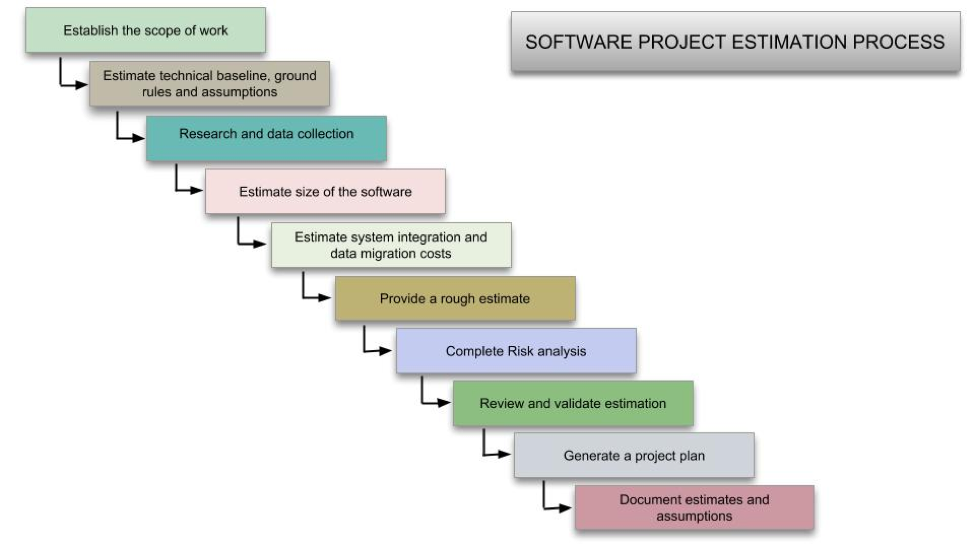
This process consists of 6 steps which include everything from determining software requirements and development to integrating the software and migrating existing data.
The first step is to write down what you want the software to accomplish.
By outlining project requirements, you can get a good idea of how much it will cost because project requirements are directly proportional to the project cost. Be sure to consider all possible deliverables and constraints.
In the initial stages of the project estimation process, BinaryFolks sets up frequent meetings with clients to get a complete picture of the software they want to develop. Good software developers strive to understand their clients’ business requirements and then translate it into a technical requirement document that will be used in the development process.
Engineers can begin designing the software after the project’s scope has been clearly communicated and your developers have a technical requirement document.
Keep in mind that the software development company will need to allocate time and resources to both user interface (UI) and user experience (UX).
Designers will need to choose a design that represents your business holistically and is intuitive, modern, visually appealing, and simple enough for everyone to use without an extensive learning curve.
When the software is designed, it’s ready to be integrated with the business’s existing systems.
This part of the process is always the most challenging because a lot of unknown variables are involved and requires extensive research and development (R&D) before specialists can dive in.
Designers need to familiarize themselves with the API, data structures, protocols, and user authentication. They will achieve minimal functionality to get an idea of the product and understand its endpoint before integrating the whole program.
Once the requirements, information, and UI/UX design get final approval, actual development begins.
This phase needs a lot more manpower and hours than people might expect, no matter if you choose an off the shelf solution or not.
The development phase also includes all the time that is consumed in the form of communication overhead and the timeframe that is committed to the client.
When interfaces include multiple systems, the software can sometimes become too complex which makes it become too costly and risky to modify.
If this is left unchecked, it can impact projects and leave behind clunky, inefficient applications.
It is normal for the software requirements and scope to change in the development process as more features and workflows are added or removed. Anytime this happens, cost needs to be adjusted as well.
Whether it’s about data consolidation on a single platform, upgrading to a completely different platform, a merger, or an acquisition, your company will likely need data migration.
Sometimes, a group of applications, like servers, files, and databases, needs to be migrated simultaneously. If this is not done correctly, it can result in interrupted service for end users.
There are different types of software, depending on your needs and project scope.
Always keep in mind, however, that software development pricing varies among on-site, off-shore, or outsource development and thus, the location. The above estimates are drafted based on outsourced prices.
Additional Reading: 'How to Find & Hire an App Developer'
While some may believe that standardized, one-size-fits-all products lack the adaptability required to support their business as it evolves, others may find that off-the-shelf software can provide the functionality their team requires without the costs associated with custom software development.
To determine whether a custom software vs. off-the-shelf solution is the right option for your business, you need to consider your budget, project requirements, and long-term business goals.
If custom software seems like the right choice for your business, look into some of our top service providers.
 Jyotirmay Samanta is CEO of BinaryFolks, a software development company with a specific focus on cutting edge SaaS-based web application development and mobile application development. He is an entrepreneur and technocrat with more than 18 years of experience working in different technical leadership roles with a focus on Cloud Network Infrastructure. Working in different global branches of Google, Amazon, and Salesforce helped him understand different work cultures, techniques, and values across different continents.
Additional Reading
, 2, When choosing between off-the-shelf and custom software, businesses should consider cost, functionality, and business needs.
Jyotirmay Samanta is CEO of BinaryFolks, a software development company with a specific focus on cutting edge SaaS-based web application development and mobile application development. He is an entrepreneur and technocrat with more than 18 years of experience working in different technical leadership roles with a focus on Cloud Network Infrastructure. Working in different global branches of Google, Amazon, and Salesforce helped him understand different work cultures, techniques, and values across different continents.
See full profile