
The Community Advantage: Why Reddit and Quora Are Reshaping B2B Marketing
Reddit and Quora now shape B2B buying decisions long before a sales call. Learn how community trust, expert answers, and peer proof win buyers over.
Updated April 10, 2025

Social media marketing is an essential business tool, but its direct impact can be hard to measure. Learn how to avoid these 4 common mistakes to see results.
Only 23.3% of marketers have the ability to measure the impact of social media quantitatively. The rest? They can only feel a qualitative impact or are unable to prove that social media has any benefit.
If you use social media to build your business, you know that getting results from your marketing efforts is more difficult than it looks. Misconceptions and wrong practices stop people from seeing real results from social media.
Looking for a Social Media Marketing agency?
Compare our list of top Social Media Marketing companies near you
This article lists 4 social media misconceptions and how to avoid them.
You can achieve different goals with social media.
According to Social Media Examiner’s Social Media Marketing Industry Report, marketers see the following results from social media marketing:
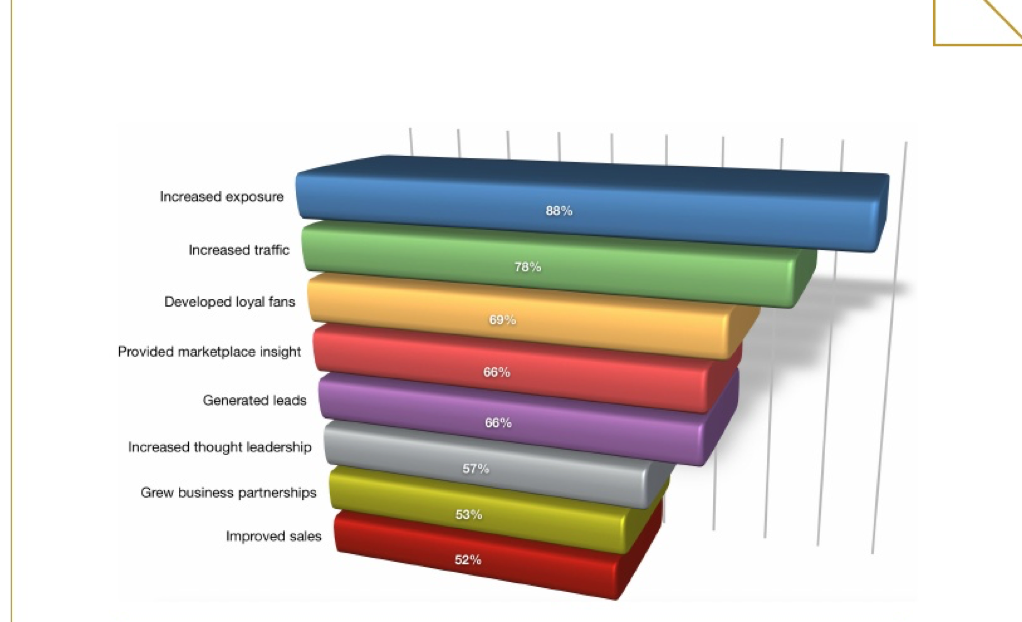
Needless to say, you need to determine which goals are most important in your social media plan and align your efforts with those goals.
For example, in order to increase exposure, you need to increase your follower base, impressions, and mentions. It would be wrong to post your sales pages upfront and expect people who don’t know you yet to buy from you.
To measure the success of your efforts, you need to measure the right KPIs (key performance indicators). For awareness campaigns, the right KPIs might be profile visits, post impressions, and the number of likes, followers, shares, and mentions.
The KPIs for increasing engagement, generating leads, and finally improving sales are metrics such as the number of clicks, sign-ups, and downloads.
If you still don’t know what goals and KPIs you should pursue, consider taking advantage of an expert consultant.
It might be a bad idea to be present on all social media networks.
For one thing, keeping up with each network and producing content for each is hard work; for another, content standards on each network differ, and the audiences on each one might have different expectations.
To have a general understanding of what content performs well on each social media platform, check out the following suggestions from Entrepreneur:
Once you know the demographics of the users on each network and what they’re interested in, you can create great content for them.
For example, 88% of people aged 18-29 are on Facebook, while 77% of high school students use the platform. Pinterest users are predominantly women: 45% of the total number of online women use Pinterest.
Why bother using the platforms your target audience won’t be on? You want to choose the social media platforms that your customers use most.
Learn more about the latest social media trend - BeReal.
Another misconception about social media is that you can post random content and get results.
You should post different kinds of content depending on the goals of your campaigns.
Hubspot identified content types based on the concept of the sales funnel.
Depending on what stages your customers are in or what goals you want to achieve (awareness, evaluation, purchase), you should post different kinds of content.
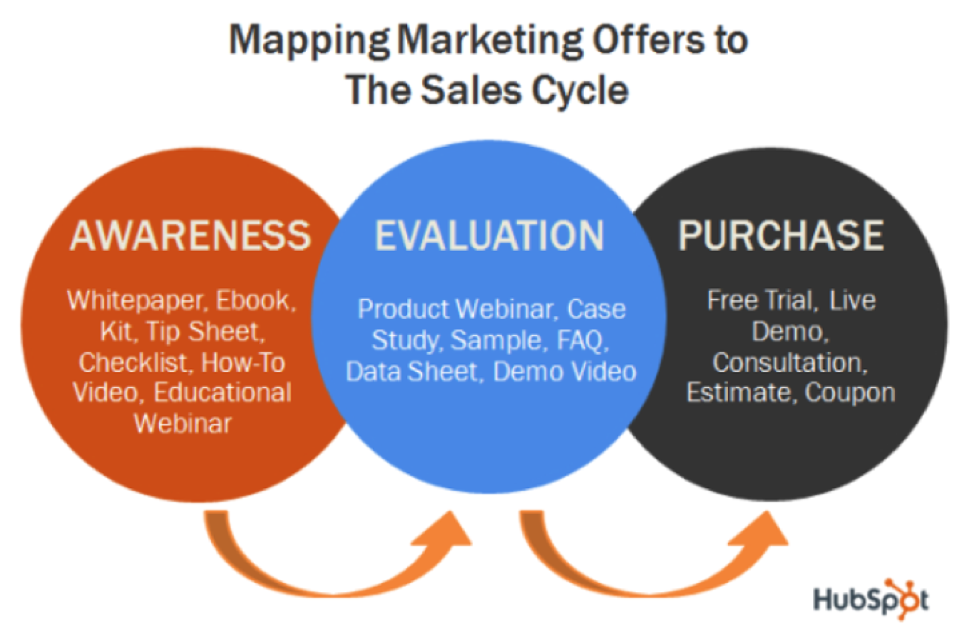
There is typically a distance between the awareness phase and the purchase phase of the customer buying journey, and you need to fill that distance by providing suitable content and engaging people.
You can’t assume people will buy from you in their first interaction.
In order to fill this gap, you need to know your audience and their buying journey (i.e. how they move from the awareness phase to the purchase phase).
Your customers’ demographic features such as gender, age, and work are a goldmine here. You need to have a good understanding of their behavioral features as well. Their lifestyle, habits, interests, pain points, and micro-moments are more important than you could guess – you want to connect with your customers and appeal to them in the buying journey.
Here are some questions to determine your customers’ preferences and their buying journey:
The greatest source for finding the answers to these questions is your customers.
Make professional surveys using SurveyMonkey or Google Forms, send them to your customers (through your email list or social media), and use the information to provide a great customer experience throughout their journey.
Once you determine how your customers use social media (for example, whether they use it to find products or to validate their product choices), what types of content they prefer to see, and when and on what devices they use social media, you can more easily provide support throughout their journey.
It doesn’t make any sense to keep repeating the same social media marketing mistakes again and again.
Social media analytics tools enable you to monitor your success or failure in social media marketing and choose the right actions for the future.
To have the right social media marketing strategy, you need to avoid some misconceptions and wrong practices.
Mostafa Dastras has written for important companies such as HubSpot, WordStream, SmartInsights, and MarketingProfs. What keeps him up at night is how he can help his clients increase sales with content marketing (or how people can grow an email list). Visit his blog, Live a Business Life, or connect with him on LinkedIn to get him to write for you.
See full profile