How App Companies Can Build Trust with Customers
Learn how app companies can build customer trust through better privacy practices, transparent communication, and stronger security to improve retention and...
Updated March 27, 2026

Are you looking to establish a successful relationship with an app development partner? Based on our experience at Designli, an app design studio that focuses on startups, this article will show you how to be prepared with the information you need to start the discussion, the right questions to ask, and what to look for.
If you want to create a mobile app that attracts and retains users, selecting the right mobile app development partner is critical. You need to find a partner you can work well with, one with plenty of development experience and an understanding of how to design products that keep users engaged.
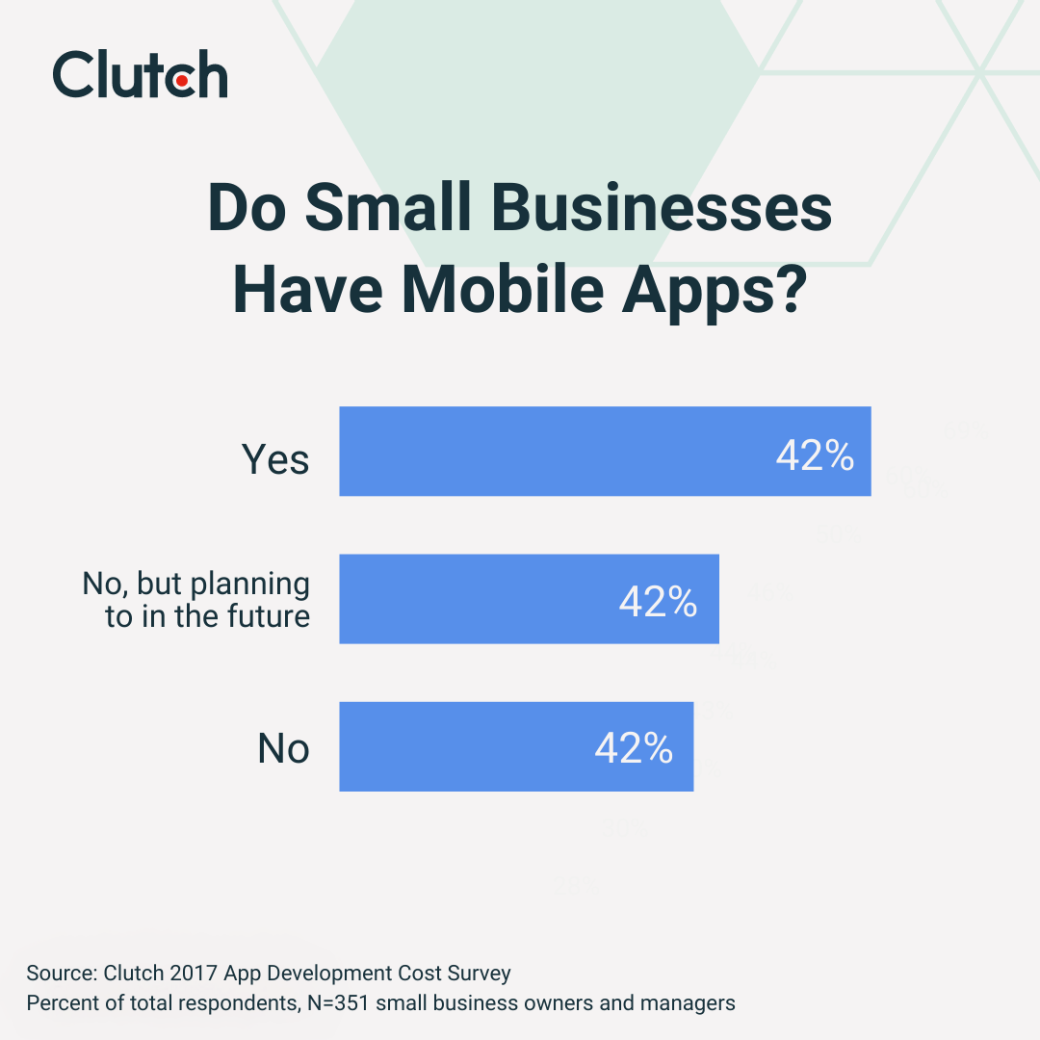
Nearly half of small businesses (42%) have a mobile app, and it’s becoming increasingly important for businesses of all sizes.
Looking for a Mobile App Development agency?
Compare our list of top Mobile App Development companies near you
We’ve been on both sides of the partnership experience, and we’ve learned a lot as a result. Our first startup partner showed us the challenge of building quality mobile apps. The lack of agencies and development teams that understand the needs of startups, the business aspects of development, and the importance of a transparent process led us to start our own digital product development studio.
We’re sharing what we’ve found to be essential for building a strong working relationship between a startup and its app development partner.
Choosing the right app development partner is crucial. You're not just hiring someone to code and build you a mobile app. You’re bringing on a collaborator who can help to shape and refine your product ideas with their strategic insights, provide organized project management to streamline your launch, and continue to support you post-launch to ensure growth and success.
There are several different types of app development partners to consider:
Overall, the right development partner all depends on your stage, goals, budget, timeline, and how hands-on you want to be. Look for someone who has experience working with startups, understands lean product development, and doesn’t just say “yes” to everything — someone who challenges your thinking when needed. A strong app development partner helps you avoid missteps and build smarter — not just faster — while still being able to quickly pivot with you and build a product that’s ready to scale.
In a startup, time and resources are tight. Choosing the wrong app development partner can cost you both! Save your time and money by avoiding these mistakes when choosing your app development partner:
While sticking to a budget is important, choosing the cheapest option often leads to missed deadlines, poor design, and more expensive fixes down the line. Focus on value — look for partners who understand your goals and can deliver a reliable product that’s built to scale.
A slick portfolio or confident sales pitch isn’t enough. Talk to past clients, especially other startups. Ask how the partner handled communication, deadlines, problem-solving, and post-launch support. Firsthand feedback reveals more than any case study ever will.
A solid development partner relationship is built on clear terms from day one. Vague terms around project scope, timelines, deliverables, or ownership of code can cause confusion, create conflict, and could cost you big time. Your contract should lay out exactly what’s being built and who owns it, who’s responsible for what, how changes will be handled, and how disputes will be resolved.
You now have a full understanding of what you want to build, and you’ve spoken with development prospects to ask key questions.
Now it’s time to narrow your options. Here are the most important things to look for in a developer.
When you review a developer’s portfolio, go beyond checking reviews and feedback. Take the apps they designed for a test drive.
Do the apps demonstrate a strong understanding of user experience and behavioral design? Essentially, are they engaging enough that users will want to use them, and continue using them, on a daily basis?
A development partner’s technical skills must match your needs. Consider the platform you want to use for your app, as that will determine the technology that will be required.
For example, Android mobile app developers need solid Java and XML skills. This expertise will be important for Android apps but not for iOS apps.
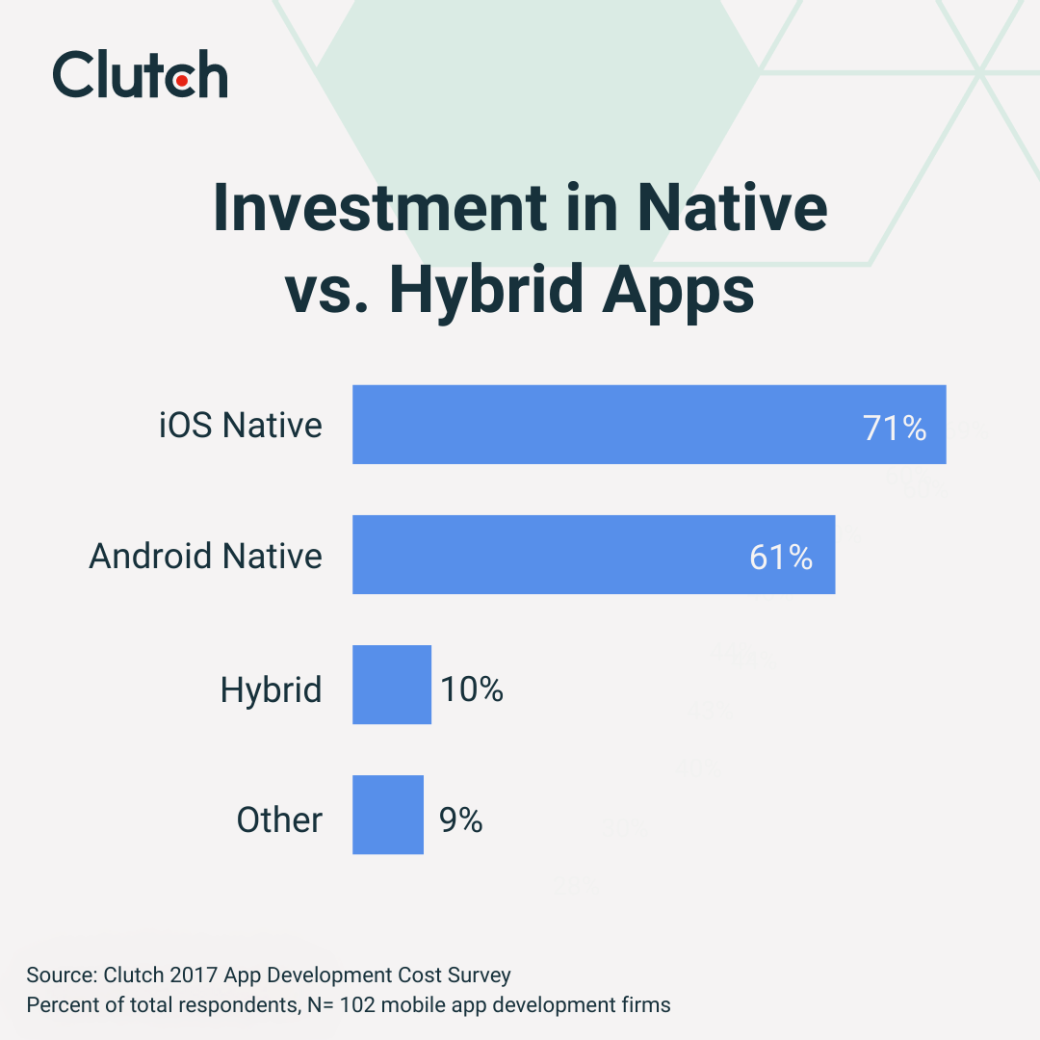
The platform you use is up to you, but keep in mind that Google’s Android and Apple’s iOS operating systems dominate the mobile market, accounting for 99.2% of total mobile OS usage.
Will your app interact with other apps and systems? Then experience with APIs is important. Will there be a large volume of data collected with your app? Solid database experience will be valuable.
All app developers should have a thorough understanding of security, as mobile apps are vulnerable to cyber threats. The developer should have a process for identifying security threats, proactively implementing safeguards pre-launch, and quickly implementing patches post-launch.
Developers also need to understand marketing and monetization strategies in addition to their technical knowledge. They should be able to offer creative suggestions based on their experience with converting app users into revenue.
Optimization should be considered throughout the development process to ensure that it will support your monetization strategy. For example, if your app will use in-app advertising, you want to make sure the ads will not distract the user.
An experienced developer will have a proven track record and will know how to optimize each strategy effectively.
You want to work with a development partner with a real interest in your business. It will be difficult to see success with a developer that just wants to get the job done.
Look for a developer that not only understands technology but also is invested in understanding your business.
Development partners should have a documented and transparent process and set clear expectations at every step. They should also follow coding standards and use a framework for development.
Having this level of organization enables multiple team members to work on the same project and minimizes confusion. They should also be able to see the bigger picture for strategic planning and help you make decisions leveraging their experience.
Several specific questions will help you with the selection process.
You’ll want to get a feel for the developer’s experience building apps similar to what you’re looking to build and their knowledge of product development. It will also be helpful to gain an understanding of their development process and how they handle testing and maintenance.
Here are 8 questions to ask a potential development partner.
Review the developer’s portfolio to see if they have experience in your industry or with the type of app you want to build.
Do they have the technical proficiency that you want? Have they been around a while? Do they have strong customer feedback?
You’ll want to work with a development partner that offers transparency and involves you throughout their process.
The developer should have a clearly established process that’s organized and methodical and regularly solicits client input.
Will the developer make suggestions for good development practices or simply fill orders?
A development team that has experience with concepting and building successful apps and can provide product development guidance will help you produce a better product.
Most apps will need updates and patches after they go live, particularly to keep an eye on any security vulnerabilities that may arise.
You’ll want your development partner to actively monitor potential issues and be available to fix any problems in a timely manner.
It’s essential to receive development documentation about the app, including instructions for how to use it.
This is especially important if your developer does not handle post-launch app maintenance.
What testing methods are used for the apps? What does the developer recommend specifically for your app?
User testing is essential to ensure the app is intuitive for users to engage with and that everything works the way it should. Testing takes care of many issues in advance of release, preventing headaches.
Keeping clients in the loop is an important part of the development process. Good developers understand this and will be transparent about their communication process.
Make sure your chosen app developer communicates consistently and in ways you prefer.
Submitting to stores and marketplaces isn’t too difficult if you know what you’re doing, but it can be cumbersome if you don’t have experience with it.
Will your app partner handle the submission for you? Or will they provide guidance on how to do it? You will want to be sure they’ll provide guidance on creating your listing and submission if they’re not handling it.
Knowing the right questions to ask is an important part of selecting the right developer. There are also some key things to look for in their responses and your interactions.
A successful collaboration with your app development partner starts with the relationship. Treat them like they are a team member, not just a vendor. Connect them with relevant teams, integrate them into your communication channels, and be transparent about your objectives, priorities, and constraints. When both sides are engaged and informed, the collaboration runs smoother and the end result is stronger.
To achieve that outcome, follow these best practices for collaborating with your app development partner:
This is the starting point of your partnership, as both sides need to be in alignment. Define what the success of your mobile app looks like — not just in terms of features, but also timelines, specific needs, target audience, user outcomes, and business impact. Share your vision, requirements and product roadmap early, so your app development partner understands “the why” behind the project and can bring their insights and recommendations to the build.
Effective communication is the key to any relationship, so ensure your app development partnership is a success by establishing a clear communication plan. Decide who the key contacts are, how you’ll communicate and when, and the expectations for every communication. For example, determine what’s appropriate for quick Slack questions and conversations, what’s best for email communications and the requested turnaround time for emails to be answered, and what’s expected during a weekly status call. This avoids confusion and keeps everyone aligned.
Just like your communication, this should be happening regularly throughout the project. Don’t wait until the end of a sprint or milestone to weigh in. Review demos, ask questions, and give actionable feedback as the product evolves. Besides making the app development a truly collaborative process, this also helps to catch issues early, reducing rework and frustrations on both sides. Your app development partner can do their best work, and you get a final product that meets (or exceeds!) your expectations.
Establishing a successful relationship with an app development partner requires an understanding of what app you want to build and why, knowing the right questions to ask, and understanding what to look for in the answers.
Technology partners should have solid technical abilities in the skill sets you need as well as business skills and expertise on how to keep users engaged for the long term.
Ideally, you want a partner that’s seeking to build a long-term relationship with you. A successful app doesn’t just happen. It’s the result of combining all of these factors.